After I Posed as the Grand Tutor’s Widowed Sister-in-law, He Insisted on Shouldering the Succession of Two Branches - Reviews

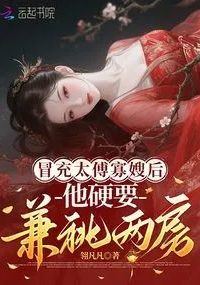
After I Posed as the Grand Tutor’s Widowed Sister-in-law, He Insisted on Shouldering the Succession of Two Branches
+Add to Custom List
Sort
Add review
... Read More
That jade thumb ring Ji Yan keeps rubbing—'his fingers rapidly rubbed the jade thumb ring'—it's become this little tell for me. Every time he's thinking, every time he's suspicious, his hand goes to that ring. It's his anchor, his nervous habit, and honestly kind of humanizing for a character who otherwise seems all cold calculation. But the bigger symbol here is pregnancy as both weapon and vulnerability. Su Tanghuan's 'posthumous child' is the entire plot engine— it's what makes her valuable to the Ji family, what makes her dangerous to the Zheng family, and what gives her the leverage to threaten Zheng Butler. She weaponizes her own body and her own shame. And the 'joy-bringer' wedding tradition—using a living woman to ward off illness for a dying man—is such a dark symbol of how women's bodies are treated as vessels, not people. Su Tanghuan flips that on its head by making herself a vessel for something the Zheng family can't control. The whole story is about who gets to define her identity.
... Read More
There are two images in this scene that I can't stop thinking about: the wall and the knees. The aunt gets slammed against a wall—pinned, helpless, elevated and dangling. And then she ends up on her knees, trembling, bruised, unable to rise. These aren't just physical positions; they're symbols of the entire power dynamic flipping. For however long this aunt has been dominant in Su Tanghuan's life, she's been the one standing over her. Now she's the one pinned and kneeling. The wall becomes a symbol of the barriers Su Tanghuan has had to climb over her whole life, and now she's using those same barriers to trap her abuser. And the knees—kneeling in this world is supposed to be an act of respect, of hierarchy. But Su Tanghuan weaponizes it. She tells her aunt to stand up properly because 'I'm your junior,' forcing the aunt to perform the very deference she never showed Su Tanghuan when she had the power. There's also the imagery of the maids forming an impenetrable barrier at the gate, sticks slapping against palms. They're literally creating a wall between the old power (Zheng Fu's servants) and the new power (the Ji Residence). The story seems to be about how the oppressed can become the oppressor—and how Su Tanghuan is choosing to use the tools of her oppressor (violence, hierarchy, public humiliation) but redirecting them toward justice. Or at least, toward something that feels like justice to her.
... Read More
Okay, let me just say this upfront: the opening premise is absolutely BRILLIANT. A girl who gets trapped in a recurring nightmare about her own future, wakes up on her wedding night, and has to decide whether to run or face a fate worse than death? That is some next-level tension right there. The way the author structures the dream sequence at the very beginning is genius—starting with an intimate, almost romantic scene that slowly reveals itself as a nightmare of exploitation. The reader is disoriented just like Su Tanghuan is. We think this is a romance setup, and then BOOM, it's a survival horror story disguised as a marriage plot. But what really sold me is the twist she pulls at the Ji residence. She's running for her life, soaked in rain, and instead of begging for help honestly, she literally invents a posthumous child and plays the scorned mistress. "Eldest Young Master, how could you be so heartless as to abandon me and our unborn child?" I nearly fell out of my chair laughing. This girl is desperate, terrified, and completely cornered—and her immediate instinct is to become the greatest actress in the dynasty. That's not just clever plotting, that's character revelation through action. She's willing to destroy a dead man's reputation to save her own life. Is that morally gray? Absolutely. Does it make her fascinating? 100 percent. The subplot with the aunt is also tightly woven. We learn through Su Tanghuan's memory that the aunt deliberately gave her away to a dying man, planned to make her a ghost wife, and then intended to sell her to noblemen. That's not just a villainous relative—that's a calculated predator who sees her as nothing but a commodity. And the fact that Su Tanghuan only realizes this in Chapter 1, right as she's escaping, makes every step she takes feel like she's racing against a clock that's already ticking down. So here's the question that's keeping me up at night: now that she's claimed to be Ji Yuan's widow with a child, what happens when the truth comes out? And more importantly, who is actually going to believe her story?
... Read More
The stakes in this story are not subtle and I appreciate that. Su Tanghuan is literally pregnant with another man's child while pretending to be married to his brother, and if the Zheng family gets her back, she faces a posthumous wedding to a dying man. If the Ji family finds out she's a fraud, she's ruined. If Zheng Butler doesn't cooperate, she has no exit. And Ji Yan? He's the wildcard who could expose her at any moment but seems weirdly invested in keeping her instead. The scene where she threatens Zheng Butler is peak high-stakes tension—she's basically saying 'help me or I'll make sure you and your madam both die.' But here's what makes it work: we know she's bluffing about half of it. She doesn't actually have leverage over the Zheng family, she's just really good at sounding like she does. The suspense comes from not knowing whether Ji Yan sees through it, whether Zheng Butler calls her bluff, and whether Lady Ji will keep protecting her or turn when she learns the truth. Every conversation is a landmine.

Leave a comment

You must be logged in to leave comments. or
