After Dressing as a Male Lead with Multiple Personalities - Reviews

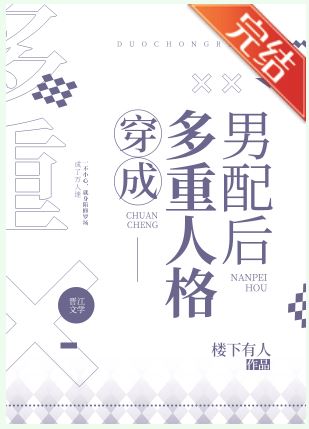
After Dressing as a Male Lead with Multiple Personalities
+Add to Custom List
Sort
Add review
... Read More
The pacing in these chapters is masterful. Let me break down why this works so well structurally: Chapter opens with Yu Le's cold assessment of his situation—counting money, realizing he's broke, deciding what to keep and what to toss. Very clinical, very detached. Then Zhu Luo appears. The tension builds slowly—first through internal monologue about recent events, then the actual encounter where they can't meet each other's eyes, then the trash throwing scene where we see Zhu Luo watching from the shadows. The reveal of what's in the bag comes right when we need it most. Not too early, not too late. And then—just as Zhu Luo is having his full emotional crisis—the kid and grandmother show up like a pressure valve releasing all that built-up tension into comedy. 'I want to eat McDonald's today instead!' And then Zhu Luo hurries away 'as if he was running for his life.' The cut to the orchestra rehearsal is a perfect structural pivot. We go from the intimate, dark, shadowy world of the trash can to the bright, crowded, performative world of the concert hall. Two different rhythms, two different kinds of performance. The chapter structure itself mirrors the theme: everyone is playing a role, everyone is hiding something, and the audience doesn't always know they're watching. This is how you control reader engagement—not through action alone, but through emotional pacing.
... Read More
"You despicable outsider, you stole my body! Get out of here..." I need to talk about this line first because it's the vice-captain's opening salvo and it contains everything. Four words, then a longer sentence that sounds like a child's accusation but lands with the weight of actual betrayal. The ellipsis at the end is doing SO much work—it's not just trailing off, it's the sound of someone who's said this a hundred times and still hasn't gotten the reaction they want. But let's also give credit where it's due: Yu Youzhi's dialogue in the现实 sections is quietly phenomenal. Every line he speaks to Yu Le sounds like affection, but rereading it, there's this undercurrent of something almost predatory. "I told you that I'll stay by your side these days"—that's not a request, that's a statement of fact wrapped in warm words. And then the line that got me: "You are so perverted—but I like it." Said while Yu Le is literally blackout-drunk from his own medication. The casual cruelty of it, delivered with that same gentle tone... Qi Dongyi's dialogue is the perfect counterweight though. "A handsome guy's friend is indeed a handsome guy." Simple, warm, completely oblivious. He's the only character who speaks without any hidden layer, and his presence makes everything else feel even more weighted. The vice-captain's voice is distinctly different from Yu Le's narrative voice too. Where Yu Le's internal monologue is measured, observant, almost clinical, the vice-captain's speech is raw and immediate—short sentences, sharp accusations, sneers that read as action tags. You can literally hear the difference when they speak.
... Read More
The detail work in this chapter is actually really impressive, especially when it comes to spaces. Let me start with Yu Le's rental flat—"most of the familiar items having been rearranged already. Compared with before, it was much simpler now…and a lot less personable. Looking around, one was hardly able to glean anything about the inhabitant with a glance." This is such a quiet but devastating description. It's not just that the room changed; it's that the new version of the room has erased the traces of who lived there before. The original owner's personality literally got cleaned out, replaced by something impersonal and generic. Then contrast that with the concert venue scene where Yu Le shows up in a loose t-shirt and jeans, and the ticket inspector gives him a long look. "But now, it was too late to go back and change clothes, so he could only bite the bullet and keep his head down." This moment captures such a specific feeling of vulnerability—you know you look out of place, you can't fix it, and you have to just walk into a room full of people who will judge you anyway. The author doesn't overdescribe the venue, which is smart. We only need to feel Yu Le's discomfort, not get a tour of the concert hall. The online world of Jiali is another fascinating space. A niche chatting software that becomes the battlefield where the sub personality operates. The interface itself is barely described, but the names alone tell the story: "rich and young" talking to "vice-captain," then "vice-president is dead." These nicknames create an entire parallel world that exists alongside the physical one, and the fact that Yu Le navigates both simultaneously adds this strange digital layer to the story's atmosphere.
... Read More
Okay, I need a moment. Just a moment. Because the entire conversation between Yu Le and Zhu Luo in that tea shop is basically one long exposition dump and I am HERE FOR IT. Let me trace this out because it's actually really elegant in its setup. You have Zhu Luo coming in with a confession letter he found in a music box. The letter says A Yu was going to disappear to find treatment for his multiple personalities. But then Yu Le drops this bombshell: there was no treatment. There was a small white pill. A pill designed to weaken the violent second personality... but it weakened the whole system. A Yu chose to die alongside the other personalities rather than let them hurt Zhu Luo. This is such a clean cause-and-effect chain. The letter creates the expectation of hope—treatment exists, A Yu is just hiding. Then the truth is worse: A Yu actively eliminated himself to protect someone else. The reveal about the three personalities is staggered too. Zhu Luo only knows about the main personality and the violent one; the little girl Yu Beiman is mentioned almost in passing. That subtle detail makes the world feel bigger, like there are layers we're only just beginning to peel. And then Yu Le's own backstory drops in—car accident, death, resurrection into another body. The plot keeps giving us new information like it can't stop. Each answer produces two more questions. Who is watching from across the shop? Why would the original Yu Le have kept a music box with a hidden letter? What happens when Zhu Luo processes all of this? The story also sets up this delicious dramatic irony: Yu Le is conveying A Yu's feelings to Zhu Luo, but Yu Le himself doesn't fully understand those feelings yet. He says the emotions of the original owner still torment him. So there's a layer of emotional distance that makes every confession feel indirect, filtered through someone who is still learning to be this person. That's messy and human and I love it.
... Read More
'You look so sad. Is it really such a bad thing to meet me? I've been looking forward to seeing you every day.' That line hit me like a truck. The way he says it — soft, sincere-sounding, completely manipulative — it's perfect characterization. And then immediately after he switches to public mode and kisses the back of Yu Le's hand in front of an entire charity dinner crowd like absolutely nothing. 'Of course, if my fan orders me, I would be happy to oblige with any of your wishes.' The sheer gaslighting energy. I love it. I hate it. I need more. Huo Annong's dialogue is on another level though — 'don't let this ignorant little slut appear in front of me again—regardless of time or occasion.' BRO. That's not even a threat, that's a statement of fact from his mouth. The way the author gives each character such distinct voices is what makes this readable. Yu Youzhi's playful cruelty vs Huo Annong's cold contempt — you could tell them apart blindfolded.
... Read More
Okay so the pacing in these chapters is honestly dangerous. You start with this heavy emotional scene—Yu Le's dinner with Zhu Luo, all this unresolved tension and secret-keeping—and then BAM you cut to the next day with comic relief in the form of Lele showing up at his door. It's a perfect tonal pivot. If the author had kept going heavy for five more chapters I would have needed a break, but instead we get this chaotic energy that keeps things moving. And then right when you think it's all just humor, Lele drops this line about his father and mother not wanting him, and suddenly your chest tightens again. The author is playing with us and I am HERE for it. But the real masterclass in pacing is the ending. Lele sends that message. Yu Le tries to stop him. Zhu Luo is TYPING. And then the chapter just... stops. No resolution. No answer. Just a postcard and a ginkgo tree and me screaming into a pillow. This is how you end a chapter. This is how you make someone immediately click on the next one. I specifically told myself I'd read one chapter and ended up devours four straight because the rhythm never lets up. Is that allowed? Can an author hold me hostage like this?
... Read More
The very first line of this passage — 'ginkgo leaves divided the sunlight into fragments, and a love poem was written across it' — and I'm still thinking about what that does for the whole piece. A love poem written across fragmented sunlight? That's the author setting the emotional frequency for everything that follows. This story isn't about grand romances; it's about how love exists in broken, filtered, scattered pieces. The postcard photo Yu Le took casually and accidentally included in the mail to Zhu Luo — that's him sending warmth into the world without even realizing it. He doesn't know he's a good person until someone shows him the evidence. And then there's the recurring imagery of small beds and shared spaces. Lele immediately flags that 'your bed is too small' and suggests they squeeze together, and Yu Le offering the sofa instead. These beds represent intimacy, proximity, the vulnerability of letting someone sleep in your personal space. The vegetable soup is another piece of symbolism that won't leave my head — it's nourishment that neither person wants, endured because it's necessary, and shared because that's what people do even when it's terrible. And Lele's father? His absence and betrayal is the dark mirror to everything Yu Le becomes. The father represents emotional abandonment while Yu Le represents reluctant acceptance. The grandmother's plea — 'he doesn't want to listen to what I have to say anymore' — hints at another theme: how adults fail children not through malice but through exhaustion and distraction. The real story beneath all this is about who chooses to stay when leaving would be easier.
... Read More
Zhu Luo is one of those characters who seems so put-together on the outside—concert performer, composed, articulate—but underneath he's equally tangled up. Watch how he shifts through this entire conversation: starting angry and demanding answers, then self-deprecating and sad, then almost pleading at the end. 'I'm not ready to let you leave me behind.' That's not the line of someone who's emotionally secure. That's someone who's been losing something for ten years without even knowing what it was. And Yu Le! He's this incredible mix of sarcastic inner monologue and genuine emotional vulnerability. The narrator voice ('CPU loading... CPU exploded...') is basically his defense mechanism—humor as armor. But when he finally drops it, when he starts speaking from the original owner's memories, he becomes almost reverent. 'The memory from ten years ago was very clear, a shining ray of light that had been preserved.' Their dynamic is fascinating because it's inverted from the usual. Zhu Luo was the popular, talented one who never noticed. Yu Le was the quiet friend who noticed everything. And now that Yu Le's confessing, Zhu Luo is the one falling apart while Yu Le is the one trying to hold it together. The power has shifted and both of them are handling it poorly in the most human way possible.
... Read More
Okay so first of all I NEED to talk about how Yu Le's dynamic with Lele unfolds across these chapters because it genuinely made me feel things I didn't expect. At the start, Lele is this bratty, confident little shit who waltzes in demanding ice cream and overnight stays, and Yu Le's whole vibe is like 'I'm not your dad, get out.' But then the grandmother's message hits him, he sees those roses and smiley faces and suddenly he's stuck in this position of caretaker whether he likes it or not. And the moment that absolutely wrecked me was when Lele lowered his head and said 'I don't fit into either of those categories' — like, he's so clearly carrying this deep wound about being unwanted by both parents and he weaponizes it by staying with Yu Le because at least Yu Le is kind to him. The power dynamic shifts so beautifully here. At first Lele thinks he's in control, naming demands like a tiny dictator, but then we see he's actually the one running toward someone who might actually care. And Yu Le — oh my god, Yu Le rubbing the kid's hair and just saying 'you can stay, just for tonight' — that tiny让步 completely betrayed everything he'd said earlier. He pretends to be tough but he can't resist this kid. Their relationship feels earned and real, not manufactured for drama. I loved the ending where Lele calls him the most handsome person in the world and Yu Le just... slaps him. That slap? Pure affection disguised as annoyance. I'm not even mad about it.
... Read More
'A gap had been created between the two of them overnight.' That line just wrecked me honestly. Because it's not romantic love or anything—it's deeper than that. It's the specific grief of losing someone who's still physically there. The whole trash scene is basically a proxy for every conversation they haven't had. Zhu Luo doesn't know HOW to ask about what's happening, so he asks through objects instead. The photo album. The notebooks. The music box. These are love letters written in physical form, and throwing them away is the only language Yu Le has left to use right now. What gets me is the grandmother scene right after. The tonal whiplash is intentional—I'm sitting there emotionally destabilized from Zhu Luo's anguish and then suddenly there's a chubby kid saying he wants to pick up trash because Zhu Luo is handsome. The kid says 'But he looks so good!' and the grandmother's like 'What's the use of being good-looking, he still has to pick up trash!' And I just—how am I supposed to process my feelings at this exact moment? The text captures this specific frequency of male friendship that isn't romantic but isn't platonic either. It's the space where you collect someone's old notebooks and they don't know. Where you notice when their eyes change. Where you'd rather be anywhere than face what's between you.
... Read More
I swear I laughed out loud when Tao Feng smashed his wine glass. The writing literally says 'the scarlet liquid flowed on the ground like blood, reflecting his crazed eyes' — that's not just a tantrum, that's a whole mood shift right there. The author does something really clever here: we spend the entire chapter watching Tao Feng feel like he's won, building him up as this puppet master pulling strings with water armies and fan wars, and then BAM. Green Tea Machine drops a four-hundred-word takedown so calm it's terrifying, and Tao Feng's entire worldview cracks. He can't process being ignored. He can't process being talked down to by a 'layman.' And that's when the glass shatters. The plot twist I didn't see coming though was Song Fangba's reveal about Manman. Up until that moment I thought [Fully Automatic Green Tea Machine] was just some random fan account, and then we get hit with Yu Beiman? The same girl Yu Youzhi noticed in the bunny tutu? That's a full-on identity reveal that connects three characters in one sentence. I'm sitting here like — what is Yu Youzhi going to do when he finds out his own brother is the one dismantling his fanbase? And what is Mu Yuxing's role in all of this now? The narrative layers are stacking so fast.
... Read More
Let me just say it straight: the pacing in this section is absolutely lethal. The author spends these entire chapters—157 through 160—building this slow, suffocating tension with Yu Youzhi hovering around Yu Le like a ghost, and you're thinking, okay, romantic subplot, celebrity follow-around, get to it. Then BAM. One paragraph into the dream sequence and everything changes. The transition from the convenience store to the dream space is handled so cleanly too. No dramatic shift, no chapter break announcing "now we enter the subconscious." Yu Le takes the pills, feels dizzy, and the next thing you know he's standing in that room watching the vice-captain look at him. It's seamless, and that's what makes it so jarring. The reader doesn't even have time to brace. What's brilliant is how the author uses the vice-captain's dialogue as a series of mini-reveals spaced out like detonations. First: "you can call me vice-captain." Okay, intriguing. Then: "those two idiots disappeared long ago." Wait, what? Then: "I will never attack you in here again—but I have a condition." Oh no, what condition? Each line lands like a hammer, and Yu Le (and the reader) has to sit with it before the next one comes. The chapter ends on a note that's equal parts revelation and cliffhanger—the vice-captain beginning to explain what happened, trailing off mid-sentence. It's the kind of ending that makes you immediately open the next chapter while also needing to lie down for five minutes.

Leave a comment

You must be logged in to leave comments. or
