Summary

... Read More

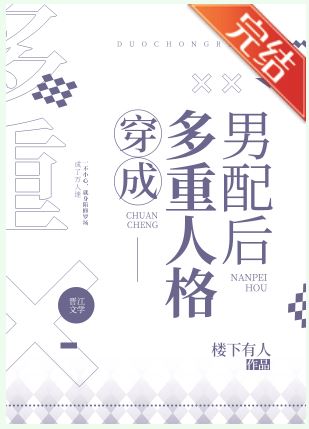
Yu Le is an ordinary man who reads a novel called "The Genius Wife of the Overlord" with a supporting character named Yu Le. The story within the novel features a young man with multiple personalities, including a cruel secondary self and a lively third personality who is a girl. The original host falls in love with Zhu Luo, a genius violinist, but is tormented by his alternate personalities and the loss of his sister. Despairing, he takes medicine to erase his other selves, only to die in a car accident caused by his cousin reading the novel aloud. Yu Le wakes up in the body of the novel's supporting character, now the sole occupant of a mind that previously held three distinct identities. He inherits the original owner's memories and deep, unrequited love for Zhu Luo, along with a fragile financial situation and a messy apartment filled with mementos.

Confronted with his new reality, Yu Le decides he must survive in this fictional world without repeating the original owner's tragic fate. His primary goal is to ensure that the novel's main couple, Zhu Luo and the CEO Huo Annong, meet and fall in love, thereby completing the plot and allowing him to live freely. However, the residual emotional attachment in the body makes this difficult. When Zhu Luo visits Yu Le, he is confused and hurt by the sudden distance and rejection. Yu Le attempts to maintain boundaries but finds himself unable to completely ignore Zhu Luo's presence. The situation complicates further when Yu Le discovers that the novel's antagonist, Yu Youzhi, is a manipulative celebrity who will cause trouble for the main couple later in the story.

Yu Le resolves to intervene in the plot to prevent future disasters. He logs into an online chat app where the original owner's secondary personality had previously communicated with Huo Annong under a false identity. Yu Le assumes this role, intending to steer Huo Annong toward Zhu Luo. He attends Zhu Luo's charity concert, where he sits next to Huo Annong. The meeting is disastrous; Huo Annong misinterprets Yu Le's presence as an attempt to solicit him, while Zhu Luo is visibly angry and confused by Yu Le's behavior and secrecy. After the concert, Yu Le tries to repair the damage by secretly sending flowers to Zhu Luo under Huo Annong's initials, hoping to spark romance. Zhu Luo, however, throws the flowers away, believing them to be from a stalker.

The plot thickens when Yu Le befriends a young fan of Yu Youzhi named An An. To attend a fan meeting and gather information on the enemy, Yu Le cross-dresses as a female fan, utilizing the wardrobe of the third personality. He also encounters a persistent neighborhood boy named Little Fatty, who discovers Yu Le's flower deliveries and blackmails him into letting the child stay over. Meanwhile, Zhu Luo finds one of the discarded postcards and realizes the sender is actually Yu Le, not Huo Annong. This revelation confuses Zhu Luo, who begins to question his feelings and the nature of his friendship with Yu Le. He invites Yu Le to dinner, creating tension as Yu Le struggles to balance his mission to push the protagonists together with his own growing complications. Yu Le continues to navigate this precarious path, managing his new identity, the demands of his neighbors, and the intricate web of relationships in the novel world.

As Yu Le delves deeper into the plot, he faces challenges from both the rigid storyline and his own emotional entanglement. The presence of the sub-personalities lingers in the background, threatening to resurface. His efforts to manipulate events often backfire, causing more confusion for Zhu Luo and anger from Huo Annong. Despite these obstacles, Yu Le remains determined to alter the course of the story. He learns to use the resources left by the original owner, such as his photography skills and the hidden internet persona, to influence key characters. The dynamic between Yu Le and Zhu Luo shifts from distant acquaintances to a complex relationship filled with misunderstandings and hidden affections. Yu Le must decide how much he is willing to sacrifice to change his fate, all while uncovering the secrets of the novel's world and the true nature of his own existence within it.

Latest Release
DateGroupRelease
2026-09-26knoxt c41
2026-09-26knoxt c40
2026-09-26knoxt c39
2026-09-26knoxt c38
2026-09-26knoxt c37
2026-09-26knoxt c36
2026-09-26knoxt c35
2026-09-26knoxt c34
2026-09-26knoxt c33
2026-09-26knoxt c32
2026-09-26knoxt c31
2026-09-26knoxt c30

Community Reviews

Rating(4.1 / 5.0, 178votes)
5 stars
63(35%)
4 stars
66(37%)
3 stars
49(28%)
2 stars
0(0%)
1 stars
0(0%)

Popular reviews

... Read More
I have to talk about this transformation of Zhu Luo. In the novel, he was supposed to be this cold, aloof genius violinist standing tall on stage like a flower no one could reach. But here? Oh my god. He goes bright red over the simplest things, gets flustered when Yu Le teases him, and then—this is the killer moment—he tries to cover Yu Le's mouth when he won't stop laughing. And they end up tangled together, faces three centimeters apart, breathing the same air. Mark says it perfectly: “You two have such a good relationship, not many people can act so freely towards each other!” But Zhu Luo barely registers it. He's too busy processing how close he is to Yu Le right now. The scene where he pushes Yu Le away to “cool down the blood rushing to his head” is both hilarious and devastating. He doesn't even understand what he's feeling in that moment. And Yu Le's internal response? “Sure enough, Zhu Luo was still resisting him.” This man. He reads every single one of Zhu Luo's awkward, flustered, obviously-into-him moves as rejection. The tragedy is written into his bones. He genuinely believes that in this world, he'll never be able to be friends with Zhu Luo. He gives up before Zhu Luo has even started. The person Yu Le calls “A Yu” and Zhu Luo calls “A Yu” back with that desperate intimacy—it breaks me every time. These two are orbiting each other so desperately and missing by miles.
... Read More
There are so many layers to unpack here, and I want to focus on the theme of disappearance and sacrifice. The original owner didn't just want to die—he wanted to disappear. That's a crucial distinction. He wasn't seeking punishment; he was seeking relief, a way to protect the people he loved from the damage his other personalities would cause. The pills, the rumors about studying abroad, the funeral arrangements—he was systematically erasing himself to preserve others. And then Manman, the purest personality, literally disappearing by being devoured. Her sacrifice isn't tragic in a melodramatic way; it's quiet and voluntary. She says 'I still hope you can be free,' and then she gives herself up. That word 'free' recurs like a mantra. Freedom as absence, freedom as non-existence. It's a haunting idea. The vice-captain's love for Zhu Luo is another layer—love so twisted it becomes destructive, desire so intense it seeks to possess rather than cherish. But here's the thing: the vice-captain and the original owner both wanted Zhu Luo. The hatred between them isn't just about power; it's about two versions of love colliding. And Yu Le's arrival disrupts all of that. He watches the whole thing like it's a 'silent black and white movie,' which feels like commentary on how trauma distances us. We survive by becoming observers. The recurring motif of dreams within dreams, memories that are scrambled and incomplete—it all points to a story about how identity fractures under pressure, and how sometimes the only way to heal is to let parts of yourself vanish. What do you think about Manman's choice? Did she have any other option, or was this always inevitable?
... Read More
Can we just talk about Yu Youzhi for a second because THIS MAN. "He likes me, he likes me not, he likes me, he likes me not..." picking grass like some kind of anime boy waiting outside someone's house. And then the SECOND Yu Le steps out, he's suddenly in Yu Le's personal space asking eighteen questions at once. The man has zero concept of personal boundaries and yet - and this is what gets me - he was genuinely worried enough to rush over in disheveled clothes when Yu Le called him in a crisis. So is he a genuine friend or just an annoying idiot who doesn't know when to leave people alone? I think it's both, and that's what makes him such a compelling character dynamic with Yu Le. Look at how Yu Le responds to him. At first, pure irritation. Rolling his eyes, wanting to hit him, reciting calming mantras in his head just to stay patient. But then - and this is the part that actually moved me - Yu Le turns back around anyway. He could've walked away. He was angry. But he needed information about the doctor, so he came back. "Actually, I have been very confused with the chaotic memory... I want to find him." That's not a friendly gesture. That's a transactional one. But it reveals something important: Yu Le is pragmatic enough to swallow his pride when he needs help, and he's honest enough to admit confusion. Most people would pretend they had it all figured out. And Yu Youzhi's response? "My requirements aren't high, just call me 'Brother' like you do on the internet." Classic deflection. Instead of pressing about why Yu Le really needs to find this doctor, he makes a joke about it. But the underlying message is there - I'm helping you, and I want acknowledgment for it. There's a vulnerability to that request that Yu Le sees right through but plays along with anyway. Then there's the Zhu Luo situation. "I'm just his fan...No, maybe I'm not even that." This line from Yu Le was painful because it's so honest. He borrowed someone else's identity to get close to Yu Youzhi, which means his entire connection to this world started with deception. And now he's trying to distance himself from Zhu Luo, telling him the truth about A Yu's belongings, about the other personality. But Zhu Luo still sees through him - "Yu Le, can I ask you one last question? What is the relationship between you two?" That question hangs in the air like smoke. I also found myself thinking about the original owner. Yu Le says he feels sorry for Zhu Luo but clarifies that the emotion belongs to the original owner, not to him. Nine times out of ten. That's a fascinating distinction - Yu Le is aware enough to separate his own feelings from the residual emotions of the body he occupies. But how long can he maintain that separation? Emotions are sticky things, even borrowed ones. The whole dynamic between these characters feels like a slow-motion collision. Everyone's trying to figure out who's aligned with whom, and the alliances keep shifting.
... Read More
This entire pivotal scene takes place in a small Cantonese breakfast tea shop, and I need to talk about how effectively the author uses this mundane setting to ground an extraordinary revelation. We open with sensory details: Yu Le sneezing into a mask, pulling it down and back up in one practiced movement. The other patrons don't care—they're eating dim sum, checking their phones, continuing their mornings. The outside world keeps turning while inside this booth, reality is being rewritten. Then there's the watcher. A man in sunglasses and a hat, sitting one partition away, surrounded by untouched sweet snacks. His phone screen reflects the grey pupils of whoever is watching—possibly Zhu Luo, possibly someone else entirely. The partition creates a visual barrier that the author uses so well. Both parties are in the same space, close enough to hear, separated enough to remain invisible. This is cinematic framing at its finest. The music box is a recurring object that anchors the scene in tangible reality. It started as a physical object containing a letter, but it becomes metaphorical—the mechanism that wound open A Yu's secret life and played it like a recording for Zhu Luo to hear. The ginkgo tree mentioned at the beginning, the royal blue suit, the trash bin where the discarded tissue lands—all of these small objects give the scene weight. The author also doesn't over-describe. The tea shop is never named, never given an address. It's just a place with Cantonese breakfast, masks, tissues, and strangers who become witnesses. This ambiguity makes it feel universal, like any number of small shops in any city could be the setting for this kind of revelation. The world feels lived-in because the author trusts us to fill in the blanks with our own expectations of what a morning tea shop looks like.
... Read More
Let me just sit with this for a second. Yu Youzhi and Huo Annong — childhood friends turned mortal enemies, same social circle, superficial peace maintained through mutual contempt — and Yu Le ends up as the object over which this entire cold war is fought. But here's the thing that keeps me up at night: is Yu Youzhi actually using Yu Le, or is he using the USE OF Yu Le as cover for something real? The text gives us moments that feel genuinely tender ('even if you are wearing a suit chosen by someone else, today you still look adorable') and then immediately undercuts them with public manipulation. And Huo Annong — why does he care enough to show up at a charity dinner and stare? Why does he remember Yu Le from a concert? The original novel apparently establishes that both men understand each other's flawed nature intimately, which means whatever's happening with Yu Le is layered with history none of us fully see yet. My theory: Yu Le thinks he's the protagonist of his own story but he's actually the battlefield.
... Read More
Let me just appreciate how natural this dialogue flows while carrying absolutely massive emotional weight. These two aren't just talking—they're doing this whole dance where what they're not saying is louder than what they are. Zhu Luo: 'A Yu, do you…like me?' — that ellipsis does so much work. He's terrified of the answer and knows it. Yu Le: 'Cough cough cough cough cough cough!' — the physical reaction says everything his words can't. You can hear the panic in those repeated coughs. And the best exchange has to be: 'Why did you throw them all away?' 'I'm sorry...' Two lines that contain an entire relationship's worth of miscommunication. Zhu Luo heard 'trash' and Yu Le meant 'I couldn't keep pretending.' Classic. Painfully classic. The narrator also has a distinct voice—that dry, almost comedic commentary ('The CPU is loading...') that contrasts beautifully with the heavy emotional moments. It gives the whole piece a tone that's equal parts heartfelt and slightly absurd, which feels honest to how people actually process trauma: sometimes you laugh, sometimes you cry, sometimes you do both in the same breath.
See all reviews

Custom lists

See all custom Lists