After Dressing as a Male Lead with Multiple Personalities - Reviews

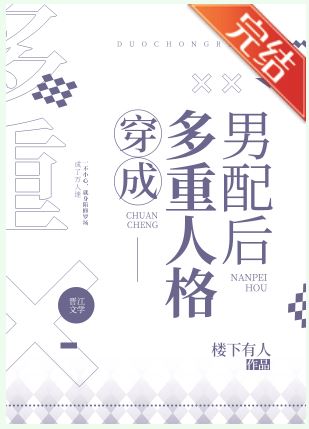
After Dressing as a Male Lead with Multiple Personalities
+Add to Custom List
Sort
Add review
... Read More
This entire chapter is about performance and the exhaustion of maintaining one. Let me break it down. Yu Youzhi literally came wearing sunglasses and a hat, changed his contact lenses, practiced his 'I'm not a famous person' face — all before coming to eat dinner with someone. He tells Yu Le straight up: 'I will never expose my true self in front of my fans, this is the bare minimum of professional ethics.' But then he proceeds to do the exact opposite with Yu Le, peeling back layers of HIS identity as if that's the real version. The restaurant itself is a symbol — it's 'secret,' opened during his high school years, a place he built with someone he trusts. He's sharing something deeply personal with a 'nominal fan.' That's not casual; that's significant. And the vegetables. The REPEATING motif of Yu Le picking out vegetables — it's not just a quirk, it's the physical manifestation of his entire strategy in life. He's constantly separating what he likes from what he doesn't, what's genuine from what's performed, what's safe from what's dangerous. His chopsticks move 'as stable as a clock' because his whole existence is calculated avoidance. Zhu Luo knows he hates vegetables. Of course Zhu Luo knows. Someone who truly cares about you notices these things. Yu Le's fear of Zhu Luo isn't just about some past conflict — it's about being known. Being seen so completely that there's nowhere left to hide. And Yu Youzhi, the professional performer, is the one who's actually capable of seeing through everyone else's performances. Irony layered like a good braised pork belly.
... Read More
"You are so handsome, kind, and gentle. The person you like must be a very happy person indeed." Hearing this sentence read aloud by my cousin in the car, I felt my chest tighten for some reason I couldn't explain. Then later, when the original owner repeats it back to himself — smiling sadly, saying "You are wrong, he is not happy at all" — and that hit me like a truck. This is a whole novel built on the foundation of unrequited, self-annihilating love, and I am HERE for it. Let me tell you about the cousin though — bless her heart. She's sobbing her eyes out over a fictional character like he's her long-lost brother, screaming about how Yu Le "silently guarded his childhood sweetheart for more than two years" and even "took the initiative to block a knife meant for Huo Annong." BRO. A KNIFE. To someone he doesn't even love romantically. That's not devotion, that's religious-level sacrifice. And then the novel reveals the original owner was planning to take medicine to become a FOOL just to erase all his sub-personalities, which were apparently the "causes of all the tragedies." He was going to lobotomize himself to protect the person he loves. I cannot. I absolutely cannot. "He had dreamed about the subsequent development of the novel" — the original owner literally experienced the entire tragic future in a nightmare and chose self-erasure over letting it happen. The grief in that is so raw. And then Yu Le, the actual real-life Yu Le, wakes up in this body and his FIRST instinct isn't panic or confusion — it's calling the original owner "a fool." Not angry. Not resentful. Just... fond sadness. Like he understands exactly what that person was going through.
... Read More
Okay I need to just—let me catch my breath first because the Yu Youzhi scenes are literally destroying me and I don't know how to process this. So Yu Le goes and tells Zhu Luo everything, right? And Zhu Luo's reaction? He just... accepts it. He says yes when Yu Le asks if he should stop disturbing him. Not a single argument, not even a "I don't believe you." Just this quiet, devastating acceptance. And then Yu Le walks away and feels a pang of sadness. OF COURSE he does. The reader feels it so hard. But then—THEN—Yu Youzhi appears like some chaotic green-tea gremlin and asks if he's a monster. And Yu Le's response is basically "it's everyone else's fault" which is both hilarious and heartbreaking because we know this person came back from death and has no idea how to exist anymore. But the fever scene. Oh god. The fever scene. Yu Youzhi is basically losing his mind over Yu Le's temperature, carrying him around like a sack of potatoes, muttering about exorcisms, and then there's that moment—when Yu Le's unconscious and Yu Youzhi notices the mole at the corner of his mouth. That was it. That one detail wrecked me. The way Yu Youzhi touches it, the internal monologue about wanting to twist his fingers between Yu Le's lips, the reference to Song Fangba asking about sleeping with Meimei and how now he feels like nothing could be better... this person is clearly into Yu Le in a way he hasn't fully admitted yet. "After burning yourself up like this, you're still so clingy, you really are a monster, right?" he murmurs. That line though. That line carries so much weight. It's gentle. It's affectionate disguised as an insult. And then he gently pats Yu Le's face and walks away. Bro is fighting himself and I am HERE for it. Meanwhile Zhu Luo is sitting alone in his apartment with scattered letters and photos wondering why Yu Le told him this at all. The tragedy is layered. One person told him the truth and walked away. The other person showed up with breakfast and documents and ended up taking care of him instead. Who needs romance when you have this level of chaotic emotional distribution? Also can we talk about the Gali app messages? "Azhu, I have not disappeared. Be careful of that person; he is lying." WHO IS LYING?? I'm screaming. The setup is immaculate.
... Read More
I said it before and I'll say it again—the author does NOT play around with pacing. We open with an interview scene that's deliberately low-stakes, "purely fan service" according to the text, and then BOOM, one line from Yu Youzhi shatters Yu Le's entire composure. The bottle drop, the spill, the awkward cleanup—all of this happens in a few paragraphs. Then we get a quick exchange with Qi Dongyi that recontextualizes everything, and suddenly the world feels smaller and more coincidental. "It's such a small world. Not only is it small, but it is full of coincidences." Then immediately after Yu Le leaves the store, his phone vibrates. Zhu Luo. The message comes in right when the reader is still processing the interview chaos, which is genius—the author doesn't give us a breather. We're immediately pulled into the next scene, the next wave of tension. The dinner scene itself moves in a slow, deliberate rhythm, almost glacial compared to the convenience store burst, which mirrors Yu Le's internal state. He's walking on eggshells, every moment stretched thin. And it ends on the most suspenseful note possible—Zhu Luo thinking, about to speak, and then... nothing. The chapter just stops. I am not ready for what happens next.
... Read More
I need to address the grandmother-grandson dialogue because it is genuinely one of the funniest things in this entire novel and it serves a purpose beyond laughs. The kid: 'But he looks so good!' Grandma: 'What's the use of being good-looking, he still has to pick up trash!' Kid: 'Grandma, I have decided that I will pick up trash when I grow up! As long as I pick up trash, I will grow up to be as good-looking as him!' This exchange does THREE things simultaneously. First, it gives us comic relief at exactly the moment we need it. Second, it reframes Zhu Luo's entire existence through an innocent child's eyes—he's seen as someone worth emulating despite (or because of?) his 'lowly' status. Third, and this is the genius part, it mirrors the earlier scene where orchestra staff are praising Zhu Luo's 'superb skills' and calling him the 'prince of the violin.' Both scenes are about external judgment of worth, but one is sincere flattery and one is accidental truth from a nine-year-old who just wants McDonald's. The staff dialogue around Zhu Luo at rehearsal is also worth noting—'Mr. Zhu is indeed a talented violinist,' 'you're a very promising young man,' 'your name has begun to spread around.' This is the kind of hollow, ritualized praise that characters hear so often it becomes background noise. Zhu Luo just smiles. He's heard it many times. The narrative voice handles this perfectly by making the praise feel repetitive and slightly suffocating. And Xiao He—the young helper who notices something is wrong with him—her dialogue is the only honest moment in the whole rehearsal scene. 'You were as wonderful as always, but when you got off the stage, you felt a little…is something on your mind?' She sees through the performance. Everyone else just sees the prince.
... Read More
Okay so the plot in these chapters is genuinely dense, like a puzzle box made of glass and knives. You have Yu Le entering this dream state and basically uncovering the entire backstory of the original owner in real time. It's a reveal-heavy sequence but it doesn't feel forced because every piece of information snaps into place. The three-personality dynamic—Yu Le, the vice-captain, and Manman—isn't just a gimmick, it's the structural backbone of the whole tragedy. The vice-captain isn't just some cartoon villain; he's driven by a distorted, unrequited love for Zhu Luo, which makes him almost sympathetic in a horrifying way. And Manman, the purest one, sacrificing herself by letting herself be devoured so the original owner could survive—that hit hard. The narrative arc from the vice-captain's paranoid descent, to the original owner's attempt at disappearing via those dangerous pills, to Manman's death, to Yu Le stepping in and finishing it all... it's a complete circle. The dream world collapsing right after the vice-captain dies is a sharp turn. It's like the story itself exhaled. And then we cut to Yu Le waking up next to Yu Youzhi, dry throat and all. The pacing here is relentless in the dream but tender and quiet in the waking world. That contrast is what makes it work. One question though: does Yu Le remember everything now, or is he still fragmented? The text says 'his memories had scrambled,' which feels intentional, like the author wants us to stay a little unsure.
... Read More
The imagery in these chapters is something else. I need to talk about the visual contrast because it's doing a lot of heavy lifting. You've got the bloody sunset illuminating Yu Le's face as he raises that chair leg—that's a scene that feels painted, not written. It's violent, yes, but there's a strange beauty in how the author frames it. Then the dream world collapses into a black vortex. That transition from a gritty, almost noir-ish memory sequence to something abstract and surreal is jarring in the best way. It makes the dreamscape feel alive, unstable, like it's breathing and dying. And then we're suddenly in this quiet room with Yu Youzhi, grey eyes catching the dim light from the window. The shift from that dark, violent subconscious space to a mundane, gentle waking moment is so effective. It grounds the whole experience. The underground doctor scene also stands out—the clinical, cold atmosphere, the unlabeled white pills, the critical stare. It felt like a medical thriller insert in the middle of this psychological drama. I also want to note the sensory details: the earth-shattering vibration of the impact, the numb scalp, the dry throat, the soft cough. These small physical sensations make the dream world feel uncomfortably real. The author doesn't just describe places; they describe how it feels to inhabit them. That's what makes the worldbuilding work—it's embodied.
... Read More
Let's talk about how the author uses different modes of communication to make this hit differently, because the shift from the letter to the text messages is masterful. The letter itself is written in this voice — soft, hesitant, almost apologetic in a way that makes you want to protect Yu Le even as the contents destabilize everything. "Azhu, long time no see." That opening is so casual and it completely disarms you before the bomb drops. And then: "you are really too slow about emotional matters" — okay, NOW we get a flash of warmth and humor from Yu Le, a tiny crack in the solemnity. It feels so human. So真实. (Sorry, English only — so REAL.) But then the text exchange? The tone shifts instantly and it's brilliant. Zhu Luo: "I just found a letter in the music box?" Yu: "?" That single question mark carries so much — confusion, dread, the dawning horror. And then Zhu Luo: "I can't believe some of the things written in the letter; I want to hear you tell me personally." Personal. He wants to hear it FROM HIM, not from a piece of paper. That line tells us everything about Zhu Luo's character — he's not ready to process this alone. He needs the voice, the presence, the eye contact. Yu Le's response is even more interesting: "It's too late today; I've already gone to bed." He's stalling. Of course he is. And that "Zhu Luo, good night." at the end — that period. That full stop. It feels like a door closing. He can't face this tonight. Neither of them can. And Zhu Luo's silence after that? The author writes: "The chat interface was motionless, filled with the same dead silence as the night outside his window." That parallel — between the dead text screen and the dead outdoor world — ties the dialogue scene back to the atmosphere so elegantly. The author's voice throughout this passage never feels artificial. Every character speaks in a way that feels lived-in, whether it's Zhu Luo's fragmented inner monologue or Yu Le's carefully measured letter.
... Read More
The pacing in this section is dangerously good. It starts SO relaxed — you've got neon lights, wooden fences, warm yellow glow, two guys eating farm-style stir fry like it's just another Tuesday. The author lets us breathe here. Lets us enjoy the food descriptions even. Yu Le choking down braised pork until he regrets swallowing his tongue — that's comedy, that's comfort food narrative energy. And then, without any warning bells, Yu Youzhi notices the vegetable-picking pattern and everything shifts. The tempo changes. The camera zooms in. What was a dinner date becomes a psychological examination. The transition is so seamless I almost missed it on first read. Then there's the Zhu Luo pivot — mid-conversation, Yu Youzhi casually drops his friend's name like it's a dagger wrapped in cotton. And Yu Le's reaction? 'I'm full.' That's it. That's the response. He sets down his chopsticks and walks away. The chapter ends on that note of retreat, which is perfect because it mirrors exactly what Yu Le does emotionally: he eats, he deflects, he leaves before things get too real. The author doesn't overstay any moment. The food scene doesn't drag. The flirting doesn't linger past its usefulness. It hits and moves on. Almost too fast, which is honestly the point — Yu Le can't stay in any moment longer than it takes to evaluate whether it's safe.
... Read More
The convenience store night shift scene is absolutely perfect as a storytelling device. On one level, it's a mundane workplace setting — sausages sizzling, cuttlefish balls being restocked, the fluorescent hum of a small retail space. But on another level, it's a crossroads where different worlds collide. The high school girls in uniform walk in and immediately start discussing Yu Youzhi's upcoming H City mall event like it's the most important thing happening in their lives. They're excited, naive, spending whatever allowance they have on drinks and dreams. And Yu Le is standing behind them, literally scanning their QR codes while his phone lights up with a Yu Youzhi emoticon package. The visual of that moment — the long-haired girl catching a glimpse of the screen, the sudden realization dawning on her face, the awkward silence that follows — is so vividly rendered I can practically see the framing. The author uses the physical space brilliantly too. Yu Le standing behind the cash register with his back to the security camera earlier in the chapter, swiping through his phone like he's just another tired worker, versus the moment when those girls notice him and start whispering about how handsome he is. The contrast between how Yu Le sees himself (broke, overworked, surviving) and how these strangers see him (tall, pretty mole near the mouth, approachable) is almost painful. The store itself becomes this liminal space where Yu Le's double life plays out in real time — part-time job by day, paparazzi by night, all while pretending to calculate overnight turnover.
... Read More
The vice-captain calling Yu Le a thief hit different than I expected. Like, sure, he's the villain here—but also, he's the one who actually had the courage to act on his feelings. The original Yu Le spent ten years pining and couldn't even say the words, and this personality formed from all that bottled-up resentment. Which means the 'real' Yu Le created him basically. "I bear all the painful emotions, and he gets to act like a good boy and follow Zhu Luo around while occupying the body…Why can't I be angry?!" This line. This line destroys me every time I read it. The tragedy isn't that the vice-captain is some monstrous evil entity—he's literally the product of someone who was too weak to live his own life. And now this transmigration guy has stolen his body AND his chance at Zhu Luo? No wonder he's unhinged. But here's what's wild: during the negotiation, when he calms down and proposes sharing, there's almost a vulnerability there. He's not just screaming for blood—he's actually trying to find a way to coexist. The violence returns only after his lies are exposed. That tells you everything about how this character operates: respect (or the closest thing he can manage) is earned through honesty, and once Yu Le proved he wasn't playing fair, the monster came out.
... Read More
Can we just take a moment to appreciate how the author transitions us from this incredibly tense, claustrophobic chapter — full of disguised identities and whispered confessions and people lying to each other's faces — into this absolutely idyllic restaurant scene? One minute you're sweating over whether Yu Le's cover is blown and the next you're imagining cracked wooden floors and osmanthus blossoms and long benches. It's such a deliberate tonal shift and I think it serves the story really well. "The store's property opened into a green farmyard, a relief of colour in the middle of the reinforced concrete city. Osmanthus flowers were planted in the yard, and as soon as Yu Le pushed the door into the shop, he smelled the faint fragrance of food." This is the kind of writing that just... settles into your bones. The osmanthus detail is doing so much work here — it's fragrant, it's nostalgic, it's quietly romantic without being obvious about it. And that cracked but solid ground underfoot? Feels like a metaphor for their whole relationship honestly. Not polished, not perfect, but genuinely solid if you know how to walk on it. The private-house restaurant known only to regulars also tells us something about the world these characters inhabit. This isn't a flashy fine-dining scene — it's intimate, hidden, almost secretive. Which perfectly mirrors the entire chapter's energy of people holding onto their true selves behind carefully constructed facades.

Leave a comment

You must be logged in to leave comments. or
