After being forced to marry an ugly husband (BL) - Reviews

After being forced to marry an ugly husband (BL)
+Add to Custom List
Sort
Add review
... Read More
What I love about these chapters is how the author drops worldbuilding bombs without anyone stopping the narrative to explain them. Three genders—male, female, and ge'er. Qingyan has become a ge'er in this new body. Chen Yu is a ge'er who is already married to someone in the Zhang family. This is just stated casually, like oh yeah the world works this way, move along. No infodump, no lecture, just normal life happening. The plot itself is deceptively quiet—Qingyan settles into a house, meets a neighbor, cooks a mediocre meal, receives clothes, gets writing tools. But underneath all this domestic calm there are threads pulling at me. Who is Qiu Henian really? A blacksmith who reads and writes? Someone with hidden depth? Why did the matchmaker connect these two? The chicken being prepared for New Year, the pig heads buried under snow—there's a timeline here, a cultural calendar, a sense that larger events are looming. And Qingyan's modern mindset versus his new reality creates constant low-grade tension. He knows paper was expensive, he knows cooking techniques from another world, he can write with a pen but his brush calligraphy is rusty. Every mundane action is filtered through this dislocation, and that's where the real plot lives—not in dramatic twists but in the slow accumulation of a person learning to exist somewhere they shouldn't be able to exist.
... Read More
The emotional whiplash in these chapters is insane. One minute you're watching this peaceful family meal scene—Qiuniang attending to Nian Sheng, Qingyan bringing out food, everyone eating together—and the next, their entire savings are gone. Qingyan's face turning pale, Aunt Li crying about how hard it is to save money with two children... I felt that. But what got me wasn't just the theft itself, it was how everyone reacted. Qiuniang blaming herself: "It's all my fault for not choosing the right people." Qingyan trying to comfort her: "It's not your fault at all." And then that moment when Liu's daughter-in-law bursts in saying they caught the person—it's like the entire village is connected by this crisis. The relief when they find the thief mixed with the horror of what he hid against his body... my heart can't handle this pace.
... Read More
Let me just start with this exchange and tell you it ruined my week in the best way: > Sure enough, before he could count to three, Qingyan had already stood up, gently nestled into his arms, and affectionately rubbed against his neck before putting a piece of fruit in his mouth. > Qiu Henian opened his mouth and ate the fruit. He hugged Qingyan's waist, kissed his fingertips still stained with juice, and then kissed his lips stained with fruit juice. > Puckering his lips, Qingyan said, "More." That's it. That's the whole scene. Two words of dialogue and I am on the floor. "More." Not "kiss me again." Not "don't stop." Just "more." And Qiu Henian — who was mentally counting to three like he's tracking some personal metric of affection — just... chuckles and obeys. The dialogue throughout these chapters operates on this principle: the most important things are never stated directly. When Qingyan tells Qiu Henian about the sorghum fruit, he also mentions that he gave Li Sheng a bowl and that "Lan Jie hasn't told her about that matter yet." He's reporting daily life, but he's also checking in — what do we know? What do we NOT know? The mundane conversation is actually intelligence gathering between two people who pay attention to each other. Then there's Liu Xiang: "Sister-in-law, hurry and eat. I've saved the best ones for you!" This line is so casually cruel that I nearly spat out my tea. He's eaten most of the basket himself, left the overripe scraps, and is performing generosity toward a pregnant woman who clearly doesn't want anything from him. The politeness is the weapon. And the novel's narrator never judges these characters directly. We're left to interpret. That trust in the reader — that's what makes the voice work.
... Read More
I need to appreciate how the author grounds us in physical reality here. After the tense confrontation outside, we cut to Qingyan at home feeding chickens and finding five or six eggs that are still warm. Still. Warm. That detail hit me like a physical sensation. The image of thirty to forty eggs accumulated in the coop, the sour cabbage that Aunt Li gave him, mixing wild vegetables with bean cakes for the chickens, taking them to the riverbank for bugs — this isn't just decoration. This is the texture of a life being built. And then the scene at the blacksmith shop: two stools, Xiao Zhuang borrowing one from a neighbor, Qiu Henian's unbuttoned shirt, the specific food — pork fat and sour cabbage buns, fried eggs with scallions, celery and potato shreds. These details make the world feel lived-in. It's not a fantasy kingdom with dragons; it's a village where people grow food, forge metal, and argue over chicken yards. The atmosphere shifts from public hostility to domestic warmth seamlessly, and that transition tells us everything about what Qingyan is fighting for.
... Read More
There's something deeply symbolic about the cart scene. Qingyan sitting on that thick mat, shaded by an oiled paper umbrella, sipping from a water pouch, waiting for his husband to pull him home. This is their entire world right here—a wooden cart, some biscuits, and mutual care. The oiled paper umbrella is interesting too. It's practical, it's old-fashioned, it protects him from the scorching July sun. But it's also something Qiu Henian provided. Every object in this scene is an act of service disguised as normalcy. And the papaya—oh the papaya. Qingyan eats too much chilled papaya because he's enjoying himself, because summer is short and the heat is brutal and he found something delicious. But enjoyment has consequences. The papaya represents those small pleasures that become problems, those moments of indulgence that require care afterward. Qiu Henian terminating the project isn't control—it's protection. He won't let his husband suffer for a treat. Then there's Wang Tiejiang's room. The text mentions it specifically—Qiu Henian closing that door behind him, the memory of sitting alone in the yard the whole night. That room becomes a symbol of grief and solitude, contrasted against the crowded feast and the warm household. Some doors close on loneliness; others open onto family.
... Read More
Okay so let me just talk about Qiu Henian for a sec because THIS man. The chapter opens with Qingyan feeling useless—his knowledge of this world only comes from the original host, he knows basically nothing about Qiu Henian's past or secrets, and he can't help with the kidnapping investigation. That vulnerability is raw. But then Qiu Henian goes and fixes dinner. Like, actually fixes it. Two dishes, one way too salty, one completely bland, and instead of saying anything he just quietly remixes them—adds water to dilute the garlic sprouts, sprinkles salt on the pork. Small gesture? Maybe. But it's devastating in how much it communicates. And then the bath scene. He washes her hair like it's the most natural thing in the world. She's half-asleep in the tub, breathing in soap and soap nuts, and he just... tends to her. When she offers to wash his hair back, she gets all shy and blushing. That push-pull of intimacy where someone is both comfortable enough to be vulnerable and nervous enough to be self-conscious—that's the real deal. He watches her walk away, his gaze lingering on her waist, and honestly the writer didn't even need to spell it out. You feel the depth of that look. The part that got me though is when Qiu Henian admits (internally) that he's also afraid—afraid his unknown past will disrupt their peace, more afraid of putting her in danger. He's carrying this whole secret history alone while trying to protect her. That tension between wanting closeness and fearing it will destroy what they have? Chef's kiss.
... Read More
Okay so this whole arc is just... quietly brilliant in a way that almost goes unnoticed. Qingyan spends three days bedridden, the story doesn't rush past it, it lingers on every detail - the chicken soup, the herbal scent, the sweet dumplings on the fifteenth. That's not filler, that's commitment to showing a character actually healing. And then there's the balm subplot that weaves through all of it. Aunt Li's scented balm, Qingyan rebranding it as 'Snowflake Balm,' the labeling process, the foresight about mass-producing labels. The author is basically building a business subplot that grounds the whole story in everyday reality while the bigger romantic/domestic narrative unfolds underneath. What I love most is how the Lantern Festival stall preparation becomes the structural backbone - everything pivots around that fifteenth. Even Qingyan's recovery timeline is tied to it. And that spoiler for the next chapter? "watching the relatives and friends ahead who hadn't noticed anything" - what does that mean, what haven't they noticed? The plot is clearly setting up some kind of reveal or social moment at the festival where something shifts. The tension isn't in explosions or danger, it's in anticipation. And honestly, that's more effective than most action sequences I've read.
... Read More
So here's the thing about this chapter that I kept coming back to — it's one of those episodes that feels completely ordinary on the surface but actually does a lot of heavy lifting for the story. Qingyan sneaking back to the shop after leaving. Just sitting there in the sun like nothing was wrong. “Without doing anything, he sat at the shop door soaking up the sun. When someone passed by, he greeted them.” That detail hit me so hard because it's not a grand gesture. It's the kind of thing people do when they can't actually stand to be away, but they also don't want to seem desperate. He leaves “for less than an hour” just to come back. That's not a plot point, that's a character beat, and it does more work than most dramatic confrontations. Then the Liu family shows up again. I noticed how the author handles this subplot — no big confrontation, no explosive argument. Just Zhang Ju glaring at Xiao Zhuang “as if she wanted to kill him,” Liu Xiang throwing a tantrum, and Qingyan sitting inside pretending to read account books while listening to the commotion. The restraint is remarkable. It makes me want to know what happens next even more than if they'd had a screaming match. And then — pivot. Completely. They go to town. Buy vegetables. Chop scallions. Set up drying mats. It's almost jarring how quickly the tension dissolves into domestic routine. But that's the point, isn't it? Life goes on. People survive things. They keep cooking dinner together. The structure here is interesting because it mirrors how real anxiety works. You don't have one big dramatic moment and then everything is resolved. You have the fear, then the waiting, then the slow return to normalcy — but you're never quite the same. “In the following days, Qingyan remained uneasy.” Three words. That's all it takes. The author doesn't dramatize it further. He just lets it sit there, like a bruise that hasn't faded yet.
... Read More
I need to stop and appreciate how vividly the author paints these domestic scenes. There's this one moment where Qingyan goes to the tofu shop and sees Qi Yanlan in the courtyard holding a baby. The whole setup feels so lived-in. She lays the child on the kang under the bedding, the baby spread out with hands and feet gazing at the two adults - it's such an ordinary, tender image that makes the world feel real. Then they close the door and lean along the edge of the kang to whisper about Liu Xiang's troubles. You can almost hear them lowering their voices, the intimacy of the confined space, the warmth of the kang in winter. It's not described with fancy language but it's so specific and grounded. The fact that they're discussing something so shameful - Liu Xiang possibly having romantic entanglements with someone in town before marriage - while a baby sleeps peacefully nearby creates this fascinating contrast between innocence and adult messiness. And the old physician's clinic! Another perfectly rendered scene. The apprentice busy in the pharmacy preparing medicine, the doctor leisurely drinking tea and playing with a snuff bottle. Just everyday village medical practice. When Qingyan comes in asking about pregnancy and the fertile period, the doctor reads him so well without needing him to finish. "Let me feel your pulse. Your body is perfectly normal, no issues." The quiet professionalism, the unspoken understanding between patient and healer - it all feels authentic. The author doesn't need to tell us the world is well-built; they just show us people living in it.
... Read More
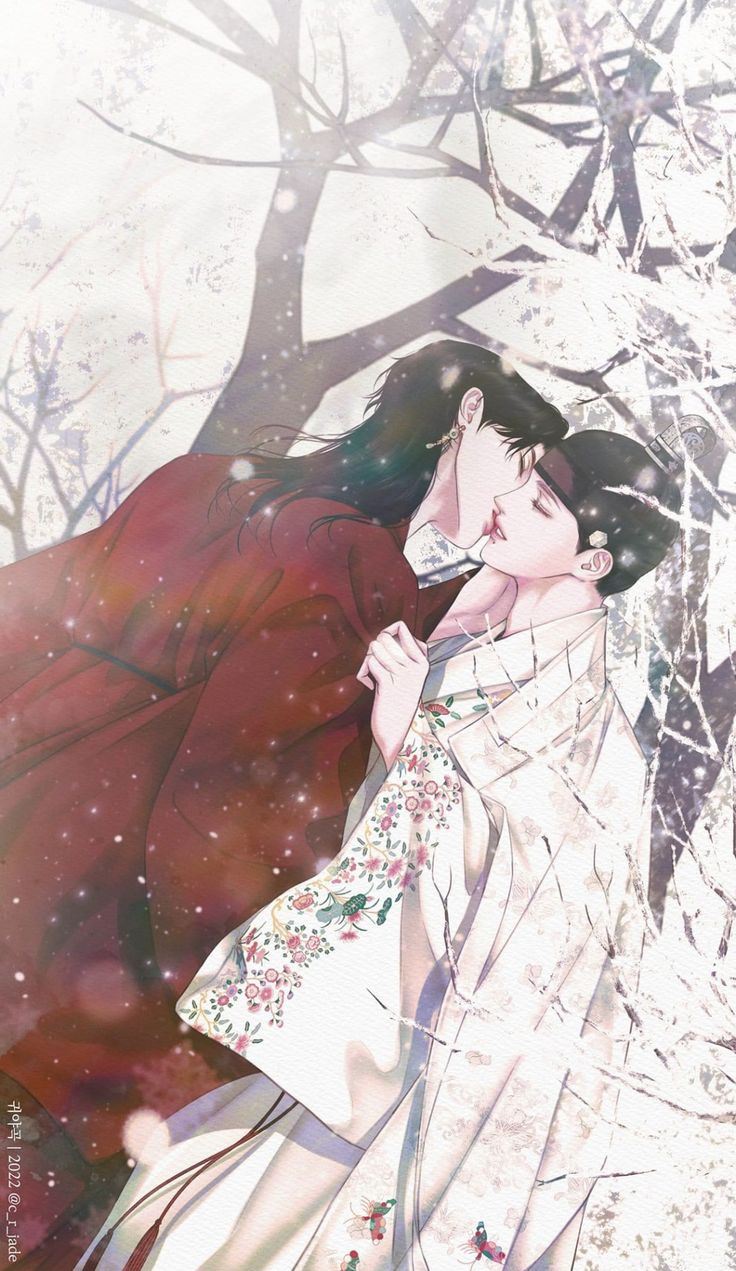
There is a moment in Chapter 297 where Qiu Henian comes home, sees Qingyan silently crying while eating soup noodles, and the way he just—puts down his bowl, gets a cloth, sits beside him, embraces his shoulders—I literally had to pause and breathe. This relationship is built on such quiet, devastating care. No grand declarations, just a man who notices tears and responds with warmth. And Qingyan's breakdown! He grabs Qiu Henian's hand trying to tuck it into his robe saying let's have a child now, and Qiu Henian gently refuses, explaining that his real concern was always Qingyan's health. The line that wrecked me was Qingyan sobbing: but I thought I was really pregnant. Before, I didn't want it, but now, I'm so sad. That's the whole arc of desire in one sentence—how we change our minds when the thing we once dismissed becomes impossibly out of reach. Their dynamic throughout this section is everything. The way he holds Qingyan on his thigh, stroking his back, heart aching for his pure and persistent Qingyan. It's tenderness without pity, strength without dominance. Then later, under the lantern lights, Qingyan quietly holds Qiu Henian's hand under his sleeve to comfort him while he's sweating from helping at the stall. Role reversal. He's supporting him now. That's a relationship that knows how to carry each other.
... Read More
"What happened to your fingers?" That's all Qiuniang says. Just that one line. And then suddenly the whole scene pivots from domestic drama into something genuinely unsettling. Because now we're looking at SHEN MIN'S HANDS and they've been completely destroyed - almost no nails left, skin broken, flesh exposed, small pieces missing. And he just looks at them with his eyes and goes silent. The physical setting around them is almost secondary to this moment. You've got the cramped courtyard house, the village head's official-looking questioning, the thick blankets piled on a bedridden man, the stove being heated with coal, the journey home in a borrowed cart with both Qingyan and Qiuniang repeatedly tucking the blanket. All of this mundane, domestic texture makes the horror of those hands hit harder because it's happening in a HOUSE, not some dramatic arena. And then Madam Wang's voice - the author specifically says it "pierced through the roof and echoed painfully in everyone's minds." The sound design of this scene is incredible. Wailing, stomping feet, the creak of a door opening after being closed for a long time, running footsteps as both mother and son flee. But it's the hands. Every time I think about this passage, I think about those ruined fingers and how calmly Shen Min describes gripping a slippery stone in a dark well.
... Read More
Everything in these chapters runs on one question: DOES QIU HENIAN KNOW. That's the stakes. Not life-or-death, sure, but for Qingyan it might as well be. His secret calligraphy practice — why does it matter? Because it's HIS. Something he built alone, without anyone's expectations or opinions, and the idea that it could be seen, judged, turned into something public is genuinely terrifying. The moment Qiu Henian offers to write the couplets instead, is that kindness? Or is it control? Is he covering for Qingyan because he cares, or because now he has leverage? Every interaction after that is filtered through this lens. Even the neighbor visit — Sister Lan being warm and welcoming, the gift of the silver bracelet, the child's happy face — Qingyan is performing normalcy while internally screaming. And Qiu Henian reading Records of Mountains and Rivers next door instead of in their shared space? Maybe giving him room. Maybe avoiding the conversation. The ambiguity is the conflict. There is no villain here and that makes it so much worse.

Leave a comment

You must be logged in to leave comments. or
