After being forced to marry an ugly husband (BL) - Reviews

After being forced to marry an ugly husband (BL)
+Add to Custom List
Sort
Add review
... Read More
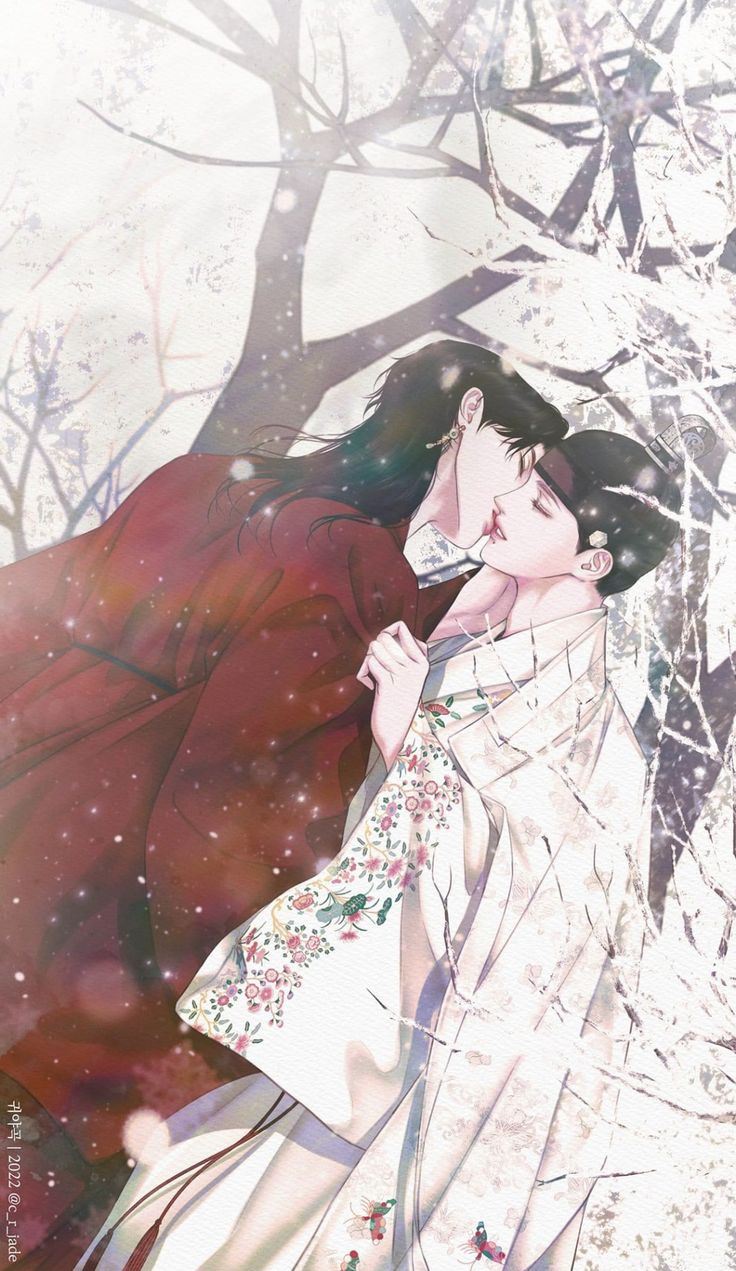
Beneath the cozy surface, this passage is brimming with symbolic resonance. The kang itself—a heated platform—is a classic symbol of domesticity, but here it's also a threshold. Qingyan straddles its edge, feet on either side, refusing to fully commit until he's ready. That posture is everything: caught between safety and risk, past and present, shame and acceptance. The red mark on his abdomen? Clearly a phantom of old wounds, but its persistence and Qiu Henian's gentle acknowledgment suggest healing isn't about erasure—it's about being seen with your scars. Then there's the snow: beautiful, intricate, but melting the moment you try to hold it. A perfect metaphor for the present tense of their happiness—precious because it's fragile, ephemeral, here-now. And the cards? Handmade from scrap paper, rules negotiated, stakes personal. They're a micro-contract, a game where loss means exposure, but also trust. Each removed layer is less about nudity and more about shedding pretense. The whole sequence argues that intimacy is built in these small, deliberate choices—to stay, to watch, to play, to let go.
... Read More
The exchange between Qingyan and the peddler is one of those scenes where the dialogue does triple duty — it advances the plot, reveals character, and is quietly funny without the author trying to make it funny. "Your father asked me to deliver a message." vs "Please tell the old master that Qingyan is no longer the same Qingyan from the past." — The contrast between the formal delivery of family obligation and Qingyan's deadpan refusal is perfect. He does not raise his voice. He does not get angry. He just states his position like a man who has already accepted his fate and chooses to walk away from it anyway. And then the half tael of silver moment. The peddler pushing it back saying it's too much while immediately stuffing it into his sleeve anyway. The old Langzhong calling his senior brother out on being a sore loser. These tiny interactions give the world texture. The characters feel like they exist beyond the pages because they speak like real people with real motivations and petty concerns. "Senior brother, you still can't stand losing." — I cannot unhear this. The chemistry between the two old doctors alone is worth the price of admission.
... Read More
I need to just collect every single thing Qiu Henian says in these chapters because his dialogue is surgical. Not a wasted word. 'I didn't mean to keep it from you. I just wasn't certain. I was afraid it might lead to nothing.' — Qingyan to Qiu Henian on the walk back. He's explaining himself, and it's raw. 'It's okay, go to sleep.' — the most important sentence in the entire passage. Four words. That's all it takes. 'This isn't an urgent matter, let's talk about it in a few years.' — said quietly beside Qingyan at Li Xizhen's house, responding to her comment about having children. He doesn't elevate his voice, doesn't make it a public conversation, but he gives Qingyan an answer that says: I hear you. I'm not rushing you. We have time. The supporting characters have distinct voices too. Qin Lan calling her daughter over with 'In the future, these two will be your uncle and aunt' — practical, warm, no-nonsense. Li Xizhen's maternal teasing about children and playmates feels like a real grandmother figure, slightly oblivious but well-meaning. Even the workers at the end have personality—the eldest washing up calmly, the youngest presumably less composed. What strikes me most is how the narrative voice itself shifts tone depending on whose perspective we're in. When it's Qingyan's head, the prose gets intimate, sensory, almost breathless. When it pulls back to observe the market or the festival, it becomes wider, more grounded. The author isn't just writing dialogue—they're writing a whole ecosystem of voices, and each one sounds like it belongs to a real person
... Read More
I need to talk about the bracelet scene because this is arguably the most important relationship moment in the entire novel and I don't think people are giving it enough credit. Qiu Henian showing up with this device full of needles, asking Qingyan to help him wear it — this is a man laying his absolute worst self before his partner and saying please help me not destroy us. The subtext is so thick you could cut it with a knife, which is ironic considering the other knife scene earlier. But what really got me was Qiu Henian's explanation: "Qingyan, you're saving me." He doesn't say "I love you" or anything dramatic. He just states that this act of trust — Qingyan squeezing those needles into his skin during intimacy instead of binding him with rope — is an act of salvation. That's the level of emotional precision this author operates at. And then Qingyan's refusal, that vigorous head shake... he's horrified but he also loves this man enough to consider it. The power dynamic flips completely here. Qiu Henian, who's usually the composed dominant one, is vulnerable. Qingyan becomes the one with agency, the one who decides how far to go. And later when Qingyan admits he's a man, not a qigong, Qiu Henian's response is one of the most tender things I've ever read in this genre. "With you here, I feel no regrets." No guilt-tripping, no disappointment, just acceptance wrapped in genuine warmth.
... Read More
Let me just say this about Qingyan: the guy is a mess and I love him for it. Waking up the next morning, fully present in his happiness, literally checking himself in the mirror like 'oh yeah, I'm glowing'—this is a character who has recently discovered that he's allowed to be happy. Remember where he's coming from. He was abandoned by his mother, raised in a world where he had to fight for every scrap of dignity. And here he is, smiling at Chen Yu like a complete softie, noticing his own skin looking radiant. The fact that he was embarrassed because he imagined Qiu Henian could see how satisfied he looked? That's someone who's learning to be seen and not shrinking from it. Meanwhile Qiu Henian—I think he noticed immediately. The fact that Qingyan didn't notice until later means Qiu Henian was watching him closely even in those quiet moments. Their dynamic has shifted so fundamentally in just these chapters. It's no longer about courting or performing; they're just... living together, dealing with chores, planning crops. The domesticity is the romance. Chen Yu being the foil—rolling his eyes at Qingyan's grin—is genius setup for later conflict if anyone tries to disrupt this peace. I'm protecting this man's joy with my life.
... Read More
I need to talk about how the author uses dialogue and the ABSENCE of it to make a point. The dinner scene at Liu Fa's house is one of the most emotionally complicated sequences I've read. Everyone is chatting and laughing around that big round table — full of warmth and community noise — and then there's Shen Min, 'remained silent, nibbling on a bun and occasionally picking at the wild vegetables and tofu.' One sentence. That's all it takes. The contrast between the boisterous group and his quiet isolation says everything about where he stands in this world. And then Liu Fa's wife serves him that bowl with extra pork belly — no words needed. A silent gesture of care in a room full of noise. But the real dialogue brilliance comes with Mrs. Wang's entrance. Every line she speaks is sharp, aggressive, dehumanizing: 'He dares to eat here?' 'This worthless thing.' 'Useless eater!' Her voice fills the space and chases everyone else out of it. Meanwhile Shen Min barely speaks at all throughout the entire scene. He doesn't defend himself. Doesn't explain. Just gets dragged away. And the final exchange where Old Lady Wang throws the keys at him and he opens cabinets she's locked him out of — the power dynamics are laid bare in three words: 'keys clattering in her hand.' The author knows exactly when to let characters speak and when to make them disappear into silence, and that choice about Shen Min's voicelessness is what makes this passage so devastating.
... Read More
Okay so this part about Qingyan realizing he can't just cleanly cut off the Yu family? I literally laughed out loud because it is SO accurate to how these transmigration stories work. You don't just swap bodies and get a clean slate. The original host's messes are your messes now. That realization must be so frustrating for him internally. He walks around this calm exterior but inside he's like... what did I sign up for again? And the Yu Fengtang angle is interesting too. The old man comes off as this strong-willed patriarch type but the narration casually drops that the mother and son are actually united and Zhou Yanliang controls the money. Classic power dynamic where the visible authority figure isn't the real one. Qingyan reading this situation correctly while pretending not to is exactly the kind of subtle political maneuvering I live for. "I haven't read a single page in over a year. I just want to live peacefully." — This line hit different. Not because it's deep but because it's so brutally honest. He's basically telling his father "no, I would rather rot here" and I respect the commitment.
... Read More
The structure of these four chapters is actually really clever when you think about it. You start with an intimate, almost serene moment—Qingyan and Qiu Henian getting ready together, the hair-tucking, the embrace—and it feels like the calm before something. Then you explode into the banquet scene with all these characters and social dynamics, and it's noisy and busy and full of tension. But here's what I noticed: the author doesn't let you relax even in the middle of all that chaos. Right in the middle of the banquet description, you cut to Liu Xiang flirting with Yang Huai, and Yang Huai is glancing back at the other table with that playful look. He knows something. Everyone knows something. And then—the cleanup scene. The quiet aftermath. Qingyan alone with the dishes, and that shadow appears. The pacing basically goes: intimacy → chaos → quiet → threat. It's like the author is squeezing you through different emotional chambers and you can't catch your breath. The spoiler at the end where Qingyan sits on Qiu Henian's lap and whispers "I really like you so much"—that's chapter 73 preview material, which tells me the next chapter is going to either resolve some tension or completely颠覆 the power dynamics. Either way, I'm not surviving this chapter break.
... Read More
There's this moment in chapter 305 where they end up at a theater watching something called 'Huanglong Xi'—a local opera form with lively dances, loud gongs and drums, upbeat tunes. Very different from Beijing opera. Qingyan had been in a bad mood for days, wound tight from the kidnapping investigation and her own feelings of inadequacy, and the writer just lets her sit there among the crowd, drinking tea, eating melon seeds, slowly watching her face relax. Even smiles occasionally. Halfway through, Ren Xiao shows up to give them an update. It's such a quiet beat but it does so much work—it's the story giving its protagonist a breather, letting us breathe with her. Then there's the bath scene, which is basically a masterclass in atmospheric writing. Anthracite fire warming the room, the steam, the faint scent of soap and soap nuts, the oil lamp casting a dimly lit triangular shadow when she bends to grab the blanket. Every detail is grounded and sensory. You can feel the heat, smell the soap, see the play of light. The writer doesn't over-explain the setting—we just know it's winter (snowing outside later), it's cold enough for a heated bath, and this is their home, their private space. And the ending shot—snow falling outside while everything intense and vulnerable happens inside—such a classic visual contrast. The world is freezing but there's warmth here. For now.
... Read More
Okay so the author does something really subtle here. After all that tension with the Wang family, after Shen Min basically threatens to destroy their lives, we get this quiet domestic scene with Qingyan and Qiu Henian making dinner. Stewed fish with sweet potato noodles, tofu, garlic chives and eggs. It's just... food. Simple food. But it hits so hard because we've been through hell with these characters. The contrast between the cold threat of the county yamen and exile, the bite mark on Qian Lei's shoulder that serves as gruesome evidence, and then this warm kitchen scene—it's almost jarring in the best way. The author understands that peace feels beautiful precisely because we know what these characters have survived. And the chicken coop! A two-level structure with dry grass nests, chickens sleeping inside at night and laying eggs during the day. It's such a specific, grounded detail that makes the whole world feel lived-in. This isn't a fantasy kingdom or a generic setting—it's a place where people grow food, build things, live alongside animals. I could see it. Qiu Henian nailing those corners, Qingyan tiptoeing to peer at the top level, the firm hand around his waist lifting him up. Cinematic without being overwrought. Then the bed scene—lowered curtains, dim light, the loosened garment tie that Qingyan doesn't fix because honestly he doesn't care anymore. The cool air making him shiver. All of it feels so intimate and real.
... Read More
I've been turning over the symbolism in these chapters and there's a lot more going on beneath the surface than first appears. Water is the dominant motif. Qingyan fetches it, almost drops it, has to be careful not to fall into the frozen well. Water as life, obviously, but also water as emotional burden — he's carrying two heavy buckets on his shoulder through a village that's watching him, judging him, talking about him. The well itself is frozen at the mouth but water still flows below the ice. That's Qingyan's situation: cold exterior, warm interior, constantly at risk of slipping. Then there are the scars. Qiu Henian's terrifying scars, mentioned in the very first lines. Scars as evidence of survival, of violence endured, of history written on the body. And Qingyan's own lingering physical pain — another kind of scarring, different cause, same category. Two bodies marked by different kinds of force. The roasted melon seeds are interesting too — small rewards for small labors, the simple pleasure available to someone in Qingyan's position. He's not a scholar anymore (his handwriting would expose him), he's not a farmer (he can barely carry water), he's somewhere in between. The paper he saves and folds — usable on both sides, gaps between words filled — that's a metaphor for how he lives. Making do. Refusing waste. Finding value where others see emptiness.
... Read More
Okay can we just talk about how the author uses something as mundane as pickled vegetables to establish the entire dynamic between these two? Qingyan finds it disgusting, teeth aching, but Qiu Henian eats it like it's nothing. And then he calmly adds porridge and hands it over like he's running some kind of emergency triage operation. The fact that Qingyan doesn't let himself show discomfort even though he wants to scream? That tells us everything about who this guy is. He endures. He swallows things—literally and figuratively. And then the plot twist I didn't see coming: Qiu Henian isn't going to work for two days. Just drops it casually while carrying Qingyan to bed like he weighs nothing. Qingyan's internal monologue is absolutely losing it: 'What's a grown man doing not going to work and staying home?' My stomach dropped. This isn't normal. This is the kind of detail that screams 'something is wrong' and the author is clearly setting up a mystery. The flashback to Qiu Henian's origin is interesting from a structural standpoint too—it interrupts Qingyan's present-moment confusion and gives us backstory at exactly the right moment to make us question everything we thought we knew. Found half-frozen, no memory, saved by a blacksmith, adopted, stayed silent for years about where he came from. That's not just worldbuilding, that's a ticking bomb. And the spoiler at the end—'He was confident that he and Qiu Henian could make their life better together'—hits so much differently now that we know something is clearly coming apart.

Leave a comment

You must be logged in to leave comments. or
