After Becoming the Black Lotus Emperor’s Imperial Preceptor - Reviews

After Becoming the Black Lotus Emperor’s Imperial Preceptor
+Add to Custom List
Sort
Add review
... Read More
'Clothes are better when new, and people are better when old.' Shen Qingzhuo says this line and I just... I need a moment. Because on the surface he's being all cryptic and philosophical with Pei Yanqi, right? Like, 'yes, the Crown Prince is nostalgic, but so am I, I'm the same.' But underneath? He's telling Xiao Shen that HE is not going to be abandoned. That he's not 'new clothes' that can be swapped out. He's saying he's still the same master, even after everything the original host put him through. And then the forehead flick. That single gesture—Shen Qingzhuo flicking Xiao Shen's forehead like it's nothing, while the boy is literally standing guard with 'a strong sense of rejection' in his eyes, while Pei Yanqi is still in the background having once tried toSeparate them. This entire relationship between master and disciple is built on this quiet, desperate kind of love that neither of them really names. Xiao Shen wouldn't let anyone else near his master. He missed a rabbit shot during the hunt on purpose because his master told him not to act bravely. He's playing the coward because his master asked him to. And Shen Qingzhuo—he's carrying all this weight about assassination plots and court intrigue, pretending to be weak and dizzy, but he still has enough presence of mind to gently tease his disciple about pouting. It's so tender and so tragic and I don't even know what to do with it.
... Read More
The white fox fur coat is such a loaded detail and I don't think readers give it enough credit. Emperor Guangxi gifts it to Shen Qingzhuo as a gesture of favor, and Shen puts it on immediately, feeling how light and warm it is. But the symbolism here is darkly ironic—the Emperor is wrapping his most dangerous minister in something soft, something delicate, while simultaneously putting him in charge of a child who carries the blood of a family the Emperor murdered. The cold palace recurs as both a physical location and a metaphor. The Seventh Prince was raised there. Shen Qingzhuo originally planned to leave him there. The cold palace is where unwanted children go to disappear, and it's also where the Emperor's guilt about the Zhao massacre is buried. The fact that the Empress Dowager insisted on pulling the boy out of that coldness but still assigning him to Shen—who has every reason to resent the Zhao name—is almost cruel in its irony. There's also the imagery of kneeling that keeps appearing. Minister Xue kneels until his legs go numb. Shen Qingzhuo kneels with perfect posture. The Emperor sits elevated on his platform looking down. Every power dynamic in this story is literalized through physical positioning—raised platforms, lowered bodies, thresholds you trip over. The architecture itself is a map of who controls whom. And then there's the author's note voice—that little wolf cub calling Shen "Master." It's a symbolic counterweight to all this political coldness. Somewhere in this whole web of manipulation and bloodshed, there's a child who just wants his teacher to come back. How long before that innocence gets consumed by the same machinery?
... Read More
I am physically shaking after reading this chapter. Let me just say it: Xiao Shen is the most dangerously obsessive disciple in the history of cultivation novels and I am HERE FOR IT. The way he asks 'is Master happy when you are with me?'—he's fishing for validation, yes, but there's something so achingly vulnerable underneath it. This boy has been through hell and Shen Qingzhuo is literally the only warm thing in his life. And then he curls up on that bed, sweating in the heat, curled into a small ball when his master isn't there—that image of him seeking shelter, seeking safety, it made my chest hurt. But then the dream... gods, the dream. He KNOWS it's wrong. 'He knew that he had committed a heinous crime, but he still couldn't control himself.' This is the tragedy of it. He's not some villain who enjoys this—he's a boy who is completely consumed by something he can't escape. His desire and his guilt are at war inside him. And the other man. The man in dragon robes. Xiao Shen watching him sniff Shen Qingzhuo's hair while whispering 'Smells so good, Master smells so good...' and Xiao Shen's fury—'His master is his! He is his alone!' This is so painfully possessive and so devastatingly human. Who wouldn't be like this if they'd lost everything once and found something worth dying for? Also Shen Qingzhuo fanning him while he sleeps, then that flash of memory about Xiao Shen's hand on him—that moment where Shen Qingzhuo flushes and cries out? That's the most electric moment in the whole chapter. Two people dancing around something neither of them can name yet.
... Read More
There's something profoundly symbolic about this fever scene that I can't shake. Xiao Shen is literally rendered helpless - comatose, biting wasn't an option, rubbing against Shen Qingzhuo's hand like an animal seeking comfort despite himself. The wolf cub archetype keeps coming back to me. He's wild, dangerous, capable of lethal bites, but sick he's just... small. And Shen Qingzhuo recognizes this. 'Even a rabbit will bite when it is cornered, let alone a living person?' That line acknowledges Xiao Shen's nature while also showing he SEES him. The wound on Shen Qingzhuo's palm is bandaged beautifully but bleeding underneath - I keep thinking about how physical scars mirror the emotional ones. The system that doesn't respond? That's the original owner's failing, isn't it? This new consciousness taking responsibility for sins he didn't commit. There's this whole theme of inherited guilt and chosen atonement. And the fever itself - it purges, it weakens, it forces vulnerability. You can't maintain your armor when your body rebels. Xiao Shen's near-murder attempt in the morning is the perfect symbol - he wants to destroy the person who hurt him, but survival instinct (that single-chance teaching!) stops him. He's trapped between hatred and the strange care happening here. The unresolved tension IS the point.
... Read More
I keep coming back to the imagery in this section and how much meaning is packed into physical objects. The snow. The bite marks. The warm jade. None of these are accidental. Snow is the weapon the Emperor uses — not directly, but through proxy. Two hours kneeling in heavy snow is a punishment designed to look like discipline but function as torture. And Shen Qingzhuo carrying the boy back through it is the only act of warmth in a story full of cold calculations. Then there's the bite. Teeth are such a primal thing — animals use them, children use them when they can't articulate, and in this story where everyone speaks in layers of meaning and political subtext, the Seventh Prince's bite is almost honest. It's raw, unfiltered emotion. No words, no schemes, just teeth. And Shen Qingzhuo protecting that act of violence by calling it a puppy bite? That's the theme right there. The palace turns everything into something else. Pain becomes political tool. Care becomes strategy. A bite becomes a secret between two people who understand each other without speaking. And the jade — warm jade given as a gift from the Crown Prince. Jade in Chinese literature always symbolizes virtue, refinement, cold beauty. But this one is WARM. Something that should be cold has been heated by human hands. Is it a token of genuine care or another chain? The ambiguity IS the point. Nothing in this palace is purely one thing or the other. Even the system's comedic moments about "old lovers" and failed hosts carry weight — they hint at a deeper theme about how stories themselves are cages, how past versions of people shape your present, how you can never fully escape the narrative you've been born into.
... Read More
I went into this batch not caring about Ling Long and I'm leaving the way someone leaves a funeral — shaken and unable to think about anything else. We barely know her. We've only heard her name spoken in passing by a woman who used to be her coworker, and yet she already occupies more emotional space in this chapter than half the characters who actually appear on screen. That's the power of absence, and the author knows it. What Xiang Lian tells us is devastating in its restraint: "At first Ling Long swore to die and went on hunger strike for several times, but it was useless. Even when she was half-dead from hunger, she was still sent to the bed of the patron by Mother." Half a sentence. Half a description. And yet I can SEE her. I can see this talented, proud woman who chose starvation over surrender and lost anyway. The word "half-dead" is doing so much work here — it's clinical, distant, almost bureaucratic, which makes it infinitely worse than if the author had gone full melodrama. And the most emotionally complex part? Xiang Lian is telling this story while sitting across from Shen Qingzhuo, who is investigating her for reasons she won't fully disclose. There's grief in her voice, yes, but there's also something else — calculation, performance, the habit of a woman who has spent her life reading rooms and adjusting her tone to survive. Is she genuinely mourning Ling Long, or is she giving Shen Qingzhuo exactly the emotional response he's looking for? I don't know. And I desperately want to know. Meanwhile, Shen Qingzhuo's reaction is fascinating because it's so contained. He frowns "unconsciously" — that's the key word. He's trying to maintain his cool investigator persona, but his body betrays him. He feels something for this girl he's never met, and that unsettles him. Which means he's not the unfeeling strategist everyone assumes him to be, which means the people around him are walking on volcano ground. The romantic subplots are simmering in the background (Kong Shang's Chun Tao arc, whatever Shen Qingzhuo is doing with his usual romantic entanglements), but Ling Long's story is the emotional core here. She's the ghost at the feast, and I cannot stop thinking about her. Who is she? Who is "Mother"? And why does Shen Qingzhuo care enough to risk everything for a girl he's never seen... yet
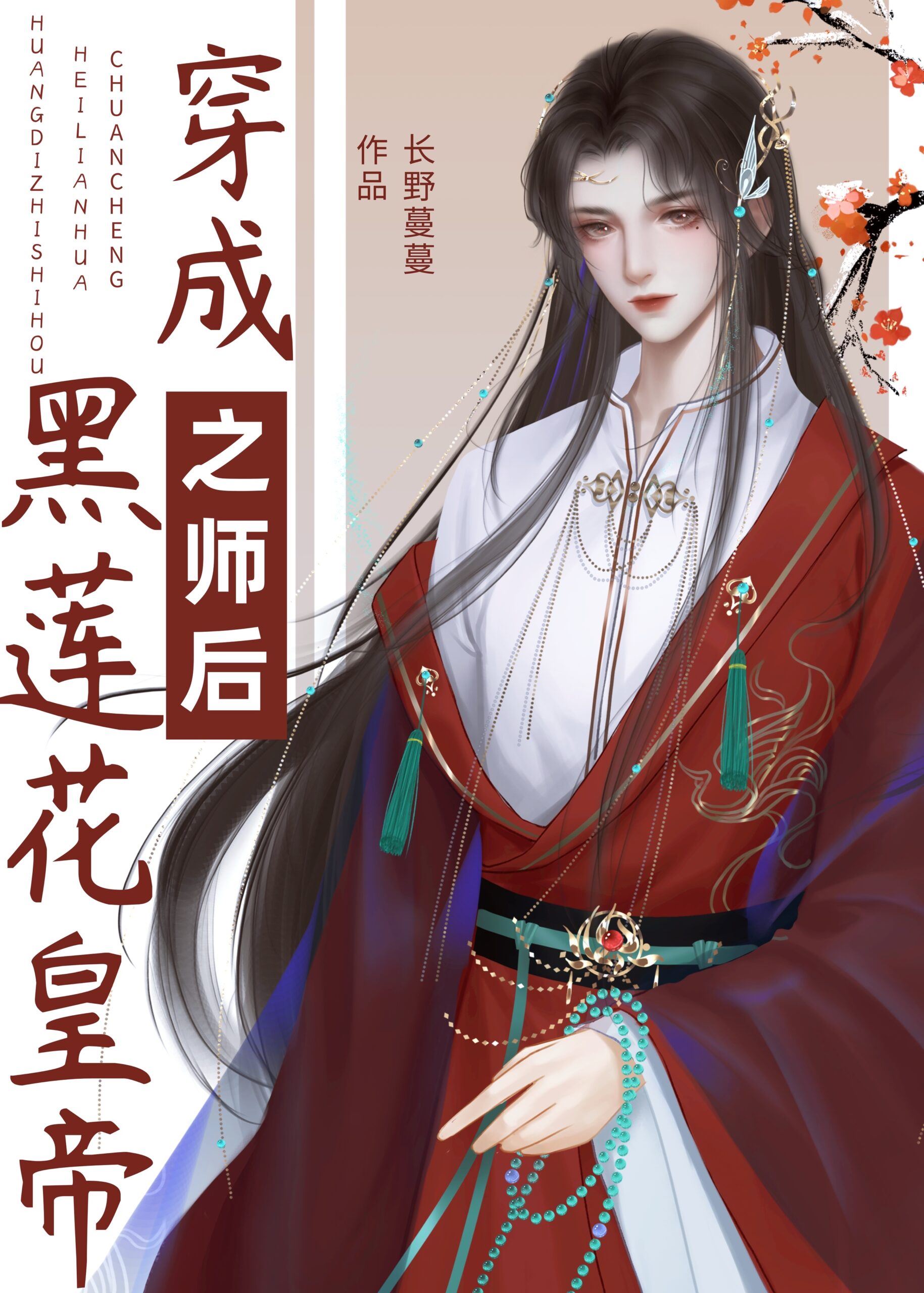
... Read More
That red Mandarin duck dudou is not just a comedic prop, and I don't think the author intended it to be only funny. Mandarin ducks are traditional symbols of faithful couples in Chinese culture—two birds that mate for life. Having that imagery paired with an undergarment, discovered at the worst possible moment, creates this rich symbolic tension. It represents the romantic entanglement Xiao Shen is hiding, the adult world he's entering, and the secrets that will inevitably test his relationship with his master. But there's another layer too: the dudou appears right after Xiao Shen confesses to killing someone. Life and death, violence and desire, these themes are woven together in this single object. Xiao Shen says he felt excitement rather than fear after taking a life, and now we learn he was also involved romantically with someone. The red cloth becomes a symbol of everything he's becoming—someone capable of both destruction and passion, someone moving away from the innocent boy Shen Qingzhuo remembers. And the fact that it falls from his sleeve at the crucial moment suggests that these hidden aspects of himself cannot stay hidden forever. Shen Qingzhuo's reaction—throwing it away as if it's poisonous—shows how deeply shaken he is, not just by the scandal but by what it reveals about the distance growing between them.
... Read More
Can we talk about how natural this dialogue feels? Like, it doesn't READ like a translation or some stiff written work — it sounds like actual people talking. Xiao Dezi's line 'Young Master, you really know how to joke' when Shen Qingzhuo says 'If your Young Master doesn't get some sun, grass will grow on his head' — that's a friend's voice right there. You can HEAR the laugh. And then later when Shen Qingzhuo asks about the Seventh Prince, Xiao Dezi immediately pivots to defending him: 'His Highness is not usually like this. Maybe he is not feeling well today.' That's loyalty. That's someone who genuinely cares, not just a generic servant character. Even the imperial dialogue, which could easily become stilted and formal, has rhythm. The Empress Dowager's 'Shen's'er is still young. Even if he made a mistake, he should be allowed to have a good New Year' sounds exactly like a grandmother weaponizing kindness in a room full of vipers. And Shen Qingzhuo's internal voice? 'Maybe in the next life' — that one line does so much. It's bitter, it's tired, it's the kind of dark humor someone develops when they've been through hell. The narrative voice itself is also doing great work — it's observant without being overbearing, giving us context about the Dayong Dynasty's customs and the Emperor's political reasoning without turning into an info-dump. It trusts the reader.
... Read More
Can we just PAUSE and appreciate the atmosphere in this chapter because the sensory details are absolutely impeccable. The setting opens with this oppressive, sweltering heat—seven or eight buckets of ice doing absolutely nothing against the scorching temperature, bamboo curtains letting in a night breeze that can't dissipate the warmth. The heat isn't just weather; it's a metaphor for what's building between these two characters, isn't it? The feverishness of Xiao Shen's obsession, the tension simmering just below the surface. And then there's the dream scene—gauze curtains fluttering, kissing the sleeping face with affection. That line alone is poetic. The red ribbons binding snow-white wrists to the dragon pillar. The flushed skin, swollen eyelids, the broken corner of his lip. And those shattered plum blossom petals staining Xiao Shen's vision red—what an image. It's beautiful and violent at the same time. The visual contrast between reality and dream is masterful. In reality, Xiao Shen sleeps curled up but peaceful near his master. In the dream, he's a prisoner, his master is vulnerable and bound. The setting itself becomes a mirror of Xiao Shen's fractured psyche. And Shen Qingzhuo looking up at that crescent moon before turning back to find Xiao Shen asleep—that moment felt so cinematic. The dark blue sky, the thin sliver of moonlight, the quiet palace around them. 'It was time for the world to change.' Such a simple line, but paired with that visual, it felt like the entire novel was holding its breath. The Eastern Palace setting always has this suffocating grandeur to it, and this chapter captures that perfectly—the ornate furniture, the jade belts, the dragon-embroidered robes, the rosewood couches. Everything feels heavy, luxurious, and dangerous.
... Read More
The atmosphere shift in these chapters is everything. You go from the oppressive cold of the 'cold palace'—where there are 'only leftovers and cold buns'—to this sunlit inner room where 'rising sun shone into the inner room through the window lattice, casting a layer of warm light.' It's not just backdrop; it's emotional terrain. The snow stopping mirrors the temporary thaw in Xiao Shen's defenses. And that breakfast scene? The detail about Shen Qingzhuo specifically asking for 'lighter porridge so that it would be easier for the little patient to digest' is such a small, humanizing touch. It grounds the high-stakes palace drama in something visceral: hunger, sickness, comfort food. Then, suddenly, you're out in the 'cold wind' again, following a eunuch to the Crown Prince's mansion. The visual contrast is stark. Scarlet attire on Xiao Yichen—imposing, loud, dangerous—against the pale, snowy world. The author uses setting to signal threat. The warm room was a sanctuary, however temporary; the Eastern Palace is a trap disguised as hospitality. I love how the environment reflects the psychological state of the characters without a single internal monologue about 'I felt scared' or 'I felt safe.'
... Read More
Let's talk about the most visually stunning scene I've read in a while. The dragon bed—snow-white undergarments, black hair scattered across a pale back, gold chains on ankles. The color palette alone is poetry. White and black intertwined. Jade-white ear. Red cheeks covered in tears and sweat. The author paints this dream sequence like a classical Chinese ink wash painting exploded into full color, every brushstroke deliberate and devastating. "His master's sleeping face was as peaceful, beautiful, and defenseless as ever. His long, thick eyelashes were like small brushes, quietly casting two shadows on his eyelids." Two shadows. Two shadows cast by eyelashes that move like brushes. This is an author who sees the world with extraordinary visual precision. Then the shift to morning—the furry head on the neck, the heavy arm pressed across the chest, the koala-disciple. The domestic softness of it after the dream's violence is almost cruel in its contrast. Shen Qingzhuo's naked confusion: "I clearly slept on the consort couch last night." The reader knows exactly why he's now in bed, and that dramatic irony makes every line of his internal monologue ache with sweetness. The temple setting throughout—the jade, the silk, the porcelain-white skin, the fur-lined warmth—all of it builds a world so tactile I can feel the temperature of it. The author doesn't just describe; she makes you inhabiting the space. Three thousand strands of black hair falling—that's not just imagery, that's texture you can run your fingers through. And the Consort Couch becoming the Bed, the boundary between duty-space and intimacy-space dissolving overnight... the worldbuilding is in the furniture.
... Read More
I need to talk about Xiao Shen because THIS BOY. The way he shows up — sweaty, flustered, pretending he had some urgent matter when really he just wanted to see his master post-prison. And then the hair-pulling scene?! "Master can only like me…" Okay that's not a disciple talking, that's a possessive lunatic in training. The contrast is what kills me: he acts all sweet and coquettish on the surface, wiping Shen Qingzhuo's hair with this innocent act, but internally he's fantasizing about skinning someone and locking his master away forever. The author literally gives us both perspectives in that scene — the polite disciple and the inner monologue of someone who would commit violence for attention. And then the meta-commentary where the author goes "this is a political struggle, not a BL novel" and Xiao Shen internally goes "en, this is BL literature" — I CANNOT. The gap between what Shen Qingzhuo thinks is happening and what Xiao Shen is actually doing is comedy gold and also genuinely unsettling. Their dynamic has shifted so much from teacher-student to something far more tangled. Shen Qingzhuo still thinks he's in control, but has he been?

Leave a comment

You must be logged in to leave comments. or
