Across Thousands of Stars - Reviews

Across Thousands of Stars
+Add to Custom List
Sort
Add review
... Read More
This chapter had me going from casual worry to full-blown panic in the span of a few scenes, and honestly? The pacing was perfect. It starts so casually—Mukuro's eye looks weird, he blames it on computer screen time, Tsuna insists on the hospital. Nothing screams DANGER YET, right? But then the doctor asks for more tests. Mukuro protests, calls it a money grab, and I knew right then something was seriously wrong. Authors who make characters dismissive about medical issues always make me tense because I know what's coming. The chapter break between 51 and 52 is smart too. Chapter 51 ends with Tsuna calling Reborn, this long conversation about their relationship status, Reborn's sarcastic remarks, all building this emotional tension. Then Chapter 52 opens with the doctor's office again, but now we know what's at stake. The transition from personal drama to medical crisis is seamless. And that ending—"After the removal, we'll see." It cuts off right when you need more information. Classic cliffhanger. I immediately wanted to keep reading. The author knows how to dangle just enough detail to keep you hooked without giving everything away. It's a delicate balance and they nailed it.
... Read More
The pacing in these chapters is insane and I need to unpack why. It starts at maximum intensity—Tsuna and Mukuro face to face, words like weapons—and then instead of staying at that peak, the author deliberately deflates it into this mundane sequence of packing a suitcase, kicking someone in the leg, checking into a hotel, ordering pasta, applying medicine to himself. That last detail alone—the image of Tsuna reaching behind himself to apply anti-inflammatory ointment—is so deliberately awkward and unglamorous that it grounds the whole scene in painful reality. No cinematic music, no dramatic poses. Just a guy in a hotel room doing something humiliating because he has to. Then there's the Reborn phone call which comes out of nowhere and gives Tsuna two days off. Reborn's parting shot about responsibility because he took courage to ask for leave is classic—cold, practical, and weirdly supportive in his own twisted way. And the transition to the next morning where Tsuna becomes a conscientious office worker again? That's the real punchline. No matter what happens, life goes on. You go to work. The pacing refuses to let you wallow in any single emotion for too long, which I think is brilliant for this kind of story. It mirrors how trauma actually feels—you don't get to stay in one emotional state, you just keep moving, numb, surviving.
... Read More
I keep coming back to one question after reading these chapters: what is this story ACTUALLY about, beneath the surface plot of a pharmaceutical scandal? Christmas is doing a LOT of symbolic work here. It's the holiday of sacrificial giving — the gift of a savior, the miracle of children saved from despair. And right in the middle of all that religious and cultural symbolism about sacrificial love, we get a story about children being SACRIFICED for profit. Byakuran literally frames his atrocities in utilitarian math: more lives saved than lost, therefore justified. It's a grotesque parody of the Christmas narrative. The irony is almost too on-the-nose, except I don't think it's accidental. The children themselves are the central symbol. They've been 'growing up in the research institute' — they don't know the outside world. They're tabula rasa, blank slates upon which science has written its experiments. And now they're 'a bit different' because of drug accumulation, and even orphanages refuse them. They are literally and figuratively unrecognizable to the society that should have protected them. There's also the Christmas present motif running through the background — Tsuna's dad says he didn't prepare one, and Tsuna expects one in return. Gifts, exchange, obligation. The whole holiday is built on the language of giving, and the Millefiore incident is about TAKING — taking children, taking their bodies, taking their futures. The contrast between a society that celebrates generosity and a corporation that practices systematic extraction is the story's beating heart. I also can't stop thinking about the title — 'Across Thousands of Stars.' What does that mean in relation to all this? Is it about distance? About hope? About the children who were lost, scattered like stars? The thematic resonance is still unfolding but the foundations are already there.
... Read More
Beneath the immediate crisis lies a meditation on loss, acceptance, and the transformation of love. The surgical removal of an eye is not just a medical event; it becomes a metaphor for painful clarity. Tsuna's realization—"I truly, really like him"—comes only after confronting the possibility of permanent change. The author suggests that loss strips away illusion, forcing us to confront what truly matters. This theme is echoed in the recurring motif of "goodbye": "Since birth, people must constantly learn to say goodbye." The passage lists goodbyes to childhood innocence, teenage naivety, youthful enthusiasm—a progression toward maturity through separation. The eye itself symbolizes perception and vulnerability. Mukuro's beautiful eyes, once a source of pride, become the site of sacrifice. After surgery, his bandaged eye represents both concealment and adaptation. Tsuna's emotional journey mirrors this: he moves from panic (blindness to his own feelings) to acceptance (seeing clearly what he loves). The line "Life itself is a prolonged consumption of actions. Your soul would be shaped and expended within it" frames the entire experience as part of a larger process of becoming. Even the temporary dysfunction—Mukuro knocking over cups—becomes a test of resilience. The author doesn't romanticize suffering; instead, she presents it as a catalyst for deeper connection. The theme of sacrifice is present but not martyrdom: Mukuro chooses surgery to live, Tsuna chooses to support him, Reborn chooses to intervene. Each act of giving oneself another is a small death that leads to renewal. The symbolism is woven seamlessly into the narrative, never heavy-handed, always serving character and plot.
... Read More
The stakes in this conflict are incredibly high, even though on the surface, nothing dramatic has happened. No one has died. No one has left. They're just… not talking. But the emotional stakes? They are life-or-death for these characters. For Mukuro, the conflict is about identity and belonging. He has spent his entire existence being the outsider, the fake, the thing that doesn't fit. Tsuna is the only person who has truly accepted him, who has pulled him into the light. Kyoko represents a threat to that singular bond. If Tsuna starts prioritizing Kyoko—if he starts building a life that excludes Mukuro—then Mukuro loses his anchor. He goes back to being alone. The shout of 'You like her' is a plea for reassurance. He's essentially screaming, 'Am I still your priority? Or am I just the weird guy you live with while you go live your normal life?' For Tsuna, the conflict is about confusion and helplessness. He doesn't understand why his kindness is being perceived as betrayal. He's trying to be a good partner, a good friend. He's trying to integrate the people he cares about. When Mukuro rejects the invitation, Tsuna feels rejected. He's hurt, but he's also angry. Why won't Mukuro just *try*? The stakes for Tsuna are proving that he can have a happy, normal life with someone as broken as Mukuro. If this fails, it validates all his deepest fears that he's not good enough, that he can't save anyone, that he's doomed to be alone. The internal conflict is where the real tension lies. Mukuro knows he's being unreasonable. He knows Kyoko is nice. He knows Tsuna didn't do anything wrong. But he can't stop the envy. It's a self-destructive loop. He pushes Tsuna away to protect himself from the pain of being second choice, but in doing so, he creates the exact scenario he fears. Tsuna is forced to choose between peace (staying away from Kyoko) and his own happiness (seeing his friend). By demanding isolation, Mukuro is essentially holding a gun to the relationship and threatening to pull the trigger. And the external conflict? It's just Kyoko's dinner party. A simple, mundane event. But the author weaponizes it. It becomes the battleground where these two men fight their war for dominance in each other's hearts. The suspense isn't 'will they go to the dinner?' It's 'will they survive this argument?' The author makes us care because we've seen how much they need each other. We know their history. We know the weight of their silence. Every word left unsaid feels like a physical blow. The tension is razor-sharp because we know that if they don't resolve this, they might lose everything. And the reader is left begging them to just communicate, to lower their shields, to admit they're scared. It's a tense, gripping exploration of how fragile trust can be.
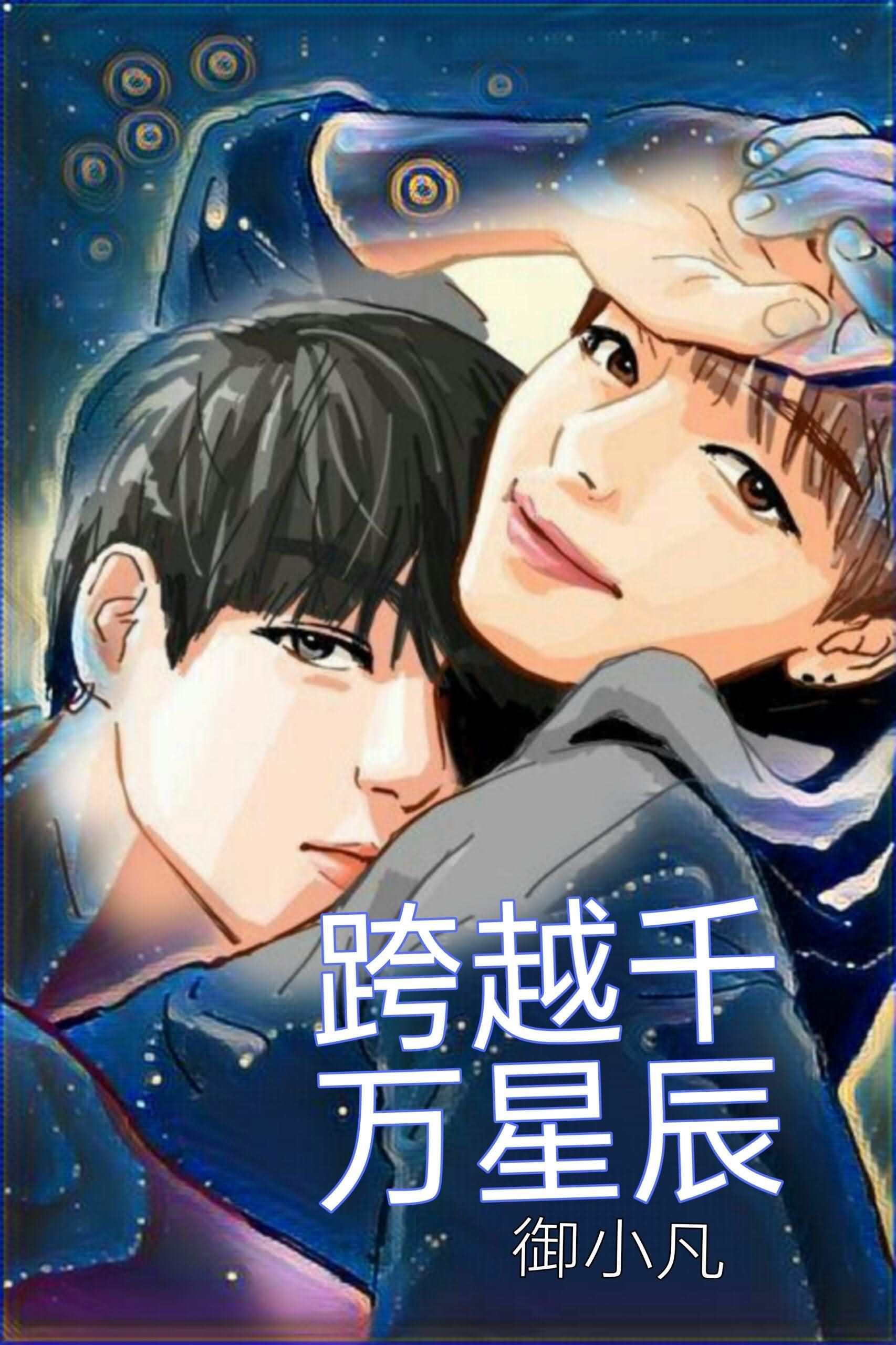
... Read More
I need to talk about what I assume happened the night before these chapters because the emotional subtext is SO thick you could cut it with a knife. Tsuna can't look Mukuro in the eye. He's smiling stiffly in the kitchen. He FORGOT that Mukuro is still handcuffed to him and yanked him across the room when the doorbell rang. These are not small details. The author is showing us, not telling us, that something massive shifted between them and neither of them knows how to process it. "Before what happened last night, Tsuna would definitely drag Mukuro to take a bath together." This line alone destroyed me. It's stated so matter-of-factly but it carries so much weight — they HAD a routine, they had comfort, and now that comfort is gone. The fact that Mukuro doesn't even suggest bathing together anymore shows he's just as affected, maybe more, since he's the one processing it internally rather than panicking outwardly. And then Enma's storyline! The part where Tsuna reads about his promotion and actually laughs out loud — genuine happiness, not forced politeness. "Tsuna is afraid that he is the only one who has a good relationship with him in the company." Oof. That hit different. It mirrored something about Tsuna himself, didn't it? Two people who struggle to connect, finding solace in each other. The parallel between Tsuna-Mukuro and Tsuna-Enma is doing a lot of heavy lifting emotionally here.
... Read More
There's a moment I can't stop thinking about. Mukuro sits in the bathtub, face half-submerged, eyes visible above the waterline like some kind of melancholy mythological figure. Then he scoops up clear water with both hands and watches it slip through his fingers until it's gone. "He stared blankly for a while." That image is doing SO much thematic work. Water has always been punishment and procedure for Mukuro — disinfectant spray, ceiling holes, cleaning. But now it's become something else entirely. And when he holds it in his hands and watches it disappear, it's almost like he's experiencing the concept of giving and receiving, of holding and releasing, for the first time. The curry scene is similarly loaded with symbolic weight. Potatoes fully cooked, melting slightly into the starch, making the whole dish sticky and rich. Chicken and carrots softly floating. The lid lifting and the rich scent dissipating instantly. This is the domestic sacred — food prepared with care, shared across a table, the first true meal Mukuro has had in this new space. The golden color of the curry rice against the white rice creates this image of warmth that directly contradicts the sterile white of whatever facility he came from. And then there's the self-introduction. Tsuna listing his details — height, birthday, dreams, dislikes — it's almost ritualistic. He's constructing a new identity for both of them, building the foundation of family through enumerated facts. "I will be your family from now on. Please know this." Not a question. A declaration. He's writing their story into existence, one word at a time.
... Read More
The sensory detail in this section is unhinged—in the best way. Let me just walk through it chronologically because it hits different. First, the apartment house smell. 'A stale odour. It was as if the windows hadn't been opened for days.' You can literally smell this. The air is dead because someone stopped living in it. Then Mukuro's bedroom is described as 'dishevelled' and Tsuna sees 'a lump on the bed'—just a lump. His whole body wrapped in a blanket, hair sticking out the top. Not a single detail of human presence except that one tuft of hair. This is visual storytelling at its most economical. And the bed itself—that's where everything collapses. Tsuna pulls back the blanket and finds Mukuro in the same clothes he left in, dry lips, colourless, dazed. The physical deterioration is so vivid you forget you're reading about fictional characters. Low-grade fever, profuse sweating, three days without food or water. The body keeps the score. What I love most is how the setting mirrors the emotional state. The house feels empty even though Tsuna owns it. Two people lived here and now only one appears to have. The warmth disappeared in days. That's not worldbuilding—that's emotional cartography.
... Read More
The pacing in these chapters is deceptively calm. On the surface, nothing much happens—Tsuna takes a shower, Mukuro dries his hair, they talk about high school. But the author is doing something really clever with tension here. The phone call comes in at the perfect moment. We've just settled into this domestic rhythm—shower, towel, hair-drying—and then *ring ring* and suddenly Mukuro's possessiveness flips on like a switch. He hides the phone without saying a word. The scene goes from warm and sleepy to quietly tense in two seconds flat. Then Tsuna picks it up, talks normally, politely declines the izakaya invite, and the scene relaxes back into domesticity. Mukuro's smile returns. We exhale. And then—Tsuna turns around, eyes wide, and Mukuro covers his face with a towel. BAM. Emotional whiplash in the middle of a completely mundane moment. The high school discussion that follows is where the pacing really shines. What could be a simple conversation about education becomes this layered negotiation where Mukuro manipulates Tsuna's fears and Tsuna's own self-doubt keeps him from seeing through the lie. The author doesn't rush it. Each beat lands: Tsuna's pressure, Mukuro's feigned seriousness, Tsuna's genuine concern, Tsuna's eventual sigh of acceptance. By the time Tsuna says "if this is really what you want," you can feel the tragedy building. He's yielding something precious because he's too kind to push harder. And then the chapter just... ends there. No cliffhanger, no dramatic declaration. Just a boy sighing and another boy getting away with something. It's a quiet ending that lingers because you know exactly what just happened and Tsuna doesn't.
... Read More
Okay, so this whole chapter is basically a masterclass in building slow-burn tension through misdirection. You think it's just a sweet slice-of-life moment—two people grabbing ramen, heading to the hospital, totally normal right? WRONG. The moment Tsuna mentions Kyoko by name, the entire energy shifts. It's like watching a car crash in slow motion except the car is Mukuro's composure and the speed limit is 'completely nonexistent.' The author sets up this whole warm scene—the ramen shop, the fluorescent lights, Tsuna being all cheerful on the phone about reconnecting with an old classmate—and then BAM. Right when you're feeling cozy, the knife comes out. And it's not even a dramatic, shouted revelation. It's Mukuro just... noticing something he didn't like. The structure is brilliant because the Kyoko information is drip-fed: first Tsuna casually asks if Mukuro met Uni, then mentions Kyoko without any dramatic weight, and only when they're AT THE HOSPITAL do we realize how deeply this has affected him. The hospital setting itself is a neat choice too—you'd expect the emotional climax to happen in the ramen shop, but the author waited until they were actually walking into that white-smelling ward. Peak time manipulation. And then the chapter ENDS with Kyoko standing there, apple in hand, with Mukuro's unhappiness 'about to reach its peak.' I'm already writing fanfiction in my head about what happens next.
... Read More
Let's talk about what's actually at stake here, because on the surface this is two guys going to a fireworks show and it reads like domestic fluff. But underneath? Everything. Mukuro's entire existence has been built on control—on knowing exactly how much of himself to reveal and when. He's manipulated people, betrayed allies, rebuilt his identity from nothing. And in this scene, he voluntarily hands Tsuna the one thing he's spent years protecting: the truth about what's broken inside him. "If you see that part of me, you might probably feel disgusted." This isn't just vulnerability; this is Mukuro testing whether the foundation they've built can actually hold weight. He's not asking for comfort—he's issuing a warning label. And Tsuna's response? He doesn't offer empty reassurance or pretend he understands. He offers something far more radical: presence without conditions. The stakes aren't about life or death here; they're about whether two people who've hurt each other catastrophically can actually trust each other with their worst selves. Then the rain comes and ruins everything. The external conflict mirrors the internal one—just when they seem to have found solid ground, the world violently disrupts it. They're running against the crowd, drenched, seeking shelter in a fluorescent-lit convenience store with total strangers. The stakes shift from emotional to almost primal—survival, warmth, basic human comfort. But the real tension remains: Mukuro won't eat. He's physically safe but mentally somewhere else. Tsuna eats alone. And the silence between them is louder than any argument they've ever had. The storm outside is nothing compared to the one they're carrying inside.
... Read More
Let's talk about the most unhinged relationship dynamic I've encountered in modern fanfiction, and I mean that as the highest compliment. Mukuro's internal monologue in this chapter is absolutely devastating. The author gives us a window into a mind that has never known anything except pain and proximity to death, and then introduces Tsuna as the sole anchor to a world Mukuro doesn't deserve but refuses to release. "From him, he found out that sugar is sweet, tomato is sour, there are things that don't smell very good but the air in the morning carries the fragrance of moist grass and trees." This is not the voice of a typical yandere character. This is the voice of someone who genuinely believes they are defective — "Abnormal feelings are unacceptable to only normal people. But it's normal for him to be the only one who has this kind of feeling." The tragedy here is that Mukuro recognizes his own obsession as pathological but considers it *his* pathology, something that belongs to him alone. He won't share it. He won't let it go. He won't even let Tsuna have a life free of it. And then we cut to Tsuna — completely unaware of the storm he's living inside. His morning-after sequence is hilarious and heartbreaking in equal measure. He's counting women like a soldier sharpening his gun, worried about being "the greatest virgin" at 27, embarrassed about potentially vomiting on his cohabitant. Meanwhile, the reader knows that Mukuro just spent the previous night staring at his exposed body with pituitary-driven intensity that nearly made him dizzy. The relationship between them operates on this cruel asymmetry: Mukuro sees everything, Tsuna sees almost nothing. But what's fascinating is that Tsuna *does* show care in his own way — he worries about having troubled Mukuro, he feels ashamed as an elder, he goes to visit Ryo-nii and naturally includes Mukuro. The fact that Mukuro volunteers to accompany him, rationalizing it as "thoughtfulness" because Ryo-nii is "the Policeman who rescued me back then," reveals something tender underneath the possessiveness. The Uni interaction adds another layer. She calls him "Mr. Muku" and is genuinely envious of their relationship. "It seems that you two have a very good relationship. I'm really envious. I really hope to have such a younger brother." And Tsuna's internal response — "In terms of legal relationship, however, they are not brothers. They are father and son" — is a joke that lands with the weight of dramatic irony. Of course they're not father and son. That's the whole point. The author's Q&A at the end is the cherry on top: when asked what to think about Tsuna after this experience, Mukuro says "I want him." Not love. Not care. Want. The raw, unfiltered appetite of someone who has decided that sharing an emotion is insufficient — Tsuna must experience the exact same emotional state, even if it requires dragging him into the abyss. Is there any relationship in fiction more dangerously intimate than this one? I doubt it.

Leave a comment

You must be logged in to leave comments. or
