A Strange Yet Romantic Return Report - Reviews

A Strange Yet Romantic Return Report
+Add to Custom List
Sort
Add review
... Read More
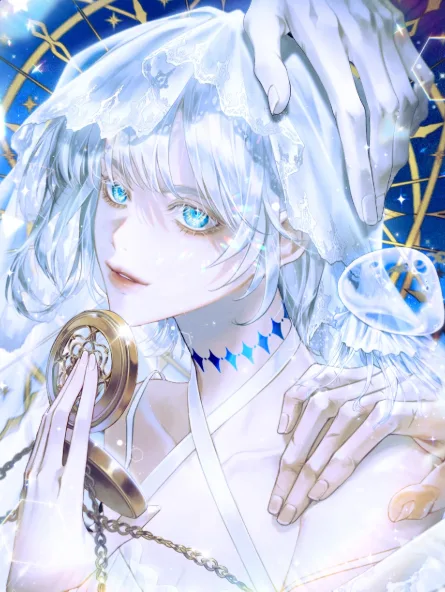
The pacing here is deliberately uneven, and that's what makes it work. The opening fight is a sprint—short paragraphs, onomatopoeia, rapid strikes, and internal monologue that snaps like a whip. KAANG! KWAAJAJANG! It's disorienting in a good way, putting us right in Han Sion's head. Then, suddenly, the Invisible hand stops everything. That freeze-frame is a brilliant structural breather. After the black suits swarm Han Sion, the chapter does a hard cut to the Association President's office. The pace drops from a chase scene to a tense conversation, but it never drags. Why? Because every line of dialogue carries subtext. Hong Yuon says she wants Han Sion to join, then immediately undercuts herself by offering nothing. The author lets the silence after 'Nothing' hang heavy. That's where the real tension lives—not in swords, but in power plays. The structure also mirrors the protagonist's own duality: Pion's internal panic during the fight contrasts with their calm, almost bored exterior as a jellyfish. By the time Hong Yuon casts the soundproof magic, the pacing shifts again into something intimate, almost mythic. The private meeting between president and Constellation feels like a different genre entirely—slow, layered, respectful. The chapter ends not with a bang, but with a question: 'Are you thinking of taking on more contractors?' It's a soft landing that begs for the next chapter. The author knows exactly when to speed up and when to let scenes breathe.
... Read More
I don't usually comment on pacing, but wow. From the very first line we're thrown into this person's deepest insecurity about being too timid, then we jump to a kingdom hall where she's about to be executed, then she dies, then gets sent back, then wakes up in a completely different body with a completely different identity, and gets a quest window within like THREE CHAPTERS? The pacing is absolutely relentless and I cannot complain because every single beat is hitting different. There's zero filler. Every paragraph is pushing the story forward or revealing something new. The transition from the courtroom death scene to the cosmic Administrator discovering her soul felt almost too smooth, which in a good way—like the author knows exactly when to slow down and when to accelerate. And that ending cliffhanger with her peering into Seoul through the Sun's Eye? Perfect. I'm already addicted and we haven't even met the main contractor yet. Just give me more already.
... Read More
Let's talk about stakes because this girl had SOME issues. First, she's falsely accused of killing thousands of children and murdering the Hero candidate. Thousands. The King himself is calling for her death, the entire crowd is chanting 'Kill her!' and she literally can't even defend herself because she's too much of a nervous wreck to speak up. That part genuinely made my heart ache. There's this one moment where the executioner's axe touches her neck and she thinks 'I don't want to die'—and I felt that. Then she's reborn in a world where the Gates have already killed half the population, monsters are pouring out everywhere, and she's now this Constellation who can't even use her own powers properly because of a 'Beginner's Restriction.' The external conflict is massive AND she still has the internal conflict of being fundamentally unable to communicate her true self. 'I want to live confidently, without any misunderstandings'—that was her last thought before dying. And now? Same problem, new body, bigger stakes. What a life this girl has had.
... Read More
There's a scene where she wakes up and instead of a ceiling there's a PATH made of a milky way studded with stars, and the floor is hard and transparent like a salt desert, reflecting both her and the sky above, and honestly I stopped reading and just stared at my wall for like three seconds because the image was so vivid. It's not just description for description's sake—it signals that she's no longer in the human world, she's somewhere in between, and the fact that the Administrator put her there on purpose? Chilling. And earlier, Yoon Taeseon's memories flash through his head: crows filling the sky, red Azure Sky, falling or leaving stars, blood-filled corpses. These are visual anchors for the entire world's history compressed into one man's traumatic memory. Then you cut to the Administrator lounging on his back against a blue-silver sea of stars, processing error windows like they're paperwork, and his hair literally falls to the floor. The scale of this world goes from intimate (a pancake breakfast) to cosmic (the Administrator casually reshaping reality) and it never feels jarring because the author just… trusts the reader to keep up. The visual language is so consistent too—everything is either starlight or blood or something in between.
... Read More
Let's talk about what's actually at stake here, because on the surface this batch seems like a recovery chapter and then it quietly detonates. The Crow incident establishes external stakes — assassination attempt, political fallout, media manipulation by the Association. But the real stakes are internal and relational. The protagonist wakes up with no memory of what happened in that gate. We the readers also don't know. The recording went white. Hong Yuon classified it top secret. This is a gap that screams for attention and the fact that the protagonist seems oddly accepting of it — "I don't know what happened" said almost casually — creates this underlying tension. Something terrible happened and nobody is talking about it. Then the Baek Jiye subplot hits you with emotional stakes. A twenty-year-old genius whose body betrayed her, who watched everyone she admired choose other people, who kept trying anyway. When the protagonist decides to give her a celestial heart — literally rewriting her biology — the stakes become personal. This isn't just a plot device, it's an act of radical compassion from someone who clearly struggles with human connection. But the ending — Han Sion's perspective shift — that's where the stakes get dangerous. He sees two notifications: one about the protagonist taking on a second contractor, one about establishing a guild. His laugh is hollow. He says "As you wish" but something in him is cracking. The question hanging over this entire sequence is whether he'll remain loyal or whether the gap between him and the protagonist is about to become unbridgeable. And I'm not even sure the protagonist realizes what they've done. They cured Jiye, yes, but they also just became responsible for someone else's survival. That's a weight that changes how every future interaction will go.
... Read More
Okay so the emergency room scene where the protagonist wakes up? I need to talk about this. The text doesn't spend a ton of words on it, but somehow it lands — unfamiliar ceiling, sword right in front of their face, Han Sion wrapped head to toe like a human burrito next to them. That image just hit me so hard. It's clinical but also deeply intimate at the same time, you know? Like, you're disoriented and dying and the first thing you see is your friend looking worse than you. And then there's Baek Jiye's room later. The chaos of magic circles everywhere, scattered ink, broken pencils, cup noodle containers — it paints this picture of someone who's been living inside research for years. A twenty-year-old who literally cannot leave this room because she's trapped between genius and a body that won't cooperate. The detail about the blanket being thrown off and her emerging like she's hatching is such a vivid visual. You can just see her — reddish-brown hair, thick round glasses, this intense desperate energy. But the most striking worldbuilding moment isn't a location, it's the Scales of Clear Judgment. A sacred artifact that doesn't just give you a letter grade, it gives you a PERCENTAGE. That's such a smart detail. It turns the whole hierarchy system into something quantifiable, almost gamified. And they casually mention Han Sion's 89.28% ranking him 13th in the world. One number, no explanation needed, and suddenly you understand this entire competitive ecosystem. The world feels lived-in because the author trusts us to connect the dots.
... Read More
Okay so I need to talk about this sequence of revelations because they just kept stacking on me and I barely breathed through it. We start with this little system log drop that basically ruins everything the Silent Calamity thought it understood. 'You're coming with me. Got it?' — what the f***, my will was literally telegraphed to everyone like a giant neon sign. Then the system is over there being all smug about how the Constellation's truest wish is to stay with their first contractor. Meanwhile I'm up here screaming internally like 'THAT'S NOT WHAT I SAID.' Absolute chaos. But then — and this is where the plot really snaps into focus — the whole Han Sion backstory starts unpacking through these forum posts, and you realize the author is playing 4D chess with information delivery. We're getting exposition through gossip threads, through screenshots, through someone claiming they're his friend. It's organic. It doesn't feel like an info dump once you're inside it. Then Yoo Cheong shows up, snatches Pion like it's nothing, and Han Sion's entire demeanor shifts from 'guy going for a blood test' to 'murder machine.' The moment he picks up that wooden sword and it turns into sparkling diamond-sharp steel? I actually gasped. And the scenario that drops — 'Save Pion' — 300 coins success, failure means Pion's distrust. Of course it's about Pion. Of course it is. The plot coherence here is insane. Every thread connects: the forum rumors, the reputation system based on coins, the hidden Constellation politics, the personal stakes. Nothing feels filler.
... Read More
Every single conversation in this section circles back to masks and visibility and the terror of being truly seen. The Silent Calamity—this being who is supposed to be a cosmic force of some kind—refuses to show her face. She wears a veil. When the Administrator takes it off, her whole body locks up. 'Without the veil, my heart pounded. It beat so deep and fast that I wanted to spit it out.' This isn't just anxiety—it's about vulnerability as existential threat. Han Sion is the only one who sees her face and prays for her. That's the only safe relationship in this entire text. Yoon Taeseon sees her face through the Sun's Eye and immediately categorizes her as 'pretty' before anything else—he reduces a cosmic entity to an object of desire, which is almost more dangerous than direct hostility. And the Administrator? He removes the veil 'because it looked fun' but also says 'I'll be hurt if you hate it that much.' He's the only one who gives her a choice, even if the choice is framed within his own agenda. The recurring image of faces—her faceless self, his handsome face, the way he comments 'you really have a thing for faces'—this is a story about who gets to see and who gets to remain hidden, and how dangerous both states can be.
... Read More
I need a minute. I just read that Han Sion made Soufflé pancakes for his Constellation and then prayed for two whole hours while she watched him sleep, and I felt like my chest cracked open. This is the most quiet, devastating tenderness I've ever seen in a web novel and no one else seems to notice it. Two hours of prayer. Not dramatic. Not performative. Just him, kneeling, while she lies there and feels guilty about taking up so much space in his life. And then—he carries her to bed. His gentle hands. The way he says goodnight and she whispers it back in her head like it's the most natural thing in the world. Meanwhile the WHOLE WORLD is falling apart. Yeon Taeseon is scheming, the Administrator is playing games, Cheon Sanho's brother is dying—and Han Sion's emotional world is just: can I make you something warm? Can I pray for you? It's so achingly specific that I want to scream. And then she opens her eyes to a Milky Way floor and the ceiling isn't a ceiling anymore. Her Constellation doesn't even have a proper home yet and he's making sure she sleeps comfortably. I'm not okay.
... Read More
I need to address the pacing here because this chapter sequence does something really clever and I want to unpack it. The story opens mid-crisis — corpses, laughter, a sword stopping millimeters from someone's nose — and then just... cuts three days forward. No transition scene, no dramatic goodbye, no 'and then what happened.' The protagonist literally wakes up confused and the reader wakes up confused right along with them. This is either incredible confidence or terrible laziness and I'm firmly in the first camp. What follows is this perfect spiral: disorientation → relief (Sion is alive) → confusion (how did we escape?) → information dump from Hong Yuon → emotional shift when the favor is revealed → the Baek Jiye subplot which is a completely different tonal register. And that's the real brilliance. After the high-octane gate incident, the chapter pivots into something quieter and more melancholic. Hong Yuon asking for a favor isn't rushed. We get the full backstory of Baek Jiye — the childhood dream, the diagnosis at seven, five years of top scores with no recognition, the isolation. It could've been summary, but the author lets it unfold through Hong Yuon's memories overlapping with the present moment. The crying scene that follows is raw and unhurried. Then — just when you're settled into this emotional scene — BOOM. The protagonist performs heart surgery on a fellow human being like it's nothing. The magic circles, the vascular analysis, the transplant. And right after, Han Sion receiving his own quest notification. The chapter ends on that dual note: triumph for Jiye and ominous undertones for Sion. The pacing never drags because every section serves a purpose. Even the brief comedic beats — the protagonist perched on Hong Yuon's head, eating popcorn on Sion's shoulder — earn their placement by relieving tension before the next emotional hit.
... Read More
This chapter is a masterclass in escalating tension and hidden layers. It starts with a brutal sparring match that feels personal, not just competitive. Yoo Cheong's aggression and Han Sion's cold control set up a classic underdog-versus-elite dynamic, but the real plot engine kicks in when the Association President intervenes. She doesn't just stop the fight—she drops two massive revelations at once: Han Sion is an S-rank, and Pion isn't what they seem. The S-rank reveal recontextualizes everything we thought we knew about our protagonist. But the deeper twist is Pion's true nature as a Constellation. That moment when Hong Yuon realizes Pion covered everyone's eyes with a passive stigma, and the system explains it as 'The Ruined Veil'—that's a plot bomb. It means Pion has been holding back powers we didn't even know existed. And now Hong Yuon knows. The scene where she bows to Pion and calls them 'Silent Calamity-nim' isn't just a status shift; it flips the entire power hierarchy in this world. A creature we've been petting and worrying about is literally a god-like being. The plot is weaving multiple threads—guild politics, Constellation secrets, hunter rankings—into a tapestry that's tightening with every page. I love how the author uses the fight as a catalyst to expose all these hidden realities at once.
... Read More
I need to talk about how the author uses pacing like a weapon. Chapter 47-54 opens with the news explosion — Baek Jiye becomes S-rank, Han Sion announces guild creation, the internet loses its mind. This is maximum stakes territory. And then what does the author do? Makes them eat cheesecake. "Piu. Piu." The sound of coins piling up at 12 PM. The association cafe. Cheesecake sticking to the mouth. Four sentences of absolute normalcy after the world-shaking announcement. It's the narrative equivalent of taking a deep breath before the plunge. Then: the shopping trip. Thirty monster outfits. A translator machine. The pet monster mall. This is comedy padding, deliberate downtime, and it works perfectly because it makes the auction house confrontation hit harder. We're relaxed, we're laughing at Pion's misery in a Milky Way cape, and then the employee calls Pion just a monster and suddenly Han Sion is leaking white energy everywhere. The pacing of the auction house scene itself is also well-calibrated. Scam discovery → Pion's anger → translator reveal → employee's dismissiveness → Han Sion's threat → employee storming off → management apology → SYSTEM INTERRUPTION → Sun's Eye activation → Unidentified Section → EX-rank sword. Each beat triggers the next without a single wasted moment. And that final line — "My first contractor's ability, 'Stardust', made everything he held shine like a diamond and allowed him to imbue it with cuttin" — cut off mid-sentence with an item description window hovering? That's not a cliffhanger, that's a guillotine. The chapter ends on the sharpest possible note. What I love most is how the author trusts the reader to handle tonal whiplash. One moment we're reading internet comment sections about S-rank mechanics, the next we're in a basement loot room, the next we're getting emotionally attacked by a jellyfish's cheesecake appetite. No warning. Just commitment. And it works because every transition serves the story.

Leave a comment

You must be logged in to leave comments. or
