A Strange Yet Romantic Return Report - Reviews

A Strange Yet Romantic Return Report
+Add to Custom List
Sort
Add review
... Read More
I'm not even going to pretend the forum posts aren't the most entertaining thing in this entire passage. Let me just quote a few gems because I can't do them justice by paraphrasing. 'What kind of monster surfs the internet…' / 'Is its intelligence high? As expected of a monster chosen by the Constellation-nim…' — this exchange between Han Sion and himself is comedy gold. He's talking to a jellyfish like it's a philosophical question and the jellyfish is over there thinking about coins. The forum users are a whole personality showcase in miniature. 'I think his Constellation is the Silent Calamity;; didn't you see the interview?└ I agree. If that interview is fake, the acting industry has lost a great actor.' The tiered reply structure, the semi-colon typos that feel so real, the way they're simultaneously skeptical and impressed — this is internet culture captured perfectly. And then there's Han Sion's friend's post, which is basically a whole narrative in forum form. The casual 'lol' scattered through serious revelations. The proof shot mention. The observation about his personality: 'His personality doesn't seem very nice… but then again, Awakeners these days;;' — and then the reply defending him. This is how real people talk online. Real, messy, contradictory, passionate. The Silent Calamity's internal voice is also distinct — that mix of greed, panic, and dry observation. 'My wallet, which had surpassed 5,000 coins in an instant… was satisfying to look at no matter how many times I checked.' That's not a Constellation speaking, that's a addict talking about their fix. And the famous 'pikku' miscommunication scene? 'No. I was definitely trying to send 'That's not it, and I'm not selling my contractor.' But all that comes out is 'pikku.'' The frustration is palpable and hilarious. Every character has a recognizable voice. Even the jellyfish, somehow.
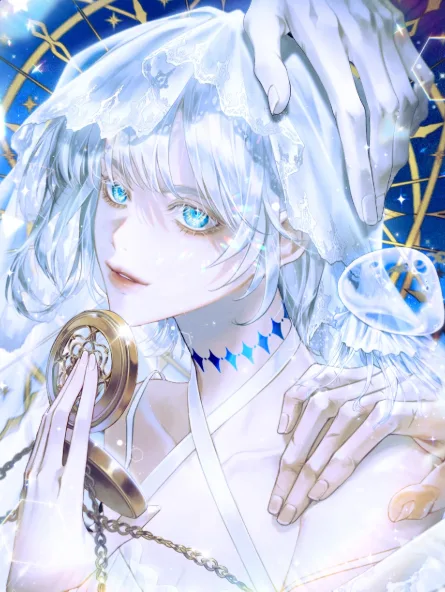
... Read More
I need to talk about how lonely this character is. Like, truly alone. She was summoned to another world, became the most powerful person there through sheer accident, and yet when she's standing on that execution platform—with accusations of killing children, with the Hero dead, with the Demon King's army coming—nobody comes to her defense. Nobody. All those people who praised her, all those voices that called her 'White Magic Tower Head' with reverence, they turned on her instantly. 'Kill her! Kill her!' and she couldn't even cry. Not even a single tear came out. And her last conscious thought wasn't about revenge or justice—it was just 'I want to live confidently, without any misunderstandings.' After everything she went through, that's what she wanted. Just to exist without being misunderstood. And then she dies alone, gets sent back to Earth, and ends up in a body that isn't even hers. The scene where she's checking the mirror and seeing white hair and sun-patterned pupils—that's not a triumph, that's isolation. She's more alone now than ever. But also... there's something kind of hopeful in it, right? She's dead and she still chose to find a contractor instead of cashing out. Maybe she's tired of being alone, tired of having no one beside her. I just hope whoever she contracts with actually listens to her. Please let someone finally hear her.
... Read More
I need to talk about how the author builds atmosphere because some of these scenes hit different. Let's start with that opening image: 'A clear sky, a smiling handsome man, a mocking system.' Three beats, three tones, perfect compression. You immediately understand this is a story about the gap between appearance and reality. Then there's the Awakener Association scene, which is just SO well-staged. The place is crowded because it's been closed for a week dealing with the B-rank rampage aftermath. The line is shortening but the energy is electric — people are whispering about whether Han Sion is really S-rank, and the guide's attitude does this complete 180-degree pivot the second he sees the jellyfish. 'I-I'll escort you!' The shift from dismissive to reverential in two lines tells you everything about this world's value system. But the most cinematic moment has to be the training ground confrontation. 'Han Sion's eyes widened. It wasn't just because of the huge sum of 300 coins.' He picks up the wooden sword, activates his unique skill, and that brown stick transforms into something 'sparkling diamond, scattering light.' Yoo Cheong is dumbfounded. The jellyfish goes flying. The impact wave rolls across the training ground. This reads like a storyboard panel by panel. And the worldbuilding details accumulate naturally — the currency system (coins that can be exchanged for cash but not reverse), the S-rank Constellation 'Clear Scales' who blessed the testing machine, the guild dynamics, the way fame literally generates income through the internet. The world feels lived-in because the rules are revealed through action, not exposition.
... Read More
I am not ready for how much I care about this jellyfish man and his devoted contractor. Let me explain why this relationship has me absolutely wrecked. On one side you have Han Sion, who went from Scavenger to overnight legend, and who — and this is the part that genuinely surprised me — is basically a religious fanatic about his Constellation. His friend on the forum says it straight: 'He almost got into a fight when he heard people badmouthing his Constellation.' That's not normal devotion. That's cult-level energy. But here's the thing: he also named a jellyfish Pion and cried when it was hurt, and the jellyfish is honestly kind of a terrible roommate who sits on the ceiling and refuses to come down. And on the other side, the Silent Calamity — this so-called nobody Constellation who can't even communicate properly without accidentally sending 'pikku' every time — is somehow the emotional anchor of this whole setup. When Pion gets grabbed by Yoo Cheong, the narration hits different. 'Our Pion's body is weak, and he cries in pain when squeezed like that.' That's Han Sion thinking this. Not 'my contractor's pet.' Not 'the Constellation's asset.' His Pion. The beauty is in the asymmetry. Han Sion worships like his life depends on it, and the Silent Calamity is mostly just along for the coin rush — until it isn't. The fact that the Constellation felt genuine panic about being misunderstood by The Crow's Ruins ('That Constellation will think I have a flawed character!') shows there's a vulnerable core under all that greed. These two are locked into something neither of them fully understands yet, and I am here for it.
... Read More
The layers of conflict in this passage are what make it hit so hard, and I need to unpack why. At the surface level, it's straightforward: some A-rank hunter grabbed the jellyfish and now the contractor has to rescue it. Simple rescue mission. But the author keeps pulling the rug out from under you. First layer: the system betrayal. The Silent Calamity thought it was being private, but its unvoiced thoughts were broadcast. That's existential vulnerability for a being that apparently values its privacy above everything else. Second layer: The Crow's Ruins making a play. This isn't just some random hunter being jerky — this is a Constellation-level power move. 'Awakeners of that level are common. I'll give you a good price.' The implication is clear: Han Sion is an asset, and assets can be acquired. The Silent Calamity is being told its contractor isn't worth keeping. Third layer: the coin economy as stakes. The Silent Calamity's entire existence is tied to internet fame generating coins. 'When Han Sion grabbed me and told me to live with him, I couldn't breathe… but once I realized that this contractor saw me not as a human but as a jellyfish, I felt at ease.' This is both funny and deeply tragic — a god-like being whose survival depends on being treated like a pet. Fourth layer: the scenario itself. 'Success: 300 coins. Failure: Pion's distrust.' The stakes are framed in currency but the real cost is relational. Pion's distrust isn't just a number — it's the credibility of an entire Constellation-contractor partnership built on misunderstanding and accidental devotion. And underneath all of it: Han Sion's near-instinctive violence when his jellyfish is threatened. 'His target was the neck.' This man will kill for a gelatinous organism. The emotional stakes have already crossed a threshold where logic doesn't apply anymore.
... Read More
You cannot tell me the Administrator saying 'But are you okay? You don't have your veil now' isn't the most casually unhinged line in recent web fiction. He just kidnapped her into a dream dimension, stripped her of her protective gear because it 'looked fun,' and then complains that she LEFT HIS GIFT lying around. Like a teenager who took someone's hoodie and now they're mad the hoodie was folded wrong. And she fires back 'If you don't like it, don't take the veil' and I lost it. The power dynamic here is SO tilted and yet she's giving him sass like he's a annoying coworker, not a god-tier entity who controls the entire system. Then she goes ALL business when she realizes what he actually wants and asks 'Why did you call me?' in the most deadpan voice possible. The dialogue shift is masterful—he teases her, laughs at her short answers, says 'it's a shame if you were in the starry sky I'd play with you all day,' and then pivots to 'your ascension is only 10 years away' like it's nothing. One moment he's a playful menace, the next he's delivering lore that makes your blood run cold and he doesn't even pause for effect.
... Read More
Okay so let's talk about this Yoon Taeseon guy because what the actual hell is he doing here. This regressor just waltzes into Cheon Sanho's life promising to cure his sibling, completely sidestepping Han Sion who literally just showed up with the same offer. And then the Silent Calamity—this brand new Constellation who barely knows what she's doing—tries to contract with Cheon Sanho and gets REJECTED because his stigma is too powerful. That's the first domino. Then we cut to Yoon Taeseon finding out the Silent Calamity exists and deciding SHE is the real target. He literally thinks about her face. THE FACES. Like she's not some cosmic entity he should be terrified of. And then—BAM—the Administrator shows up in a DREAM and offers to lift the stigma in exchange for something we don't know yet. The plot is moving at a thousand miles per hour and I haven't even figured out why the Administrator is smiling when he looks at her. She's basically a toddler in a jellyfish body and he's watching her like it's his favorite show. 'I'll get caught up too.' WHAT DOES THAT MEAN.
... Read More
There's something deeply symbolic happening with Pion's form that the book doesn't quite name outright but keeps circling around. She's a Constellation — a being of stars, of cosmic scale — yet she chooses to inhabit a tiny, soft, nearly transparent jellyfish. This is a creature that drifts. It has no brain. It flows with currents. And yet it's ancient, older than dinosaurs even. There's a parallel there between Pion's situation and her physical form: she appears vulnerable and drifting but carries an ancient power, and her lack of traditional weapons or imposing physique is exactly what makes her dangerous. The Mana Disharmony Syndrome is another layer I can't stop thinking about. It's described as the body's blood rejecting mana — a beautiful rejection, a sacred energy being treated as foreign by the very vessel meant to carry it. This mirrors Pion's own position: she's a being from outside this world trying to find a place where she belongs, where she can coexist with a human without being rejected. The cure requires blood from another race, which is this deeply intimate act of merging, of making the foreign into the familiar. The fact that the association president is offering a girl with this exact condition to a Constellation feels almost allegorical — two mismatched beings trying to find compatibility. And then there's the golden gear, fragment of an annihilated Constellation. The idea that Constellations can die, that they leave behind artifacts that can be found inside monsters, reframes everything about the power structure of this world. It suggests that even cosmic beings are mortal in some sense, and that their remains become part of the ecosystem of the lower world.
... Read More
Okay I need to just say this immediately — the relationship between the Constellation and Han Sion is quietly one of the sweetest things I've read in a long time and I think it's meant to be but like actually feels earned because of how Pion narrates everything. Think about it. This is a cosmic being who could just observe from afar but instead she's actively thinking about whether she should take on more contractors, whether she can afford it, whether the opportunity cost is worth it. And then when the Association President brings up her niece, Pion's first instinct isn't even about the girl — it's about making sure she doesn't lose Sion, and she frames it almost like a romantic dilemma without even realizing it. That line 'If my heart were trembling, it would have been an endless YES' — that is genuinely devastating in the best way. She's describing her own emotional response to a contract like it's a love confession and she doesn't even seem to realize how much she's already invested in this guy. And then the little moments — the pancakes promise before entering the gate, the head strokes, the way Pion flirts her little tentacles when he calls her Pion versus when they call her jellyfish. 'I don't like ugly things' she says while snuggling closer to him. That's not just comedic relief, that's genuine affection. The author never makes it melodramatic or overly explicit, but the emotional thread runs through every scene and I kept catching myself smiling at my phone like an idiot.
... Read More
I'm not even going to pretend I'm going to analyze this objectively. That line. "Sleep well." ... "But when you wake up, let 'us' not remember anything." ... "Because it's embarrassing." Laughter echoing in a room full of corpses. That is — I cannot — the tonal whiplash is extraordinary. We go from existential horror to teenage embarrassment in three sentences and it works because the voice is so distinctly the protagonist's. This is someone who has survived things that would break other people and their first instinct is self-consciousness. And the dialogue throughout this batch? Everyone sounds like themselves, which in fantasy novels is rarer than finding a working elevator in a building that wasn't just constructed. Baek Jiye's voice is immediate and sharp: "What's that? That stupid-looking jellyfish?" Then a few lines later she's sobbing "Auntie… what do I do?" The pivot between deflection and vulnerability is so natural it doesn't feel written. It feels like someone who has spent twenty years building walls and the walls are crumbling in real time. Hong Yuon's speech patterns are softer, more hesitant. "J-Jiye, that's not it…" The stutter tells you everything about how she's feeling — caught between professional duty and personal love. Han Sion barely speaks in this batch and that's the point. "As you wish…. My Constellation." Two sentences, hollow laugh, and you understand his entire emotional state. He's watching the protagonist bond with someone new, receiving orders from above, and he's fine with it on the surface. But the hollow laugh says otherwise. And the protagonist's internal monologue — "I hate interactionnnnn… human to human, person to person, I hate ittttt…!" — this is pure comedic relief that also tells us everything about their social orientation. The narrative voice is self-aware, slightly absurd, and completely trustworthy even when it's lying to itself.
... Read More
The stakes in this section operate on three simultaneous levels and the author never lets you forget any of them. On the surface level, there's the stability assessment — an A-rank gate test that should be routine but immediately goes wrong when monkey monsters attack the second they enter. Sion's speed in dispatching the first one creates tension because you're already bracing for the escalation. Then there's the guild conflict with The Crow. These guys are established antagonists who killed Yoo Cheong, they've made threats against Sion, and now they're in the SAME GATE as him during an official assessment. The whispers behind their backs, the veiled threats through messages, the reminder that 'Yoo Cheong got his ass kicked' — all of this means that if things go south inside the gate, there's no authority figure who can protect them. The supervisor is watching but not intervening, which is the worst possible setup. But the deepest stake is the one Pion discovers mid-battle. The golden gear — a fragment of an annihilated Constellation — appearing inside a monster during an official assessment is not coincidence. Something is hunting Constellations or their remnants, and Sion just handed it to her voluntarily while she was distracted. That moment where she doesn't notice the Crow members reacting to it? That's the kind of dramatic irony that makes your stomach drop. You know something bad is coming and there's nothing you can do about it except keep reading.
... Read More
There's something really interesting about the theme of silence running through this entire passage. Our protagonist was timid, couldn't make eye contact, would spend half a day thinking about how to reply to someone—and yet that exact trait is what made people praise her as the 'White Magic Tower Head.' Her silence was misread as dignity, her passivity as wisdom. And then the same silence becomes her undoing when she's on trial—she can't speak up fast enough to save herself. Even after becoming a Constellation, she's literally blocked from speaking because of the 'Word of Power' restriction. Silence is both what elevates her and what destroys her, and now it's what keeps her powerless in her new form. There's also this beautiful irony in her title: 'Silent Calamity.' She's feared as a calamity but she's just... quiet. The white imagery throughout is striking too—white mana, white hair, pure white light. White representing both purity and erasure, like she's being painted over by other people's interpretations again and again. 'I want to live confidently, without any misunderstandings'—that line hit me hard because it's the exact opposite of everything she's experienced.

Leave a comment

You must be logged in to leave comments. or
