A Story Only I Don't Know - Reviews

A Story Only I Don't Know
+Add to Custom List
Sort
Add review
... Read More
Okay so this chapter is giving me major emotional whiplash and I cannot lie, I am HERE for it. The whole setup with Edmund showing up unexpectedly after three days of silence? Chef's kiss. The way the author builds this tension where Elia is trying so hard to pretend nothing happened while everyone around her is absolutely losing their minds over his visit is both hilarious and devastating. Let me talk about the central mystery here - WHY did Edmund come? The author refuses to give us a straight answer, which is both frustrating and brilliant. Elia keeps telling herself it was just an anomaly, but then she overhears the staff gossiping about him, and suddenly she's the one waiting. That反转 moment where she catches herself hoping he'll show up again? My heart literally ached. She goes from "he's not coming" to "wait, maybe he will?" and it's so painfully relatable. The subplot with the staff preparing elaborate outfits and cleaning the mansion without even being asked is such a clever way to show how Edmund's presence ripples through everyone's lives. They're all living in anticipation while Elia is desperately trying to maintain normalcy. And that line "waiting for Edmund, who wasn't coming, was that meaningless" - wait, no, it wasn't meaningless at all, was it? I also love how the author uses the duck incident as both comic relief and character development. Elia's outburst about never eating duck again shows her stress levels through action rather than just narration. Classic show-don't-tell. But underneath the humor, there's this real question about power dynamics - who gets to decide when Edmund visits? Who gets to control the narrative of their relationship? The ending where Elia is left stewing in her own frustration because Edmund promised he wouldn't do anything and then actually does nothing is such a perfect note to end on. The author has turned us all intoElia - we want answers but we're also afraid of what we might find if we actually get them.
... Read More
Okay so I need to talk about Eugene because this man is THE funniest character in the entire series and nobody gives him enough credit. Watching him try to work while Elia is dramatically sighing and kicking her legs on his sofa is comedy gold. The sibling dynamics between these two are absolutely flawless. Eugene's entire existence revolves around hating his job, and Elia's chaos is the universe's way of punishing him further. But here's the thing that got me — the scene where they're arguing about whether he called her twice or four times and dragging Lucas into it? That's not just comic relief, that's CHARACTER. Eugene is a responsible earl who secretly cares deeply but would rather die than show it. And Elia is chaos incarnate but she DOES her work and she shows up. Their relationship is built on this beautiful contradiction of annoyance masking genuine affection. And then there's Edmund. Oh Edmund. The way he goes from cold and distant to THIS vulnerable man asking permission to walk someone home... I don't trust him one bit and I can't look away. His childhood connection to Elia through the duck incident and the flowers is haunting. He REMEMBERED she liked duck. After ALL this time. That's either the sweetest thing ever or the most manipulative thing ever — and honestly, it's probably both.
... Read More
I need to talk about how the author handles the repeated phrase 'What is all this?' because honestly it's one of my favorite dialogue choices in recent memory. Elia says it first: 'What… What is all this?' Her voice breaks between the articles—she can barely form the sentence. And then she repeats it, almost ritualistically: 'What does it mean? What is all this…?' And then again, clutching the blue invitation: 'What is all this?' Three times. Each time slightly different, each time revealing more of her unraveling. This isn't lazy repetition—this is character voice showing someone who genuinely cannot process what she's seeing and is using the same words as an anchor while her整个世界 falls apart. Meanwhile, Hans's dialogue is a completely different creature. 'Greetings, Miss.' 'As His Grace's most trusted aide.' 'Have a good day.' Every sentence is measured, polished, rehearsed. The narration even tells us he 'had taken two hours to prepare, but less than a minute to say it all.' This man is a performance artist delivering a script, and the contrast with Elia's raw, fragmented speech is chef's kiss. Eugene's voice is warm and clumsy: 'I'm worried, that's all.' 'What if he threatened you…' He trails off. He hedges. He's always leaving sentences unfinished because he's worried about how they'll land. Even his internal monologue is softer than everyone else's—'Elly, listen. Do you really… really not want to talk about it?' The double 'really' says everything. And the narrative voice itself—dry, slightly sardonic, capable of devastating precision: 'In a world where people kill for love, even murderers go around talking about love.' That line came out of nowhere and absolutely wrecked me. The author's voice has this dark humor that sneaks up on you between scenes of emotional devastation.
... Read More
The symbolism in this text is SO thick I need to untangle it slowly. Let me start with the music box because it's doing heavy thematic lifting. Edmund winds it and the doll woman dances endlessly, trapped in his hand. The text is almost shamelessly explicit about this: "The woman would have to keep dancing until the spring wound down, not even knowing she was in the palm of the man's hand." Elia is the doll. Edmund controls the mechanism. The romance genre is full of this dynamic, but the author doesn't shy away from how suffocating it is. Then there's the puppy motif. Eight-year-old Edmund calls her a puppy — clinging, noisy, annoying. But then she becomes a guard dog, growling at intrusion. And now? Now she's the one being wound up, being made to perform affection she doesn't understand. The animal imagery traces her entire arc from victim of his cruelty to someone trying to survive within his world. And those blue eyes — the winter-lake blue that's both "clear and pure" and terrifyingly deep. Water as a symbol of both clarity and danger, of reflection and drowning. Elia tries to measure Edmund like a lake, but she can only see her own confusion reflected back. The dream where the monster hands her a book she can't read? That's the thesis of the whole novel in one image: intimacy that is physically present but emotionally inaccessible. The tragedy isn't that they don't love each other — it's that neither of them knows how to translate it.
... Read More
Okay so here's the thing about this whole Edmund situation—three days ago he shows up, drops the most casually devastating line of his entire existence ('I missed you'), and then vanishes for FIVE DAYS. And then what? He sends an army of staff with thousands of flowers to flood her drawing room with autumn in the middle of spring. This plot twist isn't some dramatic villain reveal or a shocking death—it's far more interesting because it's emotional. The real bombshell is that Edmund, who has been cold and distant this entire story, has been actively hurting at the Imperial Palace, losing sleep, swearing (remember: Eugene swears sometimes and even that felt rare), and still managed to personally pick gifts for Elia while pretending he wasn't affected by her at all. And then the parallel plot of the assassination attempt hits us. Five staff members killed, poison at breakfast—this isn't just a romance novel anymore, people. The political danger is escalating AND Edmund's personal feelings are escalating at the same time. Did the assassination attempt have anything to do with his decision to finally admit he misses her? Is that why he's sending all these flowers? The timing feels suspicious. Also, the structure of hiding Edmund's POV for an entire chapter and then showing us HIS side through Hans's report was such a smart move. We think we know what's happening from Elia's confused, hurt perspective, and then BAM—Hans reveals Edmund hadn't even blinked when told about five deaths but TWISTED at news of Elia crying. That's the kind of character-revealing moment that makes you slam the book shut.
... Read More
I need to sit down because my heart can't take this. The emotional complexity in these chapters is absolutely staggering, and I am not okay. Let's talk about Elia's internal journey because oh boy, does she have one. She starts off furious - righteously so! Edmund shows up, says this devastatingly vulnerable thing about missing her, and then disappears like she's nothing. But somewhere between her threats to the kitchen staff and her failed attempts at indifference, something shifts. That moment when she catches herself listening to the servants discuss when Edmund might return? That's the moment I fell in love with her character. She's so honest with herself even when she doesn't want to be. And the loneliness! The author writes it so beautifully - "She thought she was the only one unable to forget, the only one suffering alone." But then she overhears the staff talking and realizes she's not alone in wondering, in hoping, in obsessing. Yet being part of a shared secret doesn't make it easier. If anything, it makes it worse because now everyone knows except her. I have to mention the coat scene. When Elia feels like she's wearing Edmund's coat when there's nothing there - that's such a powerful metaphor for carrying someone's presence even when they're gone. It's physical, it's sensory, it's everything. And then the music box metaphor, that unwound melody that won't stop playing in her head... the author is crafting this entire emotional landscape through sensory details rather than just stating feelings. The CP chemistry here is so interesting because it's built on absence rather than presence. Every interaction we see is either回忆 or aftermath. Edmund says "I missed you" and then vanishes. Elia wants to confront him but can't because of pride and propriety. This push-pull, this tension between wanting to run toward him and needing to run away is exhausting and addictive. And Eugene! Her brother keeps pushing her to tell him what happened, and Elia's threat to forge a breakup letter is both funny and sad. She'd rather face public humiliation than admit that a man who barely acknowledges her in public made her feel something real in private.
... Read More
There's this line where Elia realizes that the TOTAL amount of time she's ever spoken to Edmund in her entire life is probably less than thirty minutes. Thirty minutes. Out of eighteen years. And somehow those thirty minutes are the ones that are destroying her ability to function. The pacing here is deliberately unsettling. We get Edmund's grand declaration, then immediately the chapter slows down into this long, spiraling interior monologue where Elia goes from panic to memory to dream. It's not action-heavy, but it's never boring because every paragraph is charged with tension. The author trusts us to sit with discomfort. I also loved how the chapter ends — not with a cliffhanger dialogue or a dramatic reveal, but with Elia's dream. The structure moves from external chaos (Edmund's visit, the servants scrambling) → internal processing (memories, analysis) → subconscious expression (the dream). That's a really controlled escalation. The dream sequence at the end is the emotional climax, and it's far more powerful than anything Edmund could have said awake. The only thing I'd flag is that the servant dialogue at the very end feels slightly rushed compared to everything else. But honestly, it works as a comedic release valve before we dive into the dream. The author knows exactly when to breathe and when to tighten the screw.
... Read More
Okay so let me just... I need to process what Edmund is actually saying at the end here because it genuinely gave me chills. Like, he lays it all out — he knows he could manipulate Elia. He knows he could kidnap someone she cares about, or guilt-trip her into staying by pretending he'd die if she left. The man is fully aware he's capable of vile, petty, emotionally abusive tactics. And yet. And yet the thing that actually terrifies him isn't losing her to another man or to revenge. It's the possibility that after all this time, after all his effort, after chasing her all the way back to this mansion... that he might not even still love her. "Even if she wore the same skin as the woman he loved, he might not be able to love her." That line hit me like a truck. Because it's so honest. It's not the dramatic "I can't live without you" romance language — it's something far more human and far more devastating. He's afraid that the love he's been carrying for eight years, the love that survived death itself, might just... fizzle out. That she might look at him with blank eyes and feel nothing. That he might look at her and feel nothing either. And Eugene meanwhile is over here thinking his sister looks "human enough" and that the only time she's cute is when she's eating. The contrast between these two men's perspectives on the same woman is honestly hilarious and heartbreaking at the same time.
... Read More
The pacing in these chapters is absolutely masterful, and I need to break down why it works so well. We open with the aftermath of Edmund's visit - the staff already preparing for his potential return, Elia trying to maintain normalcy. The author drops us right into the middle of the emotional fallout without unnecessary exposition. This is confident storytelling. We don't need to know everything that happened; we just need to feel what it did. Then we get this beautiful slow burn of three days passing. The author could have rushed us to the next encounter, but instead chooses to sit with the anticipation. Each day passes with increasing tension - the staff's excitement doesn't fade, Elia's denial becomes more desperate, and we, the readers, are left wondering just like Elia does: when will he come back? The structure alternates between comedy and pathos in perfect rhythm. The duck incident gives us a release, then Eugene's arrival tightens the screws again. Elia's outburst - "If something even resembling duck shows up on the table after today, I'll starve" - is hilarious, but it's also a cry for help. She's starving for answers, for contact, for something. I love how the author uses time jumps effectively. We skip from the immediate aftermath to three days later, and in that gap, everything has changed internally even though nothing has changed externally. Elia goes from "he's not coming" to consciously hoping he might. The author trusts us to fill in those emotional gaps without spelling everything out. The chapter breaks with Elia overhearing the staff conversation about when Edmund will return next - this is such a perfect structural choice. We thought the quiet period meant peace, but no, the excitement has just gone underground. It's hiding in stairwells and kitchen conversations, waiting to emerge. And that ending! Left with Edmund's promise that he won't do anything, followed by three days of absolutely nothing. The author has created this excruciating suspension where the reader and protagonist are equally desperate for resolution. It's not dragging - it's deliberate. Every silent day feels like a scene because we're watching Elia's thoughts evolve in real time.
... Read More
Let me just say this first: the pacing in these chapters is genuinely masterful and I'm still recovering. We open with Elia covering the music box, not quite hidden, not quite visible, and the narrator immediately connects that to Edmund—'just like Edmund. He'd appeared out of nowhere, and now his absence was just as irritating.' Three sentences and we're already layered with symbolism AND emotional timeline compression. The past visit and the present anxiety occupy the same psychological space. Then we CUT to 'after five days.' Five days of palace work, and the transition is so smooth you barely notice the time jump. Eugene arrives exhausted, they have their conversation, she confesses, she runs to her room, the door locking scene plays out with mounting tension, and then—BOOM—Daisy knocks. 'They're from the Raspe Dukedom.' Your heart drops. You know exactly what's coming and you can't look away. She walks through the hallway, senses sharpened like a blade at her spine, and enters the drawing room. The sensory overload hits: the overwhelming scent, the autumn flowers in spring, the sheer spectacle of it all. And then the chapter ends on 'Another story was flowing by, one that only Elia didn't know.' Which is honestly the most frustrating sentence ever written and I have never wanted to flip to the next chapter more in my entire life. Then Chapter 6.1 pivots to Hans reporting to Edmund—a complete POV shift—and the pacing here is almost comedic in how efficiently it works. We get exposition about the assassination attempt, the poison, Elia's tears, Edmund's reaction, and Hans's internal monologue all in rapid succession. By the end, Edmund has already assigned Hans hours of additional work before Hans can even leave. The chapter ends mid-Hans-suffering and I'm already reaching for the next one.
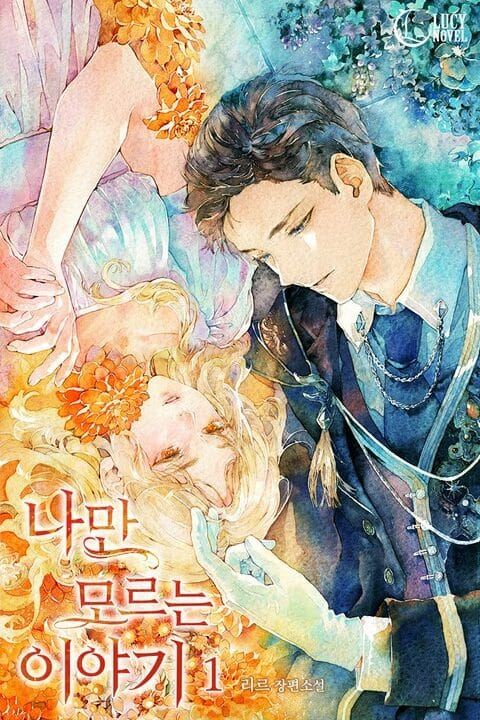
... Read More
There is a symbol in this text that I cannot stop thinking about. Eyes. Specifically Elia's eyes. They are described as autumn-colored and when Edmund looks into them, a flower blooms. Autumn is a season of endings. Leaves falling. Things dying. The warm colors before the cold takes over. And flowers blooming in autumn is almost paradoxical. It is beautiful but it is also slightly wrong, slightly desperate, like something reaching for light knowing winter is coming. Edmund is cursed by death. He cannot love anything. And yet her eyes made flowers bloom in him. The symbolism is doing a lot of work here. It is suggesting that love in this story is not warm and sunny. It is autumnal. It is beautiful precisely because it exists alongside decay and ending. It is connected to his curse. Then there is the blood. The Duke of Blood. His infamous title. Blood is life and death simultaneously. It is what connects him to Elia in the most physical, intimate way and also what separates them. In their marriage, he wanted to devour her eyes. To consume them. To leave marks on her skin. The blood imagery and the eye imagery are tangled together and I think that is intentional. Daisy keeps saying Elia will fall deeply in love with Edmund eventually. But the text already knows the opposite happened. They were married for eight years and it ended. The theme here seems to be about the impossibility of controlling how you feel about someone, and also about the impossibility of unfeeling someone you were once devastatingly close to. The engagement in Chapter 1 is not a beginning. It is a return. A cyclical structure. They are being pushed back toward each other after eight years of separation and the text keeps asking us to feel the weight of that history even though Elia herself seems determined not to carry it. What does it mean to be cursed by death but still capable of wanting to devour someone's eyes with your mouth? I don't think that is a contradiction. I think it is the whole point.
... Read More
Okay so here is the thing that completely wrecked me in these first seven chapters. You spend the entire first chapter believing you know this story. Lazy noble girl, indifferent duke fiancé, political marriage, the usual. And then Chapter 2 just pulls the rug out from under everything. Elia and Edmund were MARRIED. For eight years. And she handed him divorce papers at twenty-eight while he was thirty-two. That is not a casual breakup, that is a life being cut open. But what gets me is the asymmetry of how they remember each other. Elia doesn't even want to think about Edmund. To her, he is literally less than a stranger. She jokes about sending a letter to break off the engagement and adds, "Unless he hears I've fallen down the stairs and died, he wouldn't come to the mansion." That line is devastating because it is presented as humor. She is so certain of his indifference that she makes it a joke in front of her maid. And then you get Edmund's POV and learn that the only thing he ever noticed about her were her eyes. "No one else dared to meet his gaze, but Elia always tried to look directly into Edmund's eyes." Think about that. Everyone in this entire empire is terrified of him. He is the Duke of Blood. Cursed by death. Unable to love anything. And this one girl, from the age of two, looked right into his face and never blinked. "Whenever she did, a single flower seemed to bloom in her autumn-colored eyes." That image is everywhere in this text. Flowers. Blooming. Autumn colors. It is soft and warm and completely at odds with everything else about him. The worst part is the ending of Chapter 2. She hated it when he kissed the skin around her eyes. He wanted to devour them. And then the text cuts off mid-sentence: "Sometimes, biting the skin around her eyes, he left a mark by mis". What did he miss? What happened next? How did it go from intense physical passion to her handing him divorce papers eight years later? I need to know what destroyed that.

Leave a comment

You must be logged in to leave comments. or
