A Story Only I Don't Know
+Add to Custom List
Novel Info
  • Author:
  • Status:Ongoing

Summary

... Read More

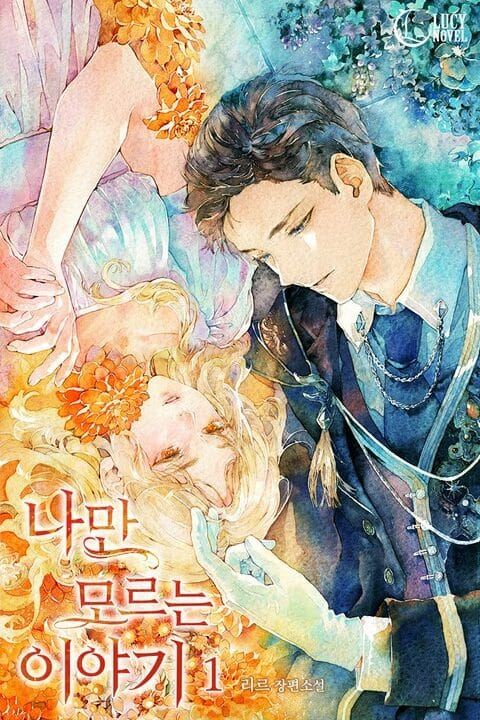
Elia Roang is a nineteen-year-old noblewoman from a declining Earldom who has spent her life in indolent routine, preferring to read books and sleep rather than engage with the world. Her only family is her brother Eugene, the Earl, who manages their crumbling estate. Elia is engaged to Edmund Raspe, the powerful Duke of the Raspe Duchy and a cousin to the Emperor. The engagement is purely political, a alliance that saved Elia and Eugene from ruin after their parents died, leaving the Earldom vulnerable. For years, Edmund has shown Elia no interest whatsoever, treating her with cold indifference while Eugene constantly praises the Duke as a savior. Elia herself feels nothing for him, viewing their connection as a burden rather than a romance.

One morning, Edmund unexpectedly visits Elia’s mansion without prior notice, an event that throws the household into chaos. Unlike his usual icy demeanor, the Duke behaves with intense warmth and urgency. He calls her by her childhood nickname, "Elly," and tells her directly that he misses her profoundly. He brings gifts, including intricate music boxes, and offers her his jacket when she is dressed sloppily from sleeping. His behavior is so erratic and affectionate that Elia becomes terrified, suspecting he has either lost his mind or is plotting something malicious. She fears his attention like one would fear a predator, unable to comprehend why the man who ignored her for years is suddenly acting as a devoted fiancé. Despite her confusion and fear, Edmund remains persistent, insisting on his feelings before departing.

The narrative then shifts to reveal Edmund’s true perspective. Ten years in the future, Edmund is thirty-two and married to Elia, who is twenty-eight. Their marriage was a tragedy; Elia, suffocated by Edmund’s obsessive and consuming nature, eventually left him with divorce papers. She died in a carriage accident shortly after leaving him. Overcome with grief and regret, Edmund committed suicide at her graveside. However, he did not die. Instead, he awoke back in his body at age twenty-two, ten years in the past. The bloodstains in the tomb and the living state of his deceased butler confirmed that he had returned to the moment before their relationship fully developed. In his previous life, he had been too late to realize his love for her until it was too late. Now, he is determined to change fate.

Edmund’s past self was emotionally stunted and cruel, failing to understand Elia’s needs and pushing her away until she fled. Remembering her last words—that he was a fire that devoured everything—Edmund resolves to use his future knowledge to capture her completely this time. He is not concerned with whether she loves him initially; he is desperate to keep her alive and by his side. He returns to the Roang mansion with a singular goal: to prevent her from ever leaving him again. He visits the palace, alters his schedule to spend more time with Elia’s brother, and buys gifts that hold sentimental value from his memories, though he struggles to understand the nuances of courtship.

As the story progresses, the dynamic between the two begins to shift. Edmund’s actions, while perceived as madness by Elia, are calculated attempts to bond with her. He tries to learn her preferences, such as her dislike for the duck dishes previously served at the Duchy, and makes promises to accommodate her tastes. Elia remains deeply unsettled by his sudden change in behavior, oscillating between fear and bewildered curiosity. She cannot reconcile the indifferent man she knew with the obsessed suitor standing before her. Meanwhile, Edmund wrestles with his own dark impulses, fearing that his intense desire might corrupt the pure, young girl he remembers. He questions whether he can truly love this eighteen-year-old version of her or if he is merely possessing a memory. Nevertheless, he continues his pursuit, determined to rewrite their tragic ending by any means necessary, even if it means becoming the monster she once dreamed of.

Latest Release
DateGroupRelease
2026-10-03dusk blossoms c67
2026-10-03dusk blossoms c66
2026-10-03dusk blossoms c65
2026-10-03dusk blossoms c64
2026-10-03dusk blossoms c63
2026-10-03dusk blossoms c62
2026-10-03dusk blossoms c61
2026-10-03dusk blossoms c60
2026-10-03dusk blossoms c59
2026-10-03dusk blossoms c58
2026-10-03dusk blossoms c57
2026-10-03dusk blossoms c56

Community Reviews

Rating(0 / 5.0, 38votes)
5 stars
0(0%)
4 stars
0(0%)
3 stars
0(0%)
2 stars
0(0%)
1 stars
0(0%)

Popular reviews

... Read More
Okay so this chapter is giving me major emotional whiplash and I cannot lie, I am HERE for it. The whole setup with Edmund showing up unexpectedly after three days of silence? Chef's kiss. The way the author builds this tension where Elia is trying so hard to pretend nothing happened while everyone around her is absolutely losing their minds over his visit is both hilarious and devastating. Let me talk about the central mystery here - WHY did Edmund come? The author refuses to give us a straight answer, which is both frustrating and brilliant. Elia keeps telling herself it was just an anomaly, but then she overhears the staff gossiping about him, and suddenly she's the one waiting. That反转 moment where she catches herself hoping he'll show up again? My heart literally ached. She goes from "he's not coming" to "wait, maybe he will?" and it's so painfully relatable. The subplot with the staff preparing elaborate outfits and cleaning the mansion without even being asked is such a clever way to show how Edmund's presence ripples through everyone's lives. They're all living in anticipation while Elia is desperately trying to maintain normalcy. And that line "waiting for Edmund, who wasn't coming, was that meaningless" - wait, no, it wasn't meaningless at all, was it? I also love how the author uses the duck incident as both comic relief and character development. Elia's outburst about never eating duck again shows her stress levels through action rather than just narration. Classic show-don't-tell. But underneath the humor, there's this real question about power dynamics - who gets to decide when Edmund visits? Who gets to control the narrative of their relationship? The ending where Elia is left stewing in her own frustration because Edmund promised he wouldn't do anything and then actually does nothing is such a perfect note to end on. The author has turned us all intoElia - we want answers but we're also afraid of what we might find if we actually get them.
... Read More
Okay so I need to talk about Eugene because this man is THE funniest character in the entire series and nobody gives him enough credit. Watching him try to work while Elia is dramatically sighing and kicking her legs on his sofa is comedy gold. The sibling dynamics between these two are absolutely flawless. Eugene's entire existence revolves around hating his job, and Elia's chaos is the universe's way of punishing him further. But here's the thing that got me — the scene where they're arguing about whether he called her twice or four times and dragging Lucas into it? That's not just comic relief, that's CHARACTER. Eugene is a responsible earl who secretly cares deeply but would rather die than show it. And Elia is chaos incarnate but she DOES her work and she shows up. Their relationship is built on this beautiful contradiction of annoyance masking genuine affection. And then there's Edmund. Oh Edmund. The way he goes from cold and distant to THIS vulnerable man asking permission to walk someone home... I don't trust him one bit and I can't look away. His childhood connection to Elia through the duck incident and the flowers is haunting. He REMEMBERED she liked duck. After ALL this time. That's either the sweetest thing ever or the most manipulative thing ever — and honestly, it's probably both.
... Read More
I need to talk about how the author handles the repeated phrase 'What is all this?' because honestly it's one of my favorite dialogue choices in recent memory. Elia says it first: 'What… What is all this?' Her voice breaks between the articles—she can barely form the sentence. And then she repeats it, almost ritualistically: 'What does it mean? What is all this…?' And then again, clutching the blue invitation: 'What is all this?' Three times. Each time slightly different, each time revealing more of her unraveling. This isn't lazy repetition—this is character voice showing someone who genuinely cannot process what she's seeing and is using the same words as an anchor while her整个世界 falls apart. Meanwhile, Hans's dialogue is a completely different creature. 'Greetings, Miss.' 'As His Grace's most trusted aide.' 'Have a good day.' Every sentence is measured, polished, rehearsed. The narration even tells us he 'had taken two hours to prepare, but less than a minute to say it all.' This man is a performance artist delivering a script, and the contrast with Elia's raw, fragmented speech is chef's kiss. Eugene's voice is warm and clumsy: 'I'm worried, that's all.' 'What if he threatened you…' He trails off. He hedges. He's always leaving sentences unfinished because he's worried about how they'll land. Even his internal monologue is softer than everyone else's—'Elly, listen. Do you really… really not want to talk about it?' The double 'really' says everything. And the narrative voice itself—dry, slightly sardonic, capable of devastating precision: 'In a world where people kill for love, even murderers go around talking about love.' That line came out of nowhere and absolutely wrecked me. The author's voice has this dark humor that sneaks up on you between scenes of emotional devastation.
... Read More
The symbolism in this text is SO thick I need to untangle it slowly. Let me start with the music box because it's doing heavy thematic lifting. Edmund winds it and the doll woman dances endlessly, trapped in his hand. The text is almost shamelessly explicit about this: "The woman would have to keep dancing until the spring wound down, not even knowing she was in the palm of the man's hand." Elia is the doll. Edmund controls the mechanism. The romance genre is full of this dynamic, but the author doesn't shy away from how suffocating it is. Then there's the puppy motif. Eight-year-old Edmund calls her a puppy — clinging, noisy, annoying. But then she becomes a guard dog, growling at intrusion. And now? Now she's the one being wound up, being made to perform affection she doesn't understand. The animal imagery traces her entire arc from victim of his cruelty to someone trying to survive within his world. And those blue eyes — the winter-lake blue that's both "clear and pure" and terrifyingly deep. Water as a symbol of both clarity and danger, of reflection and drowning. Elia tries to measure Edmund like a lake, but she can only see her own confusion reflected back. The dream where the monster hands her a book she can't read? That's the thesis of the whole novel in one image: intimacy that is physically present but emotionally inaccessible. The tragedy isn't that they don't love each other — it's that neither of them knows how to translate it.
... Read More
Okay so here's the thing about this whole Edmund situation—three days ago he shows up, drops the most casually devastating line of his entire existence ('I missed you'), and then vanishes for FIVE DAYS. And then what? He sends an army of staff with thousands of flowers to flood her drawing room with autumn in the middle of spring. This plot twist isn't some dramatic villain reveal or a shocking death—it's far more interesting because it's emotional. The real bombshell is that Edmund, who has been cold and distant this entire story, has been actively hurting at the Imperial Palace, losing sleep, swearing (remember: Eugene swears sometimes and even that felt rare), and still managed to personally pick gifts for Elia while pretending he wasn't affected by her at all. And then the parallel plot of the assassination attempt hits us. Five staff members killed, poison at breakfast—this isn't just a romance novel anymore, people. The political danger is escalating AND Edmund's personal feelings are escalating at the same time. Did the assassination attempt have anything to do with his decision to finally admit he misses her? Is that why he's sending all these flowers? The timing feels suspicious. Also, the structure of hiding Edmund's POV for an entire chapter and then showing us HIS side through Hans's report was such a smart move. We think we know what's happening from Elia's confused, hurt perspective, and then BAM—Hans reveals Edmund hadn't even blinked when told about five deaths but TWISTED at news of Elia crying. That's the kind of character-revealing moment that makes you slam the book shut.
... Read More
I need to sit down because my heart can't take this. The emotional complexity in these chapters is absolutely staggering, and I am not okay. Let's talk about Elia's internal journey because oh boy, does she have one. She starts off furious - righteously so! Edmund shows up, says this devastatingly vulnerable thing about missing her, and then disappears like she's nothing. But somewhere between her threats to the kitchen staff and her failed attempts at indifference, something shifts. That moment when she catches herself listening to the servants discuss when Edmund might return? That's the moment I fell in love with her character. She's so honest with herself even when she doesn't want to be. And the loneliness! The author writes it so beautifully - "She thought she was the only one unable to forget, the only one suffering alone." But then she overhears the staff talking and realizes she's not alone in wondering, in hoping, in obsessing. Yet being part of a shared secret doesn't make it easier. If anything, it makes it worse because now everyone knows except her. I have to mention the coat scene. When Elia feels like she's wearing Edmund's coat when there's nothing there - that's such a powerful metaphor for carrying someone's presence even when they're gone. It's physical, it's sensory, it's everything. And then the music box metaphor, that unwound melody that won't stop playing in her head... the author is crafting this entire emotional landscape through sensory details rather than just stating feelings. The CP chemistry here is so interesting because it's built on absence rather than presence. Every interaction we see is either回忆 or aftermath. Edmund says "I missed you" and then vanishes. Elia wants to confront him but can't because of pride and propriety. This push-pull, this tension between wanting to run toward him and needing to run away is exhausting and addictive. And Eugene! Her brother keeps pushing her to tell him what happened, and Elia's threat to forge a breakup letter is both funny and sad. She'd rather face public humiliation than admit that a man who barely acknowledges her in public made her feel something real in private.
See all reviews

Custom lists

See all custom Lists