A Marriage Promise Should Not Be Made Lightly - Reviews

A Marriage Promise Should Not Be Made Lightly
+Add to Custom List
Sort
Add review
... Read More
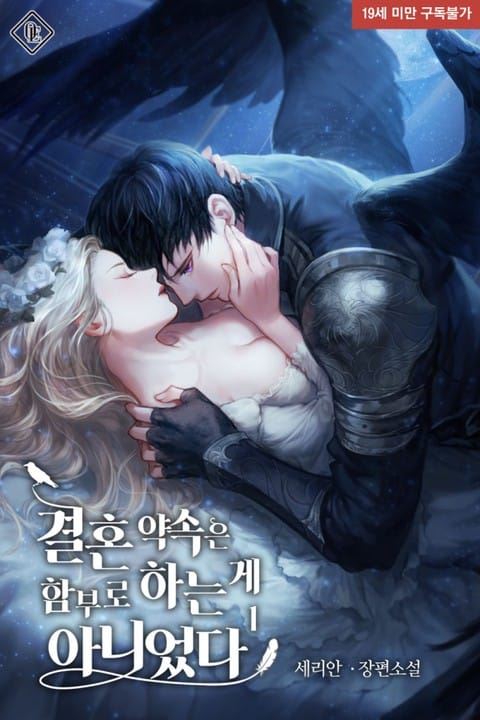
'Everyone would die.' Just one sentence from Livie and suddenly the entire political situation crashes into focus. This isn't just a kidnapping anymore—it's an act that could start a war. The King personally arranged her marriage to the Duke of Resette, and Boris just swept in and took her on the wedding day with an army at his back. Meanwhile, the Duke's knights—who are supposed to be exceptional swordsmen—were taken down like puppets in seconds. That alone should tell you everything about how dangerous Boris actually is. And he's not even stressed about any of it. He's riding along with this bright smile while Livie is calculating everyone's execution risk. The tension isn't just about whether she'll escape or fall for him—it's about what happens when the king finds out. Boris claims 'I came to get you because you're my bride' but he doesn't seem to care about the consequences at all. Which is honestly kind of terrifying when you think about it. He's a war hero with absolute power and zero regard for the political fallout. What happens when someone like that decides he wants something?
... Read More
I stayed up WAY too late reading this batch and honestly I don't regret a single second. The pacing here is absolutely ruthless in the best possible way. You start with Boris carrying Livie through the night, and the author keeps pulling the rug out from under you. First we think she's safe in the tent, then she's trapped. First she's waking up confused, then she's being threatened with water, then suddenly Boris is on his knees on the bed and the whole mood shifts into something far more dangerous. What I love most is how the author controls the tension through physical proximity. Each scene starts with distance—Boris calling to her from across the room, Livie scrambling away—and then systematically eliminates every gap until there's nowhere left to run. The bed creaking as he crawls toward her on all fours like a predator? That single sound cue did more work than an entire chapter of internal monologue ever could. The flashback structure is also brilliantly deployed. Just when you're getting settled into the present timeline, you're yanked back to that conversation about war and marriage promises. It reframes everything. Boris wasn't always this dark. He was this vulnerable person who believed in love enough to cry about going to war. The contrast makes the present-day version even more terrifying because you know what was lost. And the cliffhanger? 'No matter what happens, I won't'—cutting off mid-sentence is the kind of cruel editorial choice that makes you immediately open the next chapter. I literally gasped out loud.
... Read More
Okay so. So Livie's about to get on the carriage, saying goodbye to the twins she raised—her step-siblings who she never thought of as anything less than real siblings—and just when you think things can't get worse, her FATHER shows up driving the carriage himself. To KIDNAP HER away from the wedding. And I know on paper that sounds heroic, like he's saving her, but read the actual scene and it reads NOTHING like that. Livie's terrified. She's screaming at him, telling him they're all going to die if the Duke finds out. And then the Duke's knights catch them. And her father gets beaten within an inch of his life, blood on the dirt, and still tries to smile at her through swollen eyelids. The cruelest part of this whole sequence is the wedding itself. Livie walks down the aisle ALONE. No groom, no fanfare. Just her and a half-asleep bishop and villagers who all secretly think she's being sent away as some kind of hostage. Then she can't even sign the contract—the wind keeps blowing the ink away like it's refusing to let her go through with it. Which honestly? I think it's her subconscious doing the work her mouth won't. And then the black knight crashes in. The guy literally looks like Death. Violet eyes. Full armor. And Livie has this moment where she swears she hears his voice in her head saying 'Sorry darling, am I late?' which is equal parts romantic and deeply unsettling because WHO talks like that while storming someone's wedding. But the real question hanging over all of this—is this rescue or just a different kind of trap? She escaped one forced marriage only to be intercepted by a man in black armor who clearly wasn't part of the original plan. What does he want, and why does he look like he belongs in her memories somehow?
... Read More
Okay, so I need to talk about this whole sequence where Livie tries to run away and Boris just... finds her. Like, the author sets this up as a genuine escape attempt. She finds a horse, sneaks into the forest, follows the sound of water, all while Boris supposedly counts to five hundred. The tension builds beautifully here — you genuinely feel like she might pull it off. The quiet hoofbeats, her whispered prayers to a random horse, the way she keeps glancing back. I was genuinely rooting for her, honestly. And then Boris just appears on a tree branch like some dark forest spirit and says 'Five hundred.' And she's like... done. Game over. But here's what I love about this plot choice — it's not just a cheap gag. It reveals something crucial. Boris isn't just persistent; he operates on an entirely different level. He didn't need a horse. He didn't need to make noise. He found her because apparently nothing keeps her hidden from him. And that's terrifying AND fascinating for the story going forward. "I can find you no matter where you are, Livie." That line though. It's supposed to be romantic in his head, right? But reading it from Livie's perspective — and honestly from mine as a reader — it reads like a threat wrapped in affection. The plot is building this incredible push-pull dynamic where every time Livie tries to assert independence, the story gently reminds us that Boris is always, always one step ahead. It's almost cruel how well the author controls this tension. We want her to escape, but we ALSO want to see what happens next between them. That duality is masterful storytelling.
... Read More
I need to talk about this moment because it changed EVERYTHING for me. Livie, who has been absolutely destroyed by news that her entire life was a lie, who just found out her father kept her in a farmhouse pretending she was nobody when she's actually royal — and what does she do? She stands up, towers over Earl Collam, and demands he kneel. LET ME REPEAT THAT. The girl who arrived on her knees listening to a royal decree gets up and tells the King's own envoy to SHOW HER RESPECT. That is not a victim arc. That is a main character energy so strong it could power a small city. And the best part? She doesn't do it out of arrogance. She does it because she just calculated her new position and decided to leverage it. 'If I'm going to be sold off, I might as well enjoy the treatment that comes with it.' That line alone tells you everything about her — pragmatic, sharp, and quietly furious. But then there's her father. Nicholas Hayden. The man who put a hand over his own mouth when he was about to explain something. Who knelt beside the royal envoy pale and silent. His grief was so heavy it felt physical — every word came out strained, wrung out like a cloth. He didn't protect her from the truth out of malice. He protected her from a world that would have consumed her. And now that protection is gone, and he can barely look at her. Their relationship is this beautiful tragic thing — he loves her enough to lie, and she loves him enough to stop him from finishing the explanation. Then Earl Collam, the villain we haven't even properly met yet, making that offer about the Duke 'sparing no expense for his bride' like it's some grand romantic gesture. The man is a walking red flag wrapped in aristocratic silk. Livie's response of 'How very kind of him' with absolutely zero warmth? Perfection.
... Read More
I need a minute. Boris's eyes when she says his name... the text literally says his violet eyes seemed to cloud and tears started pooling at the corners like they couldn't even wait to fall. And he's DRESSED IN BLACK ARMOR. This man came to a wedding in armor and then immediately broke down crying because she almost didn't recognize him. The contrast between his violent actions and his vulnerability is something else entirely. He keeps saying 'I've come to take you, Livie' like it's the most normal thing in the world, but there's this desperate hunger underneath it that's both heartbreaking and genuinely unsettling. And then Livie—honestly, I felt her. She notices the disappointment on his face when he flinches away from her touch and thinks it feels 'like abandoning a puppy whining in the rain.' That moment hit me so hard. She's still seeing the boy who would do anything for her buried under all this madness. The line 'I've become a Duke. So now you can marry me' is simultaneously the most romantic and most terrifying thing I've ever read. Is this love? I don't know but I am NOT okay.
... Read More
I need to talk about Boris and Livie because WOW. OK so here's the thing — Boris literally just abducted a bride from her own wedding and what does he do? He licks the blood from her tongue wound. LIKE THAT'S NORMAL CONVERSATION MATERIAL. I can't even. But here's what's actually fascinating about their dynamic — it's NOT the typical "dark guy saves pretty girl" trope where everything is smooth and hot. There's this TENSION every time he touches her. One second he's got his arm wrapped around her waist pulling her against his armored chest and the next he's like casually asking if she tastes like candy. The man is a walking contradiction. And Livie?! She goes from SCREAMING into the air to just... accepting it? Like she physically cannot fight anymore and her body just gives up? That shift from pure panic to exhausted resignation is SO realistic. You can feel her running out of adrenaline and landing somewhere weirdly peaceful because at least the horse is moving and his heart is beating against her back and thump thump thump is kind of soothing in the most twisted way possible. The captured knights staring at her with venom in their eyes while she stares back? That's a relationship moment too — she feels responsible for them, guilt mixed with fear, and Boris notices this immediately. His offer to gouge out their eyes isn't even really about them looking at her. It's about HIM controlling the situation, HIM making sure nothing bothers Livie. That possessiveness — it's terrifying and also kind of the most attention she's ever received from someone who actually sees her. I keep thinking about that line where she notices his hand on her face AND his hand on her waist and her brain goes 'wait a minute' like she's solving an equation. That's the perfect detail. It shows she's still trying to process, still analytically coping, even while her whole world is upside down. Boris is this alien creature in black armor with violet eyes and she's over here mentally cataloging WHERE HIS HANDS ARE. The most grounded reaction to an ungrounded situation and I LOVE IT.
... Read More
'Like that day on the hill when they first saw snow together, Boris smiled radiantly.' This line hit me like a truck right at the start. The image of Boris shredding paper into the air like snow, and it momentarily transforming the scene into that childhood memory—they're standing in the middle of chaos but for a second you're somewhere else entirely. Then just as quickly, the mood shatters and we're dragged into this nightmare Wedding Crashers scene but make it dark. And then the reveal of the black knights—'black, black, and more black'—I could literally feel the temperature dropping just from reading those words. The outdoor chapel with its open ceiling, the platform on grass, and then suddenly this whole army rolling in on horses creating gusts of wind. It's so cinematic. The contrast between the sacred wedding setting and the grim reaper energy of Boris's arrival is chef's kiss. I also loved the detail about Livie's ruined dress petals fluttering to the ground while she stares at them with a hollow gaze. You could practically see the death stare forming in real time.
... Read More
Okay the Hessen Forest sequence. The author just drops us from a high-spirited horse abduction scene straight into this foreboding woodland and I was NOT ready. One minute you're screaming about betrayal and the next you're wondering if those crows are actually the size of people and WILL THEY EAT YOU. What makes this setting work so well isn't just the description — it's the way the fear is GENERATIONAL. The text specifically mentions that even adults who should know better still carry this childhood terror. The parents competing to scare their kids the most, the children既 scared and curious, the next day everyone washing soiled bedding because yeah kids pee themselves when they're terrified. THIS is worldbuilding that feels lived-in. This isn't a forest that's scary because the author says so — it's scary because every household in every generation has contributed to the legend. And the visual of Boris riding through this forest with Livie wrapped in his cloak, the towering trees looming ominously, the owl hooting at exactly the wrong moment — it reads like a film sequence. I could literally SEE this. The lighting changes from daylight to dusk to this dim forest glow, and Boris's pale face against his black armor becomes almost supernatural in that lighting. The text even directly compares him to creatures FROM the legend — a sinister monster that seduces humans and devours their soul. His violet eyes in the night glow. The blood on his crimson lips. THIS IS A MOVIE. The detail about the faster route being kept secret because they're carrying cargo (the captured knights in a cart) is another great touch — it shows the world has its own logic and reasons, not just whatever plot convenience the author needs. The forest isn't just atmosphere, it's a plot device that exists independently of the main characters.
... Read More
Can we just take a moment to appreciate how atmospheric this setting is? The Forest of Crows is not a backdrop — it's practically a character in its own right, and I am absolutely living for it. The author describes it in this way that makes you feel the temperature drop just reading about it. First, there's the campfire scene where a gust of wind makes the flames crackle and Boris instinctively shields Livie with his body. The firelight catches his face — sharp shadows revealing a man's features, but traces of boyish charm peeking through. That visual alone tells you everything about who this man is. Then the crows appear: "Between the dense trees, a dark figure was moving. What she had thought was simply empty darkness began to slither and shift." SLITHER. That word choice is horrifying and perfect. These aren't just birds sitting in trees — they're moving with intent, watching with glowing yellow eyes, surrounding them in the darkness. And Boris's reaction? Utter indifference. "They're crows." His voice sounds eerie, making Livie shrink further. But then he says something that's equal parts comforting and deeply strange: "They don't eat the flesh of living humans." That sentence does SO MUCH WORK. It tells us this forest has rules. It tells us Boris knows these rules intimately. It tells us that whatever lives in these woods operates on a logic that's alien to ordinary people. The Forest of Crows isn't just a spooky setting — it's a place where the normal rules don't apply, which makes it the perfect environment for a romance where a man who shouldn't be able to track someone through complete darkness somehow does. And then the night sequence where Livie wakes to find the campfire nearly dead and the surroundings eerily silent. The darkness is described as pitch-black, filled with dread, with the cries of birds and beasts seeming closer than ever. When she finally finds the horse and mounts it, the hoofbeats make no sound on damp ground. Every sensory detail pulls you deeper into this world. This is a forest where silence is dangerous, where movement in the darkness means something is watching, and where the line between protector and threat is as thin as candlelight.
... Read More
I need to talk about pacing because the author absolutely nailed it in this section. Let me walk through why this works so well structurally. We open mid-scene — no exposition dump, no chapter summary. Just Boris lifting Livie into his arms and telling her to sleep. Immediate immersion. We're thrown into the physical closeness, the tent setup, the campfire atmosphere, and we just... go with it. The author trusts us to figure things out as we go, which is a huge confidence move. Then comes the first rhythm shift: the crows appear, tension spikes, Boris reassures Livie (and us), and things settle back down into a quieter, more intimate moment inside the tent. This is the calm before the storm, and the author lets it breathe. We get memory fragments, emotional vulnerability, that heartbreaking exchange about trust. The pace SLOWS here intentionally — we're supposed to sit with these feelings. And then BOOM. Livie needs to use the bathroom, Boris follows her, she demands privacy, he actually agrees and starts counting. This is where the pacing does something really clever. The counting motif becomes a ticking clock. Every number we hear (or don't hear) creates anticipation. The reader is thinking, Okay, she has five hundred counts of time to escape — can she do it? The author then cuts away from Boris counting and follows Livie into the forest. We're right there with her, heart pounding, every rustling sound amplified. The prose itself speeds up — shorter sentences, sharper observations, the galloping heartbeat of someone trying to get away. "Four hundred ninety-eight, four hundred ninety-nine..." And then the interruption. "Five hundred." The horse stops. Livie turns. And there he is. That single line — "Five hundred" — lands like a punch because everything leading up to it has been building toward that exact moment of revelation. The author doesn't rush it. Doesn't drag it. Hits it at the perfect beat and then immediately pivots to the aftermath — Boris's innocent explanation, his puppy-dog eyes, Livie's resigned acceptance. The structure is so干净, so intentional. This is how you control reader engagement without ever feeling like you're being manipulated. The pacing here is basically a masterclass in tension-and-release, and I will be thinking about it for days.
... Read More
I need to talk about the velocity of information in this chapter because my brain is still recovering. We open with Livie asking about the Duke's age — a seemingly innocent question that immediately establishes the central horror (he's OVER FIFTY and she's basically a child in comparison). Then within the first few paragraphs we get the royal decree, the kneeling, the political context of the war, the cursed illness, the hidden parentage reveal, the blood oath test, the demand for respect, and the announcement that she's getting married WITHOUT the groom present. That is A LOT for one chapter. And yet — and this is the genuinely impressive part — it doesn't feel rushed. The author knows exactly when to slow down and when to accelerate. The pacing decision to have Earl Collam deliver most of the exposition is smart — it turns an information dump into a confrontation. Every time Livie tries to process something, the next piece of news hits before she can catch her breath. This is technically brilliant structuring because it mirrors Livie's actual experience — she can't breathe, she can't think, she just keeps receiving shocks. The chapter ends on this incredible note where Livie demands everyone kneel and Earl Collam disappears from view, the first to move. It's a perfect cliffhanger — she's asserted dominance, the power dynamic has shifted, and we're left wondering what happens next. The transition from helpless victim to someone who commands the room happens so smoothly that you barely notice the shift until you're already cheering. Nine out of ten chapters don't manage to do this much in this little space.

Leave a comment

You must be logged in to leave comments. or
