A Marriage Promise Should Not Be Made Lightly
+Add to Custom List
Novel Info
  • Author:
  • Status:Ongoing

Summary

... Read More

Lucie Hayden grows up as the daughter of Earl Nicholas Hayden in the remote Tiso Village, leading a carefree rural life marked by horseback riding, mud-rolling, and close friendships with village girls. Her past is shrouded in mystery, as her father never speaks of her mother, leaving Lucie to wonder if she possesses royal lineage or was born of a scandalous union. Her childhood friend Boris, a boy with striking violet eyes and an intense demeanor, consistently expresses his desire to marry her. When Lucie casually dismisses the idea due to his lower status, suggesting he become a Duke if he truly wishes to wed her, Boris takes her words seriously. Years later, royal envoys arrive unexpectedly at the Hayden estate, announcing that Lucie has been selected for a political marriage to Duke Fayden Resette, a man fifty-one years her senior who rules the southern region of the Sesher Kingdom. The kingdom is recovering from a devastating seven-year civil war between the ruling Chestere family and the rebel Resette faction, and this union is intended to seal a fragile peace treaty.

Lucie discovers that she is the illegitimate daughter of Princess Elga, a royal sister who was confined to the western tower due to madness and later died. Because the royal family lacks a sane daughter to marry the Duke, Lucie’s restored noble status makes her the only viable candidate for the alliance. Despite her protests and the indignity of being treated as a commodity, the King’s decree is absolute. During her wedding preparations, Lucie learns disturbing rumors about the Duke: he is rumored to have multiple mistresses and illegitimate children, and some say he abuses women. On the eve of her wedding, Lucie experiences strange occurrences, including finding a large black feather near her bed and dreaming of being embraced by enormous wings. The following morning, her father Nicholas, unable to bear the thought of losing his daughter to such a man, attempts to kidnap her in a carriage to prevent the marriage. However, their escape is cut short when knights loyal to the Resette faction intercept them, brutally injuring Nicholas and forcing Lucie back into custody to save her father’s life.

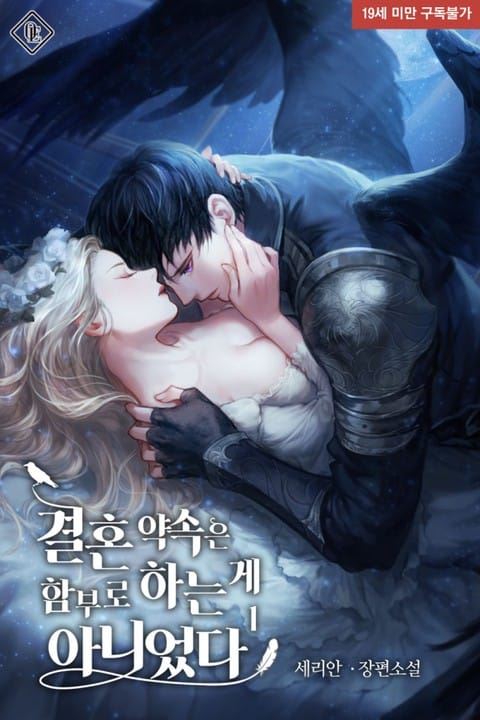
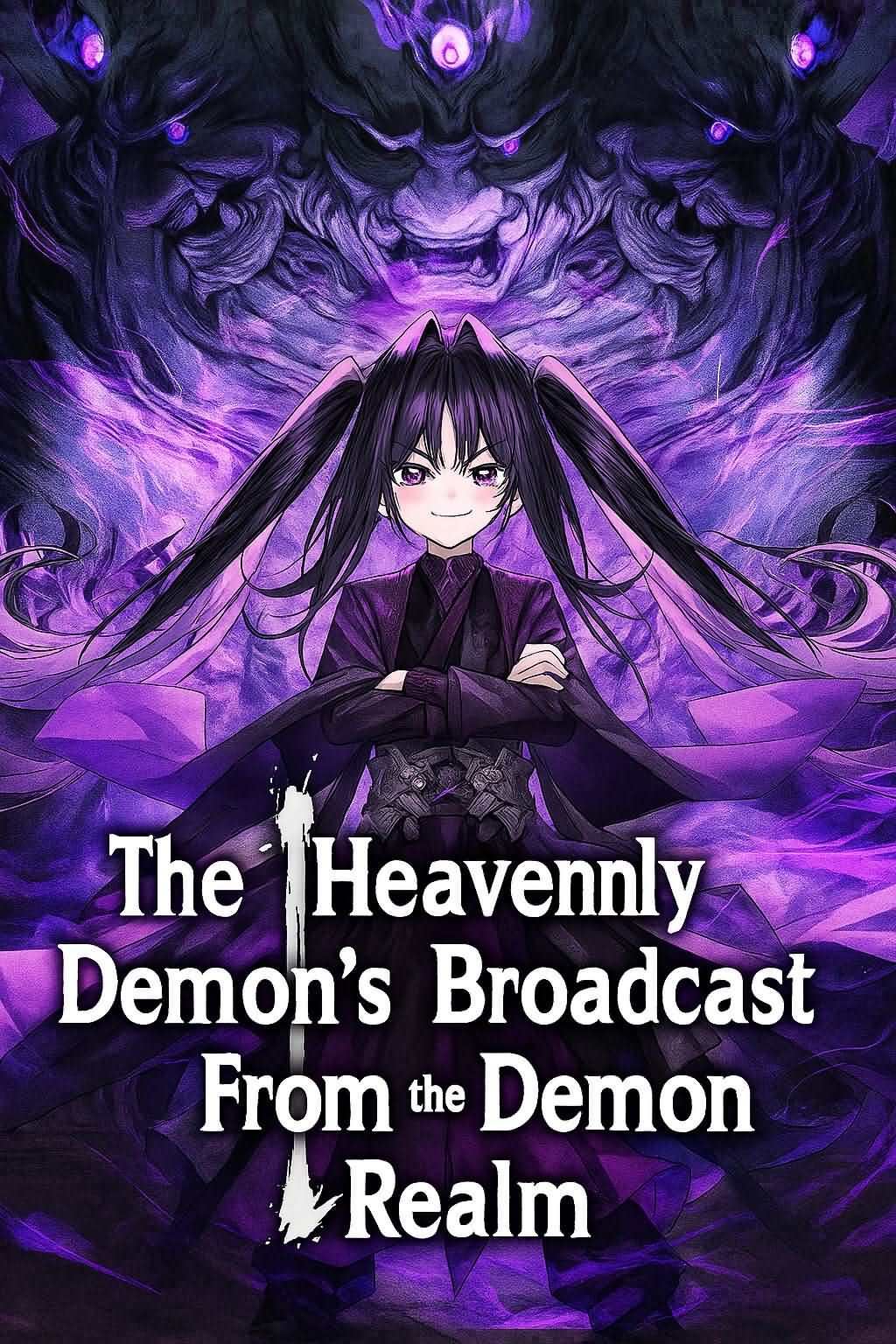
The wedding ceremony proceeds in an outdoor chapel, with Lucie walking down the aisle alone since the groom is absent. As she attempts to sign the marriage contract, a sudden supernatural gust of wind blows away the ink, preventing her signature. From this chaotic moment, a figure clad in black armor emerges, striding confidently toward the altar. The man removes his helmet to reveal Boris, now a young man with a commanding presence and violet eyes that glow with an unsettling intensity. He declares that he has returned to take Lucie as his bride, announcing that he has achieved the title of Duke. In a display of possessive madness, Boris destroys the symbols of her arranged marriage, crushing the red roses representing the Resette family and shattering the pearl necklace meant to adorn her. He insists that Lucie is the White Rose Maiden and belongs to him, rejecting the notion that she can marry anyone else. The villagers, initially shocked, begin scrambling for the scattered jewels and pearls that Boris discards, highlighting the absurdity and danger of the situation. Boris physically restrains Lucie, linking her arm to his, and demands that the bishop officiate their union immediately, viewing the arranged marriage to the older Duke as an invalid obstacle that must be destroyed.

The narrative shifts from a traditional political romance to a dark psychological thriller centered on obsession and power. Lucie finds herself trapped between a kingdom demanding she sacrifice her freedom for peace and a childhood friend whose love has curdled into violent possession. Boris’s transformation from a sensitive boy crying over rejection to a ruthless Duke who tears up marriage vows and humiliates authority figures marks a significant turning point. The story establishes a core conflict where Lucie must navigate the treacherous politics of the Sesher Kingdom while evading or surviving the relentless pursuit of a man who believes he owns her soul. The introduction of magical elements, such as the wind that prevents signing and the ominous presence of crows, suggests that the world operates beyond mere political intrigue, adding layers of mystery to Boris’s true nature and the extent of his power.

As the ceremony is forcibly interrupted and replaced by Boris’s demand, the trajectory of the story moves toward a confrontation with the established order. The Resette knights waiting outside represent the formal claim Lucie was supposed to marry, while Boris represents a chaotic, personal claim that overrides law and tradition. Lucie’s internal struggle reflects her loss of agency; she is no longer just a pawn of the king but a prisoner of Boris’s delusion. The ending of this section leaves Lucie physically bound to Boris, who is prepared to commit blasphemy and treason to keep her. The dynamic between them is defined by Boris’s erratic emotional swings—from tearful pleading to violent destruction—and Lucie’s growing realization that the boy she once knew is gone, replaced by a dangerous figure who views her only as his property. The story sets the stage for a complex relationship where survival depends on managing the whims of a madman while the kingdom watches, uncertain whether to intervene in a Duke’s personal dispute or respect his newfound authority.

Latest Release
DateGroupRelease
2026-10-03dusk blossoms c118
2026-10-03dusk blossoms c117
2026-10-03dusk blossoms c116
2026-10-03dusk blossoms c115
2026-10-03dusk blossoms c114
2026-10-03dusk blossoms c113
2026-10-03dusk blossoms c112
2026-10-03dusk blossoms c111
2026-10-03dusk blossoms c110
2026-10-03dusk blossoms c109
2026-10-03dusk blossoms c108
2026-10-03dusk blossoms c107

Community Reviews

Rating(0 / 5.0, 45votes)
5 stars
0(0%)
4 stars
0(0%)
3 stars
0(0%)
2 stars
0(0%)
1 stars
0(0%)

Popular reviews

... Read More
'Everyone would die.' Just one sentence from Livie and suddenly the entire political situation crashes into focus. This isn't just a kidnapping anymore—it's an act that could start a war. The King personally arranged her marriage to the Duke of Resette, and Boris just swept in and took her on the wedding day with an army at his back. Meanwhile, the Duke's knights—who are supposed to be exceptional swordsmen—were taken down like puppets in seconds. That alone should tell you everything about how dangerous Boris actually is. And he's not even stressed about any of it. He's riding along with this bright smile while Livie is calculating everyone's execution risk. The tension isn't just about whether she'll escape or fall for him—it's about what happens when the king finds out. Boris claims 'I came to get you because you're my bride' but he doesn't seem to care about the consequences at all. Which is honestly kind of terrifying when you think about it. He's a war hero with absolute power and zero regard for the political fallout. What happens when someone like that decides he wants something?
... Read More
I stayed up WAY too late reading this batch and honestly I don't regret a single second. The pacing here is absolutely ruthless in the best possible way. You start with Boris carrying Livie through the night, and the author keeps pulling the rug out from under you. First we think she's safe in the tent, then she's trapped. First she's waking up confused, then she's being threatened with water, then suddenly Boris is on his knees on the bed and the whole mood shifts into something far more dangerous. What I love most is how the author controls the tension through physical proximity. Each scene starts with distance—Boris calling to her from across the room, Livie scrambling away—and then systematically eliminates every gap until there's nowhere left to run. The bed creaking as he crawls toward her on all fours like a predator? That single sound cue did more work than an entire chapter of internal monologue ever could. The flashback structure is also brilliantly deployed. Just when you're getting settled into the present timeline, you're yanked back to that conversation about war and marriage promises. It reframes everything. Boris wasn't always this dark. He was this vulnerable person who believed in love enough to cry about going to war. The contrast makes the present-day version even more terrifying because you know what was lost. And the cliffhanger? 'No matter what happens, I won't'—cutting off mid-sentence is the kind of cruel editorial choice that makes you immediately open the next chapter. I literally gasped out loud.
... Read More
Okay so. So Livie's about to get on the carriage, saying goodbye to the twins she raised—her step-siblings who she never thought of as anything less than real siblings—and just when you think things can't get worse, her FATHER shows up driving the carriage himself. To KIDNAP HER away from the wedding. And I know on paper that sounds heroic, like he's saving her, but read the actual scene and it reads NOTHING like that. Livie's terrified. She's screaming at him, telling him they're all going to die if the Duke finds out. And then the Duke's knights catch them. And her father gets beaten within an inch of his life, blood on the dirt, and still tries to smile at her through swollen eyelids. The cruelest part of this whole sequence is the wedding itself. Livie walks down the aisle ALONE. No groom, no fanfare. Just her and a half-asleep bishop and villagers who all secretly think she's being sent away as some kind of hostage. Then she can't even sign the contract—the wind keeps blowing the ink away like it's refusing to let her go through with it. Which honestly? I think it's her subconscious doing the work her mouth won't. And then the black knight crashes in. The guy literally looks like Death. Violet eyes. Full armor. And Livie has this moment where she swears she hears his voice in her head saying 'Sorry darling, am I late?' which is equal parts romantic and deeply unsettling because WHO talks like that while storming someone's wedding. But the real question hanging over all of this—is this rescue or just a different kind of trap? She escaped one forced marriage only to be intercepted by a man in black armor who clearly wasn't part of the original plan. What does he want, and why does he look like he belongs in her memories somehow?
... Read More
Okay, so I need to talk about this whole sequence where Livie tries to run away and Boris just... finds her. Like, the author sets this up as a genuine escape attempt. She finds a horse, sneaks into the forest, follows the sound of water, all while Boris supposedly counts to five hundred. The tension builds beautifully here — you genuinely feel like she might pull it off. The quiet hoofbeats, her whispered prayers to a random horse, the way she keeps glancing back. I was genuinely rooting for her, honestly. And then Boris just appears on a tree branch like some dark forest spirit and says 'Five hundred.' And she's like... done. Game over. But here's what I love about this plot choice — it's not just a cheap gag. It reveals something crucial. Boris isn't just persistent; he operates on an entirely different level. He didn't need a horse. He didn't need to make noise. He found her because apparently nothing keeps her hidden from him. And that's terrifying AND fascinating for the story going forward. "I can find you no matter where you are, Livie." That line though. It's supposed to be romantic in his head, right? But reading it from Livie's perspective — and honestly from mine as a reader — it reads like a threat wrapped in affection. The plot is building this incredible push-pull dynamic where every time Livie tries to assert independence, the story gently reminds us that Boris is always, always one step ahead. It's almost cruel how well the author controls this tension. We want her to escape, but we ALSO want to see what happens next between them. That duality is masterful storytelling.
... Read More
I need to talk about this moment because it changed EVERYTHING for me. Livie, who has been absolutely destroyed by news that her entire life was a lie, who just found out her father kept her in a farmhouse pretending she was nobody when she's actually royal — and what does she do? She stands up, towers over Earl Collam, and demands he kneel. LET ME REPEAT THAT. The girl who arrived on her knees listening to a royal decree gets up and tells the King's own envoy to SHOW HER RESPECT. That is not a victim arc. That is a main character energy so strong it could power a small city. And the best part? She doesn't do it out of arrogance. She does it because she just calculated her new position and decided to leverage it. 'If I'm going to be sold off, I might as well enjoy the treatment that comes with it.' That line alone tells you everything about her — pragmatic, sharp, and quietly furious. But then there's her father. Nicholas Hayden. The man who put a hand over his own mouth when he was about to explain something. Who knelt beside the royal envoy pale and silent. His grief was so heavy it felt physical — every word came out strained, wrung out like a cloth. He didn't protect her from the truth out of malice. He protected her from a world that would have consumed her. And now that protection is gone, and he can barely look at her. Their relationship is this beautiful tragic thing — he loves her enough to lie, and she loves him enough to stop him from finishing the explanation. Then Earl Collam, the villain we haven't even properly met yet, making that offer about the Duke 'sparing no expense for his bride' like it's some grand romantic gesture. The man is a walking red flag wrapped in aristocratic silk. Livie's response of 'How very kind of him' with absolutely zero warmth? Perfection.
... Read More
I need a minute. Boris's eyes when she says his name... the text literally says his violet eyes seemed to cloud and tears started pooling at the corners like they couldn't even wait to fall. And he's DRESSED IN BLACK ARMOR. This man came to a wedding in armor and then immediately broke down crying because she almost didn't recognize him. The contrast between his violent actions and his vulnerability is something else entirely. He keeps saying 'I've come to take you, Livie' like it's the most normal thing in the world, but there's this desperate hunger underneath it that's both heartbreaking and genuinely unsettling. And then Livie—honestly, I felt her. She notices the disappointment on his face when he flinches away from her touch and thinks it feels 'like abandoning a puppy whining in the rain.' That moment hit me so hard. She's still seeing the boy who would do anything for her buried under all this madness. The line 'I've become a Duke. So now you can marry me' is simultaneously the most romantic and most terrifying thing I've ever read. Is this love? I don't know but I am NOT okay.
See all reviews

Custom lists

See all custom Lists