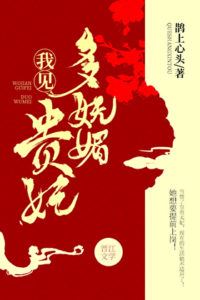
A Female Military Doctor in the 1950s
Novel Info

Summary

... Read More

Xu Wanchun, a twenty-eight-year-old female military doctor in modern times, dies following a chaotic hospital dispute and transmigrates into the body of an eight-year-old girl named Daniu in 1950s rural China. The original owner of the body had been an orphan living with cruel relatives who starved her until she collapsed and died. Xu Wanchun awakens to find herself rescued by Xu Hehua, a divorced woman in her early thirties who lives in Xujiatun with her deceased husband’s parents. Xu Hehua had spent fifteen years caring for her absent husband’s family after he went missing during the war, only to be abandoned when he returned as a low-ranking government official with a new wife and children. Despite her own hardships, Xu Hehua adopts the starving child she finds near a grave, naming her Xu Wanchun after the late spring season.

Struggling to adapt to her frail new body and the extreme poverty of the era, Xu Wanchun relies on her medical knowledge and adult mindset to survive. She quickly identifies the year as 1950 and realizes she has twenty-eight years before the reform and opening-up. Determined not to burden her adoptive mother, who works tirelessly farming two mu of land and weaving cloth, Xu Wanchun seeks a way to earn money. She notices the local herbalist, Doctor Cao, processing medicinal herbs and begins secretly observing him. Through careful study, she learns to identify over a dozen herbs and understands their preparation methods, aiming to gather and sell them to improve her family’s financial situation.

A critical turning point occurs when a villager is severely injured by a wild boar and Doctor Cao is away on a house call. Xu Wanchun steps in to assist Su Nan, the doctor’s wife, by correctly weighing and preparing a prescription of honeysuckle and dandelion to prevent infection. Her precise knowledge shocks the adults, revealing her exceptional memory and natural aptitude for medicine. Doctor Cao and his wife, impressed by her talent and character, agree to let her sell herbs through them, providing a legitimate path for her to earn income. This event also solidifies the bond between Xu Wanchun and her adoptive mother, who is deeply moved by her daughter’s maturity and desire to help.

The family faces external pressures from Xu Hehua’s traditionalist parents, who disapprove of her divorce and attempt to interfere with the child’s upbringing. Xu Hehua firmly rejects their demands to give Wanchun to relatives or arrange a child marriage, choosing instead to protect her daughter and maintain her independence. As Wanchun recovers physically, gaining weight and health through proper nutrition, she looks forward to enrolling in the local primary school in September. The story follows her integration into village life, her growing relationship with her neighbors, and her strategic use of modern medical knowledge to navigate the challenges of 1950s rural China while building a stable future with her adoptive mother.

Latest Release
DateGroupRelease
2026-08-11shanghai fantasy c27
2026-08-11shanghai fantasy c26
2026-08-11shanghai fantasy c25
2026-08-11shanghai fantasy c24
2026-08-11shanghai fantasy c23
2026-08-11shanghai fantasy c22
2026-08-11shanghai fantasy c21
2026-08-11shanghai fantasy c20
2026-08-11shanghai fantasy c19
2026-08-11shanghai fantasy c18
2026-08-11shanghai fantasy c17
2026-08-11shanghai fantasy c16

Community Reviews

Rating(4.3 / 5.0, 22votes)
5 stars
10(45%)
4 stars
8(36%)
3 stars
4(18%)
2 stars
0(0%)
1 stars
0(0%)

Popular reviews

... Read More
Let me tell you why this story keeps me up at night. It's not the elopement. It's not the bandits. It's the quiet, terrifying question: what happens when a poor village girl starts learning to read? Every conflict in these chapters spirals from that one act. Wanchun getting accepted by Dr. Cao and Aunt Su—that's a victory, sure, but it also makes her different. Her mother weaving herself into exhaustion to afford supplies—that's love, but it's also desperation. The grandmother saying reading is useless—that's not just old-fashioned thinking, that's a genuine fear that education will pull her granddaughter away from the family. And the stakes keep rising. First it's just 'can she learn to read?' Then it's 'can her mother learn too?' Then it's 'what will the village think?' Then it's 'what happens at this rushed, scandal-born wedding tomorrow?' Each answer creates new questions. The bandit threat is mentioned casually—'things outside aren't peaceful these days'—but it hangs over everything like a sword. Wanchun, grown up in a peaceful era, hasn't even considered it. But her mother does. That gap between them isn't just age—it's the gap between someone who knows the world is safe and someone who knows it isn't. The biggest conflict though is the one Wanchun carries inside her. She's eight years old but she's already planning to take her mother to the city, to university, to a whole different world. The stakes aren't just about passing a test or learning sixty characters—they're about whether a mother who's spent her life in a mountain village can ever imagine herself anywhere else. And whether her daughter, no matter how brilliant, can actually make that happen. That's the real suspense. Not whether Shuigeng and San'ya will make it work. But whether Wanchun's dream is bigger than the world's ability to crush it.
... Read More
The dialogue in these chapters is genuinely excellent. Each character has a distinct voice and you never forget who's speaking. Hehua's voice is all action and worry. 'We can't let them teach for free. Okay, we won't talk about money, but I'll steam some meat buns.' She doesn't sit around—she DASHES to the kitchen. Her dialogue is practical, immediate, slightly panicked. Even her internal monologue about weaving 'an extra bolt of cloth each month' sounds like a mother doing mental arithmetic on love and labor. Then there's the grandmother, Old Madam Xu, and her voice is pure traditional stubbornness: 'What good is reading? I've lived my whole life illiterate, and I'm still doing just fine.' Short. Dismissive. The kind of person who says something hurtful and then immediately pivots to 'I'll save a drumstick for you' to save face. You can hear her exact tone—defensive, then suddenly generous, then awkwardly retreating. Wanchun's voice is the most interesting because she's eight but sounds like someone who's read too many novels. 'Clever move, Wanchun thought. They really pulled the rug out from under everyone.' That's not how an eight-year-old naturally thinks—that's a transmigrator's voice slipping through. But it works because it creates this delicious dramatic irony where we know she's not actually a child, and the other characters have no idea. And Su Nan's line—'No rush, no rush. Let's go steady. We still need to carefully observe her character'—has this perfect teacher cadence. Measured. Cautiously optimistic. The kind of person who smiles warmly but is actually running a thousand calculations in their head. The author also lets silence speak. When Hehua snaps back at her mother about Li Shanhai, the text says 'That was a death blow. The old woman faltered and fell silent.' No dialogue needed. The period after that sentence is devastating.
... Read More
I need to talk about how this section flows, because the pacing is genuinely masterful and I want to understand why it works so well. The chapter opens with domestic tension—the grandmother's visit, the money dispute, the brother's schemes—and it moves through this whole conversation about Shuigen's marriage demands with a lightness that almost disguises how heavy the subject matter is. Then Xu Hehua drops the sarcasm about flying to the moon and Wanchun bursts out laughing with a loud 'Pfft!' And just like that, the tension breaks. The author lets us exhale. Then we cut to the next morning, and the pace shifts entirely. Early morning, sturdy clothes, thick-soled shoes, packed food. The transition from the cramped, gossipy courtyard to the open mountain is so sharp you can feel the change in your lungs. 'She was just debating whether to trade for a fish in the village to cook her daughter a nourishing dinner, when a familiar booming voice rang out from the courtyard.' Wait—this is Aunt Lancao offering grape saplings, which is this brief detour before the main event. The author could have skipped it, but no. She lets us have this small domestic moment that makes the world feel lived-in. The herb-gathering sequence itself is paced like a lesson. Dr. Cao teaches ten herbs, then asks if she wants more, and she says five more. The author gives us the gastrodia scene as a capstone—she identifies it correctly, he praises her, then pivots to the bigger revelation: 'Not knowing how to read won't do. Starting tomorrow, your aunt and I will teach you.' That's the emotional peak of the chapter, and it comes after a full hour of mountain walking and learning. The payoff feels earned because we've been on that journey with her. The return trip mirrors the outward journey—Xu Hehua waiting three times, spotting them first, tugging at Su Nan with excitement. And then the kitchen scene where Wanchun tells her mother about the mountain while eating a chestnut cake. The pacing here slows down to a warm, domestic rhythm that lets the earlier excitement settle into something quieter and deeper. What I love most is how the author controls information. We don't get exposition about why Wanchun is hiding her literacy. We don't get a flashback to her previous life. We just get her internal thrill at the revelation and the promise 'I'll work hard.' The author trusts us to understand the stakes without spelling them out. That's confident pacing.
... Read More
I need to sit down. The scene at the Earth God Temple. Just the scene. Two white steamed buns—buns that her mother usually couldn't bear to eat herself—placed as an offering. And then Wanchun asking if she believes in gods and Buddhas, and Xu Hehua saying just "repaying a wish." What wish? What did this woman pray for? I've been turning it over in my head ever since I read that. The author doesn't give us the answer and honestly I think that's intentional. Some things between a mother and daughter don't need words. But the real emotional gut-punch for me was when Wanchun said to Doctor Cao and Auntie Su: "I'm not in great health, and it costs a lot to raise me. I don't want my mother to work so hard." She's eight years old and she's already carrying the weight of the family's survival on her shoulders. And then her eyes got round and she blinked away tears when they said yes. Tears! From an eight-year-old who just wanted to help. I swear I was the one crying. What destroys me is that Xu Hehua's eyes turned red too. Two women, both trying not to cry, both so grateful for each other in a world that gives them so little. The author writes these quiet emotional moments so well—like when Wanchun calls Doctor Cao "Uncle Cao" and his whole demeanor softens, or when Xu Hehua rushes off to get gifts without waiting for a response. These tiny gestures say more than any dramatic confession ever could. The bond between these two isn't loud or flashy. It's in the ladle of water, the hand-holding, the shared smiles at the temple. And that's exactly why it hits so hard.
... Read More
The opening scene of the herb-gathering trip is one of those moments where the author just lets the world exist around the character and it's absolutely gorgeous. "Mountain winds rustled, pine trees whispered. Xu Wanchun sat on the back seat of the bicycle, eyes half-closed, basking in the raw, untamed essence of nature." That's it. That's the whole paragraph. But I can feel that wind. I can hear those pines. An eight-year-old body, yes, but a modern medical student's mind experiencing the Chinese countryside for the first time through this reborn perspective—the sensory details hit different when you know she's appreciating something her previous self took for granted. The mountain itself is characterized as 'true to his reputation as a seasoned traditional Chinese doctor'—Dr. Cao walks through it 'like it's his own backyard.' The author keeps returning to this idea that the mountains are filled with medicine, that 'in the eyes of a true traditional physician, these green mountains were filled to the brim with medicine.' It transforms the landscape from scenery into a pharmacy, which is such a clever way to worldbuild without info-dumping. And the domestic scenes are just as vivid. The courtyard with spiteful women spreading rumors, the grandmother unwrapping layer after layer of cloth to reveal a single silver dollar, Xu Hehua mashing chestnuts in a basin while her mother watches with a 'pained look.' The chestnut cakes she's making for Dr. Cao and Sister Nan—small gestures that carry enormous social weight in a village where everything is tracked and judged. The grape saplings scene is tiny but perfect. Wanchun runs out to see them, comes back a minute later, and says 'It's just two sticks? Can they really bear fruit this year?' They look so fragile. And the mother's reply—'Don't expect anything this year. But if we take good care of them, we might get a small harvest next year.' It's a whole philosophy of hope wrapped in a gardening conversation. What strikes me most is how the author makes scarcity feel tangible without ever saying 'we are poor.' The sorghum trades, the wrapped silver dollar, the chestnut cakes as payment, the two sticks that might one day bear fruit. Every object in this world has been counted, saved, traded, or sacrificed. That's how you build a setting.
... Read More
Okay so I have to talk about how the author uses the herb-gathering subplot as this quiet but powerful engine driving the whole narrative forward. On the surface it's just a little girl learning about medicinal plants with Dr. Cao, right? Wrong. This whole sequence is doing heavy lifting for the plot. First, it establishes Xu Wanchun's hidden identity—she's actually a medical student trapped in an eight-year-old's body. When she correctly identifies gastrodia and says she can learn five more herbs, that's not a kid showing off, that's a grown professional suppressing her expertise. The line 'Indeed, there is gold within books. The ancients did not lie' hits differently when you realize she's not being naive—she's genuinely impressed because her modern medical knowledge validates traditional Chinese medicine in a way that feels earned. Then there's the grandmother's visit, which branches into this whole subplot about the brother borrowing money and Shuigen's marriage demands. The one-wall brick house! A whole brick house as a bride price in a village where people are trading sorghum for grape saplings? The author is painting a picture of social climbing that feels painfully real. And Xu Hehua's refusal to explain herself when her mother offers a silver dollar—she can't reveal she has money because then the whole greedy family would descend. That's a brilliant plot complication that doesn't need drama to be tense. The herb trip also circles back to her biological parents' graves. She passes them but doesn't stop, thinking 'there'd be other opportunities.' That tiny decision carries so much weight. She's balancing gratitude to Dr. Cao against her own unresolved grief, and the fact that she chooses not to impose on his time shows how much she's grown. But here's what's got me wondering: the grape saplings. Two saplings for eight catties of sorghum, and the mother does it without hesitation because 'when she thought about her daughter's thin arms and legs.' Is the author setting up some kind of symbolic parallel between nurturing these fragile plants and nurturing this child? Because it feels like it.
See all reviews

Characters

See all characters

Custom lists

See all custom Lists