Hard Carry Healer - Reviews

Hard Carry Healer
+Add to Custom List
Sort
Add review
... Read More
I've been thinking about the Black Witch costume and job choice and honestly it's the most loaded symbol in this entire passage. Arumi didn't just pick a cool outfit. She recreated it down to the smallest detail. The text says it plainly: 'This Costume was proof of how much she wanted to imitate even the smallest details about Arang.' She's wearing his aesthetic as armor. The Black Witch is literally his creation—his design, his vision, his alter ego made flesh—and she's inhabiting it in the hope that proximity to him will make her visible. But here's the thing that wrecked me: Arang sees the costume and his first reaction isn't 'she looks like me' or 'she's tribute to my work.' It's 'the fit is supposed to be tight, but on you, it's all loose.' He critiques the execution, not the intention. He doesn't see devotion. He sees a sloppy copy. And then he says something that reframes everything: 'the Black Witch felt like my past Alter Ego.' He's not romantically interested in her cosplay. He's looking at her and seeing a ghost of himself. She wanted to become someone who could stand beside him, and instead he's using her as practice data for his own build optimization. The pillow with the witch character, the bromide that says 'Arang Luv♡ Yumi,' the ID 'Arang's Sandbag'—every single symbol in this passage points to one direction: Arumi orbiting him, him barely registering her gravity. The costume wasn't a bridge. It was a mirror, and she kept looking into it hoping to see herself reflected as his equal.
... Read More
Okay so Arang's dialogue throughout this whole sequence is just PERFECT. Let me start with his test scenario: "But our healer is a damn troll, right? This bastard has no concept of blocking or dodging arrows. He won't move an inch and only heals occasionally." That's him describing Arumi's exact behavior — her spacing out mid-combat, her initial panic, the way she froze when she realized who he was. He weaponized her own mistake into a teaching moment and she fell right into it. The meta-awareness is chef's kiss. And his line before that: "What were you thinking about to lose focus like that?!" → "More important than this situation?" → "W-Well… maybe……?" This back-and-forth is so natural. It's not expository at all — you can HEAR his exasperation and her flustered defensiveness. Then there's Arumi's voice, which is beautifully inconsistent. She swings between internal panic ("I'm screwed, totally screwed!") and fierce determination ('It's my turn to prove myself...'). Her dialogue outside her head is stammered and minimal — "W-Well…" — which actually reinforces that she's a ranker who normally has it together, just completely thrown off by this specific situation. The narrator's voice is also doing heavy lifting. Lines like "a scene from a cartoon, that it almost made him laugh sardonically" and "the Berserker of the Mage Class" add this dry commentary layer that makes the whole reading experience feel polished without being pretentious.
... Read More
Okay so this whole sequence where Arang brings up 'Arang's Sandbag' had me literally holding my breath. The way the author dangles that moment—three seconds of silence, Arumi's heart dropping—then immediately pivots to the costume question? That's textbook misdirection and I love it. He almost had her. He didn't, but the reader thinks he might have. That tension between what we know (she's the previous player) and what he knows (nothing yet) is what makes every line of dialogue crackle. But then the real plot masterstroke hits: the friend request. 'Be my Damage Slave.' Not a gentle invitation, not some formal alliance proposal—he just bluntly throws out the terms and she immediately latches onto 'Pet' and then 'Subordinate' like it's some kind of romantic hierarchy. Meanwhile Arang is just sitting there thinking about whether the Black Witch job synergizes with his Priest build. The gap between what these two are experiencing in that same conversation is hilarious and also deeply telling about their dynamic. And then the sparring match setup. Arumi trying to reframe herself as a 'rival' while internally panicking because she has zero confidence. Arang accepting because he genuinely believes it's a 99-to-1 matchup. Both of them walking into this fight with completely different emotional frameworks. That's not just good plot—it's plot that characterizes without anyone saying 'I feel intimidated.'
... Read More
I genuinely did not expect to be emotionally invested in a cheating scam, but here we are. The emotional arc of these chapters is surprisingly rich because it operates on two levels. First, there's the raw, gut-punch emotion of the dying players. That Chinese old dude who invested 5 million Yuan and is counting down his last health points — when he finally gets healed, he doesn't just say thank you. He lets out a sound that isn't even a word, just pure relief decompressing from his body. 'Sob, sob…' Even after being saved, he remains curled up, shoulders shaking. That image broke something open in me. These are people who risked everything to keep up with the Vanguard, and the meaning of a single death to them is 'this immense.' Then there's Arang's private joy — 'trying hard to hide his smile' as he checks his level-up notification. The satisfaction of a plan executed perfectly. It's almost predatory, and yet the narrative makes you root for him anyway because he's also the one being hunted. The most unexpected emotional beat comes from the girl in black. She laughs at Arang's scheme, calls it a waste of time, and yet the very next thought is: 'Lord Arang will probably come too, right?' There's anticipation there. Not hostility. Not contempt. Something closer to… expectation? Longing, maybe? Whatever it is, it's the kind of quietly loaded emotional detail that makes me want to re-read the entire passage just to catch what I missed. This story knows how to make you feel things you didn't expect to feel.
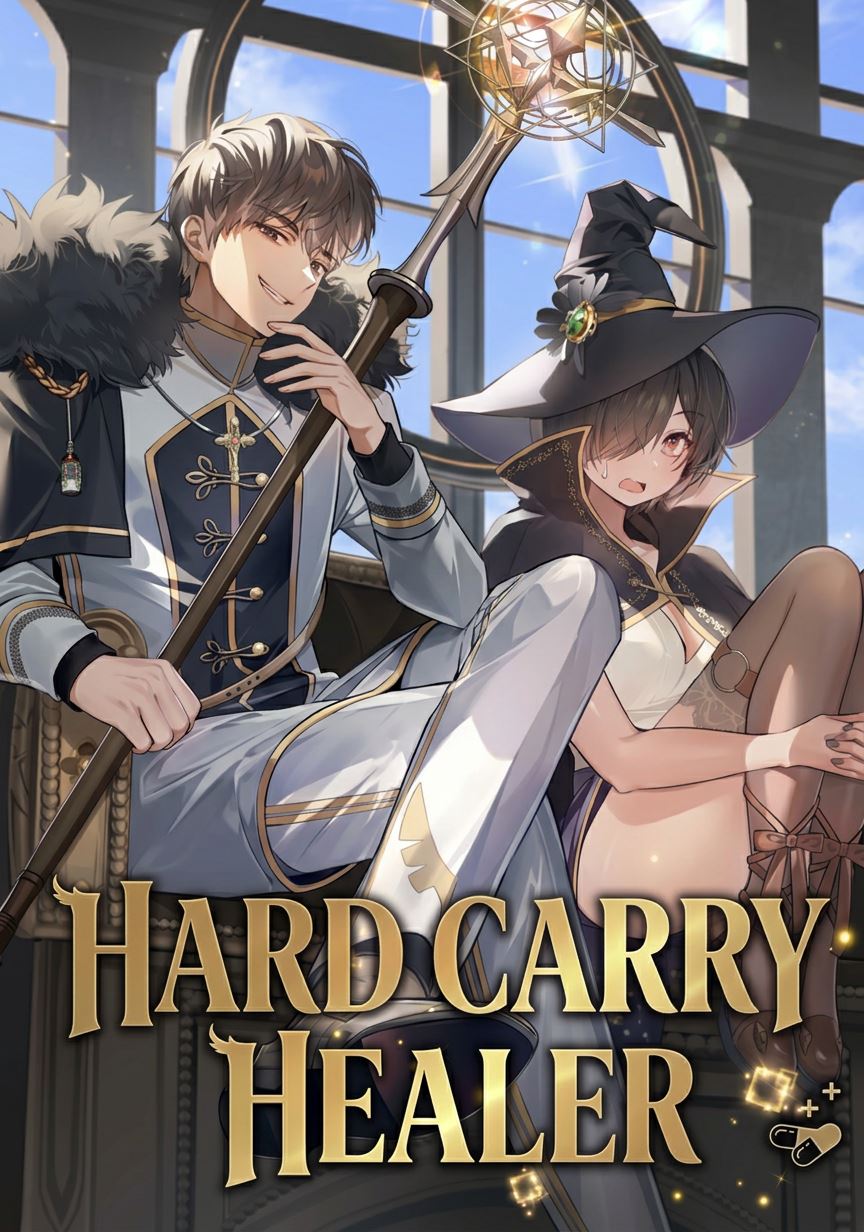
... Read More
Okay so the pacing in these chapters is absolutely brutal. Arumi is stuck in this valley with the carriage getting torn apart from all sides—zombies clawing at the walls, skeleton archers picking her apart from the rocks, and then the elite Ghost Wolves finally make their move. And just when you think things can't get worse, the damn carriage EXPLODES. Not breaks, not cracks—explodes into a hundred pieces and she goes flying through the air. And then she's on the ground, wounded, one arm already gone, and the wolves are closing in. The author doesn't let up for a single second. This is the kind of moment where you're literally holding your breath and thinking there's no way out. Then—plot twist. Arang didn't actually run away. He was positioning himself. He uses that [Emergency Rescue] skill to yank her back, pops a [Soul Shockwave] that sends all the Ghost Wolves tumbling off the cliff, and creates this perfect window for her to go full berserk. And the payoff? Level up x3. Achievement: Merciless Slaughterer. Achievement: Mage of Disaster. Achievement: God of War. Over 100, over 500, over 1000 enemies at once. The light explodes across the valley. This is the kind of moment that makes you slam your phone on the bed and then immediately open the app again. "Scream!" The command is simple, almost casual, but it carries the weight of everything that just happened. And her scream—honestly that image of her screaming into the valley while her damage triples and the undead disintegrate around her—that's the kind of scene that stays with you.
... Read More
I need to talk about how Arang narrates this because honestly his voice is everything. The guy is constantly making dry, self-aware comments like 'What an incredibly helpful skill' when the skill is clearly mediocre at first glance. And then when he realizes the mechanics actually work, he's just internally hype but externally calm. That contrast is gold. His inner monologue is sharp and unhinged in the best way. Things like 'I planned to switch to the 9-point job immediately' if the passive was trash, or 'the only way would be to beat the crap out of the part-timer angel' — this is a guy who talks to himself like he's roasting a video game NPC. It's funny without trying too hard. The dialogue with the other players is also well-done because it actually sounds like gamers. The bickering over prices, the desperation, the skepticism — it's not stylized or literary, it's exactly how people talk when they're grinding in an MMO. 'Heal me all 4 times, I'll give you 10 bronze!' has zero pretension and that's why it works. The angel's dialogue is a different flavor entirely. Cold, measured, almost clinical. There's zero warmth in her speech but she's clearly manipulating every word. 'Certainly, it may be a worthless object to the dull-witted' — she's not lying, she's just choosing what to reveal. That voice contrast between her and Arang is fantastic storytelling.
... Read More
Let's talk about what's actually at stake here, because on the surface it's just a friendly duel but underneath it's everything. For Arumi, this spar isn't about proving she can win. It's about survival in the most pathetic way possible. She's been building this entire fantasy where Lord Arang notices her as an equal, and right now the only role she's allowed him to give her is 'Damage Slave.' Every second she spends in that game with him is a second she's negotiating her own worth. When he says 'slave' and she flinches, that's not just awkwardness—that's the collision between her delusion and his clinical assessment. And she still says yes. "My level is higher and the Job Matchup is in my favor. I'm not confident I can lose, actually..." She's lying to him and she's lying to herself. The narrator tells us directly that she had 'absolutely no confidence she could win, but even if defeat was certain, she couldn't lose her confidence.' That sentence hit me like a truck. She's performing confidence as a survival strategy. If she admits she's scared, the whole thing falls apart. Meanwhile Arang is thinking about something completely different—he's assessing whether she's useful as a party member, whether her PvP skills meet the threshold, whether the Overseas Players later on will require her. His stakes are strategic. Hers are existential. And that asymmetry is what makes this scene so painful to watch. The duel itself starts and immediately Arang dodges her first grab. Nine-to-one becomes ninety-nine-to-one in three seconds. What happens next? I need to know.
... Read More
I need to talk about Arumi's internal monologue because WOW. Just wow. The entire flashback sequence where we learn about her relationship with Arang is quietly devastating. At first he was just a rival she thought she could catch. Then admiration. Then… something deeper. She wanted to PLAY THE GAME WITH HIM. Not beat him, not prove herself to him—just stand beside him. "Lord Arang didn't need me. No, he didn't need anyone." That line just wrecked me. She tried to force her way in anyway, and all she got was his hatred. Multiple times. She got defeated and trampled and it STILL felt like enough just to be near him. "With each death, my existence became clearer in Lord Arang's perception, so even if I was defeated and trampled, my heart felt fulfilled." This is not a healthy obsession. This is not healthy AT ALL. And yet I cannot look away from this character. So when she's lying there about to die and she sees Arang running away, and she thinks 'I'll die as a stepping stone for the one I've admired,' and she LAUGHS—like a hollow, broken laugh trying not to cry—that hits different. She expected this. She ALWAYS expects this. And yet when the moment actually comes, it still hurts. "It was the first time in her life he had offered her a party, so maybe she had dreamed a slightly arrogant dream." Dreams are dangerous things, aren't they?
... Read More
I need to just sit with the final moments of this text because the author dropped a narrative bomb and I'm still processing it. The Priest of Salvation. A 10-point recommendation that comes as a CROWN, not a book. The angel doesn't even open a grimoire for it — she levitates a crown from a chandelier. This is visually distinct from the other two recommendations in a way that screams 'this is different, pay attention.' And the description: 'Rise to the highest place. If you have the confidence to bear the gazes of all.' That's not a skill description, that's a thematic statement. This class isn't about healing or combat — it's about POWER. Authority. The gaze of all. Then Arang's final thought: 'Opportunity is equal for all? That's just a play on words!' The angel literally said those words moments before, and Arang connects it to something deeper. She lied — or at least, she omitted. A 10-point hidden class exists, she showed it to him, but the system claims no such thing exists. The game is hiding things from players, and Arang just found a crack in the facade. But here's what really gets me — the Saint from the first chapter is walking around with a broken healer build, farming XP through cruelty, thinking he's the smartest person in the room. And Arang is about to pick a class that the game itself doesn't want advertised. Two players. Two approaches. One is already OP but blind. The other is about to become something the system never intended. I'm not even halfway through and I already know this story is about to get very interesting very quickly.
... Read More
There's something really interesting happening beneath the surface of this chapter. The job class is literally called 'Priest of Salvation' and the trait is 'Savior.' And the core mechanic? You gain experience by helping others. The system itself rewards altruism, even if Arang's initial motivation is just to test it. The desperation mechanic is the most symbolic part. Healing amplifies when people are at their lowest, when they genuinely need it most. It's almost a commentary on what salvation actually means — it's not for the comfortable, it's for the desperate. And Arang understands this instinctively. He deliberately waits until people are injured and uncertain whether they'll be chosen, maximizing their desperation. Is he using the system, or is the system using his nature? Then there's the money angle. People immediately assume free healing is suspicious. The young man asks 'are you doing it for free?' like it's a trick question. In this world, everything has a price, and the fact that Arang refuses payment — at least initially — sets him apart. But it's not pure altruism either. He's running an experiment. The line between genuine care and strategic optimization is beautifully blurry here. The crown itself hanging from the ceiling is symbolic too. Something valuable placed out of reach, visible but inaccessible. The angel says it's for those who 'aim for the summit.' Arang takes it not because it was given to him, but because he was provoked into reaching for it. Salvation, it seems, belongs to those who actively strive for it.
... Read More
"The look in her eyes as she nodded was filled with resolve." God, that line hit different after everything else. Because up until this moment, the entire chapter has been building toward this exact beat — Arumi realizing who he is — and then Arang immediately testing whether she's a troller or not, and then HER PASSING said test by actually being competent. What I love about the plot structure here is how the author plays with dramatic irony. We know Arumi is a former NMP member. He doesn't know she knows him from before. And THEN she recognizes his movement from Leviathan Online. The layered reveals — first the combat style, then the confirmation through the "Protect the healer" troll test, then the actual gameplay showcasing — it's almost too perfect, but somehow it still works because each reveal earns its own beat. The skeleton carriage ambush sets up immediate danger, but the real twist isn't the skeletons themselves — it's that Arang was evaluating Arumi the entire time while also fighting. The plot runs on two tracks: survival AND assessment. When the zombie wolf appears and Arumi body-throws it through the air? That's when the author finally lets both tracks converge and Arang stops pretending he doesn't know who she is. The pacing is tight — no filler, every skill description and system message feels like it serves the narrative rather than slowing it down. Which is honestly rare.
... Read More
I need to talk about how VISUAL this entire sequence is because the author really committed to making this read like a movie storyboard. Start with the setup: a carriage rattling downhill through a valley, undead clinging to the sides like barnacles, skeletons clattering onto the platform. The sound design alone — rattle, rattle, the jaw sounds, the Woooong of the shield vanishing — it's all there. But then the visual escalates when Arang goes full assassin mode: "the purplish half-moon was already tearing through the darkness." Purple slash against dark night. That's a frame I would literally screenshot. And the arrow rain scene — "a rain of arrows will pour down on the carriage, leaving no room to step" — creates this claustrophobic sense of being trapped on a moving platform with no cover. Then Arumi uses the CLIFF. The terrain isn't just background; it's a tactical element she recalls from memory. That's worldbuilding that rewards players who actually pay attention to map details. The zombie wolf leaping into frame and being body-checked off the cliff — "the creature's cry gradually faded as it plummeted down the distant precipice" — followed ten seconds later by the Level Up echo. TEN. SECONDS. That delay makes the valley feel massive and real. You can feel the acoustics. The lighting shifts from darkness to purple soul-infused strikes to the parabola of the wolf against the sky. Every beat has a color palette. This isn't just a fight scene — it's a cinematographer's dream.

Leave a comment

You must be logged in to leave comments. or
