Hard Carry Healer - Reviews

Hard Carry Healer
+Add to Custom List
Sort
Add review
... Read More
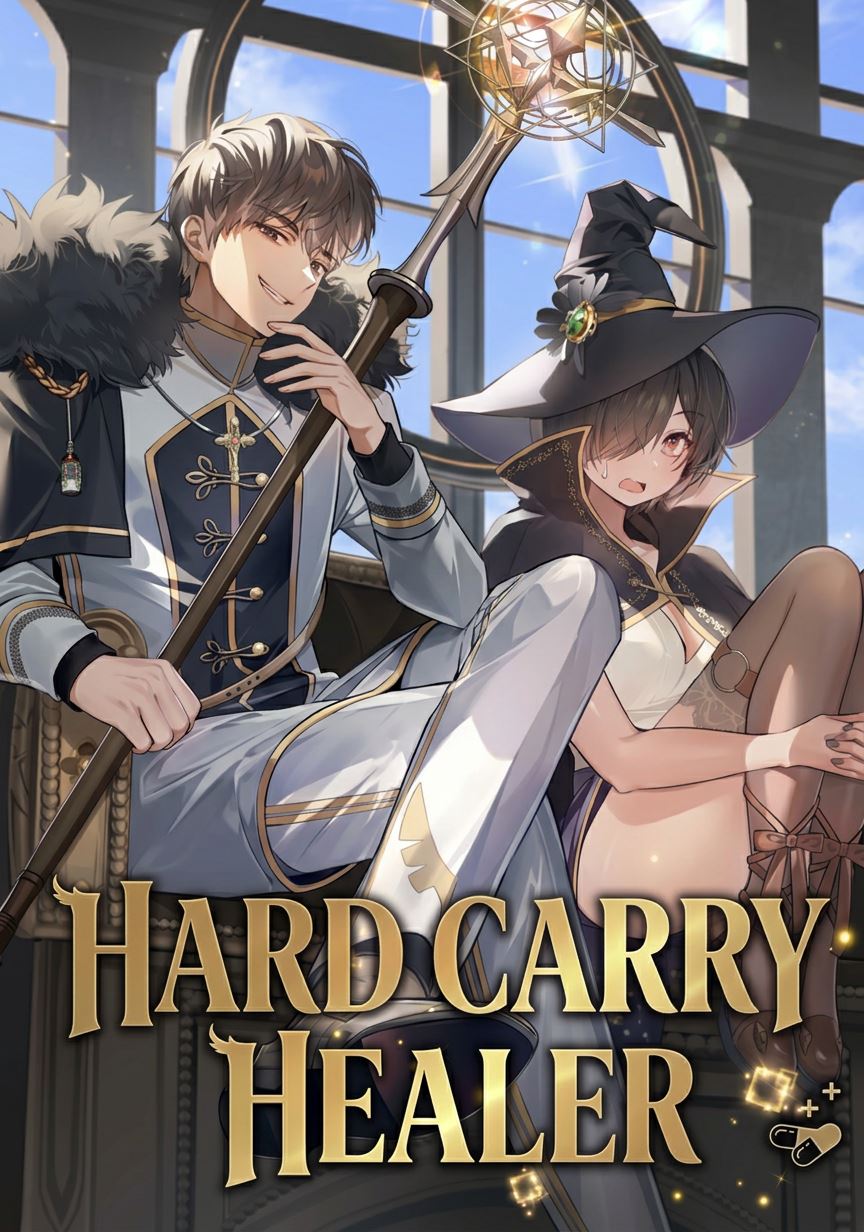
I'm still thinking about that counting scene. You know the one — the Chinese old dude is dying, health dropping by the second, and they make him COUNT ALOUD while everyone else is holding their breath waiting for the Priest's mana to regenerate. Let me just quote it because it's that good: "75, 69, 62…." His health was being eaten away by the poison in an instant. "25, 19, 10…." As he continued his count, he couldn't hear a thing. "8, 7, 6, 5, 4, 3, 2…!" "Fuuuuuuuuuck~!" That raw, unfiltered sound of euphoria when the heal finally comes through — it's one of those moments that transforms a scene from good to unforgettable. The author builds the tension methodically: first the setup of five near-dead players, then the false hope of the mana shortness excuse, then the agonizing countdown that stretches what should be seconds into an eternity. Every detail serves the atmosphere — the distorted vision, the twisted tongue, the face contorted in pain. This is the Forest of Fresh Blood after all, and the name isn't poetic fluff. The worldbuilding details woven throughout are also top-tier. The visual of the health bars floating above each player's head, the cooldown mechanics that the players notice but can't prove anything with, the way the vampire bats disappear once Arang's plan executes — everything feels grounded in game logic while still being emotionally real. And that final image of the girl standing beneath the crumbling bat swarm, letting the byproducts scatter around her like confetti, is pure cinematic gold. The dark forest, the black-robed figure, the casual display of power — it's the kind of imagery that stays with you.
... Read More
Arang's narrative voice is an absolute delight. It's this unhinged cocktail of cold calculation and emotional volatility that somehow feels completely authentic for someone who's been a top player across multiple games. Watch how his internal monologue shifts register constantly. One moment he's in full analyst mode: 'Magic Power×(7.5+15)×up to 5x×2...?' And the next he's losing it: 'Tsk, how annoying.' 'There's a limit to how much I'll tolerate just because you're Korean!' 'That's right — it's not enough that you're hogging all the experience with your mob hunting, you're trying to bleed a stone dry!' The last one? That's peak Arang. That's a man who has personally experienced the violation of having his resources stolen and his space invaded, and he's projecting all of that accumulated grievance onto this one girl screaming in the distance. What's brilliant is the contrast between his analytical self and his reactive self. He can compute optimal skill rotations in his head while simultaneously being personally triggered by a girl 100 meters away. The mind of a true gamer, honestly. And the narration style — it's first-person internal thought mixed with third-person observation in a way that never feels jarring. The author trusts the reader to stay oriented. No hand-holding. Just pure, unfiltered stream of consciousness from a guy who's seen too much and still can't believe some NPC-looking girl is ruining his evening.
... Read More
Okay so this whole plot setup is genuinely interesting. Arang gets recommended this crown hidden on a ceiling by an angel, and it turns out to be a healer class — which he initially hates because he's never played healers before. But then the twist kicks in. The skill looks garbage on paper, half the healing of other classes, but there are these layers underneath. The job gives XP just for healing people, and the healing amplifies when targets are desperate. That's not a bad build at all if you think about it. What really got me was how the author dangles the mystery. You read it and go 'this is trash' and then suddenly you're like 'wait, this might actually be S-tier.' The pacing of the reveal is great. First it's just a normal healer, then you learn about the soul shield, then the passive trait, and by the end you're realizing this is probably going to break the game somehow. Classic isekai gameLit progression fantasy move — give the MC the 'weak' class that's actually broken. Also loved the test scene where Arang heals four random injured players to see how the desperation mechanic works. That's smart plotting because it's not just exposition, it's actual gameplay demonstration. Shows the system working in real time instead of the author just telling us. But honestly, the part that made me want to keep reading is the hook at the end. Arang is starting to realize this might be fun. What does he do next? How far does this healer build go? I need to know.
... Read More
The Valley of Darkness is NOT a place you want to get stuck in. I keep thinking about how the author layers the threats—first the skeleton archers rain arrows down on the carriage until it looks like a hedgehog, then the zombies tear at the outer walls, then the Ghost Wolves come sprinting down the slopes faster than the carriage itself can slide. Three directions of attack and nowhere to go because the cliff is at your back. And the carriage breaking apart—"Creek, creeak—A crack that formed on one part of the floor gradually spread outward"—this slow, almost musical build to the explosion is chef's kiss. You hear it dying before it actually dies. "In the air, where dozens of wooden fragments scattered, Arumi clenched her teeth." I love that image. Floating debris, a girl on the ground, wolves converging from every direction. It's got that cinematic quality where the whole world narrows down to one moment. Then the combat aftermath—the light exploding across the valley after her skill goes off, the screen-filling system notifications lighting up her vision, her scream echoing through the valley for 'some time' after. The visual contrast between the dark, rotting valley and the blinding burst of level-up light is gorgeous. And those Ghost Wolves flying through the air from the Soul Shockwave—"a massive roar shook her eardrums"—you can FEEL that impact. The worldbuilding here isn't just about setting; it's about making every threat feel physical and immediate.
... Read More
This chapter operates on two conflict levels simultaneously and the stacking is brutal. On the surface: physical survival. Skeletons climbing onto a moving carriage on a downhill slope. Hundreds of skeleton archers ahead. A level 80 elite zombie wolf drops from the sky. If any of these land a hit, Arumi dies in-game and potentially in real life too — the text specifically mentions "the only thing more important than her character's life was her own life inside the capsule." The stakes are literal life and death, doubled by the VR risk. But the deeper conflict is Arumi's internal crisis. She just called Lord Arang a scammer and a slave trader to his face. She told him to get lost. And now she's realized — mid-battle, while arrows are flying — that he's THE Ghost Assassin from Leviathan. The cognitive dissonance is palpable. Her panic isn't just about monsters; it's about having burned her bridge to the one person whose opinion matters to her. "Could things be different now?" This question drives everything she does after. Every spell she casts, every movement of those black witch arms — it's not just combat, it's her proving she's worth something to HIM specifically. That's why the level-up sound almost makes Arang forget to close his mouth. He's witnessing someone transform from a liability into a legitimate threat in real time. The tension never drops. Even when the skeletons are dealt with, arrows appear. When arrows are blocked, the wolf jumps. The author doesn't let the reader — or the characters — catch their breath.
... Read More
Okay so this opening sequence is absolutely unhinged and I love it. Let me just... sit with that image of guys getting bombed to bits, healing back up, getting bombed again, healing again, like some kind of roly-poly toy loop of suffering. The guy literally treats his own army like an XP farm. 'Should I farm a little more?' he thinks after the first round. I actually laughed out loud. That's not a hero, that's a power-gamer who found the most broken class and is just leaning into it. And then the enemy realizes he's the weak point — a javelin hits him, stuns him for ONE SECOND, and suddenly thousands of his own soldiers are dead. Of course. The guy's so obsessed with maximizing his divine power bar that he had no room for actual defensive buffs. His own greed got him caught. But THEN — and this is the part that made me literally gasp — he resurrects ALL of them with a massive stat boost and they charge the fortress. 'I carried again,' he mutters. The man is completely unaware that he is the villain of this story. Or maybe he knows and doesn't care. Either way, the narrative is playing with us — is he a saint or a demon? The text itself asks that question and never fully answers it. Then Chapter 1 transitions to Arang and the angel, and suddenly the whole framework of this world clicks into place. Rupenia is a game-like world with AI NPCs, job systems, skill trees. The Saint was just one player exploiting a build, and Arang is about to do the same thing but smarter. That final line — 'Opportunity is equal for all? That's just a play on words!' — tells you everything. This guy sees through the game.
... Read More
I need to talk about Arang because this guy is a walking paradox and I cannot stop thinking about him. On the surface, he's playing the role of a holy priest — the kind of character you'd expect to radiate warmth and compassion. But every single action he takes is calculated. When he says 'Heal the dying first, and save as many lives as possible. Isn't that the duty of a Healer?' — is that genuine conviction or is it performance? The text makes it deliberately ambiguous, and that's what makes him so fascinating. The narrator tells us he learned that 'a person's Desperation is most amplified when they stand on the boundary between life and death.' He's not saving people because he cares. He's saving them because that's when the Experience Points hit hardest. But here's what got me — the moment he lies down and pretends to rest to 'recover mana faster,' and the players immediately rationalize it as noble sacrifice. That scene revealed everything about both characters. Arang's ability to manipulate isn't just about game mechanics; it's about understanding human psychology on a visceral level. He knows exactly what to say, when to show frustration, when to smile benevolently. And the players? They WANT to believe he's a hero. Their desperation makes them complicit in their own exploitation. Then there's the girl in black — totally different energy. She watches Arang's entire scheme and laughs at it. 'The patheticness of him using such a smart head to just squeeze out some money was laughable.' She sees through him completely, and yet she also recognizes his capability. The hint that 'Lord Arang will probably come too' suggests she knows who he really is across timelines. Their eventual interaction is going to be absolutely electric.
... Read More
Let me just say this: the structural pivot between the Saint's battle and Arang's introduction is one of the smoothest transitions I've read in this genre. You've got this absolutely relentless, high-octane warfare sequence — bombardments, deaths, Resurrection skills, knight charges, fortress sieges — and then it just... cuts. No epilogue, no summary, no 'meanwhile, elsewhere.' One moment you're reading about thousands of corpses evaporating in a stream of light, and the next you're in a quiet library with an angel and a guy trying to figure out his class build. That contrast is intentional, and it works. The Saint chapter is pure kinetic energy — short sentences, onomatopoeia (Kbooooom, KABOOM, Fwoooosh), all caps system messages breaking through the prose like UI pop-ups in an actual game. The rhythm is chaos. And then Arang's section slows down to a crawl — measured questions, analytical observations, the kind of pacing that makes you feel like you're figuring the puzzle out alongside him. But here's what's really clever: the Saint chapter ends on a note of false resolution. 'The war is over, it seems.' 'A bitter victory.' The enemy commander thinks he's won, thinks this guy needs to be imprisoned. Classic setup. Then the Resurrection happens and the tables turn completely. So even within that first chapter, there's a mini-arc: triumph → despair → impossible comeback → smug self-satisfaction from the Saint ('I carried again'). It's a complete story beat that also functions as a warning label for everything Arang is about to walk into. The pacing between chapters also mirrors the content perfectly — fast warfare followed by slow investigation. The author knows exactly when to sprint and when to walk.
... Read More
The stakes in this section operate on three different levels simultaneously, and the author layers them so smoothly you barely notice until it hits you. On the surface, it's a survival conflict — five players are literally dying from poison, and the only person who can save them is the one who (indirectly) caused their predicament. The countdown sequence raises the visceral stakes to heart-pounding levels. But the deeper conflict is Arang's own limitation: 'If I keep farming experience like this, they might find out I was the one who lured the Vampire Bats.' He's already thinking about the consequences of his own success. The tail gets too long, it's stepped on. This is a protagonist who understands the danger of his own momentum. Then there's the meta-conflict introduced at the end — the girl in black who has clearly encountered 'Lord Arang' before. The line 'You won't be able to crush me so easily this time' is ChILLING. It implies a history of violence, defeat, and possibly death between them across multiple timelines or runs. She's not just an observer; she's a participant who has already lost to him once and is preparing for round two. What makes this all work is that the author never lets us forget that Arang's current victory is also his vulnerability. Every Experience Point he gains brings him closer to exposure. Every player he saves is someone who now owes him — and someone who might also remember his face. The tension isn't just 'will he survive this encounter?' It's 'how long can he keep playing this game before the game plays him?'
... Read More
"Hold on for five seconds." Arang says this and immediately the chapter goes into a rhythm that mirrors those five seconds — short, sharp, controlled bursts of action followed by system readouts that land like drumbeats. Here's what's impressive about the pacing: the author inserts skill descriptions (Soul Strike, Arms of the Black Witch) WITHOUT breaking momentum. Each system message arrives at a moment of maximum relevance — right when Arang is about to use Soul Strike, right when Arumi activates her unique skill. The information serves the action instead of interrupting it. The chapter structure follows a rising action pattern that never plateaus: - Undead cling to carriage (tension build) - Skeletons board, Arang counts down (tension spike) - Soul Strike execute — head flies off (release) - Two more skeletons, legs removed, they fall (release) - Arrow rain incoming (new tension) - Troll test revealed (comedy beat that also builds character) - Arumi blocks arrows using terrain (skill showcase) - Zombie wolf leaps (escalation) - Body throw off cliff + level-up echo (climax with delayed payoff) That ten-second delay on the level-up sound is a masterclass in pacing. It's the author saying "we're not done here yet" and extending the moment just enough to make you feel the scale of what just happened. By the time the echo arrives, you've already moved on emotionally — and then BOOM, reminder that she leveled up. Perfect comedic and structural timing.
... Read More
Can we talk about how the Saint speaks versus how Arang speaks? Because this is where the author really earns their keep. The Saint's dialogue is sparse but devastating. 'I need my Divine Power to be full to cast a buff… will nagging make it happen any faster?' That line does SO much. It's dismissive, it's impatient, it reveals that he's aware his soldiers are suffering and simply doesn't care. And then 'Hurry up and die! If you can't even kill yourselves, should I help you?' followed by him striking a desperate soldier on the head with an iron staff. The violence in the dialogue — the CLANG — makes it visceral. He's not just indifferent; he's actively hostile to the people he's supposed to be protecting. Meanwhile Arang's internal voice is completely different. It's analytical, slightly sarcastic, constantly questioning. 'Doesn't seem like she has much of a personality.' 'That's not a lie, is it?' 'Opportunity is equal for all? That's just a play on words!' He's not shouting or striking anyone. His weapon is skepticism. And the angel — her dialogue is wonderfully flat and robotic at first ('I don't know what you mean,' 'I'm sorry, I don't quite understand'), but the moment jobs come up, she becomes eerily smooth. 'Opportunity is equal for all.' 'I cannot tell a lie. That is the rule of a Guide.' The shift in her speech pattern is a red flag the reader should catch, and Arang absolutely does. The system messages — [Allies' health will not drop below 1.], [Stunned for 1 second!] — are another layer of voice entirely. They're cold, mechanical, absolute. They contrast beautifully with the emotional chaos around them. The Saint reads these same messages with the same flat detachment. That's character development through formatting.
... Read More
Okay so let me just say — Arang's reaction to the girl in the black witch outfit is SO revealing about who he actually is. At first you'd think he's just annoyed about stolen mobs, but no. The instant he sees her silhouette, his brain goes straight to: stalkers. He brings up this whole history of people obsessed with him from Arcfinder, the blacklist he made, the ones he killed and who kept coming back. And then there's this one image he can't shake — someone grinning while respawning to chase him again. That's the stuff that haunts him. But here's the thing that made me sit up: he doesn't hate the girl. He calls himself her "alter ego" at one point. He even thinks about cheering for her against overseas guilds. There's this weird sense of camaraderie mixing with territorial anger, and that duality is so human. He's tolerating her, justifying her existence, telling himself it's fine — until she steals his mobs for the third time. And THEN the mask slips. "There's a limit to how much I'll tolerate just because you're Korean!" The way his respect for her degrades in real-time is fascinating. First it's curiosity, then mild annoyance, then full-on resentment. And I love that he acknowledges he COULD go aggressive — if this were any other foreign player, he'd pull every monster in the valley on them. But he doesn't. Not yet. That restraint says something about his character code, doesn't it? He's not a mindless killer. He's calculating, patient, and selectively hostile.

Leave a comment

You must be logged in to leave comments. or
