Summary

... Read More

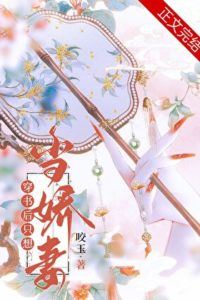
Shu Yuan awakens in 1980, having transmigrated into the body of a minor character in a novel she once read. She finds herself in a cramped, three-room apartment in the Hongxing Electronics Factory residential compound, living with her stepmother Li Hongxia and younger sister Shu He. The original host was an unemployed twenty-five-year-old woman who had returned from the countryside after giving birth to a son, Xiao Man, whom she had abandoned with a farming family. In the novel, Xiao Man suffers a tragic fate: he is sold by his foster family, injured by human traffickers, and grows up crippled and resentful, eventually becoming a successful but dark writer who destroys his biological father, a renowned surgeon. Shu Yuan realizes she must alter this trajectory to prevent the child’s suffering.

Immediately upon waking, Shu Yuan faces a blind date arranged by her stepmother. She rejects the suitor, a technician whose family views her solely as a vessel for producing a male heir, and decides to prioritize rescuing Xiao Man. She learns that the Spring Equinox, two days away, is the date when Xiao Man is sold to the Zhang family and subsequently targeted by traffickers. Lacking a letter of introduction and funds, Shu Yuan sells her wool coat for forty yuan and obtains a introduction letter from the neighborhood committee. Her eldest sister, Shu Ping, provides additional financial support and helps cover for her absence, unaware of the full scope of Shu Yuan’s plan.

Shu Yuan travels to Bingcheng and then to Baihua County, hiring a local man on a bicycle to reach the Xiaohe Production Team. She observes Xiao Man from a tree, noting his emaciated state and the abuse he endures as a child husband to a mentally disabled girl. Xiao Man, who has been waiting for his mother to rescue him, is overjoyed when she reveals herself. Shu Yuan carries him away from the household, navigating through mountain paths to avoid detection. Their escape is interrupted by human traffickers, but Shu Yuan, utilizing her combat skills, defeats two attackers. Public security officers, who were tracking the traffickers based on Xiao Man’s prior report, arrive and apprehend the criminals.

At the township substation, Shu Yuan confronts Zhang Laocai, the man who bought Xiao Man. Zhang attempts to frame Shu Yuan as a trafficker, but she exposes his crimes, including his involvement in selling other children. Xiao Man provides testimony confirming Zhang’s guilt. The public security officers arrest Zhang and the traffickers. Shu Yuan ensures that Lin Dahu, the son of Xiao Man’s original foster family who sold him, is also investigated. She then takes Xiao Man to the county hospital, where he is diagnosed with synovitis rather than a permanent injury. Relieved, Shu Yuan buys him new clothes and prepares to return to the city, having successfully intercepted the tragic events of the original plot.

The story concludes with Shu Yuan and Xiao Man beginning their journey back to Lucheng. She is committed to raising him properly, despite her initial reluctance to mother a child. The immediate danger has passed, and the key figures responsible for Xiao Man’s misery are in custody. Shu Yuan’s actions have shifted the narrative from tragedy to redemption, setting the stage for a new life for both mother and son away from the harmful influences of the past.

Latest Release
DateGroupRelease
2026-08-11shanghai fantasy c101
2026-08-11shanghai fantasy c100
2026-08-11shanghai fantasy c99
2026-08-11shanghai fantasy c98
2026-08-11shanghai fantasy c97
2026-08-11shanghai fantasy c96
2026-08-11shanghai fantasy c95
2026-08-11shanghai fantasy c94
2026-08-11shanghai fantasy c93
2026-08-11shanghai fantasy c92
2026-08-11shanghai fantasy c91
2026-08-11shanghai fantasy c90

Community Reviews

Rating(3.6 / 5.0, 21votes)
5 stars
4(19%)
4 stars
5(24%)
3 stars
12(57%)
2 stars
0(0%)
1 stars
0(0%)

Popular reviews

... Read More
I need to talk about the coat. The fucking coat. Shu Yuan spends money she barely has on a winter coat for Xiao Man and the way the author writes it — "the best piece of clothing he had ever worn" — I actually had to put the book down for a second. This kid had never smiled once at Old Zhang's house and now look at him, beaming in that coat, promising to buy her one worth eight hundred when he grows up. Eight hundred. He has no idea what that means, but he says it because he wants her to know she's worth it. And Shu Yuan's response? She doesn't cry or get dramatic. She just smiles and says she'll wait. That's it. That's all. But it destroyed me. The whole mother-son dynamic in this book is built on these tiny moments of mutual recognition — they're both survivors, both poor, both trying to hold onto each other in a world that keeps trying to tear them apart. When Xiao Man says "I'm too heavy, I need to get better soon so Mom won't have to carry me anymore" but then the narration tells us he actually really wants to be carried because it feels safe — that contradiction is everything. Kids don't get to be vulnerable, do they? He has to frame his need as independence. I'm not okay.
... Read More
Okay, let me just say this out loud—Shu Yuan is the most refreshingly selfish protagonist I've read in forever. Like, she transmigrates, finds out she's the mother of the future villain, and her first instinct isn't some noble sacrifice. It's literally: "I don't even like kids, why should I fix this?" And then she changes her mind anyway. Not because she's suddenly a saint, but because the clock is ticking. Spring Equinox. Two days away. The urgency overrides her reluctance. That's such a human decision-making process, you know? Not clean or heroic, just... real. What struck me most though was how the original host's secrets shaped everything. She had a child out of wedlock, hid it from her own mother and sister, and was still going on blind dates with a concealed pregnancy as leverage. Shu Yuan looks at all of that and is just... done. "Neither side had clean motives—so in a way, it was even." That line hit me hard. She's not judging the original host from a moral high ground. She's acknowledging the mess and deciding to clean it up on her own terms. When she walks out on the blind date and tells Technician Zhang's family straight up that she's not a breeding machine, that's not just defiance—that's a complete rejection of every expectation placed on this woman's body. And the mother-daughter dynamic with Li Hongxia? Brutal. The feather duster threat, the constant complaints about money, the way Li Hongxia sees her daughters as burdens. But Shu Yuan navigates it all with this cold efficiency. She borrows nothing, asks for nothing, just sells her coat and moves. Who is this woman, really? A city girl from the future trapped in a 1980s factory worker's body, who doesn't want to be here but can't unsee the tragedy waiting for a boy she's never met. That tension between indifference and responsibility is what makes her compelling. She's not growing into a hero. She's making a choice while hating every second of it.
... Read More
There are two objects in these chapters that I can't stop thinking about: the black wool coat and the calendar on the wall. The coat is worth 150 yuan originally, sells for 40. It's the original host's most valuable possession—fine quality, barely worn—and Shu Yuan liquidates it without hesitation to buy her freedom. That's not just a plot device. It's a symbol of what she's willing to sacrifice. The warmth she feels without it, the cold wind piercing through her thin sweater, the physical discomfort she chooses over comfort—that's the cost of agency. She trades warmth for movement. And the calendar. Shu Yuan sees it and immediately connects it to the Spring Equinox. The date isn't just a plot marker; it's fate written into the fabric of the world. In a story set in 1980s China, where life was governed by official documents, letters of introduction, factory assignments, and neighborhood committees, the calendar represents something even more inescapable than bureaucracy. It's destiny. The whole novel-within-a-novel structure is doing heavy thematic lifting too. We're reading about a woman who knows she's in a story, who understands she's a minor character whose only purpose is tragic backstory. And yet she's fighting against the narrative itself. That's meta in a way that feels organic, not gimmicky. Xiao Man's story—abandoned, sold, crippled, turning to art as both weapon and confession—is the novel's dark heart. The fact that his story becomes a famous film within the fiction speaks to how trauma gets commodified, how pain gets polished into something the public consumes. Shu Yuan is trying to prevent that transformation before it starts, which means she's not just saving a boy—she's trying to rewrite a story that's already been told.
... Read More
The stakes in these chapters are layered in a way that keeps you on edge the entire time. On the surface, it's a rescue mission—get Xiao Man out of the Zhang family's hands. But the author keeps raising the bar. First there's the physical danger of the mountain escape, then the traffickers appear with KNIVES, then Zhang Laocai shows up trying to claim the boy, and through it all there's this underlying question: what if the police don't believe them? What if Zhang Laocai succeeds in painting Shu Yuan as the trafficker? That moment when Zhang Laocai starts shouting 'She's a trafficker too. She's trying to kidnap my child'—my heart actually dropped. Because this is exactly the kind of lie that could work in a rural village where a woman alone with a child looks suspicious. The author understands that the real danger isn't just physical violence, it's institutional failure. A child who has been sold and beaten has no voice unless someone amplifies it. Shu Yuan becomes that voice, but she's also vulnerable—she's a woman in 1980s rural China with no official status, no family, no proof. Every conflict in these chapters tests a different weakness: physical combat, legal credibility, emotional trust, institutional support. And the resolution feels earned because each obstacle is overcome through a different strategy—force against the traffickers, words against Zhang Laocai, patience against the system. The suspense never drops. Even after the police arrive, Zhang Laocai is still plotting escape routes in his head. The author doesn't let you breathe until the very end, and that's why these chapters hit so hard.
... Read More
The pacing here is absolutely ruthless and I love it. Chapter 1 drops us into a transmigration, establishes the entire backstory of the novel-within-a-novel, reveals the inciting incident (Spring Equinox = traffickers = crippled Xiao Man), and by the end of the chapter Shu Yuan has already decided to go to the northeast. That's a lot of ground to cover, and the author doesn't slow down for breath. What's clever is how the blind date scene functions structurally. On the surface it's character work—showing us what kind of world Shu Yuan has entered, what kind of expectations are placed on women here. But it's also a ticking clock mechanism. Every conversation about marriage and sons and reproduction is a reminder of how trapped the original host was, and how much urgency there is to escape that fate—not just for Shu Yuan, but for a child she hasn't even found yet. Chapter 2 is even tighter. Problem → Solution → Problem → Solution. No ticket? Sell the coat. No money? Sold the coat. Need a letter of introduction? Neighborhood committee, five minutes. The prose itself moves faster here—shorter sentences, quicker decisions. It mirrors Shu Yuan's mental state: no time for hesitation. The chapter ends on what could be a cliffhanger but isn't—it's just a statement of fact: "Her luck wasn't bad at all. The two major obstacles standing in her way to the Northeast were resolved swiftly." That's it. No dramatic pause. The story just keeps moving, and now the real question is: can she actually find him in time? The structure is basically a countdown, and we're locked into it immediately.
... Read More
Okay so I need to talk about this scene where Shu Yuan is hiding in the elm tree and she's watching Xiao Man stir pig feed with this tiny ladle. Like, her entire body is tense, right? She's literally gripping the trunk so hard the blue veins pop out. And then she sees his leg—his right leg is dragging, not working right—and my heart just dropped. This kid has been through hell and he's still trying to put out the fire before he leaves because if the food burns he gets beaten. That's the kind of trauma response that doesn't just go away. But what really got me was when he sees her. He doesn't scream or run or anything dramatic. He just... looks at her. And then he goes back inside to pull his sister away first, like even in this moment of reunion he's still protecting someone else. Then he comes back out alone and limps toward her. The way the text describes his leg—"a loose part hanging off his body, clanking as he moved"—that's not just a physical detail, that's the physical manifestation of everything the Zhang family did to him. And Shu Yuan? She picks him up. Not asks, not negotiates. Just lifts him into her arms. She feels his bones. She feels how light he is. And she says "I'll take you back to Lucheng. From now on, I'll raise you." That's it. No hesitation. No "let me think about this." Just immediate, total commitment. The kid says "Okay, Mom" and that one word carries so much weight. He's four years old and he's already learned to trust carefully. The fact that he agrees so quickly—almost too quickly—makes me wonder if part of him is terrified she'll change her mind if he hesitates. God, I hope she never gives him a reason to doubt her.
See all reviews

Characters

See all characters

Custom lists

See all custom Lists