Summary

... Read More

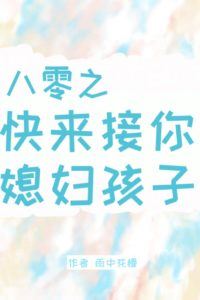
Shu Yuan awakens in 1980, having transmigrated into the body of a minor character in a novel she once read. She finds herself in a cramped, three-room apartment in the Hongxing Electronics Factory residential compound, living with her stepmother Li Hongxia and younger sister Shu He. The original host was an unemployed twenty-five-year-old woman who had returned from the countryside after giving birth to a son, Xiao Man, whom she had abandoned with a farming family. In the novel, Xiao Man suffers a tragic fate: he is sold by his foster family, injured by human traffickers, and grows up crippled and resentful, eventually becoming a successful but dark writer who destroys his biological father, a renowned surgeon. Shu Yuan realizes she must alter this trajectory to prevent the child’s suffering.

Immediately upon waking, Shu Yuan faces a blind date arranged by her stepmother. She rejects the suitor, a technician whose family views her solely as a vessel for producing a male heir, and decides to prioritize rescuing Xiao Man. She learns that the Spring Equinox, two days away, is the date when Xiao Man is sold to the Zhang family and subsequently targeted by traffickers. Lacking a letter of introduction and funds, Shu Yuan sells her wool coat for forty yuan and obtains a introduction letter from the neighborhood committee. Her eldest sister, Shu Ping, provides additional financial support and helps cover for her absence, unaware of the full scope of Shu Yuan’s plan.

Shu Yuan travels to Bingcheng and then to Baihua County, hiring a local man on a bicycle to reach the Xiaohe Production Team. She observes Xiao Man from a tree, noting his emaciated state and the abuse he endures as a child husband to a mentally disabled girl. Xiao Man, who has been waiting for his mother to rescue him, is overjoyed when she reveals herself. Shu Yuan carries him away from the household, navigating through mountain paths to avoid detection. Their escape is interrupted by human traffickers, but Shu Yuan, utilizing her combat skills, defeats two attackers. Public security officers, who were tracking the traffickers based on Xiao Man’s prior report, arrive and apprehend the criminals.

At the township substation, Shu Yuan confronts Zhang Laocai, the man who bought Xiao Man. Zhang attempts to frame Shu Yuan as a trafficker, but she exposes his crimes, including his involvement in selling other children. Xiao Man provides testimony confirming Zhang’s guilt. The public security officers arrest Zhang and the traffickers. Shu Yuan ensures that Lin Dahu, the son of Xiao Man’s original foster family who sold him, is also investigated. She then takes Xiao Man to the county hospital, where he is diagnosed with synovitis rather than a permanent injury. Relieved, Shu Yuan buys him new clothes and prepares to return to the city, having successfully intercepted the tragic events of the original plot.

The story concludes with Shu Yuan and Xiao Man beginning their journey back to Lucheng. She is committed to raising him properly, despite her initial reluctance to mother a child. The immediate danger has passed, and the key figures responsible for Xiao Man’s misery are in custody. Shu Yuan’s actions have shifted the narrative from tragedy to redemption, setting the stage for a new life for both mother and son away from the harmful influences of the past.

Latest Release
DateGroupRelease
2026-08-11shanghai fantasy c149
2026-08-11shanghai fantasy c148
2026-08-11shanghai fantasy c147
2026-08-11shanghai fantasy c146
2026-08-11shanghai fantasy c145
2026-08-11shanghai fantasy c144
2026-08-11shanghai fantasy c143
2026-08-11shanghai fantasy c142
2026-08-11shanghai fantasy c141
2026-08-11shanghai fantasy c140
2026-08-11shanghai fantasy c139
2026-08-11shanghai fantasy c138

Community Reviews

Rating(0 / 5.0, 6votes)
5 stars
0(0%)
4 stars
0(0%)
3 stars
0(0%)
2 stars
0(0%)
1 stars
0(0%)

Popular reviews

... Read More
Okay so I need to talk about this scene where Shu Yuan is hiding in the elm tree and she's watching Xiao Man stir pig feed with this tiny ladle. Like, her entire body is tense, right? She's literally gripping the trunk so hard the blue veins pop out. And then she sees his leg—his right leg is dragging, not working right—and my heart just dropped. This kid has been through hell and he's still trying to put out the fire before he leaves because if the food burns he gets beaten. That's the kind of trauma response that doesn't just go away. But what really got me was when he sees her. He doesn't scream or run or anything dramatic. He just... looks at her. And then he goes back inside to pull his sister away first, like even in this moment of reunion he's still protecting someone else. Then he comes back out alone and limps toward her. The way the text describes his leg—"a loose part hanging off his body, clanking as he moved"—that's not just a physical detail, that's the physical manifestation of everything the Zhang family did to him. And Shu Yuan? She picks him up. Not asks, not negotiates. Just lifts him into her arms. She feels his bones. She feels how light he is. And she says "I'll take you back to Lucheng. From now on, I'll raise you." That's it. No hesitation. No "let me think about this." Just immediate, total commitment. The kid says "Okay, Mom" and that one word carries so much weight. He's four years old and he's already learned to trust carefully. The fact that he agrees so quickly—almost too quickly—makes me wonder if part of him is terrified she'll change her mind if he hesitates. God, I hope she never gives him a reason to doubt her.
... Read More
I want to talk about how sparse the dialogue is in this chapter and how every single line lands because of it. Most of the interaction between Shu Yuan and Xiao Man comes down to three exchanges: "Who am I?" / "Mom." "Xiao Man, come with me. I'll take you back to Lucheng. From now on, I'll raise you." / "Okay, Mom." That's it. Three words repeated, and each time they mean something completely different. The first "Mom" is trembling, unfamiliar on his tongue after years of not having a mother who looks at him with tenderness. The second is soft, cheerful, full of a trust he's probably never had to give before. And Shu Yuan's dialogue is equally restrained. She doesn't monologue. She doesn't explain herself. She asks practical questions—"What's going on with your leg?" "Are you cold?" "Do you know which path has fewer people?"—and then she makes a promise and keeps it. Her voice is described as "the gentlest voice she could manage" and "warm and light." The narrative itself tells us she's adjusting to the role, trying to find the right tone. The child husband explanation in the footnote is interesting too—it's the only expository dialogue in the chapter, and it's necessary because this practice might be unfamiliar to readers. But even that is handled cleanly, without breaking the narrative flow. What strikes me most is how the silence between the lines speaks louder than the words. When Xiao Man exchanges a silent glance with his sister before leaving her and going to his mother—that glance says everything about what kind of child he is.
... Read More
There are so many layers to unpack in this chapter and I barely know where to start. Let me just pick two symbols that won't leave my head: the elm tree and the broken leg. The elm tree is where Shu Yuan hides, where she watches, where she finally reveals herself. It's bare in early spring—no leaves for cover, which makes her position vulnerable. But it's also the only vantage point that lets her see the entire layout of the Zhang household. The tree becomes a liminal space, a place between observation and action, between the outside world and the trapped world of the Zhang compound. When she tosses the stone to get Xiao Man's attention, it's like a signal flare—she's crossing from watcher to participant. And the broken leg. Xiao Man's leg is described as a "loose part hanging off his body" and he resembles "a little zombie." But it's also the same leg he broke in his nightmare while trying to escape. The dream and reality are mirroring each other—he broke his leg trying to flee the Zhang family, and now his mother comes to save him with that same broken leg. The nightmare predicted the present. But this time is different. This time someone is carrying him. This time he's not running alone. The child husband system itself is the biggest symbol here—a practice where a boy is bought not as a son but as future property, a tool for the family's lineage. Xiao Man is already a commodity twice over: first sold by his biological parents, then sold again by the Zhang family. The fact that he writes characters in the dirt with a corn stalk shows his mind is sharp, his humanity intact, despite being treated as nothing more than an investment. The nightmare where his mother dies and he turns to hatred—that's the story's warning about what happens when abandoned children have no one to anchor them. Shu Yuan's arrival isn't just a rescue; it's the antidote to that entire trajectory.
... Read More
The way this author describes the Zhang family's house is doing so much heavy lifting. Five large rooms, red bricks, black tiles, surrounded by a stone wall two meters high. And then the text immediately contrasts this with "most other families lived in three-room low adobe houses." That single comparison tells you everything about Zhang Laocai's status in the village—he's well-off, which means he has connections, which means he's the kind of man who can buy and sell children without consequences. But what I love is how Shu Yuan reads the environment like a tactical map. She notices the feng shui—the drainage ditch on the west side, the elm tree with no leaves because it's early spring, no cover. She doesn't just see a house, she sees escape routes and observation points. The golden corn hanging under the eaves, the pigsty, the cooking stove, the two kids near the fire. Every detail paints a picture of rural poverty and harsh daily life. The escape route through the hawthorn trees and apple groves is described with this quiet, almost meditative quality—"the only sound was the crunch of dry branches and fallen leaves underfoot." It's so peaceful compared to everything that just happened, and that contrast makes the tension even sharper. You know the Zhang family is going to discover Xiao Man is missing, and every step through those trees is a step away from danger but also a step into the unknown. The canal path, the mountain route Xiao Man had already mapped out for his own escape—this world feels lived-in and real. You can smell the pig feed and feel the cold wind.
... Read More
Let me just say this chapter is a masterclass in building tension without ever raising its voice. The whole thing starts with Shu Yuan hitting dead ends—the public security substation is closed, the officers are out on a mission, there's no institutional help coming. And instead of slowing down, this failure actually IGNITES her. "Go, Shu Yuan!" the narrative basically screams. That pivot from frustration to fierce determination is what hooks you immediately. Then the journey to Zhang's house. The bicycle jolting along the dirt road, the thick Northeastern accent of the driver, villagers warmly giving directions because they assume she's visiting relatives. There's this wonderful dramatic irony here—we know exactly what she's going to do and the villagers have no idea. It's tense but also almost darkly funny. And then she sees Xiao Man. The pacing slows right there, almost to a halt. We get this long, detailed observation through the tree branches. The author could have just said "she found the kid" and moved on, but instead we get the corn stalks, the soot on the girl's face, the snot, the ladle, the stirring. Every detail stretches the moment out, makes us feel like we're right there in the tree with her, heart pounding. The escape sequence picks up the pace again—quick dialogue, movement through the hawthorn trees, the question about the escape route, the branch she picks up as a weapon. And it ends mid-scene with Shu Yuan noticing his hands are ice cold. No resolution, no safe haven. Just movement forward into uncertainty. That's how you keep someone turning pages.
... Read More
I have to be honest, the nightmare sequence is what completely destroyed me in this chapter. Let me just say it: Xiao Man dreams his mother dies because of another child, and then he hates his father and makes him a disgrace. This kid is four and he's already mapping out an entire revenge fantasy in his head because his subconscious is telling him the world is cruel and people he loves die. The text says "he broke his leg while trying to escape" in the dream. And then when he wakes up, his face is streaked with tears. But here's the thing that hit me hardest—he'd already been having this nightmare for two nights. Two nights of this kid losing his mother in his sleep and waking up crying, and nobody noticed. Nobody cared. The Zhang family probably just thought he was being difficult. And then Shu Yuan shows up. Right when he's at his lowest, right when he's convinced he's been abandoned and will be sold again, she appears in that tree. The text describes his chest surging with "indescribable joy, as if swept up by crashing waves." I literally had to pause reading because I was emotional. But what made it even more painful is the contrast. This kid's entire emotional world has been built on the hope that his mother will come for him. He's been fighting against forgetting her face, piecing together her image from haze. And then she actually shows up and looks at him with tenderness—something he's never experienced from her before. His lips tremble when he says "Mom" because the word feels unfamiliar on his tongue after years of silence. I'm not okay. I'm genuinely not okay.
See all reviews

Custom lists

Oops…There is nothing here.