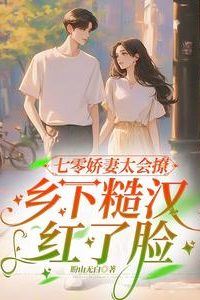
70s Delicate Wife is Too Flirtatious, the Rough Country Man Blushes
Novel Info

Summary

... Read More

Professor Su Niannian, a renowned physician in Beijing, passes away in 2024 after spending thirty-seven years mourning her husband, Gu Nan, who died of stomach cancer in 1990. Her final moments are filled with regret for the life she could not fully share with him. Upon reopening her eyes, she finds herself reborn in 1976, at the age of sixteen, just as her abusive stepmother, Tao Chunhua, is forcing her to take her half-brother’s place in the Down to the Countryside movement. In her previous life, Su Niannian had endured years of torment in Kaoshan Village, where she was deceived by educated youths Lu Xingguang and Huang Yingying, had her university acceptance letter stolen, and was imprisoned and assaulted by a thug hired by her stepmother. She had only found solace in Gu Nan, a kind man who helped her recover from her trauma, but their happiness was cut short by his illness. Now, armed with memories of the future and her medical knowledge, Su Niannian is determined to change her fate and save Gu Nan.

Confronting Tao Chunhua and her indifferent father, Su Heping, Su Niannian refuses to passively accept her fate. She exposes the bruises and scars left by her stepmother’s beatings, threatening to report the abuse to the authorities. Fearing the loss of her reputation and job, Tao Chunhua agrees to let Su Niannian go to the countryside in exchange for one hundred yuan and a signed severance agreement, effectively cutting all familial ties. Su Niannian sells her coveted position at the state-owned garment factory for two hundred and ten yuan, securing the funds she will need for her new life. Before departing, she discovers that the jade wedding rings Gu Nan gave her in her past life have traveled with her through time. When she puts one on, she is transported into a spiritual spring space—a secret dimension where time stands still, water has healing properties, and soil is incredibly fertile. This discovery gives her a significant advantage, as she can store supplies, preserve food, and use the restorative water to ensure her own health and, eventually, Gu Nan’s.

During her journey to Kaoshan Village, Su Niannian meets Song Zhaodi, a straightforward and kind-hearted girl, and Zhao Sulan, a selfish and manipulative young woman who will later become an enemy. Su Niannian befriends Song Zhaodi, offering her food and kindness, while maintaining a distant and polite demeanor toward Zhao Sulan. Upon arriving in the village, she is greeted by Gu Nan, who is now a young man in his early twenties. He is tall, handsome, and hardworking, supporting his exiled family by hunting in the mountains. The moment Su Niannian sees him, she is overwhelmed with emotion, but she restrains herself, knowing she must win his affection gradually this time. She is assigned to the educated youth dormitory, where she begins to settle in, using her spiritual space to stockpile food and supplies for the future.

Gu Nan, unaware of Su Niannian’s inner thoughts, is intrigued by the beautiful new arrival. He notices her quiet strength and the way she carries herself with dignity despite the hardships of village life. Meanwhile, Zhao Sulan, jealous of Su Niannian’s beauty and the attention she receives, begins to scheme against her. Su Niannian is determined to avoid the mistakes of her past life. She plans to use her medical knowledge to detect and treat Gu Nan’s early signs of illness, ensuring he survives this time. She also intends to build a better life for herself, using the resources from her spiritual space to thrive in the countryside. As she navigates the complex social dynamics of Kaoshan Village, Su Niannian remains focused on her primary goal: to be with Gu Nan, protect him, and create a happy, lasting future together, free from the tragedies that defined her previous existence.

Latest Release
DateGroupRelease
2026-08-11shanghai fantasy c200
2026-08-11shanghai fantasy c199
2026-08-11shanghai fantasy c198
2026-08-11shanghai fantasy c197
2026-08-11shanghai fantasy c196
2026-08-11shanghai fantasy c195
2026-08-11shanghai fantasy c194
2026-08-11shanghai fantasy c193
2026-08-11shanghai fantasy c192
2026-08-11shanghai fantasy c191
2026-08-11shanghai fantasy c190
2026-08-11shanghai fantasy c189

Community Reviews

Rating(3.8 / 5.0, 42votes)
5 stars
13(31%)
4 stars
11(26%)
3 stars
13(31%)
2 stars
5(12%)
1 stars
0(0%)

Popular reviews

... Read More
The reincarnation plot device is being handled with surprising subtlety here. The author doesn't info-dump—we learn about Su Niannian's past life through fragmented emotional beats rather than exposition. "In her past life, Su Niannian had been manipulated and deceived by Lu Xingguang and Huang Yingying. She had been framed, ostracized, and wrongfully accused." That's it. Three sentences carrying the weight of an entire destroyed life. Brilliant. The plot is setting up a classic revenge/rebirth structure but with genuine emotional stakes. Su Niannian isn't just trying to avoid suffering—she's actively choosing who to trust. The bun exchange with Song Zhaodi isn't just cute worldbuilding; it's her drawing a line. This time, she's not making the same mistakes. She's identifying who's genuine and who isn't. Zhao Sulan's connection to Huang Yingying is the plot thread I'm most curious about. Is Zhao Sulan working with Huang Yingying from the countryside? Or is she just a local echo of the same toxic energy? The author seems to be building a web of female rivalry that Su Niannian now has the wisdom to navigate differently.
... Read More
I need to talk about the puppy, because I'm pretty sure this isn't just a cute subplot. Think about it—Su Niannian finds this filthy, trembling creature caught in a trap, abandoned and suffering, and she rescues it. She brings it into her hidden space, heals it with spiritual water, and feeds it five meat buns. This little dog represents everything she protects: vulnerability, innocence, the things that can't protect themselves in a harsh world. The trap itself is symbolic too. It's rusted, old, set by someone who clearly didn't care about the creature's suffering. It's a device of pain in a world that's already full of pain. The educated youths are trapped in a sense—sent to the countryside, bound by work points and social hierarchies. Su Niannian's spatial ability is the only real escape from that trap, and the fact that she can bring living creatures into it suggests her power is about preservation, not just personal survival. There's also the spiritual spring water, which heals wounds instantly. In a story about hardship, scarcity, and survival, this element of grace feels almost sacred. It's not earned through labor or sacrifice—it's given freely. That's a pretty powerful statement in a setting where everything else is about struggle. And Gu Nan, covered in boar blood, looking like the King of Hell—what does that image symbolize? He's violence as protection. He's the thing that stands between the vulnerable and the wild. Su Niannian's power is healing and preservation; his is force and defense. Together, they represent two sides of survival. The black flour—bran, something fed to pigs, served to human beings—also feels symbolic. It's a detail that grounds the story in real historical hardship, but it also represents the degradation of dignity, the way the system treats people like animals. Zhao Sulan's disgust at it is almost comical, but it's also a legitimate reaction to something dehumanizing. I keep thinking about this: the story is about what we protect when everything around us is falling apart.
... Read More
I need to talk about Su Heping. Like, I need to talk about him RIGHT NOW because this scene absolutely wrecked me. He shows up at the factory gate with a hundred jin of food stamps and sixty yuan, and Su Niannian just... steps back. Doesn't even take it. And I get it. I totally get it. Because the text drops this bomb that in her past life, Tao Chunhua had thugs ABDUCT her to ruin her university chances, and Su Heping KNEW about it and chose to stay silent to protect the family reputation. He never even showed his face while she was suffering. Sixty yuan and some stamps versus a daughter locked away in darkness and he does NOTHING. So when he shows up offering scraps, her refusal isn't coldness—it's the last honest thing she could do. She refuses the money not because she's heartless but because accepting it would mean pretending that gesture matters. That he matters. The line where she says 'We've already signed the severance agreement' hit me like a truck. She literally treats her own father like a business contract she's closed. That's not cruelty, that's survival. And honestly? I respect it. But it also made me so mad on her behalf. A father who only shows up when it costs him nothing and never showed up when it cost him everything. Su Niannian's coldness is earned. Every. Single. Degree.
... Read More
On the surface, this is a story about educated youth being sent to the countryside. But the real stakes are so much deeper and the author is layering them carefully. Su Niannian's external conflict is obvious—surviving in a new environment, dealing with rivals like Zhao Sulan, navigating village politics. But her INTERNAL conflict is what makes this gripping. She's carrying thirty-seven years of trauma, of being framed and ostracized, and she's trying to rebuild her life with foreknowledge that's both a gift and a burden. Every interaction is filtered through that lens. When she offers the bun to Song Zhaodi, she's not just being kind—she's actively choosing a different path than her past life. The stakes with Gu Nan are even higher because they're emotional, not just romantic. In her past life, she lost him. Or lost the chance with him. Or lost everything including him. The text doesn't spell it out, and that ambiguity is doing heavy lifting. Every glance, every warm ear, every moment of restraint between them carries the weight of a lifetime of regret. And then there's Zhao Sulan, already plotting, already comparing herself to Huang Yingying. The conflict is escalating and the reader knows it's just getting started.
... Read More
'Huh? It's actually sugar water! Oh no, I'm so sorry. If I had known, I wouldn't have taken it...' This one line from Song Zhaodi tells you everything about her character and the world she comes from. In an era where a family having sugar water in their canteen is basically showing off wealth, her immediate guilt and embarrassment is so human. And Su Niannian's response—'It's fine, I brought plenty'—with a smile, not a lecture. The dialogue here is so economical. Nobody is monologuing. Everyone speaks in fragments, in reactions, in the things they don't say. Zhao Sulan's entire personality is conveyed through 'huffed in annoyance, refusing to respond' and shooting glares. The shop assistant's attitude shift from 'indifferent, looking down on patched-up clothes' to 'eyelids twitched in surprise' when the coupons come out—no dialogue needed, the action writes the dialogue. And Su Niannian's line to her father 'We've already signed the severance agreement. I have no relationship with Mr. Su anymore'—that's not just dialogue, that's a thesis statement delivered in twelve words. The author trusts the reader to hear what's underneath every line.
... Read More
Okay so this scene on the bus is giving me MAJOR cinematic vibes. The author just paints this whole picture—Su Niannian sitting there in simple clothes but with fair flawless skin and these bright lively eyes, and the sunlight filtering through trees casting shifting shadows across her face. Just 'painting a picture of serene tranquility' and I'm sitting here like—YES. And then the author does this thing where a tanned man across from her gets these sudden unexplained tears in his eyes, like some memory surfaces and he can't even explain it. I love that. You don't need backstory for every character to feel real. And then there's the wife who says 'after two years in the village she'll end up looking just like me!' and the husband glances at her—'skin darkened like charcoal, broad shoulders and sturdy waist'—and I just laughed out loud. The worldbuilding here isn't in grand descriptions of villages or factories, it's in these tiny human moments that tell you everything about the era. The ration coupons, the enamel mugs, the cornmeal pancakes, the sugar water in a military canteen. You can FEEL the 1970s China just from what people are eating and carrying. The author doesn't need to explain the period, the details do the work.
See all reviews

Characters

See all characters

Custom lists

See all custom Lists