Summary

... Read More

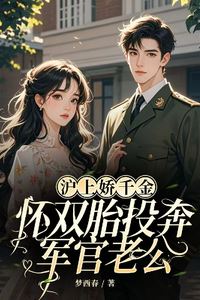
Lin Shu Yin, a vocal music graduate from the 21st century, transmigrates into the body of an eighteen-year-old girl in 1970s China. She finds herself in the role of the second daughter of the Lin family, a household of seven where she is deeply unloved. Her parents favor her twin brother, Lin Jian She, and her younger sister, Lin Shu Yi, while her eldest sister, Lin Shu Ting, is already married into a factory director's family. The original owner of this body was destined for tragedy: forced to marry Zhou Jian Guo, the son of a textile factory director, to secure jobs for her siblings and promotions for her sister. This marriage would eventually lead to her abuse, abandonment for her younger sister, and death. Upon awakening, Lin Shu Yin discovers floating bullet-screen comments revealing this plot, confirming she has entered a drama. She resolves to escape her fate, refusing to marry Zhou Jian Guo despite the immense pressure to sacrifice herself for her family's benefit.

Struggling to find employment in an era where jobs are scarce, Lin Shu Yin faces the prospect of being sent to the countryside. Her family is indifferent to her plight, viewing her primarily as a resource to be exploited. During a walk near Chang Lake Park, a system activates, issuing her a task to save a child who has fallen into the freezing water. She complies, rescuing the boy, Zhang Qi Ming, from drowning. The child’s grandmother, Mrs. Zhang, is a wealthy and influential figure who insists on repaying the favor. Learning that Lin Shu Yin wishes to join the military art troupe to avoid her family’s grasp, Mrs. Zhang uses her connections to facilitate the girl’s enlistment. Lin Shu Yin passes the audition with her superior vocal skills, securing a position that removes her from the Lin family’s control entirely.

Before departing, Lin Shu Yin’s family reveals their true colors. Her mother demands that Lin Shu Yin mail most of her meager army allowance home, treating her as a cash cow even before she has earned it. Her elder sister, Lin Shu Ting, arrives with news of a potential suitor for Lin Shu Yin, only to be furious when she learns the girl has already joined the army. The family’s greed and lack of affection are laid bare, solidifying Lin Shu Yin’s decision to cut emotional ties. She departs for Hohhot, Inner Mongolia, leaving behind a family that would have gladly sacrificed her for their own gain.

In Hohhot, Lin Shu Yin adapts to military life, training rigorously and bonding with fellow new recruits, including Sareen, a Mongolian girl who becomes a close friend. She quickly distinguishes herself in the art troupe, earning praise from her captain for her talent. Her performance at the Spring Festival Gala catches the attention of Battalion Commander Shen Guannan, a stoic officer seven years her senior. While Shen Guannan develops a quiet interest in her, Lin Shu Yin remains focused on her career and personal independence. She navigates the rigid military hierarchy and the subtle rivalries within the troupe, such as the jealousy shown by senior member Li Ting, with caution and intelligence. The story follows her journey from a disposable daughter in a toxic family to an independent woman building a new life in the army, armed with a mysterious system that provides her with resources and tasks to ensure her survival and success in this unfamiliar era.

Latest Release
DateGroupRelease
2026-08-11shanghai fantasy c29
2026-08-11shanghai fantasy c28
2026-08-11shanghai fantasy c27
2026-08-11shanghai fantasy c26
2026-08-11shanghai fantasy c25
2026-08-11shanghai fantasy c24
2026-08-11shanghai fantasy c23
2026-08-11shanghai fantasy c22
2026-08-11shanghai fantasy c21
2026-08-11shanghai fantasy c20
2026-08-11shanghai fantasy c19
2026-08-11shanghai fantasy c18

Community Reviews

Rating(3.9 / 5.0, 40votes)
5 stars
14(35%)
4 stars
12(30%)
3 stars
8(20%)
2 stars
6(15%)
1 stars
0(0%)

Popular reviews

... Read More
The author does something really clever with the pacing here. You've got this whole stretch of daily life — training, photos, department stores, mailing letters — and it feels unhurried, almost slice-of-life. Then suddenly it's New Year's Eve and everything compresses into one evening. The Spring Festival Gala becomes this pressure cooker where every character's motivations get squeezed out. Li Ting's jealousy, Sareen's nervousness, Lin Shuoyin's competence, Shen Guannan's fascination — it all happens in the span of a single performance. And then the very next morning, Captain Meng shows up at their dorm. The transition from the gala to that knock on the door is perfect. It's like the author is saying: okay, you had your big moment, now let's see what it changes. The five-day holiday break in the middle is also interesting structurally — it gives the reader a breather but also creates this sense that something is about to shift. The story isn't rushing toward anything specific yet, but it's definitely moving. And that ending with Meng Jia at the door? Classic. You close the chapter wanting to open the next one immediately. No cliffhanger dialogue, no dramatic revelation, just a knock and a smile and the implication that everything is about to change. I read that last page three times.
... Read More
What I keep coming back to is how the stakes escalate so quietly. At the start of this section, the conflict is basically: can these girls handle military training? Then it becomes: who gets the solo at the gala? Then it becomes: Li Ting is trying to sabotage Lin Shuoyin's performance. Then it becomes: Shen Guannan has feelings for her and she has no idea. Then it becomes: her brother is being sent to the countryside near her, and her family dynamic is already fractured. And now Captain Meng is at their door on New Year's morning. Each of these is a different kind of stakes — professional, social, romantic, familial, institutional — and they're all happening simultaneously. The most tense moment isn't the performance itself, it's the quiet exchange about the candy. Because if Lin Shuoyin had taken it, if she'd eaten it and failed on stage, everything would've changed. Li Ting would've won, the Captain would've lost trust, and Lin Shuoyin would've been isolated. That's a huge amount of narrative weight carried by one piece of candy and one refusal. And the external conflict — the military rules against dating, the brother being sent away, the family's financial pressure — it's all there too, simmering underneath. The story never lets you forget that this girl is navigating multiple pressure systems at once. She's not just learning to sing. She's learning how to survive in a world where every interaction could go wrong.
... Read More
Let me just say—the pacing in these chapters is absolutely surgical. The author takes us from Lin Shu Yin visiting her brother in the educated youth house, all cozy and domestic, sharing snacks and talking about raising chickens, and then pivots HARD into Sa Ren's world-shattering breakup revelation. There's no warning. You're still warm from the mutton dinner and suddenly everything changes. And I respect that. So many authors would either drag out the breakup drama for five chapters or rush past it entirely. But here? Sa Ren gets maybe three paragraphs of anger, her brother gives some advice, Lin Shu Yin offers perspective about the rural-military divide, and then they're walking her brother and Aodun out to the village entrance. The emotional arc is complete and it's over in one sitting. That's confidence. The chapter structure also does something clever—it bookends the personal drama with family warmth. You have Lin Shu Yin and her brother's sibling bond at the beginning, and then Sa Ren's family (her mother cooking, her father serving, her brother giving blunt advice) at the end. The pacing never drags because every scene has a purpose: either building character relationships or advancing emotional stakes. Even the Mongolian language lessons between the siblings serve dual purpose—worldbuilding AND character development. The author knows exactly when to slow down (the dinner scene) and when to accelerate (the breakup announcement). No filler, no padding. Just tight, purposeful storytelling.
... Read More
Let me be honest with you — on paper, nothing huge happens in these chapters. No one dies. No one gets expelled. There's no war, no disaster, no dramatic betrayal. And yet I was completely invested. That's because the author understands something most writers miss: the highest stakes aren't always the biggest ones. When Li Ting refuses the solo singing opportunity, the stakes are her career, her reputation, her sense of self-worth. To her, that IS everything. She's been in the troupe for half a year and Lin Shu Yin has taken all the solos. If she can't even perform for rural crowds without falling apart, what does that say about her? The conflict is internal and it's devastating. The Shen Guan Nan situation is another masterclass in low-stakes-high-tension writing. We haven't even seen him yet, but three different characters are already orbiting around him like gravitational bodies. Lin Jian She wants to set his sister up with him. Li Ting is convinced he's interested in Lin Shu Yin. Zhao Feng Nian is actively trying to arrange a meeting. The conflict hasn't happened yet and it's already creating earthquakes. And the biggest conflict of all: Lin Shu Yin versus her own secret. She has a system. She has fabric coupons, extra money, knowledge from a past life. She's living a double life and every generous act — the eggs, the pork, the coupons — is also a risk. What if someone finds out where these things come from? The stakes are invisible but they're always there, humming beneath every scene. The tension in the art troupe is maintained through this incredible subtlety. Meng Jia tells Li Ting: "Our task as military art troupe members is to spread positive energy through our singing and dancing, not to distinguish between the audience in the stands." That's not just dialogue — that's the author telling us the real conflict isn't about who sings solo, it's about art versus ideology, authenticity versus performance.
... Read More
Okay so let me just say this upfront because I need to get it out: the Li Ting candy incident is the kind of tiny, almost invisible plot moment that actually holds the whole story together. On the surface it's just one girl being petty, but it's also the moment that proves Lin Shuoyin is not some naive newcomer who got lucky. She saw through it immediately. "I was a small fry" — and yet she handled it like someone who'd been doing this her whole life. The Captain would've swapped her out, Li Ting would've gotten the solo, and Shen Guannan would've been disappointed instead of captivated. One piece of white rabbit candy and an entire power dynamic shifts. What I love is that the author doesn't make a huge deal out of it. No dramatic confrontation, no big speech. Lin Shuoyin just says no and moves on. But we — the readers — we know exactly what almost happened. That's tight plotting. It also sets up the next layer: the Captain comes to their dorm on New Year's morning, and suddenly we're wondering what she wants. The story keeps stacking small moments on top of each other like bricks, and by the time Chapter 12 ends, the foundation is solid enough that whatever comes next will have weight behind it. Who else is getting called in?
... Read More
I keep coming back to this one exchange: "Do you have any money left?" "Yes, sister." "How much?" "Over forty yuan. Sister, do you need money?" Forty yuan. In this time period, that's a LOT. And he's offering it to his sister like it's nothing. Like he'd give her everything and not even think about it. And her response? "I don't need it. Save your money." She's protecting him even while he's trying to protect her. That's their whole relationship in two sentences. Then she gives him fabric coupons. "Here, I don't need it. Use it to buy some fabric and make yourself a new set of clothes." She got them from her system last year and never used them. She could've kept them. But her brother is a good person, better than the other siblings, so she gives them to him. That's not plot — that's character. That's love. And the romantic tension? It's barely there and it's EVERYTHING. We don't even see Shen Guan Nan in these chapters but Li Ting is convinced he looks at Lin Shu Yin differently. "His gaze was different. Shen Guan Nan looked at Lin Shu Yin differently." She's imagining things, probably, but the fact that she's imagining them means the author has planted something real. The tension exists in the space between what's said and what's felt. The most emotionally devastating moment for me was Li Ting's internal monologue: "She could accept that Shen Guan Nan didn't like her, but she couldn't accept that he liked Lin Shu Yin. Lin Shu Yin was her arch-nemesis." That's not hatred — that's desperation. She's so afraid of being second-best that she'd rather destroy someone than admit she's not enough. And then Lin Shu Yin just... gives up the solo singing opportunity. Voluntarily. To Song Wei Wei. No drama, no resentment, just "Okay, I don't mind. Go tell the captain, and then we can switch." That kind of emotional maturity in a protagonist is rare and it makes every interaction feel genuine.
See all reviews

Characters

See all characters

Custom lists

See all custom Lists