100,000/Hour Professional Stand-in - Reviews

100,000/Hour Professional Stand-in
+Add to Custom List
Sort
Add review
... Read More
Can we just take a moment to appreciate how thoroughly Song Shiyu is being played and we are ALL just here for it? This man spent three hours with Ji Fanyin and came away feeling like "it was as if Ji Xinxin was right beside him." THREE HOURS. And his immediate response isn't 'who was that woman' — it's reaching for Ji Xinxin's phone number the next day to confess that his crush's sister likes him. The man is so emotionally stunted it hurts to watch. "So my older sister likes you," Ji Xinxin muttered. And his response? "But you're the only one I like." He says this with such conviction, completely oblivious to the fact that he's been spending an entire day with someone who isn't his crush. The irony is so thick you could cut it with a knife. Then Ji Xinxin calls back two days later crying, begging him to stop liking her because her sister is unhappy. And Song Shiyu's response? A faint metallic taste at the back of his throat. A sledgehammer to the chest. He can't bring himself to say no. The man is trapped in the most melodramatic web ever constructed and he doesn't even know he's in it. Meanwhile Ji Fanyin is over here with zero emotional investment, thinking about money and emotion points and whether ten billion is within reach. She literally refers to all these people as "the fish farm." The contrast between her cold calculation and everyone else's emotional chaos is genuinely funny. Bai Zhou is another layer of chaos I didn't know I needed. He's obsessed with Ji Xinxin, hates Ji Fanyin on principle (calling her a "toad desperately trying to climb its way up"), but then can't even bring himself to swear at her in public because criticizing her feels like criticizing Ji Xinxin. The cognitive dissonance is real. "Are you imitating her style? Do you think doing this would make Song Shiyu fall in love with you?" — Bai Zhou, probably, thinking he's being devastating. Ji Fanyin's response? Casual nod, polite acknowledgment, and walking away with two cups of coffee. She didn't even flinch. The man wanted a reaction and got a customer service smile instead. And the twin dynamic between Ji Fanyin and Ji Xinxin? The call where Ji Xinxin pretends to apologize while secretly probing for information about whether her sister still likes Song Shiyu? Ji Fanyin playing along smoothly while internally rolling her eyes? That's some next-level family toxicity right there.
... Read More
The restaurant compartment room feels like its own contained world — a space where reality and performance blur so completely that even the people inside lose track. Every detail signals wealth without the author ever saying "he was rich": the private dining room, the thousand-dollar Western cuisine, the receipt that Song Shiyu signs without hesitation. This is a world where money operates as both currency and armor. But the most striking environmental detail isn't a place — it's an object. Ji Fanyin's phone, displaying a countdown timer. Three hours. Two hours and fifty-seven minutes. One hour. The timer becomes the third presence in the room, the invisible director of every interaction. When it rings, Ji Fanyin's professional smile vanishes instantly. The contrast between her warmth during the date and her cold departure the moment the timer expires transforms what could have been a simple dining scene into something unsettling. Paris itself exists only in sunlight and video calls — Ji Xinxin "basked in warm sunlight" by her window, the grey shirt on screen somehow brightened by the light. It's a world away from the claustrophobic intimacy of the restaurant compartment. The geography matters: Ji Xinxin is physically distant, safely overseas, while her sister lives in the same city as the man she's performing for. The distance creates the cover Ji Fanyin needs. Even the WcDonalds dessert stand at the end — a vanilla cone purchased after the transaction closes — grounds this glamorous surface in something ordinary and human. Ji Fanyin hums a melody. The world isn't just about high-end restaurants and video calls from Paris; it's also about cheap ice cream eaten while counting your earnings.
... Read More
I need to talk about the dialogue in this section because it is NEAT. Like, genuinely neat. Every line feels like it's doing triple duty. Take this exchange: "Accompany me for dinner tomorrow." / "My apologies. I have just received a reservation." Song Shiyu doesn't even ask if it's Bai Zhou. He already knows. And Ji Fanyin doesn't confirm or deny — she just deflects with professional courtesy. That's not bad writing, that's CRAFT. Both of them are saying things they can't actually say out loud. And then there's Bai Zhou at the bus stop. The way he says 'She's with me' to some random guy — you'd think he's claiming property, right? But read it again. He's not possessive because he's a jerk. He's possessive because he doesn't understand what he's feeling and his body is reacting before his brain catches up. Then Ji Fanyin covers his visor with her hands and calls him 'this child' to the confused strangers — she's protecting him from himself in that moment. The tenderness in that gesture is devastating when you think about it. Her customer service voice when she says 'young master Bai' while delivering the no-refund policy? Chilling. She weaponizes politeness like a sword. And he falls for it every time because he can't bring himself to actually be cruel to her. The author also lets silence do the heavy lifting. Bai Zhou staring at the neoprints without speaking. Song Shiyu hanging up after one question. Those gaps between words are where the real conversation happens.
... Read More
I have to say, the setting in these chapters is genuinely stunning. An al fresco Western restaurant, the entire place booked for a reunion, guests mingling in a garden under parasols. The author paints this picture of upper-class social life so vividly that I could practically see the sunlight filtering through the leaves. Let me just quote this one because it's too good: "The brilliant sun cast a small patch of light on her shoulder, looking almost like a gentle kiss of affection from the world." That's not just description—that's mood. That's the entire emotional core of the scene crystallized into one image. Ji Fanyin sitting lazily under a parasol, ignoring everyone, and the sunlight chooses HER to touch. It's like the universe itself is acknowledging her presence even though every other character at that reunion is too busy performing for Song Shiyu or gossiping about Ji Fanyin to notice what's actually happening. The social geography of the scene is also brilliant. The author sets up this pyramid hierarchy without ever saying 'this is a hierarchy.' You have Song Shiyu and his group at the very top, everyone else one level beneath, and Ji Fanyin sitting somewhere outside the whole system entirely. She doesn't join any conversations. She doesn't try to climb. She just exists in her own space, and somehow that makes her the most captivating person in the garden. The women in exquisite clothes chatting in their own circles, the waiter ushering guests in, the long table with its full-course meal served at a deliberately slow pace—that slowness is no accident. The author is making us feel the excruciating length of time it takes for people to eat, for conversations to hover, for Song Shiyu to watch Ji Fanyin scan his phone with Zhao Qi. Every sensory detail serves the atmosphere. The smoked salmon salad, the passion fruit cheesecake with vanilla ice cream—these aren't random food choices. They're textures in a world that feels luxuriously real.
... Read More
The scene transitions in these chapters are genuinely doing a lot of heavy lifting. We start in a brightly lit Western restaurant with a long table and cake—the whole aesthetic is 'sisters having lunch,' which is immediately subverted by Cheng Lin's aggression. Then we cut to Ji Fanyin alone in her apartment surrounded by Blu-rays, skipping meals and sleep like a proper otaku. The text says 'What a wonderful movie!' as her internal monologue and it's such a perfectly casual way to show someone who finds genuine joy in something so simple. Then the cinema date with Zhao Qi, the Thai hotpot place that's new and spicy, and finally—bam—the bar at night with Song Shiyu, all while a rundown gray car is tailing them. Each location tells you exactly where Ji Fanyin's head is at. The video shop detail is my favorite worldbuilding touch—it establishes she's a film lover with taste, that she has money (collecting rare DVDs), and that she's maintaining a private life separate from whatever game everyone else is playing. The contrast between the public gathering and her solo DVD marathon really frames her character.
... Read More
"Are you unable to differentiate between the person you like and the person you hate?" I have read this line four times and it keeps getting better. Ji Fanyin delivers this with such quiet devastation while sipping her latte. She doesn't raise her voice. She doesn't need to. The author's dialogue writing is absolutely razor-sharp throughout this section. Bai Zhou's dialogue is perfect for his character — every line is designed to wound but somehow comes across as clumsy and transparent. "You're no more than a toad desperately trying to climb its way up." Bro, she's holding two coffees and about to go make 1.5 million dollars. Your insult landed in 2003 and never recovered. And yet Ji Fanyin just... nods. Like a boss. The video call between the twins is a masterclass in passive-aggressive dialogue. Ji Xinxin: "I want to apologize to you. I… wasn't aware that you were fond of Shiyu. If only I knew, I should have…" The ellipses are doing SO MUCH work here. She's performing remorse while subtly fishing. And Ji Fanyin's responses are equally layered — "There isn't a conflict between me liking him and him liking you" said with absolute composure while internally judging everyone involved. Song Shiyu's dialogue carries this heavy, earnest quality that makes him seem both pathetic and tragically sincere. "… Tomorrow, I'll reserve you for the entire day." The ellipsis before the sentence, the deep voice — you can practically hear the emotional turmoil he's suppressing. Then five minutes of silence and all he types is "That's all." The man cannot handle direct communication at all. Ji Fanyin's internal monologue is where the real voice shines though. Her thoughts about the app, about the fish farm, about how "everyone tends to act all dramatized in such melodramas" — this is where her personality pops. She's sharp, cynical, and weirdly philosophical about the whole situation. The narrative voice balances her cold business-minded exterior with these moments of genuine wit. The casual exchange with Song Shiyu on the phone is also chef's kiss: "My working hours are 9 A.M. to 12 A.M." "Are you certain that you wish to make a reservation for 15 hours?" She's treating a deeply emotional situation like a booking appointment and I am HERE for it.
... Read More
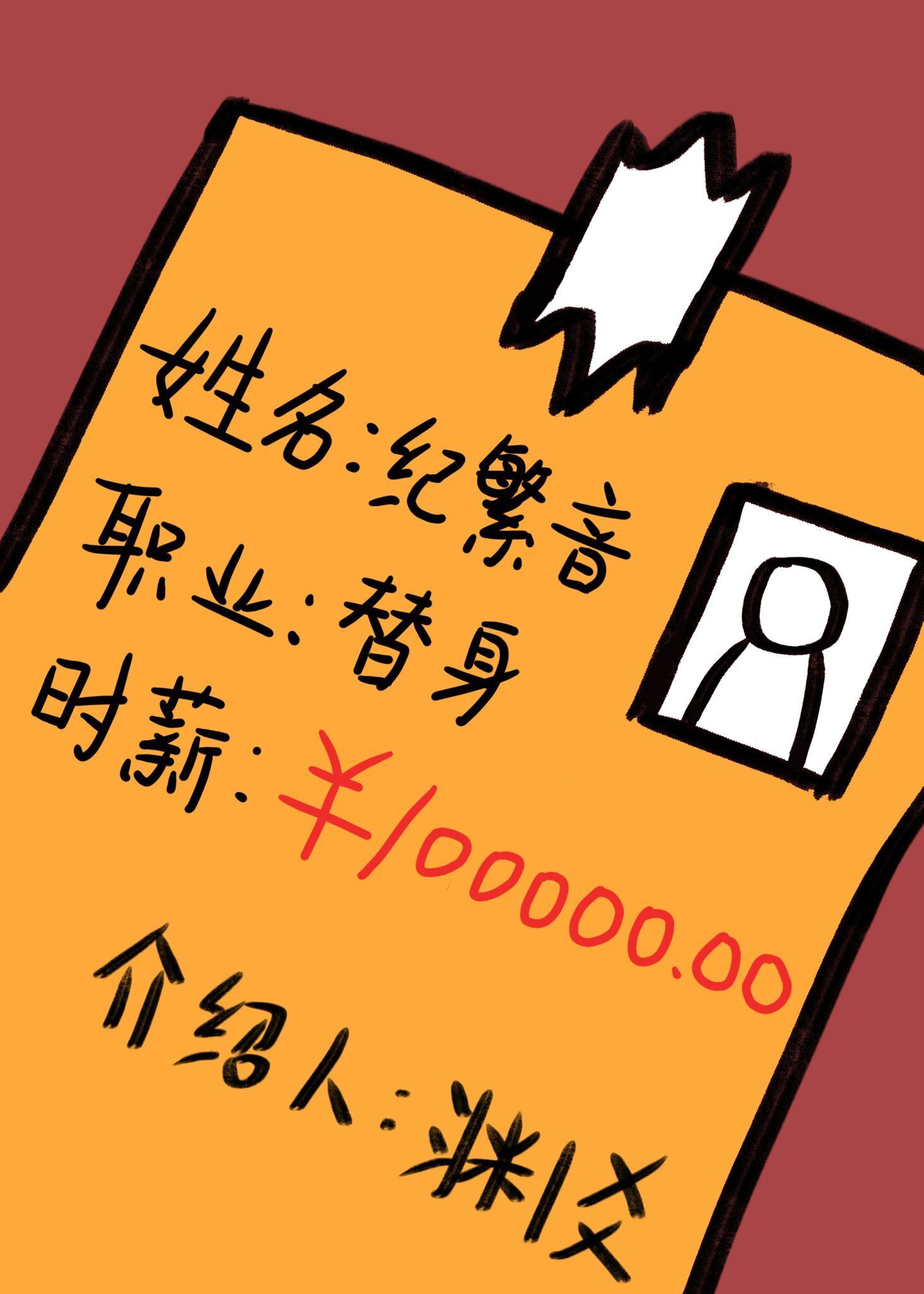
Okay so this whole sequence? The author just casually dropped a massive twist and I was NOT ready. You have Ji Fanyin walking into this family banquet like she owns the place, right? And everyone is giving her side-eye because apparently in THIS family photo wall, she doesn't even exist. Not one picture. Then you find out the 'daughter' everyone's celebrating—Ji Xinxin—is actually the ONE who was missing from the family photos this whole time, and Ji Fanyin was the invisible one all along. The inversion is BRUTAL and I love it. But here's the thing that made me actually choke on my drink: the business proposal at the end. Ji Fanyin—fresh off probably attempting suicide—pulls out a laptop and starts charging 100,000 per hour to impersonate her own sister. That's not just a plot twist, that's a complete genre shift. One second she's the tragic neglected daughter, the next she's running a side hustle and treating her family drama like a customer service problem. The pacing here is INSANE. From emotional devastation to cold calculated capitalism in three paragraphs.
... Read More
Let's talk stakes because this story is playing with them on multiple levels simultaneously and it's kind of brilliant. On the surface, the conflict is simple: earn ten billion emotion points or stay trapped in this body forever. But the story immediately layers in more personal stakes through the backstory. The original Ji Fanyin didn't just die—she died trapped, restrained, robbed of even her suicide because the people around her needed her as a spare tire. The stakes for the NEW Ji Fanyin include not repeating that fate. She's acutely aware that this body carries history with people who already see her as interchangeable. Bai Zhou represents the first real external conflict. He's hostile, entitled, and sees her as beneath his notice. But here's the thing—he's also a test subject. When she casually lies about Ji Xinxin hating the smell of smoke and watches him strip off his jacket a few steps later, she's not just winning a petty argument. She's proving to herself that the system works. That she can generate emotion points through manipulation. The 10,000 points from Song Shiyu was curiosity; this is confidence. The internal conflict is quieter but maybe more interesting. Ji Fanyin is processing someone else's trauma without being consumed by it. The original owner loved Song Shiyu. The new occupant couldn't care less. There's a strange guilt or at least awareness in that—she's living this woman's life and her body, but she doesn't share the same attachments. How does that feel? The text doesn't linger on it, but it's there underneath everything. What's really gripping though is the suspense around Ji Xinxin herself. She's overseas, ostensibly for three years of study, but she left her twin to deal with all her abandoned suitors. What is she actually doing? Is she aware of what happened to her sister? The text says the men 'dumped her' when Ji Xinxin returned—so she knew, or found out, and just walked away. That's a conflict waiting to explode. And the app itself—is it friend or foe? 'She couldn't determine if that mysterious app on her phone was a friend or foe, but it was the only straw of hope she had at the moment.' That uncertainty is the foundational stake. Everything she does is based on trusting a system she doesn't understand. What if the points don't count the way she thinks? What if there's a catch? The story hasn't revealed it yet, but that question hangs over every interaction.
... Read More
Let me just say—the premise here is absolutely deranged and I am HERE for it. Our girl wakes up on a riverbank in someone else's body with an app promising her a way back home IF she earns ten BILLION emotion points. Not million. BILLION. And these points come from whatever feelings other people have toward her, positive or negative. So basically she has to become either massively loved or massively hated to get home. That is some next-level 'desperate times call for desperate measures' logic right there. But what I actually found myself appreciating is how efficiently the plot establishes its rules. We get the transmigration setup in the first few paragraphs—wet hair, confused, phone vibrating like it owes her money—and then the app explanation drops without feeling like a textbook info-dump. The memory transfer happens, we learn about the twin sister situation, and suddenly the whole framework clicks into place. The original Ji Fanyin's backstory is honestly brutal. Her twin used her as a placeholder for ALL of Ji Xinxin's suitors, men who would literally only call her by her sister's name. She tried killing herself so many times they had to restrain her. And when Ji Xinxin finally came back, they dumped the spare tire and our girl threw herself in a river. The fact that her death is what brought someone else HERE is deliciously cruel. Now the new Ji Fanyin immediately picks up on the system and starts testing it. Song Shiyu transfers her 100,000 dollars plus 10,000 emotion points just from being provoked. Ten thousand points from ONE conversation. The math is terrifying. She needs to trigger roughly a million emotional reactions of that magnitude. Or find a way to make hundreds of thousands of people feel something intense about her. The plot is essentially: how does a woman who was nobody become unforgettable? What's also clever is the parallel world element. She searches for her old self online—nothing. Doesn't recognize landmarks. She's truly stranded. That isolation layer raises the stakes beyond just 'earn points and go home.' There's no backup plan, no safety net. Just her and this app. I'm curious where this goes when she starts actively playing the game instead of just observing it. The setup is tight, the rules are clear, and the protagonist actually has agency from page one. No passive 'oh no I'm in a new body' whining—she immediately checks her bank account and starts figuring things out. That's the kind of protagonist who gets shit done.
... Read More
This story is obsessed with reflection and doubling, and I'm not just talking about the twin setup (though that's the obvious one). The entire narrative runs on the idea of imitation, substitution, and the gap between appearance and reality. Ji Fanyin literally impersonates her sister. Two women wearing the same face, putting on different acts to dupe the same person. She even notes the irony directly: "It sure is ironic that my impersonation is as fake as Ji Xinxin is. The two of us are putting on an act to dupe the same person. It's so ridiculous that it's actually interesting." That meta-awareness is the key to understanding everything. Then there's the app itself — "Temptation of Home" — which quantifies human emotion into tradable currency. Emotion Points. 160,000 from a single phone call. The story is essentially asking: what happens when feelings become commodities? When love, jealousy, guilt, and longing can be measured, tracked, and harvested? Ji Fanyin treats people like a fish farm, and the reader can't help but wonder how far this economy of emotion will go. Bai Zhou chasing the wrong silhouette in the Starbucks is almost symbolic on its own — he's so fixated on an idealized version of Ji Xinxin that he can't see the real person standing in front of him. His confusion between the twins mirrors the larger theme: people don't see others clearly when they're projecting their own desires onto them. Song Shiyu buying a new car specifically for a clandestine date while still emotionally tethered to someone else speaks to the theme of performance in relationships. He's performing the role of the romantic lead while actually being performed upon by his own inability to see clearly. The dress, shoes, and accessories worth 80,000 dollars that Song Shiyu sends — these material objects become symbols of emotional manipulation. They're not gifts; they're props in a theatrical production where everyone plays a part they didn't audition for. And Ji Fanyin's closing thought about ten billion being "not that unreachable" if she can just "harvest out of the fish farm" — that's the story's thesis statement in miniature. Emotion is resource. People are livestock. The modern world has turned connection into transactions, and this narrative is holding up a mirror to that ugliness with a smirk.
... Read More
Okay so this whole dinner scene is just… chef's kiss. Cheng Lin shows up ready to destroy Ji Fanyin and ends up humiliated in like four exchanges. The beauty is that Ji Fanyin doesn't even try to fight back—she just plays innocent and lets Cheng Lin dig her own grave. When Cheng Lin yells 'Why are you speaking so loudly?' and Ji Fanyin literally repeats what Cheng Lin said back to her like a broken record? I nearly spat out my tea. And then the birthday thing—oh god, the birthday thing. 'We simply celebrate on her birthday.' That one line absolutely nuked the entire room. Even the narrative narration itself went 'No matter how he looked at it, this was simply too pitiful.' I love how the plot uses social dynamics as a weapon. Cheng Lin thought she was walking in to crush someone, but Ji Fanyin just stood there with her dessert spoon and dismantled an entire social hierarchy without raising her voice. Then Cheng Lin storms out and Ji Fanyin calmly goes to pay her own bill like nothing happened. The structural irony here is immaculate.
... Read More
Let's talk about the absolute web of romantic tension we are sitting with right now. Zhao Qi is clearly into Ji Fanyin—or at least into the version of her that looks like his sister—and he's trying SO HARD. He offers to drive her, picks movies he knows she'd like, brings friends (who conveniently bail), offers to pay, asks if he can treat her next time. Meanwhile Song Shiyu is over there losing his absolute mind because Zhao Qi is 'dating another man using her face' which is both deeply creepy and weirdly tell-y of his own feelings. And Ji Fanyin? She navigates ALL of it with the emotional temperature of a reptile. Her response to Zhao Qi about treating her next time—'Sure, if an opportunity allows'—is the perfect non-committal answer that keeps him hooked without promising anything. And Song Shiyu offering TWOFOLD payment for extra hours? She's literally charging him for her time and he's just… paying? The power dynamic here is everything. Also, what is going on with Ji Xinxin? The sister who exists primarily as a face Ji Fanyin 'borrows' and a reason Zhao Qi is confused? I need answers.

Leave a comment

You must be logged in to leave comments. or
