100,000/Hour Professional Stand-in - Reviews

100,000/Hour Professional Stand-in
+Add to Custom List
Sort
Add review
... Read More
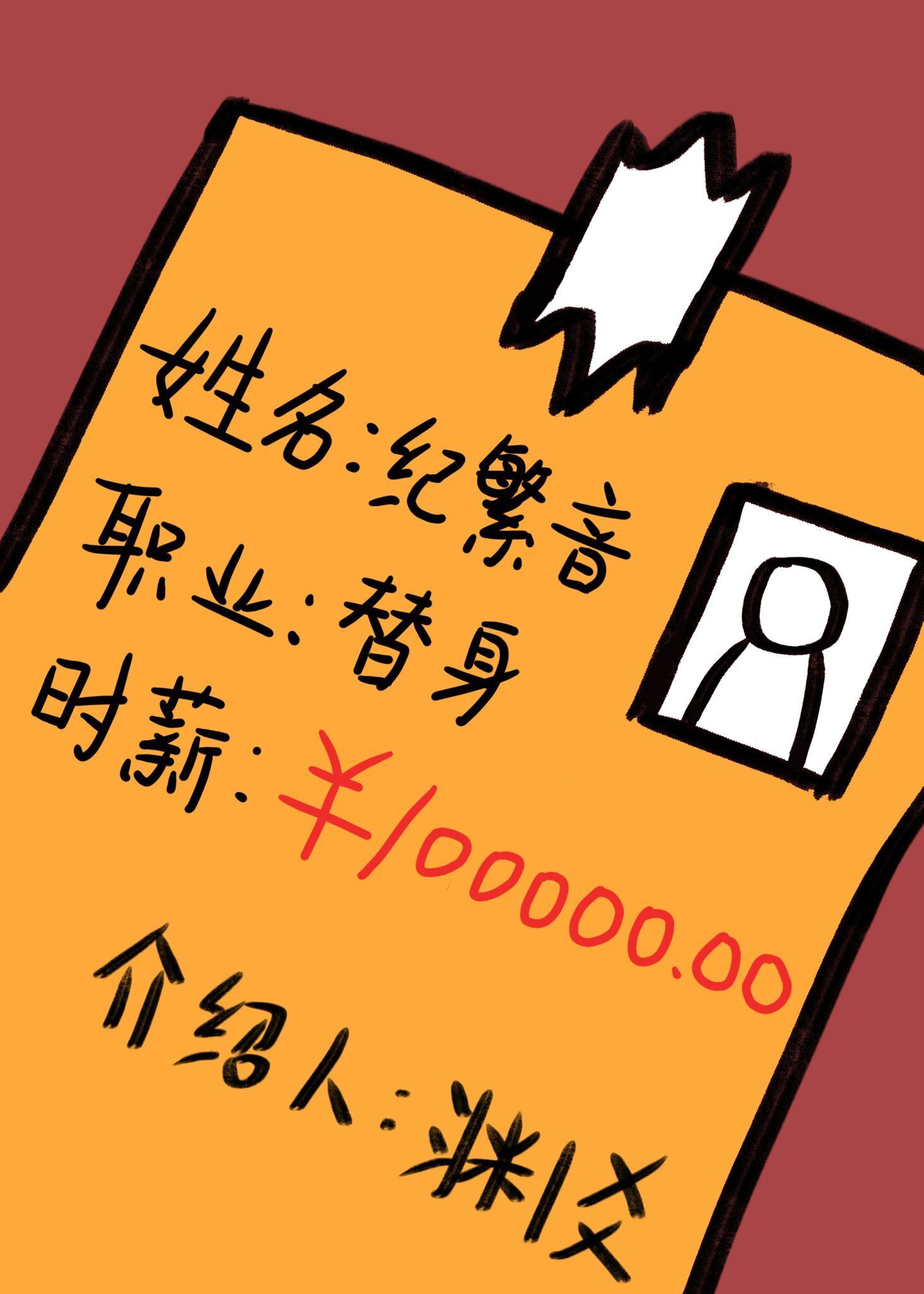
This opens FAST. Like, really fast. We go from death to consciousness to app installation to memory transfer to full situational awareness in what feels like maybe ten pages. Most transmigration stories take forever to get to the actual story—there's always that awkward phase where the protagonist spends three chapters panicking about being in a new body. Not here. Ji Fanyin is confused for approximately two paragraphs and then immediately starts checking her bank account. The chapter structure is interesting because it moves in clear phases. Phase one: wake up and understand the rules. Phase two: process the backstory and do the math on the ten billion goal. Phase three: interact with the world and test the system. Each phase flows naturally into the next without feeling rushed or padded. The Song Shiyu phone call is a perfect pacing device. It serves multiple purposes—it reveals information about their history, establishes the emotional dynamics, gives our protagonist 100,000 dollars (which immediately updates the progress bar, showing us the system works), AND demonstrates that she can manipulate situations to her advantage. All of that in one conversation. Efficient storytelling. Then there's the Bai Zhou encounter, which comes right as we're settling into the hotel scene. It breaks the rhythm intentionally—he's loud, aggressive, smelling of smoke, and instantly hostile. This provides contrast to the earlier phone call which was calm, controlled, and intellectual. The chapter alternates between quiet observation and sharp confrontation, which keeps the energy from going flat. I do want to mention the translator's note about the FL being 'more focused on her goals than romance'—and that's absolutely reflected in the pacing. Romantic tension exists in the background (Song Shiyu's lingering attachment, Bai Zhou's obsessive crush on the sister), but the narrative never stops to dwell on it. The pacing stays locked on the central question: how do I earn ten billion emotion points and go home? The chapter ends on a note of active engagement rather than cliffhanger drama. She's not in immediate danger, she's not received shocking news—she's just started playing the game. And somehow that's more compelling than a traditional cliffhanger because it makes you want to see what she DOES next, not just survive what happens to her.
... Read More
What happens when the con artist becomes someone she doesn't recognize? That's the question hanging over every scene in this batch, and it's what makes the stakes feel genuinely dangerous even though no one is physically threatened. Ji Fanyin's central conflict is razor-sharp: she needs Song Shiyu's money (300,000 dollars already deposited, plus 90,000 Emotion Points from this single date), but the more perfectly she performs as Ji Xinxin, the more real the performance becomes. The scene where she quietly serves him mussel meat — something she learned by obsessively studying his habits — isn't just clever strategy. It's the moment she crosses a line. She's not just mimicking Ji Xinxin anymore; she's anticipating needs Ji Xinxin herself may never have imagined. Song Shiyu's conflict is equally layered. He's a "two-faced man" who masks his true self, and Ji Fanyin explicitly offers him the fantasy version: "You'll be able to do what you dare not do with her." He knows this. He says so himself. But knowing and surrendering are different things — watch him fiddle with the pen, watch it slip from his fingers and clatter to the ground when she describes what their relationship could become. The physical tells are screaming what his words refuse to admit. The birthday subplot raises the stakes dramatically. Ji Xinxin won't return from Paris for it. That gap is where Ji Fanyin's opportunity lives, and it also means the real sister will eventually discover what happened. When that collision comes — and it will — the emotional damage won't be financial. It'll be something Ji Fanyin may not have calculated at all.
... Read More
This chapter's dialogue is where it really shines, honestly. Every character sounds completely different and the subtext does all the heavy lifting. Song Shiyu's voice is this creepy mix of fragile and manipulative—he's drunk on Hennessy like it's iced tea, confessing his pain, asking "Why should I wait for someone who doesn't even like me?" Like a heartbroken boy, right? But then five lines later he's talking about Ji Fanyin like she's an object he purchased. The whiplash is intentional and it's brilliant. "I want Ji Xinxin to like Song Shiyu." That line. Just—just sit with that. He's not asking Ji Xinxin to like HIM. He's asking Ji Fanyin to make Ji Xinxin like Song Shiyu. The dissociation is haunting. Ji Fanyin's voice is the most interesting because it shifts mid-scene. When she's performing for Song Shiyu, her dialogue is soft, apologetic, vulnerable—"Can you forgive me for my selfishness?" And then the moment Song Shiyu falls asleep, you get narration that strips the act away completely. She's not vulnerable. She's calculating. "Ji Fanyin quietly swirled the glass of water in her hand, seemingly hatching a devious plan." And Bai Zhou? His voice is all sharp edges and sneers. "Don't put on that innocent act with me." "I've never seen anyone as desperate as you." He never once considers that maybe he's the one who's been played. The author's dialogue does something really clever here—it lets you hear the gap between what characters say and what they mean, and that gap is where all the drama lives.
... Read More
Okay so let me just say this—the layers in this chapter are absolutely insane. Bai Zhou thinks he's the one holding all the cards, right? He hires a PI, tracks Ji Fanyin to a bar, catches her with Song Shiyu, and is absolutely convinced he's uncovered some big scandal. But then—plot twist within a plot twist—Song Shiyu casually drops that HE'S using Ji Fanyin as a stand-in for Ji Xinxin! And the REAL mind behind all of this? It turns out to be Ji Xinxin herself, paying Ji Fanyin to play the part while she's supposedly in Paris! "Ji Fanyin jotted down this service request in her mind before replying, 'Very well.'" That line literally made me gasp. Ji Fanyin isn't some random gold-digger or secret lover—she's doing this as a JOB. The whole thing reads like a carefully orchestrated scheme where even the people catching each other are themselves caught in someone else's web. And Bai Zhou? Poor guy thought he was playing detective but really he just walked right into Song Shiyu's trap. The ending where Song Shiyu basically forces Bai Zhou into complicity by keeping him in the loop—"I'll even keep the secret for you"—that's the kind of moment where you realize the entire power dynamic just flipped upside down. Who's actually in control here anymore?
... Read More
Let's talk about the stakes here because they're deceptively simple on the surface. Ji Fanyin's conflict: survive the app, collect enough points to go home, don't actually catch feelings (which she's already proven she can handle, or so we think). Song Shiyu's conflict: he's been trapped in this loop of unrequited longing for four years and Ji Fanyin just handed him fifteen hours of everything he wanted — except it was all a lie. That's the core tension that makes this chapter grip you. But the external stakes matter too. Bai Zhou is out there with his motorcycle and his suspicions, and he's the wild card. When he asks "Are you trying to change the subject?" and later warns "My eyes are on you!" — he's genuinely dangerous to the whole setup. He might be the only person close enough to Ji Xinxin that he could eventually see through Ji Fanyin. And Song Shiyu at the end? He's fighting himself. The bracelet he loved five minutes ago is in pieces on the pavement and he can't stop his hands from shaking. That internal conflict is where the real stakes live.
... Read More
I need to talk about the WeChat group chat because IT IS THE REAL STAR OF THESE CHAPTERS. Like, the author could have just summarized what happened at the reunion and moved on, but no—they give us the FULL chat log, and it's absolutely brilliant. "Yukki: @Ji Fanyin You are joining the gathering? No way! Did anyone even invite you? Why are you so thick-skinned?" This one character alone tells us everything about the social dynamics. Yukki is the class clown, the bully, the one who feels entitled to police who belongs and who doesn't. And Ji Fanyin doesn't even respond. She just reads and mutės. That silence speaks louder than any dialogue could. Then there's Dream, casually asking if they can bring Senior Song Shiyu, and everyone loses their collective minds. The gossip about the rose confession, the speculation about whether Song Shiyu will 'run at the sight of Ji Fanyin'—this is how real people talk. It's messy, it's mean, it's fascinated, it's layered with years of history and unspoken rivalries. And Song Shiyu's actual spoken dialogue? Minimal, but each line is perfectly calibrated. "You mentioned that there was a chat group for such gatherings?" — he's asking for information he already knows. "I don't like being added into chat groups" — this is a half-truth that lets him maintain control while secretly wanting to be included. The gap between what he says and what he means is where the entire emotional arc lives. Zhao Qi's dialogue is also worth noting. He's nervous, he's eager, he's a hamster-like character who keeps apologizing for being too talkative. But Ji Fanyin's response to him—'I won't befriend someone I dislike'—is so casually devastating. She's not trying to be cruel; she's just being honest in a world full of performative politeness. The narrative voice itself is fascinating too. It's external, omniscient but deeply rooted in Ji Fanyin's perspective, occasionally dipping into Song Shiyu's internal state. The author never tells us directly how to feel—we're shown everything through action, dialogue, and these razor-sharp observations.
... Read More
There's a theme running through these chapters that I can't stop thinking about. Ji Fanyin literally wears someone else's face—a face people mistake for her sister's, a face Zhao Qi is apparently attracted to, a face that makes Song Shiyu feel threatened. But then there's also the money angle: Ji Fanyin is literally transactional about her time with Song Shiyu, charging fivefold for overtime, calculating her worth down to the hour. And her parents? They gave her a BMW worth 300,000 dollars but are apparently stingy, and she doesn't even care about the brand because 'cars are just four-wheeled vehicles.' She's detached from status symbols in a way that's either incredibly mature or deeply dissociative. The recurring motif of misrecognition—people seeing Xinxin when they look at Ji Fanyin, people projecting their desires onto her face—that's the core of it. Who is she when nobody's looking? The video store scene answers that: she's a woman alone with movies, no audience, no performance. That's the real her. Everything else is costume.
... Read More
I need to just... sit with this for a moment. A family banquet. A celebration. And the mother says "you're really late" to the daughter she clearly doesn't want there. The father SHINES at her. NOT WELCOMES HER. Just sits her down and tells her to eat and shut up. And this is BEFORE we even know the full scope of what's going on. But the real gut-punch? Ji Xinxin asking her sister in a WHISPER, "Do you actually hate me?" And Ji Fanyin smiling and saying no, and being genuinely thankful. That line—"If you weren't rearing such a huge pond of fishes, how could I possibly find such an easy way to make money?"—that's the kind of thing that makes you close the book and stare at the ceiling for twenty minutes. This is supposed to be the moment where sisters reconcile or fight or something cathartic happens. Instead? Ji Fanyin is mentally calculating her profit margin while hugging her sister. The emotional whiplash is unmatched. I simultaneously want to cry for her and cheer for her and also like... protect her from all of this?
... Read More
So the photo booth — the neoprint — is the single most loaded symbol in this entire arc and I am not even being dramatic. Bai Zhou is literally paying to capture moments with someone who isn't real, and he can't stop doing it. The neoprints are evidence of an experience that exists only in that frame, that frozen moment, nothing more. He takes them home and puts them in his jacket pocket like treasure. But they're just paper. They can't talk back. There's also this recurring visual motif of barriers and reflections. The narrow neoprint booth where their knees knock together and he recoils like he's been burned — physical proximity that terrifies him even as he craves it. The motorcycle helmet visor that Ji Fanyin has to physically push down to stop him from glaring at innocent people. Sunglasses, visors, screens — these characters can't face each other directly without some kind of barrier. And Ji Fanyin checking the progress of 'Temptation of Home' before bed while lying in the dark, phone glowing on her face — she's measuring her existence in numbers, counting toward an exit that keeps getting further away the more connected she becomes. The novel keeps reminding us that this is all temporary, that she's a guest in this world, but you can feel the writer pushing against that idea like the story itself doesn't want her to leave. The art studio ending — Bai Zhou drawing exhausted, falling asleep at his supplies — ties back to creation and authenticity. He's trying to make something real with his own hands while the woman he's obsessed with is the most beautifully crafted illusion he's ever encountered. I have so many thoughts about where this goes.
... Read More
The pacing in these chapters is honestly chef's kiss. You've got the chocolate factory — slow, intimate, almost dreamlike. Then the library, the candlelight dinner, the musical — it accumulates this whole twelve-fifteen hour sequence that feels luxurious and warm. And then BAM. The car drops her off at 11:20 PM, he says his line about wishing she actually liked him, she plays along one more time, and then he tears into the parking lot and DESTROYS the bracelet. The structural symmetry is insane — the chapter starts with him happily driving her somewhere special and ends with him alone in a parked car, red-faced and shaking. And Bai Zhou? He appears right at the midpoint as this disruptive element that reframes everything we've been watching. His motorcycle entrance is perfectly timed. Also the transition from the warm restaurant dates straight into the cold reality of the timer counting down — that's where the whole emotional tone shifts. The author doesn't warn you. You just go from candlelight to cold pavement in two paragraphs.
... Read More
Okay so this arc has been building in the most deliciously tense way and I am HERE for it. Bai Zhou showing up at the neoprint booth — that scene where he just kept paying again and again? Iconic. The author didn't even have him say much, just that quiet desperation of someone who can't look away. It's such a small thing on paper, right? A photo booth. But it says SO MUCH about what's happening with this guy. And then the whole timing mechanic with Ji Fanyin — 8 PM cutoff, alarm going off, Bai Zhou being that petulant kid whose console got taken away — it was giving me life. Not because it was funny (though it was) but because it showed how much control she actually has. She sets the boundaries. She ends the session. He can grumble all he wants but she walks away on her own terms. Then she catches that one-second call from Song Shiyu, realizes he's blocked her on WeChat, and just… decides to ignore it? I respect this woman so much right now. The next morning when Bai Zhou cancels because he wasn't prepared for the Disneyland plan, I nearly fell off my chair. He spent the whole night up playing PUBG, stressing over something he couldn't even articulate. And then he still tries to pull the high-and-mighty 'we'll do another day tomorrow' move but she's like no refund, and he caves. The power dynamic is just shifting and reshifting and I am obsessed. He keeps trying to act like the boss but every single time she pulls the rug out from under him.
... Read More
The opening scene is doing a LOT of heavy lifting and it works. Cold wind, dripping wet clothes, groggy head, phone vibrating like it's personally offended by her confusion. It's sensory overload in the best way—you can FEEL the chill. The author doesn't spend pages describing the river, but every detail lands: the damp fabric clinging to skin, the shivers, the cold. It's minimalist but effective. Then there's the parallel world reveal, which is handled through absence rather than exposition. She looks herself up online and finds NOTHING. She recognizes none of the landmarks from the mountaintop. The world feels REAL because it has its own geography, its own social structures, its own version of the Ji Family that still exists without her in it. That's sophisticated worldbuilding—showing us a world by what's missing rather than what's present. The hotel scene is where the visual storytelling really shines. 'Located in the midst of a serene mountain, surrounded by lush greenery. It was a place where the affluent could flaunt their good taste and class to others.' That single paragraph tells us everything about the social hierarchy of this world. The Ji Family isn't just rich—they're the kind of rich that holds farewell parties at mountain resorts and expects their daughters to play roles in family optics. I also appreciated the shopping mall moment. Uniqlo, discount items, less than three hundred dollars total, ten minutes flat. This character's priorities are clear—she's not going to waste money on luxury when she's stranded in another dimension. The mirror scene where she pulls up her fringe and actually looks at her new face was a quiet powerhouse moment. 'An oval-shaped face, phoenix eyes, tall nose bridge, dense eyebrows, and fair complexion.' Then the observation that 'one's disposition affected one's appearance'—the original Ji Fanyin looked diffident and hid behind her hair, while her sister was vibrant and noticed. The new Ji Fanyin applies trending lipstick, ties her hair back, and watches herself transform. It's a visual metaphor for reinvention that doesn't need a single line of internal monologue to land. The mountain road, the cigarette smoke on Bai Zhou, the faint scent that makes the original Ji Fanyin nauseous—all these small environmental details build a world that feels lived-in rather than designed.

Leave a comment

You must be logged in to leave comments. or