Your Fangs Are Perfect for Biting My Glands - Reviews

Your Fangs Are Perfect for Biting My Glands
+Add to Custom List
Sort
Add review
... Read More
Okay so let me just say—Cheng Che is my favorite alpha energy right now and I need everyone to understand WHY. The scene where he gets that friend request from Wen Ran and his immediate internal monologue? 'You're overthinking it. It's my omega that told me to look at you. It was not because it's you.' CHENG CHE. I SCREAMED. He's so possessive but in the most wholesome way possible—he doesn't even pretend he's not obsessed. And then the follow-up where he takes Zhou Zhou's phone, locks the screen, and says 'Qualified or not, I'll check the goods first' before flipping him onto the bed? That's not just confidence, that's devotion wrapped in pure chaos. He's saying 'this person is mine' without actually having to say those words out loud, and it's SO much more attractive. Meanwhile Zhou Zhou is just... Zhou Zhou. He doesn't hide their relationship at all. When his classmates ask if they're together, he just smiles and nods. He's sweating, excited about bubble tea, completely transparent about his feelings. There's this beautiful contrast between Cheng Che's controlled intensity and Zhou Zhou's unfiltered joy. But can we talk about Wen Ran as a character? Because he's genuinely unsettling. He knows Cheng Che is unshakable—that's what Su Han told him—and yet he still tries. The pheromone thing, the deliberate unveiling of his collarbone, that perfect smile that never fades even when told to stay away? He's playing a game and he knows exactly what he's doing. That's not cute, that's calculated. And the fact that he sends messages about Zhou Zhou while watching them walk away together... chills.
... Read More
Let's talk about how the author wields patience like a weapon here. These chapters operate on two timelines simultaneously—Cheng Che's present moment of almost-confession at Zhou Zhou's apartment, and his retrospective memory of watching Zhou Zhou from afar. The shift between these two layers is seamless, and it's what gives the romance its devastating weight. We open in medias res—Cheng Che has just left Zhou Zhou's place, physically unable to stay, and then the narrative pulls back to show us how he got here. Every remembered detail is filtered through knowledge that Zhou Zhou doesn't yet have. The window seat, the stray dogs, the strawberry milkshake scent growing stronger—each memory is a tiny ache because we're watching Cheng Che fall for someone who doesn't even know his true name yet. The pacing is deliberately glacial in the best way. The author doesn't rush to the big confession. Instead, they pile on moments—the head pats from other alphas that Cheng Che hates, the couple card incident, the desperate pheromone control, the bracelet, the walk out the door. Each beat is small but cumulative, and by the time Cheng Che is lying awake wondering about Zhou Zhou's suppressants, you feel the entire weight of their history pressing down. *Translator's Note: Love rival is really a headache. Especially a very dark hearted love rival with no sense of morality in them. Grr.* That little note from the translator feels like the author winking at us, acknowledging how frustrating this setup is. And then we get the chapter ending with this unresolved question about Zhou Zhou's suppressants failing—which is basically the narrative equivalent of dangling a knife right in front of our faces. The story trusts us to sit with discomfort. It doesn't promise resolution. It just keeps building, layer by layer, until the only option is to keep reading.
... Read More
Can we talk about how the dialogue in this section is doing so much with SO LITTLE? Zhou Zhou asks Yu Yang this one question — 'Do you think an alpha would voluntarily kiss an omega he doesn't like?' — and it's the most devastating line in the entire passage. Not because of what it says, but because of what Zhou Zhou is NOT saying. He's basically asking 'did he like me or not' through three layers of indirectness. And Yu Yang's response — 'It's just a kiss. It won't lead to anything else. Why do we have to categorize it as liking or not liking?' — that's Yu Yang basically describing his OWN experience with Jin Wuqi and not realizing he's doing it. The dialogue here is layered like an onion made of regret. And then the scene where Zhou Zhou finally tells Yu Yang what happened — 'He just... kissed me.' — that pause, that ellipsis, that broken-off sentence. That's not how people talk when they're fine. That's how people talk when the memory physically hurts. Meanwhile Yu Yang is over there losing his mind internally, thinking about his own kiss with Jin Wuqi, and he's asking Zhou Zhou questions that are really about HIMSELF. The whole conversation is two people shouting at each other from different rooms without either of them knowing it. And the author never once breaks from naturalistic dialogue — no exposition, no narration telling us how to feel. Just these two guys in separate locations, orbiting the same emotional black hole.
... Read More
There's a passage in this chapter that I've been turning over in my mind: 'My little flower couldn't help but bloom brightly.' On the surface, it's just Zhou Zhou being romantically giddy over a compliment. But layer it with everything else in the chapter and it becomes something much more complex. The 'marking' is the central symbol here—it's Cheng Che claiming Zhou Zhou, yes, but it's also Zhou Zhou's transformation. Before the mark, he was just an Alpha among Alphas. After, he's something else entirely. The flower blooming isn't just about romance—it's about identity unfolding. The bookshelf scene is rich with symbolism too. The test papers represent duty, structure, the mundane obligations of student life. Cheng Che has to reach FOR them—literally reaching over Zhou Zhou's body. The height difference, the proximity, the pheromones ('clear minty sake')—it's all about Cheng Che occupying space around Zhou Zhou, claiming the airspace between them. And yet, he uses that closeness to give something BACK: the note, the favor of fetching the papers, the public acknowledgment disguised as a complaint. The -13:14 timestamp is a motif I keep noticing in this novel—numbers as emotional shorthand, private language between two people. The social media post '@ZZZZZhou' suggests Zhou Zhou is documenting this too, just in his own way. The marking changed him, but he's not passive in it. He's posting. He's blooming. He's choosing to exist openly in this new reality. What's the story really about? Control and surrender, played out through an ABO lens. Who gets to mark whom. Who gets to be vulnerable. Who gets to write the note versus who gets to receive it.
... Read More
I need to talk about how this chapter flows because the pacing is honestly masterful and I'm still recovering. We start in what feels like an extended, almost dreamlike sequence — the bedroom scene with Cheng Che and Zhou Zhou plays out in slow motion, every touch and breath lingering. The prose slows down here, the sentences feel heavier, and you can practically feel the heat. This is the kind of scene that makes you read it three times because you don't want it to end. It's languid, sensual, immersive — and then BOOM, it cuts to a social media timestamp at 23:36. The abrupt shift from physical intimacy to digital confession is such a deliberate structural choice, and it works perfectly because it gives you room to breathe after that intensity. Then the next chapter opens with Yu Yang walking home — completely different tone, different characters, different energy. It's night again but outdoors now, and the pacing instantly quickens. Jin Wuqi appears, the conversation banters back and forth faster, and within minutes Yu Yang is physically confronting him. The chapter builds from this quiet, domestic intimacy into something sharper and more volatile, and I didn't see it coming at all. The chapter endings are also doing heavy lifting here. Zhou Zhou's social media post followed by Cheng Che's single reply is a micro-cliffhanger — small but deeply satisfying. Then Jin Wuqi muttering "little beast" and Yu Yang losing it? That's a full-on hook. Two different storylines, both ending on beats that make you immediately want to turn the page.
... Read More
On the surface, this chapter is about a beta spilling vegetable soup on someone in a cafeteria. That's it. But the subtext is layered with enough tension to make my palms sweat. The external conflict is straightforward—Su Han confronted Zhou Zhou, spilled something on him, and there's that lingering question of whether this was just a random act or something more calculated. But the real conflict is internal and it's all about what Su Han revealed without meaning to: he knows about Zhou Zhou and Cheng Che. And worse, he seems to think he has a chance. "He likes you, I guess," Zhou Zhou says casually, but the way he describes Su Han's behavior—the switching from cursing at him to going weak the second Cheng Che appears—shows how clearly Zhou Zhou reads the room. He's not naive. He sees the threat. And yet his anger isn't directed at Su Han. It's directed at the situation itself: "It's not my fault. Why bother me with that?" The stakes here aren't life-or-death, but they're personal in a way that feels just as high. This is about possession, about fear of loss, about two people who have built a fragile equilibrium and the threat of someone trying to crack it open. Every glance, every word between Zhou Zhou and Cheng Che carries weight because we know there's an audience watching. What makes this work so well is how the author balances the ridiculous with the real. Yes, vegetable soup. Yes, a school cafeteria. But underneath it all is the same ancient story—someone wants what you have, and you have to decide how much you're willing to fight for it. The comedy of errors setup makes the emotional payoff hit even harder because we're already invested in these characters before the real wound opens up.
... Read More
'Cheng Che, I have a bold request.' Can I just scream about this line for a second?? Zhou Zhou leaning over a sleeping Cheng Che, heart pounding like he just ran 1500 meters, and whispering all this stuff before actually kissing him. The emotional whiplash in this scene is incredible. He confesses everything while Cheng Che is unconscious — 'I'm an Omega,' 'I really like you,' 'I secretly stayed here so I could see you every day' — and then follows it up with asking permission to kiss him, and when there's no answer, just takes it as a yes. This man has zero filter when he thinks no one is listening and I love him for it. The detail about his heart beating so fast he feels like he 'stolen a sweet piece of candy, filled with nervousness and excitement' is the kind of line that made me put the book down and stare at the ceiling. The contradiction of feeling both light enough to float and heavy enough to suffocate — that's what first love feels like, honestly. Pure, terrifying, electric. And then Cheng Che's pheromones spike right after the kiss. Zhou Zhou panics and runs back to his seat thinking he did something wrong, but Cheng Che just wakes up and goes back to grading papers like nothing happened. The fact that Cheng Che was probably dreaming about Zhou Zhou and didn't even know it?chef's kiss.
... Read More
"I really want to taste the strawberry milkshake." SAY IT AGAIN BECAUSE I DIDN'T HEAR YOU THE FIRST TIME He literally says he wants to taste the strawberry milkshake but what he MEANS is my pheromones smell like strawberry milkshake, want a taste? AND ZHOU ZHOU JUST BLINKS AND SMILES LIKE HE DIDN'T JUST GET hit with the emotional equivalent of a freight train. This man thinks Zhou Zhou has no idea what he's doing and clearly hasn't read a single romance novel in his life. "When we're on break, we'll go have it together!" TOGETHER. He said TOGETHER. Zhou Zhou, you beautiful clueless disaster, do you even realize what just happened?? And then Cheng Che's entire face when he watches them chaos-sprint past — lips curving into a smile. The way he clears his throat and hides his reaction when the teacher mentions tutoring. This boy is SO INTO HIM and it's killing me in the best way. Zhou Zhou's late-night social media post basically reads like a love letter written by a golden retriever: "He's unbelievably handsome, seriously! I talked to him so many times today! I'm so happy! Progress bar is starting! Let's go! Charge forward!" I'M DEAD. THIS IS THE PUREST THING I'VE EVER READ. The romantic tension here isn't built on grand gestures or dramatic confessions. It's built on SAUSAGES and MILKSHAKES and a boy desperately trying to hide how much he likes someone. And honestly? That's so much more powerful.
... Read More
"Wherever my dads are is my home." That line though. That's the thematic anchor of the entire passage, isn't it? Zhou Zhou saying this while leaning into Jian Yan's arm—it's not just sentimentality, it's a declaration. He's been through eighteen years of ups and downs, memories, friends, everything he cares about in this city. And yet when asked if he'd leave for college, he says no. Not because he can't, but because home isn't a place. Home is people. But then Cheng Che's side of the story adds another layer. He had options—universities reaching out to him, parents overseas suggesting better schools—and he refused them all. Why? Because his definition of home aligns with Zhou Zhou's, even if neither of them would say it out loud. He stayed for the exam, for the chance to be in the same city, potentially the same university. The umbrella scene with Wen Ran walking alone into the rain is such a perfect symbolic counterpoint. While Zhou Zhou is surrounded by love and family, Wen Ran is alone with an umbrella, heading into an alley. The rain connects them both—same weather, different experiences. One character finds comfort in togetherness, the other walks solo into uncertainty. And Jin Wuqi's cigarette, the smoke he exhales while avoiding eye contact—that's the symbol of his emotional evasion. He's there physically but absent mentally, breathing out his guilt instead of facing it. The whole passage keeps circling back to this question: what makes a home? Is it memory? Is it people? Is it choice? And the answer seems to be all three, but only when you're brave enough to claim it.
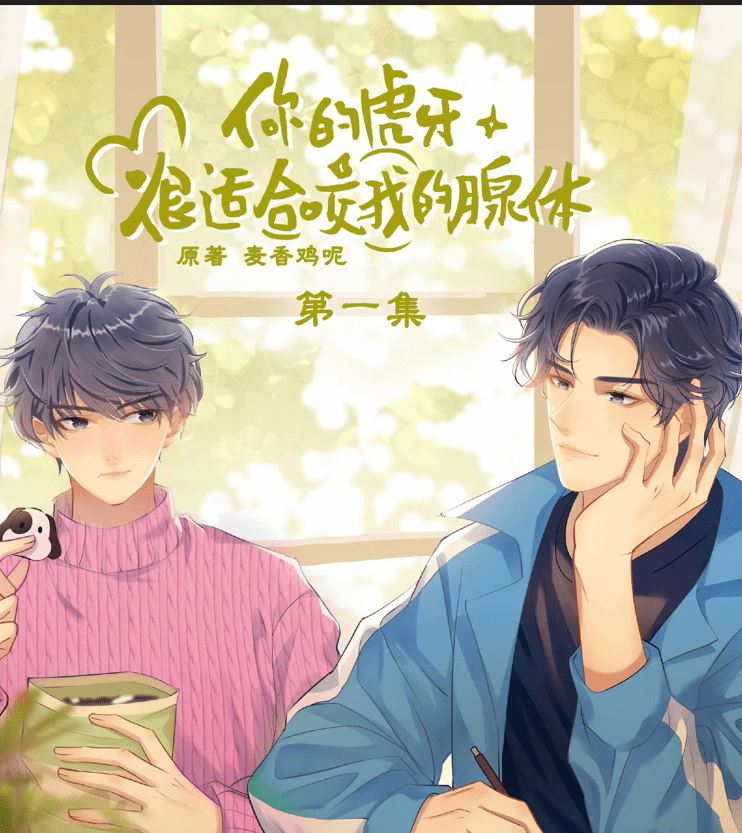
... Read More
"My parents are abroad. I've talked to my grandpa. He knows I'm going to stay at his future daughter-in-law's house. He even asked when I'll bring you home." I am NOT okay. This line alone is worth the price of admission. Cheng Che's voice is so distinctly him — confident, shameless, completely unbothered, and yet somehow it never feels like he's performing. He just says the wildest things with this deadpan delivery and Zhou Zhou has to be the straight man every single time. The contrast between them in dialogue is chef's kiss. Then you have Yu Yang's entire communication style which is basically just internal screaming and short WeChat responses. "Oh, okay." after literally agonizing over how to respond to Jin Wuqi? That man is suffering and we love him for it. The desk mate yelling "Damn, Yu Yang, are you toxic???" is also peak side character energy and I lived for it. The way the novel handles the gossip chain is brilliant though. Cheng Che says three words — "Because I marked a little strawberry" — and by the time it loops back through the senior class it's become this full romantic epic about stargazing and captivated souls. The author is making a point about how people project their own fantasies onto whatever they're given, and also just having fun with how ridiculous school rumors are. Zhou Zhou's reaction — slamming the table and defending Cheng Che's actual character against the distorted version — shows how well he knows the real person behind the rumors.
... Read More
I'm not usually someone who writes long notes about humor, but this book's voice is genuinely distinctive and I need to document why. The comedic beats land because they come from character, not just random jokes. When Yu Yang drops his sausage, then his pork tenderloin, then his lettuce — each item representing something he values more than knowing the truth about his best friend — that's not just slapstick, that's character economics. He's literally choosing food over information, which tells us everything about their friendship dynamic. And Zhou Zhou's delivery of 'I'm an Omega' while casually eating is the kind of deadpan that makes you laugh out loud. Compare that to his sister Zhou Qiao, who yells at her computer screen: 'Motherfucker! Are you addicted to giving people headshots?!' — instantly different voice, instantly different energy. You can hear them both. The register switching between scenes is also sharp. The omelette stand conversation is casual, almost absurd. Then you cut to Zhou Zhou sneaking past Cheng Che's classroom and the prose goes lyrical: 'His profile displayed distinct and smooth lines. His fingers were fair and slender.' The tonal whiplash is intentional and it works. One line that stuck with me: 'Their gazes were full of affection. It was more touching than a prison visit.' That comparison between snack aunties and prison visits is weirdly specific and deeply funny.
... Read More
'I told you so! Last time you participated in the maths competition. How could it be maths again this time?' — Cheng Che: 'Last time was the physics competition.' I laughed out loud at this exchange. Zhou Zhou's dialogue is SO distinctively chaotic. He talks fast, he lies immediately, he fills silence with whatever comes out of his mouth and half the time it's nonsense. Meanwhile Cheng Che's lines are always deliberate, short, almost clinical. 'I do have those.' 'I want to see.' 'It was the chemistry competition.' He doesn't waste words. The contrast between them is chef's kiss. Zhou Zhou's inner narration is where things get really funny though. Things like: 'What kind of Alpha was he?' and 'Is it alright for two Alphas to be so ambiguous?!' and the peeling lime plaster on the ceiling looking like 'the bald head of the Headmaster' which made Yu Yang burst out laughing. That random tangent is SO Zhou Zhou — his mind just going places. The 'ankle bracelet' bit is peak comedy writing. The author clearly understands how to write someone whose brain is running three miles per hour while their mouth is running five. It's natural, it's frantic, it's hilarious. Nobody talks like that in real life but in a novel it's perfect.

Leave a comment

You must be logged in to leave comments. or
