Summary

... Read More

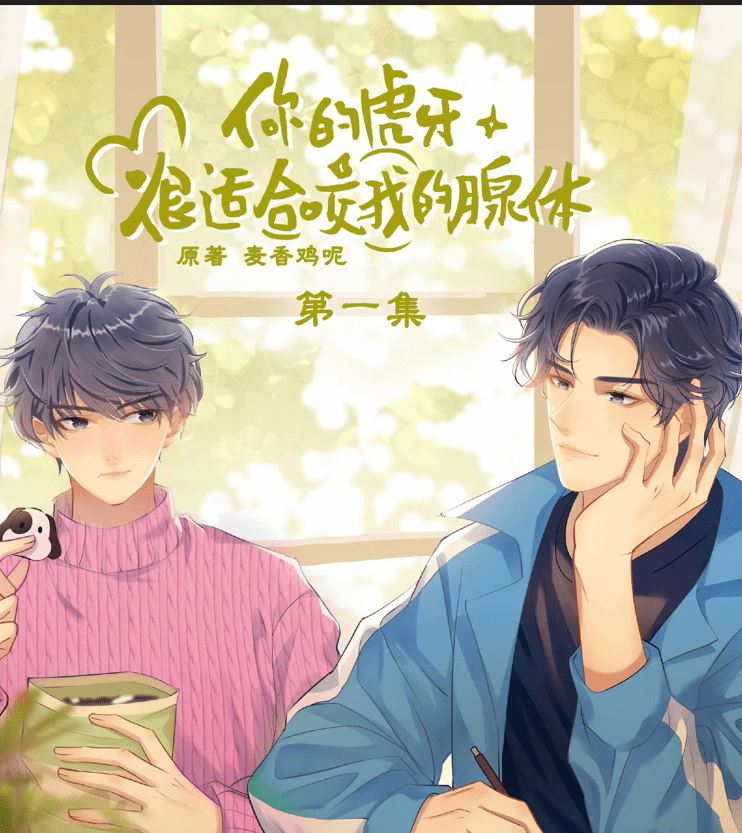
Zhou Zhou is an Omega who has enrolled in an elite Alpha Training Center, a institution designed exclusively for raising Alphas to serve in research institutes. Due to his family's background and his own ambitions, his parents arranged for him to enter this environment under the false pretense that he is an Alpha. To maintain this deception, Zhou Zhou relies on powerful suppressants obtained through his sister, Zhou Qiao, which mask his pheromones and delay his heat cycles. The school enforces strict regulations prohibiting Omegas from attending, forbidding Betas from pretending to be Alphas, and banning romantic relationships. Despite the risks, Zhou Zhou is determined to remain in the Alpha class because he has developed a crush on Cheng Che, a top-performing Alpha student known for his intelligence and cold demeanor. Zhou Zhou’s friend, Yu Yang, discovers Zhou Zhou’s true identity but agrees to keep his secret, although he struggles to reconcile Zhou Zhou’s fierce personality with the stereotypical expectations of an Omega.

The central conflict arises from the tension between Zhou Zhou’s need to hide his identity and his desire to pursue Cheng Che. Zhou Zhou initially observes Cheng Che from afar, admiring his physical features and academic prowess. Their first significant interaction occurs when Cheng Che overhears Zhou Zhou gossiping about Cheng Che’s “cute little fangs” and making suggestive comments about biting his gland. Instead of reporting Zhou Zhou, Cheng Che traps him against a wall and questions him, displaying a keen awareness of Zhou Zhou’s lack of pheromone scent. Zhou Zhou fabricates elaborate excuses involving isolation bracelets to cover his use of suppressants, but Cheng Che remains skeptical, noting that Zhou Zhou is a “little liar.” This encounter shifts the dynamic from distant admiration to direct engagement, as Cheng Che begins to take an active interest in Zhou Zhou.

A key turning point occurs when Zhou Zhou’s poor performance in chemistry provides an opportunity for interaction. Zhou Zhou manipulatively convinces the chemistry teacher to assign Cheng Che as his tutor, knowing Cheng Che is the top student in the grade. During their tutoring sessions in the self-study room, Zhou Zhou attempts to act naturally while dealing with the intense physical pull of Cheng Che’s minty sake pheromones. Cheng Che, in turn, reveals a softer side when Zhou Zhou recalls seeing him feeding stray puppies in the snow months earlier. Zhou Zhou had witnessed Cheng Che’s gentleness in that moment, which solidified his feelings. Cheng Che, aware that Zhou Zhou saw him, refers to him affectionately as a “beautiful little wildcat” and an “obedient little puppy,” indicating mutual attraction and recognition of Zhou Zhou’s dual nature.

As the tutoring continues, Cheng Che tests Zhou Zhou’s honesty by asking what kind of Omega he likes. When Zhou Zhou panics, fearing his lie will be exposed, Cheng Che responds that he values sincerity and that his preferences change based on the person he likes. This suggests Cheng Che may already suspect the truth or is at least tolerant of Zhou Zhou’s deceptions. The story progresses with Zhou Zhou navigating daily challenges, such as punishment duties alongside Yu Yang, while maintaining his facade. He faces the constant anxiety of his suppressants wearing off and the potential danger of going into heat among so many Alphas. However, his bond with Cheng Che deepens through these shared moments, moving from academic obligation to personal connection. Zhou Zhou’s internal struggle intensifies as he balances his romantic hopes with the fear of expulsion and scandal, while Cheng Che’s aloof exterior gradually gives way to playful and protective behaviors toward Zhou Zhou.

The narrative direction suggests an eventual confrontation of Zhou Zhou’s true identity. While Zhou Zhou plans to reveal his Omega status only after successfully pursuing Cheng Che or transferring schools, Cheng Che’s perceptiveness implies that the secret may not remain hidden for long. The romantic tension is compounded by the biological realities of their ABO dynamics, where Zhou Zhou’s strawberry milkshake pheromones attract Cheng Che, whose preference for such scents aligns with Zhou Zhou’s true nature. The story explores themes of identity concealment, academic pressure, and the subversion of gender roles within a rigid societal structure, culminating in a romance that challenges the boundaries of the Alpha Training Center.

Latest Release
DateGroupRelease
2026-09-26knoxt c46
2026-09-26knoxt c45
2026-09-26knoxt c44
2026-09-26knoxt c43
2026-09-26knoxt c42
2026-09-26knoxt c41
2026-09-26knoxt c40
2026-09-26knoxt c39
2026-09-26knoxt c38
2026-09-26knoxt c37
2026-09-26knoxt c36
2026-09-26knoxt c35

Community Reviews

Rating(4 / 5.0, 307votes)
5 stars
102(33%)
4 stars
99(32%)
3 stars
106(35%)
2 stars
0(0%)
1 stars
0(0%)

Popular reviews

... Read More
Okay, let's talk about Cheng Che for a sec because this guy is somehow both intense and ridiculously soft at the same time and I am HERE for it. He waits for Zhou Zhou under a streetlamp after finding out his lights are off — not because he has to, not because it's practical, but because he WANTS to see him. And then the line where he says he didn't reply to WeChat so he's punishing himself by standing there experiencing what it feels like to wait for someone? That is NOT something a typical alpha character would say in this genre. That's self-aware, almost vulnerable, and completely disarming. He takes Zhou Zhou's backpack without being asked, offers to walk him home, says the words 'let's go back home' and just... watches him. The whole energy shift from Chapter 34 where Zhou Zhou is stressed about chemistry grades to this scene where Cheng Che is just... being tender is wild. And Zhou Zhou? He's over here doing mental math about how to tell him he's an omega, working up courage, building up this impenetrable shield — while Cheng Che is just standing there holding his bag like a simp in the best way possible. The asymmetry between them is everything. One is terrified of rejection, the other is literally writing himself a punishment for texting too slowly.
... Read More
The chapter title 'A Paper Box' is so casually devastating I can't even. You'd think it's just describing an object but it becomes this entire metaphor for Zhou Zhou's emotional state—a cheap container for things he can't bear to throw away but can't bear to keep either. The pacing in these chapters is masterful. It starts with Wen Ran's confession in the hospital, which is heavy and slow and aching, then shifts to Zhou Zhou's social media post which is brief and almost breezy, and then Chapter 77 opens with the family dynamics—almost light, domestic, before crashing back down with the paper box scene. That tonal whiplash is intentional. The author lets you breathe between the heavy scenes, which makes the heavy scenes hit harder. The transition from the hospital to half a month later, then back to school, feels natural. There's no rushed recap, no 'previously on' energy. We just slide into Zhou Zhou's routine—returning to Omega Center, wearing the neck guard, avoiding questions. The scar revelation with Wen Ran at the end of the passage works as a structural cliffhanger without being cheap. It doesn't need a 'to be continued' because the image of that scar is more haunting than any question mark ever could be.
... Read More
I need to talk about the stakes in this chapter because they're simmering beneath every scene and I am NOT ignoring it. On the surface, nothing 'happens.' Zhou Zhou gets marked, deals with a few annoying Alphas, carries some papers, receives a love note. But underneath? The entire social ecosystem of this school just shifted. Zhou Zhou's conflict is internal and external simultaneously. Internally: he's adjusting to having a partner who won't stop touching him, checking on him, claiming him. Externally: the Alpha community is watching, gossiping, and Yu Yang is... something. The author doesn't spell out what Yu Yang feels, but that moment where he stares at the flower pots while Cheng Che has Zhou Zhou pinned against a bookshelf? That's not neutral. That's pain. That's jealousy wearing a mask of indifference. The stakes here are social survival. Zhou Zhou can't predict when Cheng Che is going to grab him by the collar in public. He can't control what other Alphas think. He's walking on thin ice, and the ice is cracking every time someone looks at him differently. His outburst about head-pats isn't just territorial—it's a statement of war against the old social order where he was just one Alpha among many. But the real tension comes from what Cheng Che is risking. He's an Alpha in a school environment, openly marking his partner, slipping notes during class, making scenes. He's not hiding. That takes a kind of courage that makes the quieter moments—the heartbeat in a silent classroom—feel Earnest and fragile. What happens when someone decides Zhou Zhou isn't acceptable? When Yu Yang stops pretending he doesn't care? The chapter ends on a note that feels almost TOO peaceful. I have a bad feeling about that flower-pot-staring boy.
... Read More
Let me just say this once: whoever wrote this chapter sequence deserves to have their reading experience similarly destroyed. The pacing from chapter 39 into 40 is BRUTAL in the best possible way. Chapter 39 ends with them essentially making out against a wall—hot, tense, charged—and then chapter 40 opens with Jin Wuqi literally complaining "it hurts" in that soft, breathy voice that basically functions as an aphrodisiac for the reader. The escalation is relentless. There's no breather. No "let's go eat and talk about our feelings." Just pure momentum carrying them from the elevator to the apartment to the bedroom in what feels like thirty seconds of narrative time but takes pages to process emotionally. And then—cut. Right there. In the dark, with the jacket coming off, with Yu Yang looking like a work of art in the faint light—and that's it. That's the chapter. The structure here is almost cruel in how efficiently it builds and then abandons you at the highest point. This is how you write a chapter that guarantees people will lose sleep waiting for the next update.
... Read More
The pacing in these chapters is masterful because it moves in waves, not直线线. Chapter 87-88 opens with Zhou Zhou waking up disoriented, then spirals downward through panic (the suppressant drawer scene), then almost comedically—two knocks on the door, Cheng Che appears holding a bag, expressionless. The tension here is unbearable because you're waiting for the confrontation, and then Cheng Che just... takes the syringe and throws it away. No yelling. No drama. Just 'Have you washed up? Are you hungry?' This is such a confident narrative choice. The author could have had Cheng Che berate him, could have had Zhou Zhou beg, could have had a whole emotional breakdown. Instead, the author chooses care as the pivot point. Then Chapter 88 shifts gears completely—we're now on the bed, Cheng Che confronting him with 'Why are you still taking suppressants now?' and the dialogue accelerates toward intimacy. The chapter ends with 'It's me. Only me. Zhou Zhou, I'm yours.' and we cut to Chapter 89. The structure here is: isolation → panic → rescue → confrontation → confession. Four beats in two chapters, and each one lands because the author trusts the reader to sit with discomfort. The suppressant scene alone is a pacing masterpiece—Zhou Zhou crouching, trembling fingers, heart beating too fast, breath coming rapid—then TWO KNOCKS. The abrupt interruption is everything.
... Read More
I want to talk about how the author weaponizes time in this chapter. The entire crisis unfolds across what, maybe twenty minutes of real time, but the chapter makes it feel like an eternity. How? By fragmenting it. First you get the heat hitting in real time — the fever, the ringing ears, the blurred vision. Then the bracelet countdown. Then those TEN-SECOND gaps between calls. Ten seconds of Zhou Zhou crawling to the bed. Ten seconds of him considering the third number he hasn't even inputted. Ten seconds of thunder and rain and memory overlap. The author is basically pressing pause on the worst moment of his life and holding it there. And then Cheng Che's section. Immediate shift — he's already moved, already driving, already knowing. The pacing flips from slow dread to urgent motion. One moment Zhou Zhou is drifting in and out of consciousness, the next Cheng Che is unscrewing the door lock and his glands are reacting before his brain even processes what he's seeing. The rush of that chapter transition mirrors exactly how Cheng Che feels — no hesitation, just go. But then inside the room, the pacing slows again. Zhou Zhou is too far gone to process anything rationally. He thinks Cheng Che is a hallucination. He pushes him away. The author keeps the urgency but removes the clarity, which is honestly more realistic than any clean dramatic reunion ever could be. Heat doesn't give you neat emotional moments. It gives you confusion and tears and begging. The chapter ends with that rain image echoing from months ago, which is a structural full-circle moment disguised as atmosphere. Beautifully done, even if it wrecked me.
See all reviews

Custom lists

See all custom Lists