You like it
Novel Info
  • Author:
  • 羅歇
  • Status:Ongoing

Summary

... Read More

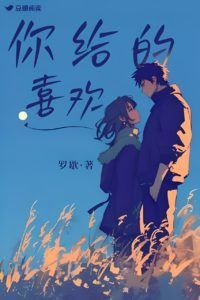
Meng Wanqiu, a bright and disciplined girl from a modest rural background, travels to the city with her aging grandfather, Meng Mao, to begin high school. Their journey is driven by a childhood arrangement: Meng Mao and Sheng Ting, former comrades-in-arms, had promised that their respective grandchildren, Meng Wanqiu and Sheng Xun, would marry when they came of age. Meng Wanqiu has spent years idealizing Sheng Xun, imagining him as a refined and kind figure, a stark contrast to the impulsive young men in her hometown. Upon arrival, she is welcomed into the wealthy Sheng household, where she meets Sheng Xun’s parents and the family matriarch, Meng Jie. However, her romantic illusions are quickly shattered. Sheng Xun is arrogant, dismissive, and openly hostile toward the engagement, viewing it as a feudal relic. His first words to her are laced with disdain, and he makes no effort to hide his lack of interest.

The initial days at home are fraught with tension. During a family dinner, Sheng Xun’s friend, Jiang Fei, cruelly mocks Meng Wanqiu’s grandfather, reducing his military service to a transactional favor. Meng Wanqiu, usually quiet and compliant, confronts Jiang Fei with sharp words, defending her grandfather’s honor. The confrontation escalates until Sheng Xun physically intervenes, pulling Meng Wanqiu behind him to protect her from Jiang Fei’s aggression. Later, when Meng Mao departs for the city to pack their belongings, leaving Meng Wanqiu alone in the Sheng household, she breaks down in tears. Sheng Xun, witnessing her distress, comforts her in an embrace that surprises both of them. Despite this moment of vulnerability, Sheng Xun maintains his stance, declaring that he will never marry her. Meng Wanqiu, refusing to be a victim, counters with equal sharpness, and the two seal their mutual disinterest with a high-five, agreeing to annul the engagement.

As they begin their first year at No. 1 Middle School, the dynamic between them shifts subtly. Meng Wanqiu excels academically, particularly in English and Chinese, while Sheng Xun struggles with Chinese essays despite his mathematical brilliance. They are placed in the same elite class, where Sheng Xun is appointed math representative and Meng Wanqiu is made English representative. Sheng Xun’s rebellious nature clashes with the school’s expectations, while Meng Wanqiu navigates the social hierarchy with caution. She finds herself alienated from Sheng Xun’s close-knit group, which includes his childhood friend Gu Siyu and Jiang Fei. Gu Siyu, though outwardly friendly, engages in petty conflicts with Meng Wanqiu, such as borrowing and losing her notebook, which leads to public criticism from the teacher.

Throughout these challenges, Sheng Xun remains a complex figure. He oscillates between indifference and unexpected acts of kindness. He lends Meng Wanqiu his copy of "The Road Less Traveled," a book she admires, and helps her with difficult math problems when she struggles. In one instance, he retrieves her lost notebook from the playground after she is detained by the English teacher, an act he downplays as mere convenience. Meng Wanqiu, in turn, begins to see past his abrasive exterior, recognizing his intelligence and hidden loyalty. She also forms friendships with other classmates, including Qian Jiming and Shang Yan, who help her with her studies and provide a support network outside of Sheng Xun’s circle.

The story explores the evolving relationship between Meng Wanqiu and Sheng Xun as they navigate the pressures of high school, academic competition, and social dynamics. Meng Wanqiu’s independence and resilience challenge Sheng Xun’s assumptions, while his gradual, albeit reluctant, support helps her overcome obstacles. The narrative sets the stage for a deeper exploration of their connection, moving from a forced engagement to a complex partnership shaped by mutual respect and understanding. As they face the challenges of adolescence together, the boundaries between their worlds begin to blur, hinting at a future where their initial hostility may transform into something more profound.

Latest Release
DateGroupRelease
2026-08-11shanghai fantasy c35
2026-08-11shanghai fantasy c34
2026-08-11shanghai fantasy c33
2026-08-11shanghai fantasy c32
2026-08-11shanghai fantasy c31
2026-08-11shanghai fantasy c30
2026-08-11shanghai fantasy c29
2026-08-11shanghai fantasy c28
2026-08-11shanghai fantasy c27
2026-08-11shanghai fantasy c26
2026-08-11shanghai fantasy c25
2026-08-11shanghai fantasy c24

Community Reviews

Rating(3.8 / 5.0, 6votes)
5 stars
2(33%)
4 stars
1(17%)
3 stars
3(50%)
2 stars
0(0%)
1 stars
0(0%)

Popular reviews

... Read More
I need to talk about the bathroom scene because it is PHENOMENAL. Let me just say this: the author takes the most mundane, everyday moment — someone showering their feet at midnight — and turns it into something that feels like a film scene. The frosted glass door, the Cantonese song playing softly, the way Meng Wanqiu curls her toes and the water reflects light on her skin. And then Sheng Xun appears. The description of him looking at the puddle on the floor afterward, touching it with his fingertips, his face burning — this is not just writing, this is pure atmosphere. It's intimate without being explicit, charged without being dramatic. The contrast between the countryside memory (drawing well water, her grandfather scolding her) and the present moment (modern bathroom, late-night music, a boy watching through glass) creates this layered sense of place that feels incredibly lived-in. And the Borges quote at the end — 'Tonight's universe has the vastness of oblivion and the precision of fever' — it's almost too perfect, but somehow it lands because the scene has earned it. The author builds worlds through sensory detail rather than exposition. You don't need to know the city, the school, the family dynamics — you just need one midnight bathroom encounter and you understand everything.
... Read More
Hide-and-seek. That's the central metaphor of this entire batch and I can't stop thinking about it. You hide, someone seeks, and the whole game is about the tension between being found and staying hidden. But what are these characters really hiding from? Meng Wanqiu is hiding from her feelings for Sheng Xun — she physically avoids him, gives false answers about choosing him as a deskmate, tries to log out of location sharing. Sheng Xun is hiding his vulnerability — he pretends this is all a game, that he deliberately got caught just to find her, that he doesn't care about the seating arrangement. The Borges reference is doing heavy lifting here. 'The Road Less Traveled' — she never finishes it, and neither does he finish his Borges collection. These unread books are symbols of the things they're curious about but too afraid to fully engage with. And the seating arrangement subplot? It's about how the system tries to optimize human connections, but feelings don't follow algorithms. Old Fan thinks he's being clever with his reverse psychology, but he's just another force trying to control something that can't be controlled. The sports day — running 1000 meters, someone waiting at the finish line — that's the next layer of the metaphor. Running toward something or away from it? The finish line is inevitable, but who's there to meet you?
... Read More
Okay so the hide-and-seek scene is honestly one of the cleverest plot devices I've seen in a while. On the surface it's just a game, right? But the whole thing is basically the author's way of forcing these characters into proximity without making it feel forced. Sheng Xun deliberately lets himself be caught so he can track down Meng Wanqiu — that's not just plot convenience, that's character motivation laid bare. He's been avoiding her, she's been avoiding him, and the game becomes the excuse to finally have a real conversation. And then the whole seating arrangement subplot? Genius. Old Fan basically reverse-psychology arranges everyone so that the people who actually want to sit together end up paired, while the ones who chose each other get separated. The fact that both Meng Wanqiu and Sheng Xun claimed they chose each other when neither actually did — that double bluff is delicious. I love how the author uses academic logistics as a vehicle for romantic tension. It's not just 'they like each other,' it's 'the entire school system conspires to keep them together despite their best efforts to dodge it.' The sports day setup at the end is the author laying the next plot thread — Meng Wanqiu signing up for 1000 meters, Shang Yan offering to wait at the finish line. That's a triangle waiting to happen, and I am HERE for it.
... Read More
The pacing in these chapters is what I'd call 'comfortably restless.' It starts with the camping trip — leisurely, meandering, lots of dialogue and character interaction. Then it pivots sharply into the academic world: report cards, teacher meetings, seating arrangements. The shift is jarring in the best way, because it mirrors how these kids' lives actually work. You can't just stay in the carefree summer moment forever; school and expectations are always waiting. And then BAM — midnight bathroom scene, which is a complete tonal shift from everything that came before. It's quiet, intimate, almost dreamlike after the chaotic energy of the hide-and-seek game and the classroom politics. Then it ends with sports day planning, which pulls the reader back into the daylight world. The author knows exactly when to slow down and when to speed up. The hide-and-seek sequence drags just enough to make you feel the afternoon laziness, then the bathroom scene slows to a near-standstill, then the sports day sign-up snaps everything back into motion. I stayed up way too late reading this batch because the transitions between scenes felt so natural — like flipping between channels on a lazy evening, except every channel was more interesting than the last.
... Read More
Here's the thing about this book — the conflicts are incredibly small-scale on paper. A seating chart. A game of hide-and-seek. Someone hearing music through a bathroom door. But the author makes you care SO much about all of it. How? By making the emotional stakes feel real. When Sheng Xun says 'I didn't choose you either' and his face falls, you feel it. When Meng Wanqiu discovers she's still sitting with him despite both of them lying about choosing each other, the quiet devastation is palpable. These kids are navigating something enormous — first love, family expectations, academic pressure, social hierarchies — through the only vehicles they have: classroom logistics and weekend games. The tension in the bathroom scene isn't about what might happen physically; it's about what happens emotionally when two people who've been dancing around each other finally share a moment of raw, unguarded proximity. And then the sports day announcement? Shang Yan offering to wait at the finish line is a quiet act of devotion that raises the stakes dramatically. Because now there's a third person in this emotional equation, and Meng Wanqiu's reaction — wanting to say the 1000 meters is nothing but smiling anyway — shows she's already aware of the triangle forming. The author never lets up. Every scene adds another layer of tension without ever raising its voice.
... Read More
Can we just take a moment to appreciate how Sheng Xun speaks? The man says barely anything and it's always devastating. 'When did you learn to lie?' — three words, delivered with a smile, and suddenly Meng Wanqiu is exposed. His dialogue is this perfect blend of casual and calculated. He's never shouting, never over-explaining, just dropping lines that land like punches wrapped in cotton. And Meng Wanqiu's responses? 'Oh.' 'I didn't.' 'You were too close, just like that night.' She says so little but says exactly the right amount. The author gives each character a distinct voice without making it cartoonish. Lian Shiyue is all energy and complaints — 'I don't like people who are always so pretentious' — she sounds like a real person venting to her friend. Shang Yan is gentle and practical, offering to wait at the finish line like it's no big deal when it absolutely is. Gu Siyu barely speaks but her presence is felt in every room she enters. The group chat moments are particularly well-done — those quick 'I won't tell you' messages and location-sharing betrayals feel exactly like how real people communicate through phones nowadays. The dialogue never feels written. It feels overheard.
See all reviews

Characters

See all characters

Custom lists

See all custom Lists