You at the End of Eternity - Reviews

You at the End of Eternity
+Add to Custom List
Sort
Add review
... Read More
This story is ostensibly about a woman trying to escape her country. But beneath that surface, it's about what we do to ourselves to survive, and what we sacrifice to stay free. The central symbol is the bet. Carlisle proposing: beat me and I disappear from your life forever. Lose and I stay. This isn't a academic competition—it's a courtship ritual disguised as a challenge. He was keeping her. And she, in her blindness, thought she was escaping him. But the bet bound them together for years. Every hour in the reading room, every time he watched her while she studied, every sharp word she threw at him—that was both imprisonment and intimacy. Then there's the scars. The author doesn't romanticize them. They're described clinically: 'old, faded scars that had long since turned white.' But the symbolism is visceral. Lynette chose to become 'defective by her own hand' so her father wouldn't force her into marriage. The scars are her original act of agency—self-mutilation as the only available path to autonomy. And now she wears them under beautiful clothes, a secret ledger of survival. The Magic Tower is perhaps the richest symbol. It's where magic once lived and now only 'faded remnants' remain. It's isolated, autonomous, untouchable. And it's the one place Lynette wanted more than anything. It represents the thing that got away—the dream she was told she couldn't have, the power she couldn't access, the version of herself that exists outside her father's house and Elaine's contracts. Carlisle got there. She didn't. And now she has to serve him as his guide. But the deepest symbol might be spring itself. The fading cold, the approaching warmth, the scent of change in the air. Spring is when she planned to leave. Spring is what she's been counting toward. And now it's delayed again. The season of renewal becomes another reminder that her freedom keeps getting postponed.
... Read More
I need to talk about the mirror scene. Just—stop. Chapter 1, Lynette comes home, changes clothes, and sees her body. Countless scars. Old, faded, white. And the narrator calls her 'a defective product of Aterne.' This is worldbuilding through body horror, and it's brutal. The author doesn't waste time explaining the magic system or the politics of Ortia first. Instead, we get Lynette at her window, feeling the 'fading cold' of approaching spring, thinking about how she wanted to leave during a season like this. Autumn wouldn't be so bad either. Just get out before the cold returns. This tiny detail does so much—it tells us about her desperation, her calendar of survival, how she measures her freedom in seasons. Then there's the carriage detail. 'To think they had even sent a carriage just because someone from the Magic Tower was arriving.' The political hierarchy is embedded in transportation. You don't get a royal carriage unless you matter, and Lynette notices every level of this hierarchy because she's surviving them. The Magic Tower itself is introduced almost as a ghost—a place Lynette wanted more than anything, but was never permitted to enter. It exists in the negative space of her desires. Ortia is a nation built on magic that no longer works, the royal family chasing remnants, the Tower isolated and autonomous. It feels like a world where power has decayed but the institutions built around it remain, and everyone is performing importance they've lost. But the most atmospheric moment? When Lynette sees Carlisle and that description hits: 'eyes that seemed to hold an entire forest within.' She's looking at the boy who once devoted himself to her, and the world around them—spring breeze, fading cold, the carriage ride—collapses into that single image of his eyes. The setting doesn't compete with the emotion. It folds into it.
... Read More
Can we just talk about Carlisle for a second? Because the way the author writes him in this section is genuinely chilling and mesmerizing at the same time. He shows up in that midnight-blue uniform with no jewelry, no gold embroidery, just this cold neatness that somehow outshines all the nobles dripping in wealth. And that badge—silver circular, rune patterns etched inside, shimmering like it was alive—that's not just a prop, that's armor. He built himself this identity outside the noble class so no one could dismiss him anymore. And yet when he's with Lynette, something flickers. When he covers her shaking hand holding the wine glass, he doesn't say comfort words. He says, almost casually, almost cruelly, 'Do you want to be embraced by me right here?' And then he just… pats her hand. Like he's giving her an out but also trapping her in the same moment. That's Carlisle. He can't just be kind without wrapping it in something dangerous. And Lynette—oh my god, Lynette. She's performing so hard at this banquet. 'She wore a smile, as always, forced.' Forced. That word hit me like a wall. She's standing next to the man she used to be passionately involved with, in front of people who already know the scandal, and she's smiling so brightly no one notices her face is pale. When her father calls her useless and tells her she should've been born a man so he could've given her everything, and she just takes it without breaking character—that's not weakness, that's survival. She's been conditioned to absorb violence and reflect nothing back. But then she spits blood and says 'You haven't changed' like she's still fighting, even if it's just internally. The三角 between Lynette, Carlisle, and Clifford is also fascinating because nobody's being honest. Clifford's family treats Carlisle like a long-lost son, but we all know that's not why Lynette sent him there in the first place. She sent him away, and now she's the only one who can't endure the consequences. That line—'She was the one who had sent Carlisle to the Cliffords, yet she was the only one unable to endure the consequences of that choice'—this is the core wound. She did it. She pushed him toward safety or duty or whatever excuse she had, and now watching him move through their world with that quiet confidence, looking at her with those pale green eyes full of something that isn't forgiveness—is killing her more slowly than any slap ever could.
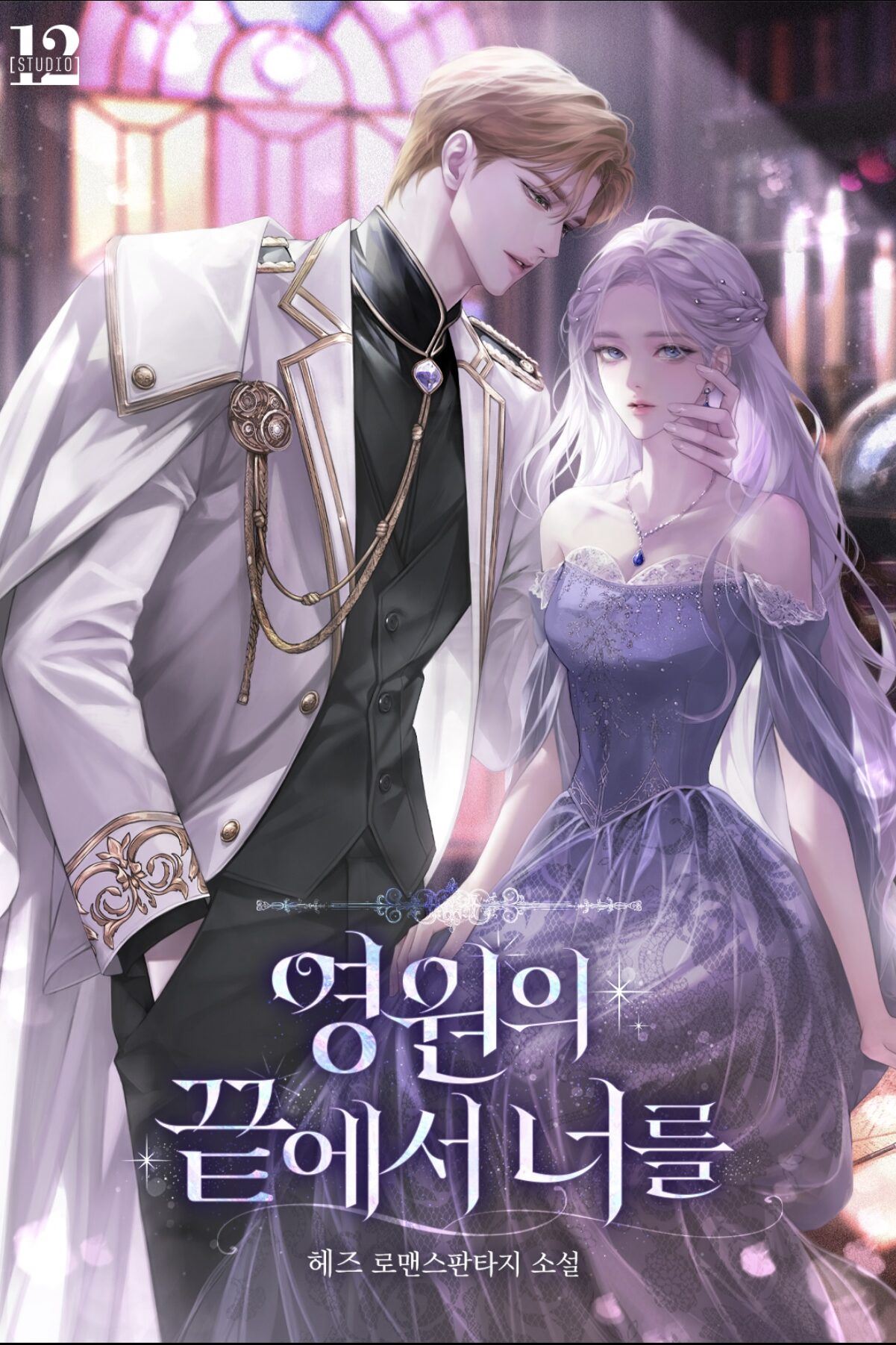
... Read More
I need to discuss the pacing in these chapters because the author completely wrecked me and I have nothing but respect. Let me walk through how this works. Chapter opens with Lynette getting dressed—slow, detailed, almost meditative. We watch her put on the silver dress, fix her hair, force the smile. This section breathes. It's quiet. It's internal. You can feel the weight of preparation, the ritual of armor-up before facing the wolves. Then she leaves the house, gets into the carriage, and—nothing. Silence. 'During the ride to the banquet hall, Lynette remained silently quiet, and Carlisle did not add any words to her. It was a relief.' This is brilliant pacing. The author gives us a moment of false calm before the storm. Two people who used to speak constantly are now saying nothing, and the emptiness between them is louder than any argument. Then they arrive, and the pacing EXPLODES. Multiple entrances. Duke Atherne. Marquess Clifford. The Crown Prince. Eris. Everyone arrives in sequence, and the scene becomes a pressure cooker. Greetings, polite exchanges, veiled threats—all compressed into a space that feels increasingly suffocating. The author doesn't let us breathe. Each new arrival adds another layer of tension until Lynette can barely stand. And then—the dance. A brief pause, a moment of movement, of music, of physical closeness that somehow slows time down even as the emotional stakes skyrocket. The waltz is the peak, and it's over too quickly. Carlisle leaves. Lynette follows him into the corridor. And here's where the pacing shifts again. Suddenly it's fast. Violent. 'The Duke closed the distance without hesitation, raised his right hand, and struck Lynette across the cheek.' No setup. No warning. Just action. The author drops us straight into brutality after we've been floating in golden atmosphere, and the whiplash is intentional. We're not supposed to be comfortable. We're supposed to feel Lynette's terror. The chapter ends mid-violence—with the Duke raising his hand again, and then it cuts off. That's a cliffhanger that doesn't just want you to turn the page, it literally grabs you by the throat and pulls. I opened the next chapter immediately. There was no other option.
... Read More
I need to address the dialogue in this text because WOW. The author has given Carlisle Preston a voice that is absolutely lethal. "Are you asking me for a favor right now?" — Said with this lazy, curling smile, like he's amusement incarnate. But it's not just flippant. It's a power move dressed as a question. "Lynette, if you're asking me for a favor, shouldn't you be a little more polite?" — This is the kind of line that should come with a warning label. The manipulation is SO refined. He's reframing HER request as HIM doing HER a favor, entirely reshaping the power dynamic with a single sentence. "Unless you want to provoke me even more, how about stopping here? You know my tastes better than anyone. If you keep acting like this, I might start misunderstanding and think you still want me." — I AM DEAD. This line does THREE things at once: it threatens her, it reveals his obsession, and it mocks her attempt at distance, all while sounding like sweet talk. The narrative voice here is perfectly calibrated. Compare that to Louis's dialogue: "I would never do that, Lynette. I'll stay by your side forever." Simple. Direct. Almost painfully sincere. It's written so plainly that it contrasts brutally with Carlisle's layered menace. And the narrative itself confirms this: "And that's exactly what suffocates me." Eris, meanwhile, speaks in sunshine: "Carlisle, it's been a long time" followed immediately by hurt feelings about formality. Her warmth is genuine but also a tool — the text frames her as "sunlight itself" right next to descriptions of the abuse Lynette suffered. The dialogue creates this grotesque juxtaposition. Carlisle's closing line though: "I already know you'll be the one coming back to me first anyway." That's not dialogue. That's a prophecy.
... Read More
I keep coming back to the dialogue in these chapters because EVERYTHING is layered. Nobody says what they mean. Not once. Let me break this down. Duke Atherne says to Lynette in a whisper, so only she can hear: 'It is always peculiar to me that you dare to stand in this place.' On the surface, this is paternal disapproval. But read it again. This man has never shown her love. He's never defended her. And yet he's concerned with whether she belongs in his world? His real message is: you are unworthy, and everyone can see it, and I'm the only one cruel enough to say it out loud. And then—he follows up with the most devastating line: 'You know better than anyone. That your best is always insufficient. Especially after you gave the top spot to a wretch like that and offered him your body and soul.' He's weaponizing her past relationship with Carlisle to hurt her, twisting her intimacy into shame. The word 'wretch'—he's calling Carlisle a wretch while simultaneously revealing that Lynette once chose him over duty. That's psychological violence disguised as criticism. Lynette's response is perfection: 'This is better than offering my body and soul to the Crown Prince, only to have my position as Crown Princess stolen by Clifford and be left as a mistress. After all, I have secured the title of the Crown Prince's aide.' She's defending herself without defending herself. She's admitting humiliation while flipping it into triumph. And the Duke's reaction—his smile distorting, his face crumbling—tells us she landed the hit. She wounded him. She won that exchange, even though she's bleeding inside. Then Carlisle's line to her during the dance: 'Well. It might be a bit difficult, since I'm used to holding and touching you like I did before.' He could've said something safer. Something polite. Instead he weaponizes nostalgia. He uses their physical history as both comfort and threat. And Lynette's only response is to whisper, 'Don't try any tricks. Just dance.' She knows exactly what he's doing, and she's calling his bluff while remaining trapped in his arms. The Duke's final spoken words to Lynette—'You useless thing. You should have been born a man. If you had, I would have given you everything I own.' This is the most honest line in the entire scene, and that's what makes it destroy me. He's telling her that her gender is the only reason she's worthless to him. That she could've earned his love if she'd been born different. And Lynette's response? She doesn't cry. She doesn't beg. She spits blood and says, 'You haven't changed.' Four words. That's it. After everything, that's all she has left—the observation that he's exactly the same monster. And then the chapter cuts away before we see what happens next.
... Read More
Okay first of all—the DESCRIPTION in these chapters is absolutely unreal. The way the author paints the banquet hall made me physically feel like I was standing there, and I hate that I'm saying this about a scene that's basically emotional torture, but the imagery is so lush it's almost distracting. 'The grand banquet hall of the royal palace was a sea of gold in itself. The giant chandeliers hanging from the ceiling consisted of thousands of crystal pieces layered upon one another, breaking the light and pouring down like the starlight of a night sky.' I just—what. Who wrote this? How does a room feel like both a jewelry box and the night sky at the same time? And then the marble floor reflecting everything like silver waves. Silver. Lynette is wearing a silver dress. Her hair is silver. The floor turns to silver waves. This isn't accidental. The author is drowning her in her own color, making the world mirror her isolation. But then—the sensory details go beyond sight. 'The scent of the flowers mingled with the smell of wine and spices, making even the air feel sweet.' Sweet. Cloying, almost. It's too much. Everything at this banquet is excessive: the light, the sound, the perfumes, the smiles, the lies. And Lynette is standing in the middle of it all, gripping a wine glass until her knuckles hurt, pretending to breathe. And then—BAM. The corridor scene. The shift from golden opulence to cold moonlight is jarring in the best way. 'The palace gallery was filled only with moonlight.' Just that. No chandeliers. No crystals. No flowers. No music. Just darkness and silver light and violence. The author strips everything away so fast it's like the world itself is abandoning Lynette the moment she steps outside. And that's when the Duke appears. That's when the performance ends and the brutality begins. This contrast—the golden cage versus the dark hallway—is genius. The banquet is a prison dressed in luxury, and the corridor is a prison without even the illusion of beauty. Lynette escapes one to enter the other. There's no safe place for her in this world, and the setting makes that feeling visceral. I couldn't stop thinking about how the silver threads in her dress and the silver moonlight connect her to both spaces—she's marked by both glamour and exposure, both performance and punishment.
... Read More
The opening scene—just Lynette and Eris having tea—sets the entire tone for me. Two women saying perfectly proper things to each other with absolutely zero sincerity between them. Eris calls Lynette pretty and immediately undercuts it with a comment about being 'loved by His Highness.' That's not a compliment, that's a reminder of who holds power and who doesn't. And Lynette? She says it effortlessly now. 'Empty words had always been easy. What was difficult was speaking honestly.' Oof. Then the conservatory dining hall hits you with this almost painful warmth—sunlight on marble, morning dew on glass, butter rolls and warm soup. Everything looks perfect. Everything looks like a fairy tale. And underneath it all, these two people are having a conversation about magic that reveals how horrific this world actually is. Some nobles tracked down mages, sliced open their chests, and tried to set fire to their hearts to understand 'flame within the heart.' That is not a detail I signed up for but also I cannot unsee it. The contrast between the golden, sunlit banquet room and the dark history of magic persecution is devastating. The world feels alive in the best way—all these layers of beauty hiding unspeakable cruelty.

Leave a comment

You must be logged in to leave comments. or
