With Taming Comes Responsibility - Reviews

With Taming Comes Responsibility
+Add to Custom List
Sort
Add review
... Read More
Okay, so I need to talk about how this chapter opens because holy shit. It starts with Ariana being cornered by some handsome man at her father's funeral—except he's calling her 'Master' and acting like she's been taming some creature. Then it immediately cuts to 'The Girl and the Monster' and we're years earlier? That's not just a flashback, that's a structural choice that makes me stop and reconsider everything I just read. The man from that opening scene must be connected to this monster somehow, right? Like the creature grew up or transformed and now he's come back to claim her or... something. Either way, the author played me. I thought I was reading a straightforward setup and then BAM, time jump and romantic tension with a stranger who knows things he shouldn't know. The main plot thread starts with Ariana saving this dirty little ball of fur during a merchant's display. Her father is showing off gifts for his new wife—the very woman who replaced Ariana's dead mother—and Ariana impolitely insists on getting the monster instead of whatever fancy thing her stepmother wants. What I love is how she maneuvers the situation. She doesn't just whine, she negotiates. 'I'll give you something I cherish, Stepmother.' She offers her mother's emerald earrings as a trade. That's a kid who's been paying attention, who knows exactly how to play this family's power dynamics to get what she needs. Then there's the subplot with the merchant, who keeps warning her about the mana stone necklace. 'You must never remove that necklace. Even if it dies.' Repeat it multiple times, almost desperate. This guy knows something about the monster that the baron and Wanda have no idea about. And he's not just selling merchandise here—he's genuinely anxious about what happens if someone removes that stone. The story is layering these warnings like it's building pressure under a lid. The pacing felt solid too. We get the funeral scene, the monster introduction, the trade negotiation, the stepmother's visit to collect what was promised, and then this creepy warning from the merchant—all packed into one chapter without feeling rushed. But the real masterstroke is the ending: Wanda comes to the annex and starts confiscating more of Ariana's things. She grabs a ruby and diamond bracelet on top of already taking the emerald earrings. And the last line hits like a punch—the new baroness is surveying the annex like it's a warehouse, surrounded by old unused things. The power imbalance is brutal and clear.
... Read More
I need to talk about this one line and I'm not even going to minimize how dramatic I'm being about it: 'Its heart was beating, trying desperately to stay alive. Ariana could feel the pulse of its small heart against her fingers.' I read that and I just... stopped. Because I understood exactly what that meant to her. Ariana has been invisible in this house for eight years. She learned to blend in 'like an inanimate object or air, as if she were both present and absent.' And here she is, holding something small and weak and dying, and for the first time in forever, she feels something that needs her. The pulse against her palm—it's not just the creature's heartbeat, it's proof that she matters to something, that someone is depending on her to keep it alive. That moment completely reversed the dynamic of her existence. And the internal monologue where she comforts herself? 'Mom would have praised me too.' She didn't even take the earrings out of the box for a long time, 'wary of her stepmother's eyes.' She's been hiding her mother's memory like contraband. And now she traded it for a life. That's not impulse, that's instinct. That's the kind of choice someone makes when their heart has been starved for so long that anything warm feels like salvation. The stepmother scene absolutely wrecked me too, but in a different way. Wanda comes to the annex and immediately demands what was promised. 'Hand it over quickly.' Her voice is sharp, impatient, treating Ariana like a thief who needs to be supervised. And then she eyes the jewelry box and just... takes more. The ruby and diamond bracelet. Without even asking twice. Ariana says 'No. Please take it'—not because she wants to, but because she knows resistance only makes it worse. The compliance reads as survival, not submission. What struck me most was the absence of love in almost every interaction. The father looks at his wife with 'loving eyes' while discussing violently beating a creature to death. The stepmother performs maternal affection ('As the adult and mother, it's only right') while actually just collecting property. Ariana bows with a 'servile gesture that made her look more like a maid than a stepdaughter.' Nobody sees her. Nobody wants her. Except... maybe the monster does? The opening scene had this man calling her 'Master' with some kind of charged, almost reverent energy. If that's the same creature she adopted as a pup, then maybe love in this story starts with something feral and broken learning to trust again. I keep thinking about what kind of bond forms between someone who's been treated like air and something that was treated like merchandise.
... Read More
I need to talk about this one image because it's sitting in my brain and I can't get it out. When Ariana is staring down her stepmother, refusing to yield, her eyes drift to the sofa. Specifically, to the indentation in the cotton where Remus always sits. 'Just one year. That much time had settled heavily, causing the cotton to sink in even when Remus wasn't sitting there.' One year. Think about that. A whole year of this creature—this 'monster' her stepmother wants dead—sharing a space with her, and the physical evidence of that companionship is built into the furniture. The cotton remembers what the rest of the house chooses to ignore. That's not just poetic, that's devastating. The house itself has been keeping count. Meanwhile, the baroness comes in wearing ruined shoes—shoes she spent money on but refused to spend on the path leading to Ariana's annex. Not a single penny for that girl. And yet the baroness is the one entering a dark, underfunded building in a thunderstorm, armed with an iron poker, convinced she can rewrite fate by killing something that doesn't even belong to her. The symbolism here is almost heavy-handed but I can't bring myself to complain because it lands so hard. The monster is loved. The mother-figure is hollow. The child who was supposed to be everything is just another tool to be wielded. And somewhere underneath all of it, the story keeps asking: what actually makes a family? Blood? Or the cotton that remembers?
... Read More
Can we just take a moment to appreciate the maid's voice in this chapter because she is ABSOLUTELY DELICIOUS. "No one but you would think of bathing with a pet." — immediate character establishment. This woman has seen things. She's not impressed. "After all, it's just an animal. It will die after about 10 years or so." — delivered so casually, like she's commenting on the weather, but you know she's trying to protect Ariana from getting hurt. That's not cruelty, that's brutal honesty wrapped in concern. "Tsk. I wonder why you keep losing weight every time I see you. It's upsetting." — the word "upsetting" is doing SO MUCH WORK here. She's gruff, she's practical, she grew up on a farm where dogs were tools not companions, and yet she's the one secretly stealing towels and books for this girl and her monster. She brings milk. She warns her to lock the door. She looks back three times before leaving. And Ariana's voice is perfect too—her internal monologue is so tender and slightly self-deprecating. "A mere dog wanting to drink milk meant for humans?" She's constantly aware of how absurd her situation is, but she leans in anyway. The narration itself has this gorgeous dual perspective, slipping between Ariana's outside view and Remus's inside thoughts without any fancy transitions. One paragraph we're watching her wash him, the next we're inside his head thinking *'She's truly treating me like a pet'* and *'How can you be so smart?' actually embarrasses me.* That narrative flexibility is chef's kiss.
... Read More
The pacing in these chapters operates on two different rhythms that somehow create perfect harmony. The first section follows Remus in near-silence—he moves through rain, through mountains, through his own thoughts, with minimal external action. The prose is controlled, almost meditative. Sentences are longer, flowing like water. Remus's internal debate about Ariana unfolds in paragraphs that don't rush, giving us space to feel his helplessness. Then, abruptly, we cut to the Cowell household, and the pacing accelerates dramatically. Glass shattering, loud crying, screaming maids, the baron's irritation escalating into shock, the baroness's performance reaching fever pitch. The author uses short sentences, fragmented dialogue, and sensory overload to create a sense of chaos. The maids gossiping in the corridor provides a brief breathing room—a comedic relief that makes the emotional crash that follows hit even harder. Then Ariana appears, and the pacing slows again, but this time it's the slow, dreadful pacing of a funeral. Every detail lingers: the blue lips, the dead eyes, the distant bow. The author forces us to sit with her devastation. And then—the iron poker hits the floor. This is the chapter's structural climax, and it arrives not with a bang but with a clatter, almost anticlimactically, which makes it more powerful. The baron recognizing the poker as the tool from his wife's room, Ariana explaining matter-of-factly that her stepmother came with it, the revelation that the stepmother told Ariana to kill Remus—that three revelations arrive in rapid succession, each one more shocking than the last. The chapter ends mid-sentence, with the baron's eyes widening, leaving us hanging in the worst possible way. This is the author's signature technique: build tension through pacing variations, then rupture it with a single devastating image.
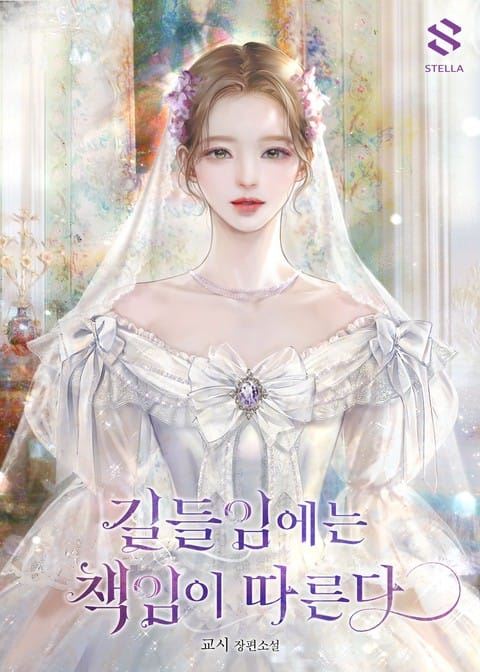
... Read More
I keep thinking about what Ariana stands to lose in this story, and honestly, it's everything. Her mother's memory, represented by those emerald earrings. Her mother's bracelet. Her own name and identity in this household—a name meaning 'silver,' which the text explicitly tells us reflects her status. Not gold. Silver. Second-rate. An asset nonetheless. Those words hit me like ice water. The conflict isn't just external—it's layered. On the surface, there's Wanda, the stepmother who wants control of everything, including Ariana's inheritance and even the monster she wanted. But there's also the father, who seems to have genuinely forgotten his daughter's birthday. Eight years. He brought rare animals as gifts for Wanda but couldn't remember when his own child was born. And yet, there's this weird moment where after scolding Ariana for being 'ill-mannered,' he offers to buy her something else because he feels a flicker of guilt. Is that real remorse or just performance? The text doesn't let us know for sure. Then there's the monster itself. The merchant warns that without the mana stone, it will go berserk and 'harm people.' What does that mean for Ariana? If she's supposed to be its caretaker and the stone comes off, she's the one who could get hurt. Or maybe worse—the rumors about monsters killing people in neighboring countries. Those rumors were dismissed as 'unsubstantiated,' but the author planted them there for a reason. Foreshadowing, obviously, but the fear they create is real. The stakes escalate when Wanda shows up at the annex less than an hour after making the deal. She's not waiting, not being polite about it. She pushes Ariana aside, ransacks her jewelry box, and takes more than what was agreed upon. The ruby and diamond bracelet. And the scene ends with Wanda looking around at this 'warehouse' of old furniture and bedding, clearly unimpressed with what Ariana has managed to survive on. What are the actual stakes here? Survival. Losing the last remnants of her mother. Losing the monster if she can't protect it. And losing herself entirely to this household that treats her as invisible. What made me most anxious was how casual everyone was about this abuse. The baron doesn't seem to notice. The servants whisper but don't intervene. Even Wanda's cruelty is mundane, bureaucratic almost—she's just collecting what she wants. That's what makes it terrifying. It's not dramatic villainy, it's systemic neglect wrapped in politeness.
... Read More
So this chapter structure is interesting and I wasn't sure about it at first but then I realized it actually mirrors Ariana's mental state perfectly. She falls asleep half-dead from exhaustion, Remus wakes up and observes everything, she wakes up groggy, they have a small interaction, and then she goes to bathe. It's a rhythm of exhaustion and brief moments of aliveness. The pacing choices here are deliberate. The author could have dumped all the exposition about Ariana's situation upfront but instead spreads it across servant conversations, Remus's internal observations, and Ariana's own reactions. It creates this slow-burn feeling where each new detail lands like a small punch. One thing I noticed: the Remus awakening section is told from HIS perspective, which is a narrative shift that totally works. It breaks the flow just enough to create intrigue — who IS this creature? What does he see when he looks at her? And then when it snaps back to Ariana's POV, you feel both characters' vulnerability. The tension builds subtly throughout. Not through action scenes but through emotional accumulation. By the time Remus bites her and then licks her hand, I was genuinely invested in their dynamic. The chapter ends on a note of fragile connection rather than drama, and somehow that felt more powerful than any cliffhanger would have been.
... Read More
The pacing in this section is genuinely masterful and I want to break it down because the author knows exactly when to speed up and when to force you to slow down. It starts with the fortune teller scene—lots of exposition, dialogue-heavy, but it moves quick because the baroness is too eager to listen. Then: the weather shifts. Rain starts. Thunder rolls. The baroness storms across the muddy path and the narrative pace changes. Shorter sentences. Bang. Bang bang. Lightning, thunder, footsteps in mud. By the time she reaches the annex, the momentum is already building. The knocking itself—three violent strikes—feels like a drumbeat. Ariana grabs her lamp. The door opens. And then suddenly the pace drops. The baroness sits down. Tea is poured. Silence stretches. It's almost unbearable because you know something is coming. The dialogue here is razor-thin: 'That monster, give it to me.' Four words and the entire room shifts. From there, it spirals upward—slaps, arguments, revelations, the pivot where Ariana turns the tables. And right at the peak, when the baroness and Ariana are locked in a stare-down that could shatter the book, the back door creaks. End of scene. I literally gasped out loud. The author didn't even let us breathe before cutting to black. Absolute perfection.
... Read More
Can we just take a moment to appreciate the servant dialogue in these chapters? The maids are basically the Greek chorus of this whole story. They tell you everything you need to know through casual gossip, and the writing makes it feel completely natural. The exchange where one maid says 'It's as if the sun rose in the west' about Ariana oversleeping — that's such a vivid character voice. You can hear the concern underneath the casual remark. And then immediately after, 'But it might be better to bring her all her meals in the morning' because... well, workload. The realism of it! What's brilliant is how the dialogue reveals power dynamics without anyone stating it directly. When the maid warns her friend 'Such words should only be kept in your heart,' it's not preachy — it's survival instinct. They ALL pity Ariana but they can't show it. The text trusts the reader to understand the subtext without spelling out 'the Baroness is cruel.' Ariana's own dialogue is sparse but meaningful. Her whisper to Remus — 'When evening comes, I'll let you drink blood again' — that single line carries so much: secrecy, care, sacrifice. And Remus never speaks aloud at all in these chapters, which makes his internal voice even more striking when we get it. The narrative voice itself has this gentle, almost melancholic tone that never quite breaks into melodrama. It lets the situations speak for themselves.
... Read More
"For reasons unknown, whenever he was in skin contact with Ariana like this, his scattered energy gradually began to gather." I read that sentence five times. FIVE TIMES. Because it's the most heartbreaking thing I've ever encountered and it's wrapped in what is basically a bath routine. This whole chapter is about how two broken things fit together. Ariana, who hasn't had real warmth since her mother died, who was pushed out to live in a dark annex like she was nothing... and Remus, who is a monster pretending to be a puppy, who wanted to break his necklace and leave but now can't bring himself to shake off her towel because he knows how much she values these moments. The line that destroyed me was Ariana's internal thought: "The irreplaceable happiness made her feel scared in one corner of her heart." She's happy. Truly happy for the first time in years. And that happiness terrifies her because she knows it can be taken away. The maid already planted that seed—"ten years or so." And Remus! He's a blood-craving supernatural being who was trained by nobles, and yet the simplest thing—a warm bath, a soft towel, someone praising him—makes his scattered energy gather. It's not romantic love. It's not even quite friendship. It's something deeper and wordless. Two creatures who've never been treated like they matter, suddenly matters to each other. The ending where she says "It would be good if you drank blood again"—and then it cuts off—LEFT ME SHOOK. What does that even mean?? Is she worried he's not nourished enough? Is she worried he'll go back to hunting? What is happening.
... Read More
I keep coming back to this image of Ariana described as a ghost. The text says it directly: "She was like a ghost haunting the annex." But what fascinates me is how that theme of invisibility operates on every level. Remus, trapped in wolf form, also exists between worlds — not quite animal, not quite person, too wild for human society but unable to return to his pack. And Ariana? She's physically present at family gatherings but emotionally erased. The contrast between the bustling main building preparing for the grand dinner and the silent, empty annex is almost unbearable to read. There's this scene where Remus follows Ariana's scent trail to the main building and watches from the shadows. He sees her there, being ignored, while the pregnant baroness commands every ounce of attention. The food smells appetizing, the servants move with purpose, and Ariana is just... there, tolerated at best. Meanwhile, the newborn-unborn baby is already being fought over, already considered more precious than the daughter who actually exists. What struck me most powerfully was the baron's internal monologue when he looks at Ariana's tears and thinks about her deceased mother. "Her soft chestnut-colored hair that resembled his former wife's." Suddenly, he's not seeing his living daughter — he's seeing a memory, a ghost of someone dead. That's the tragedy, isn't it? Ariana is loved only as a reflection of someone else. And then Remus, who never had that luxury, who looks at her and sees only HER — that's why their bond cuts so deep. The house itself becomes a character, a place that consumes the vulnerable and glorifies the useful. What does it say about a family that can only value what it hasn't lost yet?
... Read More
I want to talk about how the spaces in this story work because the author didn't waste a single description. The annex isn't just where Ariana sleeps—it's a statement. The text tells us it's 'surrounded by dense forest' and 'perpetually dark,' that it's 'more suited to be called a warehouse than an annex,' filled with 'old, unused things. Old furniture... Old bedding...' And the stepmother surveys it all with disdain. That's worldbuilding through architecture. The main house is 'always gleaming and decorated with luxury items' while Ariana's corner of the estate is basically a storage unit for things nobody wants anymore. The scene where the merchant displays the monsters is so vivid I could see it. Barons and merchants discussing price, the stepmother coquettishly leaning on her husband's arm, the servant whispers rippling through the room. And then Ariana—small, barely noticeable, standing a step behind—speaks one sentence and suddenly everyone turns. The physical positioning matters here. She's literally positioned as an afterthought in her own father's house. But the most striking visual is the monster itself. 'A small creature no bigger than her palm. A dirty, matted ball of fur that seemed either black or navy blue. It could barely support itself, as if the mana stone necklace around its neck was too heavy.' Yellow eye discharge. Dust-caked. Weak. And yet Ariana 'couldn't take her eyes off' it. The contrast between how everyone else sees it—as worthless, as a 'mangy dog,' as something pathetic—and how Ariana sees it is devastating. She sees life. She sees something fighting to stay alive. The text says 'its heart was beating, trying desperately to stay alive' and I realized that description applies to Ariana just as much as it applies to the creature. The merchant's warnings create an atmosphere of danger and secret knowledge. He speaks in hushed tones, looks around as if checking for eavesdroppers. This isn't a normal animal trade. There's something hidden here, something the world doesn't understand about these monsters and the stones that suppress them. The Deril Mountains in the north—that's a location name that sounds like it could be a real place in this world, which adds to the texture. I also noticed how the text uses light and darkness deliberately. The annex is perpetually dark. The main house is gleaming. When Wanda arrives, she's 'adorned in elaborate clothes that seemed out of place in the perpetually dark annex.' The world literally has a brightness hierarchy, and Ariana exists in the shadows.

Leave a comment

You must be logged in to leave comments. or
