Who Are You Calling Gege? - Reviews

Who Are You Calling Gege?
+Add to Custom List
Sort
Add review
... Read More
Okay so this chapter sequence is actually really clever when you think about it. The whole gaming session isn't just filler—it's a literal trial. Jiang Shi is being tested on how he interacts with potential teammates, and Xie Xu (the Snowman) is watching. The standout moment for me is when Jiang Shi asks 'did I pass the trial?' That's the kind of line that hits differently because up until then we've been reading this as casual matchmaking, but suddenly the power dynamic shifts. He's not just some newbie trying to prove himself—he's already figured out the meta. And his follow-up about colorblindness and gray hair? Chef's kiss. He's playing both the game AND the social game simultaneously. The structure here follows a classic setup-payoff pattern: tension (Jiang Lele being hostile in chat), resolution (Jiang Shi winning them over with buffs), and then the twist (the trial reveal). It's clean. No overcomplication. But what really works is the pacing. You've got the in-game action intercut with aftermath—the restaurant scene, the BAMBOO conversation, the group chat where he deliberately plays innocent. Each scene reveals another layer. First we see his gaming skill, then his romantic feelings, then his social manipulation tactics. By the time he sends that kitten emoji to the group chat, you realize: this person is three steps ahead of everyone else. The subplot with An being moved to the auxiliary building adds stakes too—it shows what happens when you're not valued in this world. It's a dark mirror to Jiang Shi's arrival. Will he be treated the same way someday, or is being 'useful' the only thing that keeps you safe? Also: the blue buff motif. It started as gameplay, became a peace offering to Jiang Lele, and then turned into a symbol of Jiang Shi's ability to control situations without seeming to try. Brilliant.
... Read More
Let's talk stakes for a second because the author keeps reminding us that this ISN'T trivial. Yuan Yang immediately goes into crisis mode—hiring extra moderators, monitoring Weibo, telling Jiang Shi NOT to check abusive comments. The fact that Time's fan base and TLG's fan base have CLASHED before means this isn't just 'oh well they'll get over it.' Fans felt deceived. This could have been career-ending. And Jiang Shi himself is clearly still carrying that anxiety—he's clinging to Xie Xu's shirt, his fingers turning white from gripping so tightly. He hasn't fully internalized that he's safe now. The conflict here operates on multiple levels: external (public perception, fan backlash, sponsor implications) and internal (Jiang Shi's fear that he'll be punished, abandoned, or forced back into survival mode). What makes it compelling is that the author doesn't resolve the external conflict in this chapter—we still don't know how the fans will react. But the internal conflict gets a small resolution when Yuan Yang essentially tells him 'you're one of us now, breathe.' It's not a full fix, just enough to let him exhale. And that ending with Xie Xu asking 'What did you find out?'—what if someone ON THE TEAM was the one who leaked? That would raise the stakes dramatically.
... Read More
There is something so visually striking about the way this chapter constructs its scenes. The meeting room feels claustrophobic — Yuan Yang and Jiang Shi sitting across from each other, the penalty notice between them like evidence at a trial. Then Xie Xu enters and the power dynamic shifts entirely. You can practically feel the temperature in that room changing. But what really stands out to me is the livestream scene that Xie Xu replays. The author describes it in fragments — we don't see the whole stream, just key moments. "I've definitely met Time before." "What do I think about today's trending topic? It's just the usual marketing ploy." And then the chat message that seals Jiang Shi's fate: [Time: And let's not forget, Xu is hailed as the league's number one support, a three-time consecutive FMVP winner. What are you? A loser who can't be helped, you piece of trash.] This is cinematographic writing. The way Xie Xu fast-forwards through the video, pausing on specific messages, creating a rewind effect in prose — it makes the reader feel like they're INVESTIGATING alongside him. The detail about Jiang Shi sending everyone away beforehand is revealed through this playback mechanism, which is brilliant storytelling. We discover the truth gradually rather than being told all at once. The author also nails the visual comedy of the reflection paper scene. Yuan Yang flipping through those A4 pages, encountering increasingly sloppy handwriting, discovering the repeated phrase buried in the mess — it reads like a comedy sketch. The wobbly lines down the middle of the page, the phrase repeated at least ten times... I can literally picture Yuan Yang's face. The worldbuilding here is mostly implicit through these scenes rather than exposition dumps. We learn about the esports league's penalty system, the streaming culture, the power dynamics between teams and players — all through action and dialogue. The Hurricane Team storyline hangs in the background like a dark cloud, and every mention of it makes the TLG situation feel more dangerous and grounded.
... Read More
This section is a masterclass in controlled pacing. The author could have exploded this into a full confrontation with Little Bear TV, or had Jiang Shi dramatically confess his feelings, or thrown in some massive TLG scandal. Instead? We get something far more interesting. The structure moves in waves. First, the harassment backstory — brief, punchy, establishes Jiang Shi's vulnerability without dwelling. Then the bear costume dream — a literal dream sequence that serves as both comic relief and symbolic foreshadowing (what IS that bear??). Then the Weibo post and fan reaction, which escalates tension. Then the management message about contract renewal — stakes raised. Then the meal scene with Xie Xu — quiet, intimate, almost domestic. Then Jiang Lele's stream, which brings everything back to the public sphere while keeping the romantic tension simmering underneath. What's brilliant is how the author uses Jiang Lele as a pressure valve. Every time the narrative gets too intense — too close to actual emotional honesty — Jiang Lele kicks his chair or makes a wildly inappropriate suggestion and deflates the tension. "Captain, they're asking if TLG sent you to seduce Time" — AND THEN someone kicks his chair. The physical comedy is perfectly timed. But the real pacing win is the ending. Jiang Shi gets distracted during a game because he's looking at Xie Xu's legs, loses the round, and the narrator just goes: "Beauty really is distracting!" Short. Punchy. Complete. No big dramatic revelation, no chapter cliffhanger — just a guy who can't focus because his crush is sitting three feet away and that is somehow more satisfying than any explosion would have been. The author trusts the reader to sit with discomfort. Jiang Shi doesn't get his girl. He doesn't confront Little Bear TV. He doesn't even admit to himself what he's feeling. And that restraint makes every small moment — the rib soup, the emoji, the glance — feel monumental.
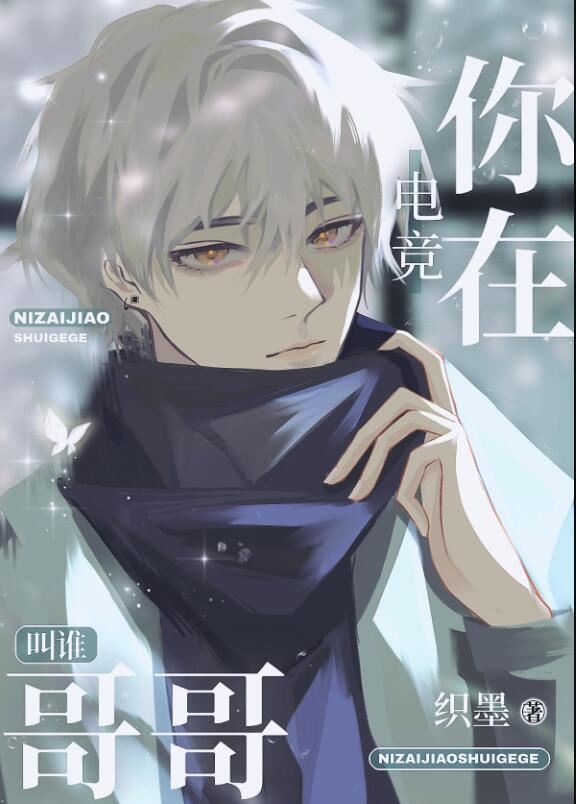
... Read More
So Jiang Shi towers dives the enemy AD at LEVEL 4, gets the kill, and then instinctively looks at Xie Xu like he's expecting approval or a reaction. And when Xie Xu says 'Good timing with the ult,' Jiang Shi literally beams and says 'Wait for me, I can kill them both when you get here.' Then the chat goes from 'I don't like such reckless AD' to silent awe after Xie Xu flashes in, tanks the tower until low health, and Jiang Shi cleans up for a DOUBLE KILL. The coordination is INSANE. This isn't just skill—it's trust. And the stakes? Well, TLG just lost the finals apparently, they've got a new ADC everyone's skeptical about, and the Weibo post was carefully calibrated to generate exactly the right amount of buzz. Yuan Yang checked the traffic that morning. This kid has seconds to prove himself on stream in front of literally everyone—fans, pros, critics—and he responds by doing something stupidly brave and then looking at his teammate like 'did I do good?' The tension between 'this is reckless' and 'this is genius' is the whole story right there.
... Read More
There's this recurring question hanging over the entire chapter, and it's not just about winning or losing. It's about WHO gets to be seen and WHO gets to prove themselves. Pink Tie tried out for TLG and didn't make it. Now he's on the other team, taunting Jiang Shi about it. His entire identity is built on proving that TLG made a mistake. And Jiang Shi? He's the replacement. The unknown quantity. The secret weapon that Yuan Yang is keeping hidden until the right moment. The tank item on the enemy ADC — that's such a symbolic detail. It represents the enemy team's refusal to take Jiang Shi seriously as a damage threat. They're building around the idea that he can't kill them. But Jiang Shi sees it, acknowledges it, and still finds a way to win. The tank item becomes a metaphor for underestimation itself. And then there's the black screen. Jiang Shi sitting there, dead, watching the game unfold without him. It's a powerful image — the most aggressive player on the team, rendered completely powerless. But it's also when he becomes most connected to his team, because he finally asks for help. The memory of Xie Xu's words acts as a kind of anchor. "You're not an outsider." In a story about teams and belonging and proving yourself, that line carries so much weight. Jiang Shi has spent his career being the lone wolf, the one who doesn't need anyone. But TLG is showing him that needing people isn't weakness. Even Jiang Lele's comedic moments have deeper meaning — his failed Nuka ults, his triple-kill stealing, his enthusiasm. He represents the joy of being part of something. While Jiang Shi plays for validation, Jiang Lele plays for fun. And somehow, those two energies complement each other perfectly. The whole chapter is really about the difference between being chosen and being trusted. TLG chose Jiang Shi. But they only truly TRUST him when he asks for help.
... Read More
There's something deeply symbolic about how this entire passage revolves around TOUCH and what touch means when you're too terrified to initiate it sober. The hands. Jiang Shi's obsession with Xie Xu's hands isn't just a quirky character detail—it's about the desire for connection that's so powerful it manifests as aesthetic fixation. When he says they look 'fake,' he's essentially saying they're too perfect to be real, which is code for 'I don't believe you'd ever look at me like this.' The hands are proxies for the emotional contact he craves but can't directly ask for. The restroom incident is the thematic core of the entire scene. Jiang Shi wanted to hold Xie Xu's hand but physically couldn't because his body was doing something else entirely. The metaphor writes itself: intimacy requires you to be present in your body, and sometimes the body has other priorities. But more importantly, it's about how vulnerability exposes us. The moment he let his guard down (quite literally in the restroom), he couldn't sustain the physical connection he wanted. The bedscape is equally loaded. Two quilts, one shared bed. Separate boundaries but shared space. The 'already warmed it for you' line is practically a marriage proposal dressed in sleepwear. And that dream where he kisses Xie Xu while imaginary fans mock him? That's the externalized fear of desire—wanting someone so much it feels dangerous, like everyone's watching and judging.
... Read More
'He pulled his hands out and said, "It's not very cold. Thank you, Yuan-ge."' I keep coming back to this moment because it's the most ordinary thing that happens in the entire chapter and somehow it's also the most grounding. The author has built a world that feels lived-in rather than constructed. The auxiliary building with its kitchen, living room, training spaces, and rest areas — it's not described in exhausting detail but you understand exactly what it is because of how characters move through it. The sensory specifics are what sell it. The wind making Jiang Shi's ears red. The ridiculous sweatshirt bulge. The conference room with its snacks and fruit. Someone perched on a table with their feet dangling. These are the kinds of observations that make you feel like you were actually there, not told about a place. Even the gaming references — thelol terms about feeding gold and EXP, Time's alt account, the Yuumi comparison — they're embedded in the environment like natural speech, not exposition. I also appreciate that the author doesn't over-explain the esports world. We get enough context to understand the stakes (trial training, promotion matches, supporting roles, team hierarchy) without a single info-dump paragraph. The world reveals itself through interaction rather than description. That takes real confidence as a writer.
... Read More
There's a symbol in this chapter that I think gets overlooked because it's so casually presented. The thermos. Xie Xu offers it to Jiang Shi. Jiang Shi refuses because drinking from the same cup feels too intimate given what he's been thinking about. But then—inevitably—he drinks from it anyway when Xie Xu isn't looking. This is such a perfect miniature of their entire relationship. Jiang Shi claims he doesn't want things he desperately wants. He says he's not interested in the memes, not thirsty for water, not looking at Xie Xu. But every action betrays his words. The thermos represents this gap between intention and behavior—the way desire operates beneath conscious control. Xie Xu notices. Of course he notices. But he doesn't call it out. He just smiles faintly and says nothing. This silence is its own kind of communication—it says I see you lying to yourself, and I find it endearing rather than problematic. The thermos becomes a test, and Jiang Shi fails it beautifully by doing exactly what he claimed he wouldn't. But there's another symbolic layer: the fan group itself operates as a distorted mirror of their relationship. Every audio file, every video, every GIF captures moments Jiang Shi thought were private or unnoticed. The group is essentially a archive of his unconscious desires made visible. When he sees the file names, he's confronting the externalized version of his internal chaos. The most poignant symbol though is the crayfish at the end. Xie Xu redirects the plate toward Jiang Shi like an offering. Crayfish require gloves to eat—they're messy, hands-on, slightly ridiculous. But Xie Xu serves them anyway. It's a gesture of care disguised as practicality. "Eat your shrimp" means I'm feeding you because you're upset, but also I'm containing you because you're about to do something stupid, and also I know exactly what kind of person you are and I'm still here. The symbolism throughout this chapter isn't heavy-handed. It lives in small objects and gestures—the thermos, the gloves, the crayfish—and each one carries the weight of everything these characters can't say out loud.
... Read More
Okay the dialogue in this chapter is genuinely hilarious and I need to talk about it because every character has such a distinct voice it's actually impressive. Jiang Shi's lines are his whole personality in miniature. When he says 'Well, that's true' after An's threat, it's not defensive or angry. It's just... agreement. Like he's agreeing with something completely obvious and then follows up with 'Even if I'm sick, beating you guys will be easy.' The casualness is the weapon. He's not trying hard at all and that's what makes it devastating. But the real standout is Jiang Lele. This guy is pure chaos energy and I love him for it. His imitation of Jiang Shi's tone - 'He looks down on me, and now he's dead' - delivered with a grin, is exactly the kind of thing that would make our team laugh in real life. And then his retort when Jiang Shi tells him to work as a parrot at the zoo? Silence. Just silence. Because he knows he deserved it. Xie Xu's dialogue is basically three words per chapter and each one carries enormous weight. 'Mind your expression.' 'Take her.' 'We won't lose.' That's it. That's all he gives us and each line does completely different emotional work. The first is protective, the second is permission and trust, the third is certainty. Three words, three different flavors of leadership. Yuan Yang's voice is the straight man here - he's the one freaking out about appearances and proper conduct while everyone else is having fun. His '...'' after Jiang Shi's response is basically his entire character arc in one punctuation mark. And the chat comments at the end? 'Is TLG's new ADC stuck in some low-rank matchm' - the截断 is perfect. It captures exactly how bewildered casual viewers would be. The author understands that dialogue isn't just what characters say, it's how the world reacts to them too.
... Read More
Okay so let me just say — the entire arc of these chapters runs on this tiny, seemingly trivial beat of Jiang Shi wanting to change his stream title and Xie Xu basically letting him do whatever he wants. On the surface it's nothing, right? Just some chat banter. But look at what's actually happening. Jiang Shi deletes two characters from "Time's Captain" and accidentally leaves it as "Time's" — and instead of correcting it, Xie Xu says change it in a month. That is such a deliberate, calculated softness from him. He's playing along. And Jiang Shi? He's already plotting to change it again to "Time's Husband" next month. The author doesn't need a big plot twist here because the tension IS the plot. Every little interaction between these two is a move on a chessboard neither of them are openly acknowledging. What I love most is how the stream chat functions as a Greek chorus — they see everything, they comment on everything, and they're the ones calling out the PDA while simultaneously being complicit in it. The structure here is deceptively simple: a minor conflict (the pervert in chat), a flashback that gives Jiang Shi depth, a quiet moment of connection with Xie Xu, and then this hilarious title mishap that actually reveals more about their relationship than any dramatic confession ever could. The plot doesn't need explosions when it has moments like Xie Xu sending 100 starships just to sit in Jiang Shi's stream and watch him."What should I do?" Jiang Shi asks, knowing full well the answer. And Xie Xu? He just says "Then change it in a month." Like he's already thinking ahead. Like he's willing to wait. The chapter ends with him telling Jiang Shi to be good and go to sleep — and Jiang Shi grumbling but not ending the stream. He's not done having fun yet. And honestly? Neither am I.
... Read More
The dialogue in this passage is so distinctly Jiang Shi that I can hear his voice when I read it. The way he goes from performative streamer mode—"Looking forward to our next match~" with all those little tildes and fake cheerfulness—to the actual whisper conversation with Xie Xu, it's like flipping a switch. You can literally see him drop the act the second the two of them are alone. His internal monologue is peak him too. "That was justified. I'm willing to pay." He's defending paying 10,000 yuan fines for other people while simultaneously trying to figure out how to scam the platform out of a refund. This man is unhinged and I love him. Xie Xu's dialogue is sparse but devastating. Three sentences in this whole scene and each one hits different: "It wasn't Yang Yuan, I sent it myself." "Didn't you think my ID was too low on the list?" "What if I say I was willing to spend it too?" Every line does double duty—it's functional plot advancement AND character revelation. The man speaks in subtext and I am OBSESSED. The chat comments are also legitimately funny. "God Xu, stop fishing" and "Wasn't the last starship shower during a proposal?" These readers have spent too much time online and I respect it.

Leave a comment

You must be logged in to leave comments. or
