Who Are You Calling Gege? - Reviews

Who Are You Calling Gege?
+Add to Custom List
Sort
Add review
... Read More
I need to talk about Jiang Shi's livestream chat because it is genuinely one of the funniest things I've read in any novel this year. The way the audience moves from 'hahaha he's so shy' to full-on unsolicited relationship coaching is so natural it hurts. You've got comments like 'Admin don't fall for his tricks' and 'I think I know Xu's alternate account' and the auntie who's just casually suggesting navel orange positions like she's reading from a manual. These people have distinct voices too—the chaotic neutral ones, the nosy gossips, the self-proclaimed experts who clearly have zero qualifications. And Jiang Shi's response to all of it? He starts sweet, tries the bootlick approach, gets called a bootlicker, and then snaps and mutes everyone. That arc within a single scene is perfect character work through dialogue alone. Then you contrast that with Xie Xu's entire dialogue in the car, which amounts to maybe three sentences and a grunt. 'What's up?' 'No need, this will do.' 'I was worried Time might be bored.' Flat, short, controlled. The difference in how these two characters communicate tells you everything about their personalities without the narrator having to explain it. Jiang Lele is the bridge between them—loud, curious, slightly dim but emotionally perceptive in the right moments. His line 'Captain, why do you even listen to livestreams when you sleep' is the kind of offhand observation that cuts straight to the truth. The dialogue here never feels written. It feels overheard.
... Read More
I need to talk about Xie Xu because this guy is a whole mood and I am not okay with how efficient he is at showing affection without actually using words. Let me just start with the thing that got me: 'I'm waiting for you.' Four words. Four. Words. Said in the most casual tone possible, wrapped up in this ridiculous excuse about it being dark and you might get lost in the dorms. We both know the hallway has motion-sensor lights, Jiang Shi even notices this. But Xie Xu says it anyway, and Jiang Shi speeds up his gameplay because of it. That right there is the entire romance of this book condensed into one moment. And then there's the milk. He doesn't announce it. He doesn't make a thing out of it. He just punctures a straw and slides it across the desk while Jiang Shi is mid-game. This is a man whose love language is basically 'I noticed you were uncomfortable so I fixed it without making you acknowledge it.' But here's where it gets complicated — An. The three-year veteran who clearly has his own feelings about being overlooked, about the endorsement going to someone else. And Xie Xu's response to him is cold, surgical: 'TLG isn't a charity, and I'm not a philanthropist.' Oof. You can feel the weight of every unspoken thing between those two. Three years of history compressed into one sentence that basically says 'you're leaving, act like it.' Jiang Shi's protectiveness is what really got me though. He's been here what, five minutes? And the second he hears An talking trash about Xie Xu, he's already positioned between them. 'You're disturbing my captain's rest.' My captain. Not our captain. His. He said it so casually too, like it just slipped out. I'm still thinking about that.
... Read More
Let me just sit with this image for a moment. Xie Xu's fingers—'clean, smooth, and long, unlike the hands of someone who plays games extensively. They had a scholarly air about them.' Jiang Shi notices this. He notices AND he thinks about it AND he has to actively shake his head to stop himself from going down a rabbit hole. This is a man who has been thinking about Xie Xu's hands for longer than two seconds and the narration catches him in the act of it. That's character revelation through distraction. But the real relationship moment isn't the finger thing—it's what happens AFTER. Xie Xu leaves the conference room without a word to Jiang Shi. Doesn't say 'good luck,' doesn't ask how he's settling in, doesn't acknowledge the guy whose fan he supposedly is. Instead he corners Yuan Yang and goes straight to: 'Did you not only give him a substitute position but also cut his pay?' He doesn't trust the situation. He doesn't trust the organization. He trusts Jiang Shi enough to be furious on his behalf. And then—the absolute worst thing Jiang Shi could do—when Yuan Yang says everyone's back sleeping, Jiang Shi says 'I wanted to return Xu's pen.' He wanted to return a pen. A PEN. After Xie Xu just intercepted his contract reading and privately threatened the management team, his excuse to seek him out is a fountain pen? That's either devastating romantic comedy timing or devastating character tragedy. I haven't decided which. What I have decided is that this relationship is built on three things: Xie Xu's quiet protectiveness, Jiang Shi's deliberate naivety, and a fan whose devotion is simultaneously his greatest vulnerability and his most genuine asset. The author keeps them orbiting each other without letting them collide and I am here for the orbital mechanics.
... Read More
"White hat, blue scarf, clean pale yellow sweatshirt, white casual pants, and sneakers. The overall look was gentle with a touch of cuteness." — read this against: "No one would guess that his suitcase was filled with skull designs and ripped jeans." THIS. This is everything. The author gives us one of the most cinematically precise shots I've read in this genre — Jiang Shi standing at that shiny security door, checking his reflection, curating this soft harmless exterior — and then immediately undercuts it with the skull-and-ripped-jeans truth in his suitcase. The worldbuilding here isn't about describing esports arenas or game mechanics, it's about the space BETWEEN appearances. The TLG base itself feels lived-in: the snail noodle smell lingering in the living room, Yuan Yang forcibly dragging Jiang Lele out at an ungodly hour, Pikachu pajamas, trash bags, half-asleep players slouched on a couch. This isn't a polished corporate office, it's a home where five people who compete together also live together, and the boundary between personal and professional has completely dissolved. The security guard recognizing Jiang Shi by his hair under the hat is such a small detail but it makes the whole world feel real — these people have been here before, they've been warned, there's history in the walls. And that red light moment in the car where the driver notices Jiang Shi defending Xie Xu, and Jiang Shi tilts his head to show the limited edition hat with pride — you can feel the warmth of that casual conversation, the ordinary world moving around this extraordinary emotional situation. The setting doesn't compete with the story, it breathes with it. Though I will say the transition from the car ride to the apartment felt slightly abrupt, like we missed the journey and just appeared at the destination. Still, that door reflection alone is worth the read.
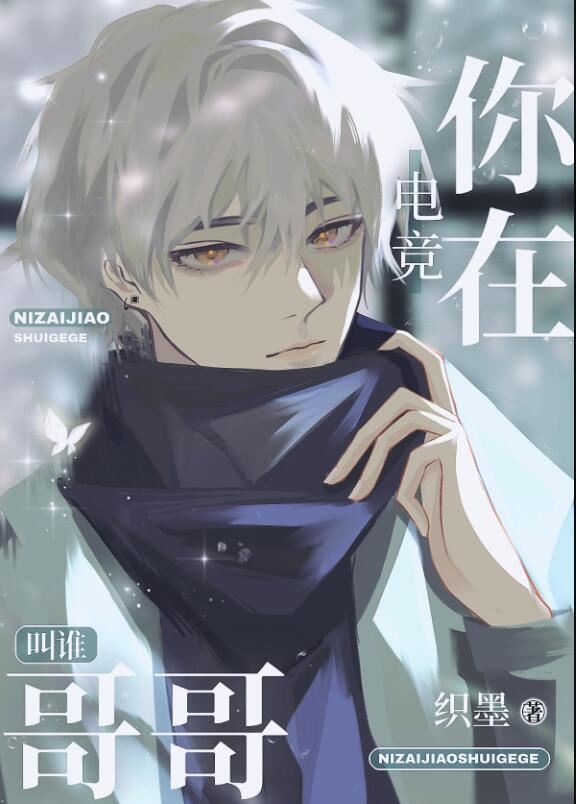
... Read More
This batch moves at a speed that's honestly borderline reckless and I'm here for it. We open with Xie Xu realizing Time blocked him—small, intimate moment, almost quiet. Then we cut to Jiang Shi and Bamboo queueing, and suddenly we're in the middle of a full competitive match with team chat Drama, minion stealing, jungle invasions, the whole nine yards. The match itself takes up roughly half the text and it doesn't feel slow at all because every exchange escalates. The jungler gets mad, bamboo blames himself, Jiang Shi stays calm, then STEALS the red buff. That's the turning point where the pacing shifts from 'this could go either way' to 'oh he's actually carrying this solo.' Then right after the victory notification, BAM—tryout day. The transition from the companion account gaming to the professional tryout venue is so abrupt it almost gives you whiplash, which I think is exactly the point. Jiang Shi's world is expanding faster than anyone's expectations can keep up with. The Jiang Lele flashback scene is a brilliant structural choice too. Instead of just telling us Jiang Shi is skilled, we get a first-hand account of someone who got absolutely destroyed by him and has lasting PTSD. That's efficient storytelling—two paragraphs that do the work of a whole chapter. And the ending... the chapter stops mid-sentence with Yu Hui about to identify Jiang Shi. Classic cliffhanger, but it works because we've been earning these reveals throughout.
... Read More
Here's the thing about this chapter — on paper, the conflict is absolutely microscopic. Jiang Shi gets mildly jealous, sits in the wrong end of a van, gets offered water by another guy, and then his captain gives him his own thermos. That's it. That's the drama. But somehow the author made me grip my phone like something catastrophic was happening. The tension builds in this beautifully mundane way. It starts with Jiang Shi's irritation — Xie Xu was supposed to meet him, but instead he's talking to someone else. Not just anyone, but Chengcheng, the second-team AD who was literally brought in as Jiang Shi's replacement contingency. That detail alone layers the insecurity so perfectly. Then Jiang Shi walks over, his tone is visibly stiff ('Captain, I'm here to get my gear'), and you can feel him trying to maintain this brittle composure. The moment he turns around and says 'I don't know the way' — that's the crack in the armor. He's not actually lost. He wants to walk with Xie Xu. What made me genuinely anxious was the car seating arrangement. Three seats in the back, Chengcheng gets on, and now Jiang Shi is awkwardly without a spot beside his captain. He tries reclining the seat, can't find the lever, realizes he's been adjusting LELE's seat the whole time, and then EVERYONE in the car is looking at him. The embarrassment stakes are so real I wanted to text the author and ask them to stop torturing this poor boy. And then Xie Xu lifts the hat off his face and all that tension just... dissolves into honey water and a shared seat. The emotional release was incredible.
... Read More
"Xie Xu's seat was empty." Four words. That's all it takes and suddenly I'm sitting here like oh my god. This whole section has been chaos—An's stream, the fan wars, Jiang Shi's fans trending—but the author just casually drops this one image and the entire emotional temperature of the scene changes. Jiang Shi had been so flustered after the 'I wouldn't kiss you during a livestream' disaster that he actively avoided Xie Xu all day. Turned down duo queue. Played games like a man possessed. And then he looks over and Xie Xu's GONE. No big emotional confrontation, no touching on what happened earlier, just... absence. It made my chest tighten in the best way. Then there's the team dynamic too—which honestly hit harder than I expected. Jiang Lele calling Jiang Shi 'mature' and saying 'you've really matured' with that T Bao nickname—it's these small moments of found family that make the whole competitive team setting feel warm instead of just strategic. The romantic tension is still there simmering under everything, sure, but it's the camaraderie that's carrying this chapter emotionally. Jiang Shi protecting the team's image by stopping Jiang Lele from arguing with An, then later choosing to handle things himself on his own terms—that's devotion disguised as discipline.
... Read More
Can we just talk about the heart emoji for a second because I think it might be the most important symbol in this entire novel? Jiang Shi posts this whole carefully worded Weibo statement — and his fans immediately call him out on it. One comment perfectly captures the vibe: [The only time he put effort into a post was when he shared a handsome photo of Xu. (And by effort, I mean those flirty little emojis he added)]. Flirty little emojis. His fans KNOW. They've been watching him. And that heart emoji at the end of the official statement — the one that makes it look less corporate and more like Time actually wrote it — was something he added himself. Xie Xu confirms this almost offhandedly to Jiang Lele during the stream, like it's no big deal, like he didn't notice how significant it is that Jiang Shi put a piece of himself into something that was supposed to be TLG's PR move. Meanwhile, Jiang Shi's emotional state throughout this is a complete mess. He gets harassed by Little Bear TV management, they threaten his contract, he vents by sending a middle finger emoji and then immediately checks back to add [Time: Stupid.] — this man is all exterior toughness with zero actual emotional regulation. He cries in his dream about fighting a person in a bear costume. BEAR COSTUME. That's not even subtle. And then Xie Xu serves him rib soup and asks if he needs help, and Jiang Shi mumbles "No need, it's just a small thing" while internally spiraling about how amazing his captain is. The gap between what he says and what he feels is honestly painful. He can't even let someone take care of him because apparently accepting kindness from Xie Xu would require him to confront the fact that he's completely smitten. The fan comments are doing the emotional labor for him though: [Did our little idiot lose his mind?][I still suspect TLG used some dirty tricks]. They're protective and confused and honestly? They have every right to be confused because Jiang Shi has never backed down from a fight and now he's just... folding? Posting statements? Being cooperative? Something is clearly different and even his enemies can see it.
... Read More
I'm not gonna lie, this scene made me actually emotional. Not the gank — though that was incredible — but the moment RIGHT BEFORE the gank, when Jiang Shi is on the black screen and his mind is racing. He's thinking about whether TLG will regret choosing him. Whether he'll be trampled by the enemy. Whether he's good enough. And then — and this is the key — he remembers Xie Xu's words: "You're not an outsider." Those three words. That's it. That's what steadies him. Not a pep talk, not a strategy adjustment, just that one memory of being accepted. His tense nerves ease. He looks at the black screen and says "The ADC has no Flash." Calm. Measured. Ready. I think what hit me hardest is how isolated Jiang Shi has been. The text emphasizes it again and again — he always declines help, he always charges alone, they've asked before and he's always said no. And the team has just... accepted it. They've been watching him carry and assuming he's fine with it. But the narration tells us: "they overlooked how frustrating it must be for someone with Jiang Shi's aggressive style to be constantly suppressed." That sentence. That's the author just laying it bare. Of COURSE it's frustrating. Of COURSE he's tired of it. And the fact that he finally asks — that he lets himself be vulnerable in front of these people — that's a huge moment for him. And the way the team responds? No hesitation. No "why now?" Just action. Jiang Lele: "I've had enough." Yu Hui: "On my way." Zhao Jiu: "Need me down there?" This isn't just a team that wins games together. This is a team that SHOWS UP when it matters. And Jiang Shi getting to experience that for the first time? Yeah, I felt that.
... Read More
This sequence is a masterclass in escalating absurdity within a confined space. You've got four people in a car for what seems like a short trip, and the author manages to hit an insane amount of beats without it feeling rushed. It starts small—Jiang Lele being hungry, offering bread around, the mundane morning routine. Then it pivots when Jiang Lele mentions Little White Hair and we get cut away to Jiang Shi's livestream. The scene transition is seamless; you're still tracking the car dynamics but suddenly you're dropped into Jiang Shi's private humiliation. And then—back to the car, Xie Xu watching the stream, the milk reveal, Jiang Lele's internal monologue spiraling into conspiracy theories about whether Xie Xu is mad at Jiang Shi. Each beat builds on the last but also creates its own little pressure cooker. The pacing works because every character is operating on a completely different wavelength simultaneously. Jiang Lele is just trying to eat his bread. Xie Xu is watching a stream he pretends not to care about. Jiang Shi is fighting for his digital life against an internet mob. Zhao Jiu is asleep. Four parallel storylines in one scene and none of them interfere with each other directly, but they all feed into the same tension. The chapter ends on that perfect little note of Jiang Lele muttering about why Xie Xu even listens to livestreams when he's supposedly sleeping, and Xie Xu just putting his earbud back in. No explanation. Just silence. That's the author's signature move—let the reader sit with the unanswered question instead of spoonfeeding a resolution.
... Read More
The training room scene is such a vivid throwback to my own chaotic gaming teams. You've got Yuan Yang running around doing laps trying to break up fights, Zhao Jiu making jokes about new heroes, Yu Hui reluctantly playing along, and these two idiots literally racing around the room like kindergarteners. The author paints this entire ecosystem in just a few paragraphs—the computer screens, the laughter being suppressed, the physical comedy of Yuan Yang panting after one lap. It feels so lived-in. You can picture every seat, every face. And the contrast between that chaotic laughter and the serious lecture that follows? Perfect tonal balance.
... Read More
Let me be clear: this chapter makes social death feel like a legitimate life-or-death conflict, and I am here for it. Jiang Shi's stakes aren't traditional. He's not fighting for his life or his team's championship. He's fighting for something arguably worse—his dignity. The fan group contains evidence of every inappropriate thought he's ever had about Xie Xu, recorded and archived for posterity. If this information leaks, if it reaches the public, if it becomes part of the team's lore, Jiang Shi will never recover. The author raises the stakes methodically. First, the relatively innocent kissing GIF disappears from public view. Jiang Shi thinks he's safe. Then he discovers it exists in a private group where it's being shared and archived. The stakes just multiplied. Then the file names—audio recordings of his own voice saying things he'd never say sober, videos of him attempting seduction. Each new discovery escalates the threat. What makes this work is that Jiang Shi takes it seriously. This isn't comic relief for the reader; it's genuine horror for the character. His reaction—threatening murder, calculating corpse fingerprint viability, escalating to physical violence—shows us that social death terrifies him more than actual death would. Xie Xu's intervention introduces a competing stake. Jiang Shi wants to destroy the evidence; Xie Xu wants to protect Jiang Shi from himself. Their conflict isn't about right or wrong—it's about who controls the narrative. Jiang Shi believes the group threatens his reputation. Xie Xu believes Jiang Shi threatens his own composure. The humor comes from the contrast between the gravity of the situation and the absurdity of the response. "Fun fact! Fingerprints can be scanned easily because our palm produces oil." This is a man literally explaining forensic pathology while plotting homicide over embarrassing voice messages. The stakes feel real because Jiang Shi treats them as real, even as the author winks at us through the comedy. By chapter's end, neither conflict is resolved. Jiang Shi hasn't gotten the group invite. Jiang Lele hasn't been murdered. But the tension has shifted from external (the group) to interpersonal (Xie Xu's response). The stakes have evolved, not disappeared. That's good conflict design.

Leave a comment

You must be logged in to leave comments. or
