Who Are You Calling Gege? - Reviews

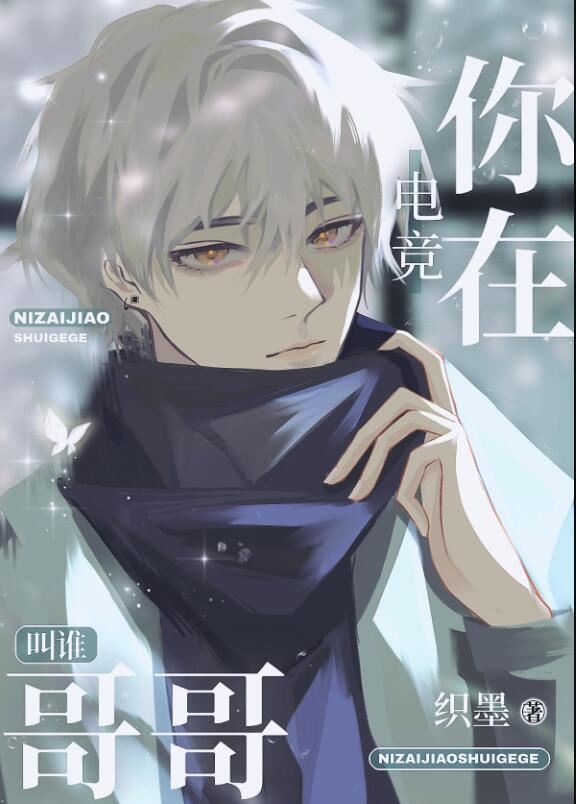
Who Are You Calling Gege?
+Add to Custom List
Sort
Add review
... Read More
There's this scene where Jiang Shi is sitting on his phone, dealing with fans who are literally threatening to storm his team's base, and he types back: "Believe me, I'll knock you all out with one punch." And then right after, he winces because his waist and knees hurt from bumping into things earlier. This contrast—this fierce digital bravado masking actual physical vulnerability—shattered me a little. Think about it. This is a kid who hasn't had anyone in his corner his entire life. His father wouldn't care if he died. The streaming company exploited him. And yet here he is, standing in a training room full of people who are slowly becoming his found family, letting them see his bruises, accepting medicine from the guy who's最难 to read, joking with teammates who tease him relentlessly. The emotional arc from "I quit, I'm done" to "I'm back, family" isn't just about his career—it's about him choosing to keep showing up despite everything. The moment that absolutely wrecked me though? When Jiang Shi sees the top fan comment on his Weibo is just "Get lost. (Slap.jpg)" and the comments below are people saying they're going to his house to beat him up. He feels guilty. GUILTY. After everything he's been through, after being exploited and betrayed, his immediate reaction is worry about his fans' reputation and his own. That's not weakness—that's the kind of kindness that comes from someone who's always been the one forgiving others and never expecting forgiveness themselves.
... Read More
I need to talk about this line because it lives in my head rent-free now: 'Besides, who said that only wife fans are allowed to exist? As a husband fan, that felt unfair.' UNFAIR. He said it was UNFAIR. While cracking open a cola. While calmly queueing into a match after getting absolutely ratioed in the chat. The casual audacity of this man. This is not a nervous homebody hiding behind a hat—this is a predator who knows exactly what buttons to push and has been doing it since chapter one. And the contrast with how he speaks to the TLG members versus how he speaks to his own chat? Chef's kiss. To Jiang Lele: 'Sorry, I only like Xu.' Polite, firm, almost boring. To his viewers: 'Don't doubt your Father.' Who talks like that? Nobody. That's not a streamer—that's a menace with a microphone. But here's what's genuinely impressive about the dialogue writing: every character sounds different. Yuan Yang has that tired-manager cadence, the sighs and the explanatory pauses. Xie Xu speaks in fragments—'Just came to see.' 'I have one.' 'So?'—short, clipped, deliberate. He never wastes words. And Jiang Shi? His dialogue shifts depending on the room. With TLG he's proper and restrained. Alone with his camera he becomes unhinged. The narrative voice itself does this too—the third-person narration occasionally slips into Jiang Shi's internal commentary, and you can tell the moment it happens because the prose gets sharper, meaner, funnier. It's not just 'he thought'—it's the narration itself adopting his voice. That's sloppy if you're not careful, but the author pulls it off because Jiang Shi's inner voice is so consistently characterized. I keep expecting him to just start narrating the whole book like this and honestly? I wouldn't be mad about it.
... Read More
There's a running motif in this chapter that I couldn't stop thinking about—the disguise of the ordinary. Everything looks like one thing but is actually something else. The orange that looks sweet but is sour. The Sprite that looks like wine. The wine that looks like Sprite. Jiang Shi's casual attitude that hides genuine care. Drunk Jiang Lele's accusations that reveal uncomfortable truths about teamwork and trust. Even the carbonated drinks accelerating alcohol absorption is a metaphor for how things that seem harmless can hit you harder than expected. The sour orange moment is particularly rich—Jiang Shi pretends something is fine when it's not, enjoys watching Jiang Lele suffer, but then suffers the same fate himself and needs Xie Xu to rescue him. It's cyclical. And Xie Xu's role throughout is always the quiet enabler and protector. He hands Jiang Shi the Sprite. He drinks the swapped drinks without complaining. He stops Jiang Shi from drinking too much. He peels the shrimp. The theme here feels like it's about the layers people wear—the performance of casual indifference hiding deeper feelings, the way rivalry and care exist simultaneously in close relationships, and how the people who understand you best are often the ones who don't announce their devotion out loud. When drunk Jiang Lele mumbles about being ignored and called a favorite, he's voicing the insecurity underneath all the teasing and competition. Nobody has an answer for him because the answer is complicated. Isn't it always?
... Read More
Bamboo literally calls him out on this and I SCREAMED. One minute Jiang Shi is over there moshoning about this boy he broke up with three hundred plus days ago, the NEXT minute some guy with nice hands and a mole under his eye walks into frame and suddenly—oops, new crush? The way Bamboo processes this is pure best friend energy. First the shock ('You can't be serious?'), then the betrayal ('You JUST turned down TLG's offer!'), then the existential crisis about whether Jiang Shi can genuinely fall for someone based on a 30KB photo of a hand. The 'Woof woof?' response from Jiang Shi is the most casually devastating comedic beat I've read in a while. He doesn't even defend himself. He just accepts the dog meme and moves on like a man possessed. But underneath the comedy there's this really tender thread about how fast grief can dissolve when something—or someone—catches your attention. Is Jiang Shi genuinely over his ex, or is he just the type of person who falls quickly and deeply and then moves on equally fast? The text leaves it ambiguous and I respect that. What I don't respect is the universe pairing him with someone whose first interaction involves whispered dialogue across a tight shelf gap. Also the emotional whiplash of reading about Xie Xu's team getting flamed after losing the finals, only to have their captain's entire emotional focus shift to one customer who asked about cutting off a tag—that contrast between professional humiliation and personal intrigue is chef's kiss.
... Read More
I need to talk about Xie Xu's dialogue because THIS man is a minimalist and I am obsessed with it. "Hello." — two words, responds to Bamboo with the absolute minimum courtesy. Establishes immediately that he's not a chatty person. "Wait. Go back to the previous game, let me take a look at the post-game stats." — efficient, direct, no filler. He's the type who doesn't waste syllables. "I'm curious too." — chuckling, three words. He's amused but won't elaborate. Classic Xie Xu. And then the most important line in the entire passage comes from JIANG SHI, not Xie Xu: "I thought you knew." THREE WORDS. That's it. That's the whole emotional payload. Jiang Shi has been sitting on this feeling and he assumed Xie Xu already understood it. The fact that he says it as a mumbled complaint rather than a confession is so perfectly in character — he's not ready to be vulnerable out loud, even though his actions (rushing towers, wanting to play with Xie Xu) have been screaming it the whole time. Xie Xu's response is equally perfect because it's ALSO indirect. "I'll make it up to you tonight" — he doesn't say "I know how you feel" or "I feel the same way." He makes a promise about future time together, which in their universe IS the confession. These two communicate entirely in subtext and it's making me both furious and enchanted. Bamboo's dialogue is the perfect foil — loud, teasing, saying everything out loud what the other two are too scared to admit. "Rushing to finish quickly so you can do something?" He's the Greek chorus of this scene, pointing out the obvious. And the chat voices! Each commenter has a slightly different register — the defensive fan, the crude theorist, the sarcastic observer. The author manages to make a scrolling wall of text feel like a real chorus of personalities. When Jiang Shi finally snaps "Can you all be quiet?" and then adds "We haven't kissed, and we haven't held hands. Satisfied?" — that pivot from angry to defeated to weirdly honest is peak dialogue writing. He didn't mean to say that out loud. He meant to just mute them. But the exhaustion got to him and the truth slipped out. "Nothing's even started yet!" — the narrator's internal aside there is everything. Jiang Shi is out here living his most intimate moment and his brain is still defending himself like he's on trial.
... Read More
I don't usually comment on pacing this early but the author has a really disciplined sense of when to speed up and when to slow down. The opening paragraph establishes mood, setting, and the central sporting event in one breath. Then we cut to character interaction—Jiang Shi and Bamboo's banter about walking speed and merchandise—which gives us personality before plot. The line-cutting scene is the structural pivot point: it starts as a minor inconvenience, escalates through dialogue ('Wanna fight?'), peaks when the middle-aged man backs down, and resolves with that delicious Bamboo-Jiang Shi exchange about going to the police station. But here's what I appreciate most: the author doesn't pause the forward momentum after the confrontation. They keep moving—toward the cashier, toward the girl, toward the Xie Xu revelation—all while dropping small character beats. The pacing never feels rushed despite the density because each scene has a clear emotional purpose before transitioning. The chapter also ends on a note that makes me want to immediately read more: 'While Bamboo was still thinking about hiring more moderators to ban the troublemakers, Jiang Shi went to meet one of them.' This is a cliffhanger disguised as a throwaway line. It tells us Jiang Shi has a history of confronting his harassers in person, that he's dangerous in ways Bamboo barely comprehends, and that this behavior pattern will matter later. That's structural foreshadowing at its most efficient.
... Read More
Okay so the whole setup here is genuinely clever. Jiang Shi blocks Xie Xu right after being added, and instead of it being some cheap drama move, it actually makes total sense when you hear his reasoning. He says it himself—'I can't break my well-behaved persona even a little, and I don't want to develop a father-son relationship with Xu.' That line about not wanting a father-son dynamic is both hilarious and deeply strategic. The original online identity [Your Father Jiang] would have torpedoed any chance of flirting, and he knows it. So he deliberately creates distance to maintain control of the narrative. Meanwhile, Xie Xu is over there casually adding him through the backend and gets hit with a red exclamation mark. The irony is delicious—he's the one who seems to want this more, and he's the one getting blocked. Then we cut to the tryout scene where five candidates show up and Jiang Shi is the only companion player, wearing a pink sweatshirt among guys in suits. That visual contrast tells you everything about where he stands in this world. He's an outsider by circumstance but completely confident about it. The plot threads are weaving together nicely—the recruitment subplot, the hidden identity tension, the competitive arc all feeding into each other.
... Read More
This is pacing mastery, honestly. Look at the structure: it opens mid-crisis with Jiang Shi's fans already disgruntled, immediately establishes the Weibo follower explosion (ten to a hundred thousand in less than a day—what a stat drop), then pivots to the comedic relief of the bunny ears livestream rumor. You think you're getting a fluffy interlude? Nope—Jiang Lele can't keep his mouth shut and now Jiang Shi is internally screaming. Then Xie Xu leaves, the seat is empty, there's a beat of melancholy, and immediately we cut to the three teammates whispering about An. The chapter never, ever lets up. It moves from external drama → internal awkwardness → team concern → An's stream → fan warfare, and each transition is triggered by a character action, not an authorial time jump. The biggest win though is the ending. It builds to this crescendo where An is basically begging to be fought, the fans are mobilizing, and then it cuts at 'When Jiang Shi entere'—and just stops. No resolution, no climax, just the moment of impact about to happen. That's a cliffhanger that works because every beat before it earned the payoff. If the author had given us even ten more paragraphs of setup, the punch would land weaker. Instead we're left hanging like damn it I need the next chapter right now.
... Read More
I need to talk about this one moment because it wrecked me in the best way. Jiang Shi is sitting there, fists clenched, watching something that clearly pisses him off. He's about to explode. And then Xie Xu calls. Just a few words, just asking if he'll come back early—and suddenly this angry, tense person is completely melted. His temper is "smoothed out" by a phone call. Smoothed out. Like butter on warm bread. He clenches his fist in the air. A few seconds pass. And he says okay. That's it. That's the entire romantic tension of this scene and it's devastating because it's so quiet. No grand declaration, no dramatic confession. Just one person who can completely disarm another with a casual voice message. And Jiang Shi, who is apparently untouchable by everything else, just... yields. The narrator even notes it explicitly: "when Xie Xu wasn't around, this brat didn't bother pretending at all." So Jiang Shi performs decency for streams, for teammates, for the team image—but he doesn't perform it for Xie Xu. He just naturally becomes softer. That difference matters. That's the whole point. And then later, when Yuan Yang is orchestrating this whole livestream strategy, subtly steering conversations back to Xie Xu without revealing anything? I felt that tension. The careful choreography of almost-confessions and manufactured proximity. Yuan Yang is basically playing matchmaker with spreadsheets at this point and I respect it. Also the Jiang Lele shipping comments hurt me emotionally. The fans are out here writing fanfiction about two guys who are actively bickering like an old married couple and Jiang Shi himself is destroying their fantasies in chat. "Are you taking a long soak in the fountain?" That's not anti-ship energy, that's just Jiang Shi being Jiang Shi, and somehow it's even funnier because of it.
... Read More
There's this one image that keeps looping in my head and I can't get it out. Jiang Shi eating wontons, Xie Xu leaning close asking questions, Jiang Shi taking three bites to finish one small wonton because he's distracted. Then Yuan Yang tells them to stop and Jiang Shi immediately downs the rest of his bowl and drinks the soup dry like 'I'm done, I'm free.' The cinematic quality of that sequence is unreal. You can SEE it. The breakfast table, the scale in the lobby, the casual physical comedy of someone trying to eat peacefully while being emotionally distracted by another person sitting three inches away. And then later—the oversized team jacket swallowing Jiang Shi's frame, his soft gray hair peeking out from under the collar, looking like 'an adorable kid' while simultaneously being a competitive ADC who tower dives at level 4. The contrast between how he looks and what he can do is honestly chef's kiss. The whole scene feels like a slice-of-life anime episode that somehow contains multitudes.
... Read More
I keep thinking about this one moment and it won't leave me alone. Jiang Shi says "The ADC has no Flash" and then asks "Can you help me gank?" Like... this is the FIRST TIME he's ever opened his mic to ask for help from another lane. The text literally says it — he's always been a solo warrior, always declined when they offered, always charged ahead alone. And what's crazy is how the team reacts. Everyone falls SILENT. Not because they're surprised he asked, but because they realize: they've been WRONG about him this whole time. They assumed he could handle everything, so they never pushed back hard enough. They let him carry alone and called it trust. But it was actually neglect disguised as respect. Jiang Lele is the comic relief guy, right? Always making jokes, always hype. But even HE gets it. He rolls up his sleeves and says "I've had enough of that idiot." That's not just team spirit — that's personal investment. This isn't just about winning a scrim anymore. And Xie Xu... he's been the one guarding Jiang Shi's side the whole time. When Jiang Shi asks for help, Xie Xu doesn't say anything dramatic. He just... appears. He's already there. That's the kind of quiet loyalty that matters most. The dynamic between Jiang Shi and Pink Tie is also fascinating. Pink Tie tried out for TLG and didn't make it. He's been waiting for a moment like this to prove he's better. But the irony is — he's not playing against a rookie. He's playing against someone who's been holding back this entire time. The team's reaction to Jiang Shi's vulnerability is what really sold me. They don't mock him. They don't treat him differently. They just... come. Four people from four different directions, converging on one target, because their teammate asked.
... Read More
the stakes in this section are layered in the best way. on the surface, it's a scrim match — supposedly low pressure, just preparation. but every character knows this is Jiang Shi's first official team practice and the author never lets us forget that. Jiang Shi's internal conflict is devastatingly simple: he wants to prove himself to his new team, but every time he tries to play aggressively, he overextends and dies. first blood is beautiful, sure, but then he takes unnecessary tower shots, gets caught without Flash, and receives a taunting emote. this is a guy who dominates in high-ranked solo queue against professionals but crumbles slightly under actual team scrutiny. the gap between his confidence and his actual performance in this setting is where the tension lives. then there's Xie Xu's silent conflict — he clearly suspects Jiang Shi IS Time, maybe even knows for certain, and he hasn't said anything. every friendly gesture, every ambiguous comment about "cuteness," is both genuine affection and a test. what happens when the revelation finally comes? that's the real stake here. and Jiang Lele! Don't forget Jiang Lele. His grievance isn't just comedic relief — it's real friction in the team dynamics. he feels excluded, overlooked, replaced by the new guy who gets to duo-queue with the captain all day. the scene where he says "And am I not considered your teammate?" with that face full of grievance hit harder than I expected from a supporting character moment. the MR match adds another layer — they're playing against a team with a new streamer ADC, and the author deliberately mirrors Jiang Shi's situation. two new players entering pro environments simultaneously. the parallel isn't accidental. by the time Jiang Shi gets ganked and taunted, I genuinely felt for him. this isn't just about winning a game, it's about whether he belongs here at all.

Leave a comment

You must be logged in to leave comments. or