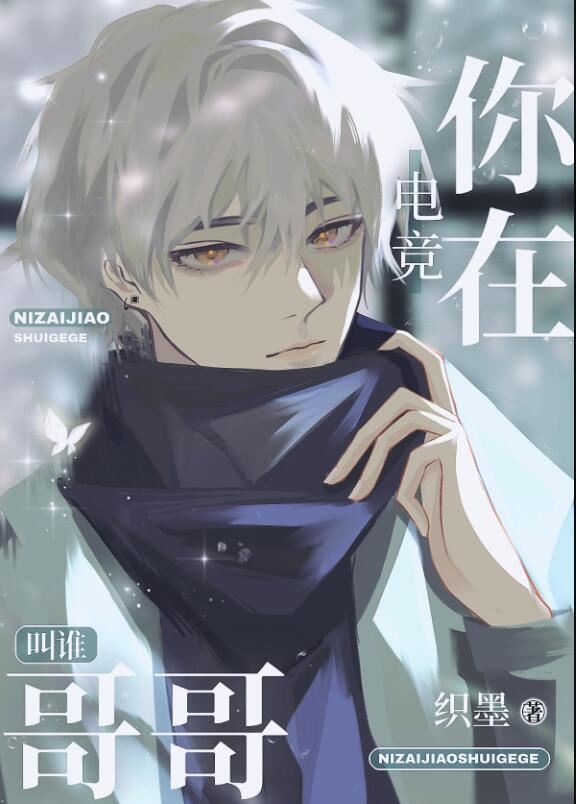
Who Are You Calling Gege? - Reviews

Who Are You Calling Gege?
+Add to Custom List
Sort
Add review
... Read More
I need to talk about Xie Xu because this chapter completely recontextualizes everything I thought I knew about him. On the surface, he's the cool, collected teammate. He naps through noisy car rides, drinks from his thermos, discusses training schedules. But the details—the author keeps giving us tiny windows into what Xie Xu is actually thinking, and it's fascinating. When Jiang Shi is staring at him, Xie Xu doesn't pretend to be asleep. His eyes are "deep and piercing, with no trace of sleepiness — completely alert." He's been watching Jiang Shi watch him the entire time. And his response? "Why'd you stop looking?" Not flustered. Not annoyed. Just... curious. Like he's studying a specimen. Then there's the thermos scene. Jiang Shi refuses the offer because he's thinking about that kissing GIF and it feels "too perverted" to share a cup. But Xie Xu doesn't pressure him—he just places the thermos near Jiang Shi's hand and waits. When Jiang Shi secretly drinks from it, Xie Xu notices and smiles faintly. He says nothing. He just watches Jiang Shi lie to himself, and finds it amusing. The neck pinch at the end is the most Xie Xu moment in the entire chapter. He doesn't yell. He doesn't lecture. He physically redirects Jiang Shi back into his seat and offers him crayfish like nothing happened. But the subtext is clear: I know what you found. I know you're thinking about murder. And I'm going to handle this my way. What's incredible is how Xie Xu's calmness contrasts with Jiang Shi's internal chaos. Jiang Shi is all impulses and panic—searching for memes, plotting violence, making threat face at his teammate. Xie Xu is ice. But beneath that ice, he's paying attention to everything. He knows Jiang Shi stares at him. He knows Jiang Shi is fascinated by him. He's seen the memes and apparently doesn't mind. Their dynamic is one of the most interesting I've read. Jiang Shi wants to be in control but can't control his own reactions. Xie Xu appears to have no control (he's always calm, always composed) but actually controls everything by letting Jiang Shi hang himself with his own words.
... Read More
I keep coming back to how cinematic this entire chapter reads. The author never gives us a single paragraph of setting description, yet I can picture everything vividly. Oil-stained gloves coming off. A bowl of peeled shrimp sliding across the table. Crabapples and oranges on the fruit plate. Crayfish arriving in steaming servings. Beer bottles and soda cans clinking. Maotai being passed around. Wine glasses next to Sprite cans. This is a team dinner after matches, people in casual clothes, half the group drunk, food piled high, the ambient noise of eating and talking and occasional arguing. It feels lived-in and real, like I could reach through the page and grab a crayfish myself. What strikes me most is the contrast between the warmth of the scene and the underlying competitive energy. These are professional gamers who treat everything like a match—even sharing food becomes a contest. Jiang Shi and Jiang Lele silently competing over shrimp. The wine-swap war escalating like a strategic play. Even the drunk Jiang Lele accuses his teammate of stealing his kills. The author manages to create this incredibly cozy, domestic atmosphere while keeping the competitive spine of the story alive in every interaction. It's not a battlefield but it might as well be.
... Read More
I need to talk about Jiang Shi because this character is absolutely unhinged and I am HERE for it. The man literally says 'I want to sleep with him' on live stream as a joke and then follows it up by poaching fans and pretending to be sweet on an alt. He's chaotic, he's shameless, and yet... I kind of understand why he's doing all this? He turned down Xie Xu's team offer, meaning he was rejected professionally AND personally, and now he's trying to get back in his orbit through the only way he knows how—which is causing trouble. That's not healthy attachment behavior and I'm calling it out. Meanwhile Xie Xu is just... cold. Completely unreadable. He notices the familiar playstyle, checks the stats, says 'His real age isn't more than twenty' with this deadpan certainty. The man operates on a different frequency entirely. And Yuan Yang is just there being the voice of reason, connecting dots, keeping everyone grounded. I keep waiting for some kind of emotional reveal from Jiang Shi—like, what's the actual wound here? Is it romantic obsession or something deeper? Because right now he reads as both annoying and pathetic in equal measure, which is honestly a compelling combination.
... Read More
"Or would you prefer I just watch my own ADC die without lifting a finger?" — THIS LINE. This is the kind of dialogue that makes you stop reading and just stare at your phone. The way Xie Xu phrases it, calling him 'my ADC' like it's possessed territory, the teasing laugh, the deliberate use of 'own' — every word is loaded. And Jiang Shi's response of just a humm and obedience? That contrast is everything. Their dialogue works because one is sharp and provoking while the other is softer but never passive. The chat comments are also doing serious narrative work here. Lines like 'T Bao has zero resistance to Xu' and 'when a girl asked if he had a girlfriend, this idiot replied I have a husband' — these aren't just flavor, they're how we learn about their relationship dynamically. And Zhao Jiu's deadpan explanation about the equipment costs was the perfect tonal reset button. The author clearly understands that dialogue isn't just about what characters say to each other, it's about what they reveal to the audience through others. Also: 'You're surrounded by just the two of us~' with the tilde. The tilde is doing SO much work.
... Read More
The hotel corridor scene is pure cinematic gold. Let me paint this for you: Xie Xu steps out onto the balcony, lights a cigarette, and the wind immediately consumes it. The smoke drifts back into the corridor like a ghost. This is atmospheric storytelling at its finest - the environment itself seems to be clearing the air, making room for whatever's about to happen. Then Jiang Shi appears, slightly tipsy, catching a whiff of smoke. The dim hallway lighting casts a 'soft, warm yellow hue' over his hair, making his hazy eyes look 'innocent and gullible.' The writer is constantly playing with light and shadow here - the motion-activated light flipping on to reveal Xie Xu's face, the contrast between the dark corridor and that sudden illumination. The private room they're coming from is described as 'confined' - and Jiang Shi's refusal to enter it speaks volumes. He's aware of his state, aware of how he smells, aware that proximity to Xie Xu in such a small space would be disastrous. The architecture itself becomes a metaphor for emotional boundaries. And then we cut to Jiang Shi's apartment three days later - the automatic feeder, the cat, the suitcase. This is domestic worldbuilding that grounds the entire story. Before we get lost in romantic tension, we see the mundane reality of someone preparing to leave their old life behind. The black figure darting past the window on the air conditioner unit - 'Greedy cat' - this small detail makes the world feel lived-in and real. The car ride with the God Making championship video playing on speaker, the driver recognizing the game, the Snowman doll on Jiang Shi's backpack with the FMVP skin tag still attached - every element builds a world where gaming culture, professional competition, and personal history intersect seamlessly. The writer isn't just creating settings; they're creating environments where character and plot can breathe.
... Read More
'For a lifetime, if possible.' Four words. Four. Words. Jiang Shi just dropped a whole marriage proposal in his internal monologue and I am SHAKING. The guy couldn't even say yes to Xie Xu properly because he was peeking at the stream on a side account, went 'Huh?' like a confused puppy, and then when Xie Xu repeated himself—'Do you want to duo with me? All day.'—he said 'Of course' loud enough for the mic to catch. And the narration says his voice was 'light and youthful, especially when speaking to Xie Xu' and he 'lowered his volume and spoke with evident joy, making his voice sound sweet and soft.' OKAY I need a minute. The fact that he changes his ENTIRE TONE when talking to Xie Xu versus everyone else? That's not just team chemistry, that's a whole different frequency. And Xie Xu? He noticed. 'Good timing with the ult.' He was looking at jungle vision, not bot lane, but he STILL noticed Jiang Shi glancing at him. These two are dangerously good at seeing each other.
... Read More
This chapter is structured like a mini symphony and I need to unpack why it works so well. Act One: The Doorway. Opens with tension — shadows, fear of theft, Jiang Shi appearing at an uncomfortable hour. But the resolution is almost too quick. Yuan Yang believes him immediately. The reader is left wanting more from this moment, and that hunger is intentional. We don't get closure on why Jiang Shi was really there, only the afterimage of it. Then the transition to gaming feels like exhaling after holding your breath. Act Two: The Game. This is where the chapter breathes. The banter between Jiang Shi and Jiang Lele plays out like a comedy routine — minion stealing, health pack wars, the frozen enemy jungler. It's deliberately lighter, almost silly. But underneath all that humor is the real storyline: the red buff conversation, Xie Xu's promise to come help, Jiang Shi's desperate bid for attention disguised as gaming strategy. The pacing here is masterful because the surface reads as funny teammate rivalry while the emotional current runs completely separate. Act Three: The Dark Stairs. After the match victory, instead of wrapping things up with celebration, the author drops us back into darkness. Same setting as Act One but completely different energy. What was tense before is now tender. The structure mirrors itself — light, dark, light, dark — but each inversion changes the meaning. The chapter ends not with a climax but with a quiet sleeve grab, and then cuts off mid-scene with Jiang Lele's internal monologue. That cut is deliberate. It leaves you hungry for the next moment, which is exactly when you want to put the book down and pick it up again immediately.
... Read More
I need to talk about the blue buff. Not the game mechanic — the emotional weight of it. Jiang Shi gives his blue to Bamboo. His blue. In the text it says "he only gave the blue buff to Xu" as if this is established lore at this point. Jiang Shi has a ritual of devotion and he broke it on stream, in front of everyone, for someone who asked politely. And Xie Xu saw it. I'm sitting here absolutely wrecked. But the real gut punch isn't the buff. It's the scene where Xie Xu walks into Jiang Shi's room while he's streaming with Bamboo. Just walks in. Doesn't announce himself. Watches from the side. And Jiang Shi — Jiang Shi doesn't even look up. He's too busy roasting his fans, too busy performing for the chat, too busy being charming and deflected and safe. He says "Captain, what's up?" like Xie Xu is a colleague stopping by to check on a spreadsheet, not a person who has been quietly dying inside for weeks. And then Xie Xu says that line. Casual. Light. Like he's commenting on the weather. But we know. We know what it means. The possessiveness is there, underneath the calm surface, and it's so much more terrifying than any angry confrontation would be because it's sincere. He means it. He will catch him back. The fans are calling it a falling out. Oh, you sweet summer children. There's no falling out. There's just two people who are desperately in love and one of them is about to say something that changes everything.
... Read More
There's a symbolism running through these chapters that I think deserves its own meditation session, and it's about language itself—specifically the word 'Gege' and what it costs to give someone a nickname. In Chinese internet culture, calling someone Gege isn't just cute; it's an act of emotional claim. It's saying: you belong to my intimacy. Jiang Shi's Weibo post—'I have only called one person Gege, and he will be the only one I call that in the future'—reads like a covenant. A self-imposed vow of linguistic exclusivity. But covenants made in isolation tend to be performative. They're promises to an audience of one: himself. The hand photo is another symbol that does heavy lifting. Hands represent agency, capability, touch. Jiang Shi fixates on how big they are—'he should be able to hold my entire neck, right?'—and immediately connects physical size to sexual possibility. But these aren't Xie Xu's hands. They're ghost hands. The hands of someone who logged off and never logged back on. Jiang Shi is worshipping at the altar of a memory and mistaking it for the real thing. And then there's the team jacket itself—the golden embroidery, the looseness, the way it becomes both shield and surrender in Jiang Shi's erotic imagination. The jacket represents Xie Xu's authority (it's the captain's uniform) but also his vulnerability (it's borrowed, it's oversized, it can be worn by someone smaller). When Jiang Shi dreams about it getting damaged, getting wet, it's almost like he wants to defile something sacred—want to make the symbol of the team his own. What's the deeper theme here? Maybe it's about how we carry our romantic templates forward, unconscious and unexamined. Maybe it's about the danger of loving someone who reminds you of someone else. Or maybe it's simpler: that healing doesn't come from forgetting the old love, but from finding someone new enough to overwrite the old script.
... Read More
Can we appreciate how well-written the casting commentary is in this chapter? Because the male and female commentators each have such distinct voices and the author uses them perfectly as Greek chorus without ever letting them overwhelm the scene. The male commentator is all wide-eyed spectacle: 'Ah? In such a deadly situation, how did Time manage to escape?' He's the hype man, the voice of the general audience, the guy who makes you feel like this is the most important match in history. The female commentator is more analytical, more restrained—and her reveal about having seen Jiang Shi's stream earlier gives her this secret knowledge that she eventually shares. That moment where she hesitates before dropping the lore about their previous matchup? Chef's kiss. She's building to something and you can feel it. Meanwhile, the in-game dialogue is wonderfully sparse. Jiang Shi barely says anything aloud. His communication is through emotes—a question mark, a 'thank you kindly'—and through actions. That's such a smart characterization choice. He's not a talker. He lets his gameplay do the talking, and when he does speak, it's minimal but loaded. 'Not bad.' Two words from Jiang Shi carries more weight than most people's paragraphs. And Xie Xu's voice is just... effortless. 'Walk carefully.' That's it. That's the entire line and it says everything about how he takes care of his team without making it dramatic or sentimental.
... Read More
This chapter is a masterclass in pacing because it starts so casually and ends on the single most dramatic moment possible. We open with mundane details - cold water, adjusting collars, a throat ache. It's almost boring. Jiang Shi is half-asleep, the staff is handing out bottles, the commentators are doing their usual setup banter. You could easily skim this part and miss it. But it's doing important work: establishing the atmosphere before the storm, making us feel like we're actually there in that waiting room. Then An comes in with the trash talk and suddenly everything sharpens. The interview scene has this great rhythm - An builds tension, the audience whistles, and then Jiang Shi dismantles it all with lazy yawns and a soft smile. The emotional spike hits and we're laughing instead of being intimidated. But here's where the author really earns their keep: after the interview, instead of going straight into the match, we get the post-interview fallout with Yuan Yang scolding him and the team joking around. Jiang Lele calling him a miracle for not insulting anyone. Yu Hui defending the clapback. Zhao Jiu pointing out the officials probably wanted the drama anyway. This scene breathes. It gives us space to process what just happened and shows us the team dynamics without a single game action. Then - BAM. Draft phase. Hurricane bans supports, not Senna. Jiang Lele reads the room. And then the final pick... the commentator is literally saying 'we'll see Senna next game' and the icon appears right then. The paragraph ends mid-sentence almost, with the chat going wild. It's the perfect cliffhanger because we're locked in right alongside the characters - nobody knows yet if this is genius or suicide. The transition from sleepy yawn to locked-in Senna in one chapter? Chef's kiss.
... Read More
I need to unpack the pacing of this chapter because the author built a tiny pressure cooker and I was trapped inside it with them. It starts LOW. Jiang Shi is moodily tapping keys after a stream. Quiet frustration. We think this is just a post-stream comedown. Then Jiang Lele pokes at him, Yuan Yang delivers the An information bomb, and suddenly the temperature spikes. The chapter moves from quiet to volatile in about three paragraphs and I was NOT ready. Jiang Shi's exit—"I'm going to wash the cup"—is the pressure release valve. He escapes to the bathroom and the chapter slows down into this almost meditative montage of destruction. Scrubbing. Mutters. Self-pity. The reader breathes with him. We're in his headspace now, alone with his thoughts, and that's where the real damage happens. "How many people do I have to compete with for Xie Xu…" That line lands differently when we've had space to sit with it. Then Xie Xu arrives and the pacing shifts again—into something slower, quieter, more deliberate. The bathhouse scene unfolds in real time. The medicine spray fumbling, the failed attempt, the chin hold, the instruction to open his mouth. Each beat is deliberate. The author doesn't rush this. They let the silence between actions speak. The chapter ends mid-scene—"Jiang" and then presumably cuts off—which is such a good cliffhanger choice. Do we get the response? Does Jiang Shi open his mouth? Does he say something brave? We don't know and I WILL be scrolling to the next chapter immediately. What's brilliant is how the structure mirrors the emotional arc: suppression → explosion → isolation → connection → anticipation. Every section transition serves the mood. There's not a single wasted moment. The author knows exactly when to speed up and when to drag out a single gesture into something that feels like forever. That's control.

Leave a comment

You must be logged in to leave comments. or
