Who Are You Calling a Canary? [Transmigration] - Reviews

Who Are You Calling a Canary? [Transmigration]
+Add to Custom List
Sort
Add review
... Read More
"I just bully the weak and fear the strong — is there a problem?" Wang Yelai says this like it's a badge of honor. And that line, more than anything else in these chapters, captures the moral rot at the center of this story. This isn't just a guy with a crush gone wrong. This is a system where power flows downward — everyone kicks whoever's below them, and grovels to whoever's above. Wang's philosophy is the philosophy of the entire world this story lives in. The tiger is doing a lot of symbolic heavy lifting here. It's wild, dangerous, lethal — and it's sitting calmly beside the Crown Prince, letting him stroke its head. Power that chooses restraint. That's basically the thesis statement of the whole narrative. Meanwhile, the bird-like figure in the tree (Yu Shaoyun) watches from above — detached, observant, not quite part of the ground-level scramble. He's another kind of power: the kind that doesn't need to assert itself. And Pei Xiting — perpetually half-asleep, irreverent, calling out hypocrisy while being utterly unbothered by protocol — he represents something radical in this world. Not rebellion, exactly, but the refusal to play by rules that only govern other people. When he says he cut ties with Qing Lingling 'so as not to implicate him,' that's a moment of genuine care cutting through all the posturing. The story keeps asking: what does loyalty look like when everyone's just surviving?
... Read More
"Do you want to go hunting with me, or go with the girls to weave colored ropes?" — okay first of all, Qu Zhao's voice is EVERYTHING. The way he oscillates between childlike whining and razor-sharp observation in the same paragraph is insane. One moment he's dramatically hugging someone's arm and saying he's scared of wolves, the next he's delivering the most accurate read of a situation in the entire chapter. His dialogue has this performative quality that's both genuine and calculated, and I cannot figure out which is real. Then there's Shangguan Jie: "Let's go in together. If you really can't ride, you can let Lianhai carry you." Polite. Perfectly measured. Designed to force Pei Xiting into a corner where refusing would make him look weak. That's dialogue as weapon. Every sentence is surgically placed. But the Crown Prince's lines hit different. "If you mean impotence, no." Said with zero dramatics, just flat exhausted truth. And his mom's response — "You can rebel against me and become the king yourself" followed by "You are right" — is one of the funniest exchanges I've read. The author lets these two characters bounce off each other with this weird mix of genuine affection and deep political dysfunction. It's funny and heartbreaking at the same time. Pei Xiting's dialogue is the quietest and the most powerful. "Tigers and wolves eat people, and people also kill wolves and tigers. Who is bluffing whom?" That's not a question he's asking anyone else. That's him talking to himself, realizing he's already won by refusing to play. The narrative voice itself has this wonderful omniscient quality — it dips into characters' internal thoughts without ever feeling intrusive. When we get Pei Xiting's perspective on Qu Zhao being a "smiling tiger" and understanding the social trap he just navigated, it's like the narrator is letting us in on a secret. The humor is dry and often comes from dramatic irony — we know more than the characters do, which makes every polite exchange feel loaded.
... Read More
Okay so I just finished these four chapters and I'm still buzzing. Let me just say it: the scene where Pei Xiting walks into Shopkeeper Qi's fish shop and turns it into a hostage situation without actually hostage-taking anyone? Chef's kiss. The way he physically corners Qi, steps on the pedal, leans in—and then just casually negotiates? "You sold me once, you don't allow me to blackmail you?" This is the kind of scene that makes you go 'oh he really is unhinged in the best way.' And then the beggar! I thought it was just a random kid for a second, but no—Shangguan Jie's people sent him. The whole chapter is basically a chain of people using other people as pawns, and Pei Xiting is at the center of it all trying to untangle the string. The structure here is really smart too: it starts with Pei Xiting seeking information, gets him caught between two factions (Shangguan Jie and this masked mystery guy), and ends on a cliffhanger with the disguise reveal. That line about 'the darkest place is under the lamp' got stuck in my head all night.
... Read More
Okay so Zhao Yi brings this painting to Pei Xiting like he's some kind of amateur knocking on a master's door, and honestly the scene plays out like a delicious little power exchange. Zhao Yi is clearly trying to expand his social circle, but there's actually some sincerity underneath the calculation. And Pei Xiting? He spots the flaw in Zhao Yi's painting immediately—three months of work ruined by one rock. The way Zhao Yi literally bows to him afterward...chef's kiss. But then it flips, doesn't it? Zhao Yi tries to play the connoisseur himself, pulling out this ancient painting he bought for five hundred taels, thinking he's showing off, and Pei Xiting casually drops a bomb: it's fake. The guy got scammed. I love how the author uses art authentication as a plot device to show status dynamics—every time someone thinks they're the expert, another person undercuts them. And Baiyou Mountain keeps coming up like a recurring hook. The masked young man mentioned it before, now Zhao Yi brings it up again, and Pei Jintang is already planning a food mission there for roasted rabbit. The plot threads are weaving together in this satisfying way where every new detail connects back to something earlier.
... Read More
This chapter reads like a scroll painting that came to life and I cannot stop thinking about the imagery. The rain curtain turning gray and hazy. The drooping willow tree by the Huai River bank. A white-walled, black-tiled inn with a black wooden plaque—every detail is deliberate, every color chosen. Then the courtyard with wisteria trees: "delicate and beautiful, like a roll of romantic purple clouds outlined on a rain curtain." That line alone is worth the price of admission. Purple clouds on a rain curtain. I need to find that exact phrase and tattoo it somewhere. And then the boat scene—this is where it really hits me. It's completely dark outside, the crown prince emerges from the rain in a green single-decked boat, there's a fragrant gauze screen, a male entertainer singing by lamplight. It's so cinematic I can see the lighting design. The flower lantern reflected in the pupils, "watery and bright, with a startling brilliance." The zither sounds merging with the dripping rain. Everything dissolves into this humid, hazy atmosphere where boundaries between characters blur. The inn itself is suspiciously perfect—Longhe Division territory, the owner knows exactly who they're looking for, the calligraphy matches something from a restaurant on Baiyou Mountain. This world feels lived-in, connected, layered. You don't just arrive at an inn randomly; the inn arrives for you because someone already arranged it. The entire setting breathes with political undercurrents even when it's just describing willow branches. Chun Sheng's perspective as an observer adds another layer too. He's watching these two interact and he's ACutely aware he's just decoration, a prop in someone else's scene. The resentful, sour gaze from behind—this minor character gets an entire emotional arc in a single paragraph and it makes the world feel so much richer.
... Read More
Let me just say this: the stakes in this novel are NOT subtle and I am HERE for it. We have an actual assassination attempt happening during what should be a casual family disagreement about parenting. The crown prince is playing go while someone tries to kill him and he doesn't even pause his conversation with his wife. That is next-level composure and it makes every subsequent scene feel like it's happening on borrowed time. But the real conflict isn't just the physical danger—it's the rumor mill. Empress Qu explicitly warns: 'After all, there have been rumors against you over the years about the second child's situation. Three people make a tiger. If a rumor is repeated many times, people will believe it.' This is the kind of soft warfare that kills princes faster than any blade. The crown prince's response? 'Then let him kill me... if he can do it.' Casual. Dismissive. But also—there's something almost tired about it, right? Like he's heard it so many times he's stopped caring. Then you layer on the hunting competition, which I'm 99% sure is going to be another arena for conflict. Pei Xiting entering for the first time, the elaborate scoring system with engraved arrows and imperial supervisors—it's all designed to prevent cheating, which means someone is definitely going to try to cheat anyway. And that guy in the star-blue brocade robe who bumped into Pei Xiting? Coincidence? In a novel this tightly plotted? Absolutely not. What I love is how the author keeps escalating the threat level while simultaneously showing us characters trying to live normal lives. Zong An is worried about losing a bet. Pei Jintang is worried about his betting strategy. Meanwhile, people are dying in the trees above their heads. The contrast makes the danger feel more real because everyone else is still going about their day.
... Read More
There's something so deliberately spatial about this entire sequence. Let me map it out because it's driving me crazy in the best way. The opening image: Qing Lingling is elevated on a high platform, literally above everyone else, draped across the prince like a particularly luxurious accessory. Light yellow riding attire, no makeup, described as a Bartzella Peony—that's not an accident, that's the author telling us he's rare and expensive and currently being treated like furniture by the one person who actually values him. Then Qu Zhao arrives and physically rearranges the geography. He takes the melon seeds, sits on the low table, leans close to QLL, creating an intimate triangle with Zong Rui looming behind. QLL shrinks into the prince's arms. Spatial dynamics as emotional barometer. Later, when Qu Zhao goes to Pei Xiting, the scene shifts entirely—he descends the stairs, moves across the stage, stands beside Pei Xiting. The camera follows QLL's gaze tracking this movement, but he can't follow because he's anchored to the high platform by both obligation and fear. And then Pei Jintang charges in, butts into Pei Xiting's face, creating this chaotic physical comedy that deflates the tension so perfectly. The worldbuilding here isn't about describing architecture or costumes—it's about levels, heights, proximity, distance. Who's above whom, who's touching whom, who's watching from afar. The stage, the platforms, the low table, the stairs—it's all choreography. And the fact that QLL remains fixed in place while everyone else moves around him says everything about his position: elevated but trapped, observed but不动.
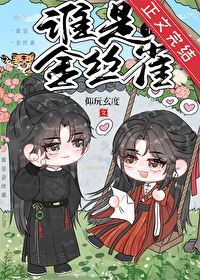
... Read More
I need to talk about Yu Shaoyun because this character is an absolute gift. His dialogue alone carries so much texture. Listen to this exchange: "Could it be because of that Chun Sheng?" ... "What does it have to do with him?" ... "You suddenly said today that these beads are ineffective. I thought about it, and among the people you've seen recently, only that Chun Sheng is a stranger." This man is working so hard to be helpful and he keeps sliding off a cliff. And then he tries to demonstrate Chun Sheng's movements — hands on hips, twisting — and the text says "Others have a soft water-snake waist, but Yu Shaoyun looked like a poisoned snake that had gone mad." I cannot stop thinking about this image. It's so funny and so cruel at the same time. The Crown Prince's responses are equally perfect — short, measured, increasingly cold. "According to your previous statement, if I were blinded by beauty, then naturally I should be blinded by Pei Xiting, because he is better looking, isn't he?" This is the Crown Prince weaponizing logic to dodge an emotional conversation, and it's brilliant character writing. Every line reveals something. Yu Shaoyun's voice is loud, physical, slightly foolish but loyal. The Crown Prince's is quiet, layered, controlled. When they clash, the contrast is electric.
... Read More
I have been sitting with the character dynamics in these chapters and honestly my heart is not okay. Let's start with Pei Xiting's stated reason for wanting to redeem Ying Ziyu from Little Spring Garden: "This Ying Ziyu can paint. I've seen his paintings; they are fresh and full of vitality." On the surface, this reads as purely altruistic. But reading between the lines — and Pei Xiting is a man who rarely does anything without layered motives — I wonder if there's something more personal driving him. He appreciates talent. He sees potential. And he's clearly someone who forms attachments quickly, even if he dresses them up as practical decisions. Then there's Chun Sheng. Oh, CHUN SHENG. "The way Chun Sheng looks at you is as if he wants to devour you. Don't tell me you haven't noticed." Pei Xiting saying this with such casual directness, then immediately trying to downplay it — this is the most Pei Xiting thing ever. He's genuinely bothered by someone else's desire for the Crown Prince, but he can't quite articulate WHY without exposing his own feelings. The "little unhappy" line is a masterclass in emotional restraint that somehow communicates MORE than if he'd just yelled it out. And the Crown Prince's response throughout is fascinating. He doesn't dismiss Pei Xiting's jealousy. He doesn't comfort him. He just... observes. "I don't understand your unhappiness." "What's the difference?" He's letting Pei Xiting sit in his own emotions without rescuing him, which is either incredibly patient or incredibly manipulative — probably both. The dynamic where Pei Xiting calls him "Brother Fu" and the Crown Prince plays along while secretly enjoying the intimacy of it — that's the core of this relationship. Two people who could be political allies but are clearly something else, orbiting each other with enough tension to power a small city. Also: Pei Xiting fanning the Crown Prince's wontons. That's not friendship. That's not just camaraderie. That's devotion disguised as convenience.
... Read More
"As the gray sky deepened and turned into a jar of ultramarine ink pouring back" — I need to just stop right here and appreciate this description because it is one of the most visually evocative lines I have read in a long time. The entire sky literally becomes art supplies. The narrator is telling us that the world itself is turning into a painting, and who is painting it? Pei Xiting, of course. The environment and the act of creation are blurring together. The pavilion setting is doing SO much heavy lifting here. You have rain, you have a mountain stream, you have tea smoke spiraling up, closed hibiscus blossoms, and this one figure in black robe and wooden hairpin playing the zither. It is a classical Chinese landscape painting come to life, except the painting is turning around and looking back at you. That meta layer where Pei Xiting is painting the painter and the subject simultaneously — the Crown Prince sees his own reflection in the artwork and realizes that "the brush and ink will prove the painter's preference" — is such a delicious visual metaphor for emotional vulnerability. And the rain! It is not just weather. It is atmosphere, it is mood, it is literally the title of the chapter. The sound of rain covers their whispered conversations with Yu Shaoyun and Eunuch Lai, which means the weather itself is enabling intimacy and secrecy. Then when the arrows come, they tear through the rain curtain. The same element that created this dreamy protective bubble becomes the medium through which violence enters. I also want to talk about the color palette the author builds. Black robe, wooden hairpin, cinnabar red at the corner of Pei Xiting's eyes, the mole on the Crown Prince's cheek compared to a bird of prey between green hills, lavender hibiscus, ultramarine ink. This is a story that thinks in terms of classical Chinese painting aesthetics and it shows in every descriptive choice. The world doesn't just exist — it is composed.
... Read More
'If I died protecting Your Highness, it would be my honor. The Pei family would even build a loyalty temple for me.' I need to sit down. This line absolutely wrecked me. Because on the surface, Pei Xiting is saying something casual, almost self-deprecating. He's being honest about where he stands in the Crown Prince's eyes. But underneath it, there's so much ache. He's essentially saying: I know I don't matter to you. I know my life is expendable in your calculation. And I'm offering it anyway. What makes it hit even harder is how the Crown Prince receives it. He just... absorbs it. Says 'You are restless and very frank' and moves on. He doesn't offer comfort. He doesn't deny it. He doesn't say anything that would make Pei Xiting feel better. And yet—the very next beat, they're under the same umbrella, and the Crown Prince has arranged for an umbrella bearer. Small gesture, but it's there. The ear-covering moment is equally devastating in a completely different way. Pei Xiting is terrified, yes, but he's also so vulnerable in this position—literally blind, holding onto someone's hand like a lifeline. And the Crown Prince lets him. Doesn't pull away. Lets Pei Xiting guide his hand to his own ears. There's this insane amount of trust happening between two people who clearly haven't figured each other out yet. It's the kind of scene that makes you realize these characters are orbiting something real and neither of them has the vocabulary for it yet. Also the tulip oil scent detail? The author slipped that in casually and it's now haunted me. A romantic detail buried in a assassination escape sequence. Chef's kiss.
... Read More
Let me just say this upfront: someone put a poisoned needle into a horse that was going to be ridden in front of nobility and witnesses, AND the target wasn't a random hunting accident victim. Zhao Yi survived because he was terrified enough to ride faster and because the Pei brothers happened to be nearby. That's luck, not destiny, and the book seems to know it. The stakes are layered on top of each other — on the surface it's an attempted murder of a noble, but underneath that you've got the Longhe Division getting involved, which means this touches the Crown Prince's sphere of influence. You Zong himself is described with 'sharp eyes' and there's this moment where he's literally assessing Pei Xiting, wondering if the rumors about him are wrong. The power dynamics here are already shifting. If Pei Xiting uncovers who did this, he might expose someone with real connections. The horse was inspected before entering the hunting ground, meaning this was premeditated and inside-access. That's the kind of detail that should make any reader's stomach drop — because it means the conspiracy goes deeper than a random enemy. How far does it reach? Who benefits from Zhao Yi being dead? And what happens when the investigation threatens the wrong people?

Leave a comment

You must be logged in to leave comments. or
