When Two Alphas Meet, One’s an Omega - Reviews

When Two Alphas Meet, One’s an Omega
+Add to Custom List
Sort
Add review
... Read More
You know what keeps haunting me after reading these chapters? That line about the mole. “The only thing that remained the same was the small mole under the corner of his eye.” I keep coming back to it because it's the emotional core of the entire passage wrapped in one tiny detail. Everything else about Bai Huai has transformed — he's taller, more muscular, more handsome, more authoritative — but that mole is the anchor that says he's still the boy Jian Songyi knew. It's a character detail that carries the weight of three years of separation in a single sentence. Jian Songyi's motivation is fascinatingly messy. On the surface, he's being pushy and antagonistic — insulting Bai Huai's intelligence, challenging him to fights, deliberately sitting in the front seat to assert dominance in the car. But dig deeper and he's clearly running from something. He's the one initiating conflict because conflict is safer than honesty. If he can make everything about who's tougher or smarter, he doesn't have to admit that showing up at his door after three years made his heart skip. The fact that he analyzed that photo on the forum for three seconds and then immediately noticed the forgotten umbrella tells me everything — he's hyper-aware of Bai Huai in a way that has nothing to do with rivalry and everything to do with someone who pays attention because he can't help it. Bai Huai's motivations are even more opaque and that's what makes him compelling. Why did he come back? Why No.1 Middle School's rival school? Why agree to be tutored so readily? His actions suggest someone who has a plan and has been executing it silently. The rearview mirror scene — watching the dark clouds press down on the city while remembering its “grayish sad atmosphere” — this is a man carrying memory like a physical weight. Whatever drove him away three years ago, he's not leaving without dealing with it.
... Read More
Okay so let me just say—Jian Songyi vs Bai Huai in that one scene where the door closes and suddenly the whole dynamic shifts? Chef's kiss. You have this guy who comes in all tough, rolling up his sleeves, ready to "teach him how to be a man," and then BOOM, he gets pinned against the wall by someone who barely breaks a sweat. The reversal is so clean it hurts. What kills me is Bai Huai's line: "I even wish that the whole school knew that I was chasing you so that those who wanted to take a bite would back down and give up." This man is out here weaponizing his own shamelessness like it's a strategic nuke. He's not even hiding it—he's broadcasting it. And the way Jian Songyi just... freezes? No comeback, no retort, just petrified silence? That's not submission, that's someone whose entire worldview just got rearranged in three seconds. And then later when Bai Huai says "I like you. As long as you like me, marked or not marked, I do not care"—that line just completely undoes everything Jian Songyi was building up. All that bravado about biting his tongue until he dies, all that "you will never mark me" posturing, and Bai Huai just... deflates it with genuine warmth. It's not manipulation. It's not manipulation. It's actually something else and that's what makes it devastating.
... Read More
Okay so let's talk about Jian Songyi and Bai Huai because this chapter absolutely DESTROYED me and I need to process. On the surface, they're best friends. Brothers even. But this chapter peels back every layer and honestly I'm not sure either of them knows what they are anymore. Jian Songyi typing and deleting messages for like ten times—it's the same cycle from THREE YEARS AGO. He deleted messages back then too, when Bai Huai left without a word. And now? Same guy, same phone, same paralysis. The only difference is that now Bai Huai is HERE, right in front of him, and Jian Songyi STILL can't ask the questions that matter. "Are you secretly in love with me" — he already asked this and apparently got crushed. So now he's drowning in all these smaller, sharper questions instead. Why did Bai Huai come back? Why is he always nice to him? Why doesn't he touch him during heat? Is their password 0101 just a birthday thing or something more deliberate? But here's what gets me — Bai Huai. Sitting in the infirmary watching the typing indicator flash on and off, smiling like an absolute fool. He KNOWS Jian Songyi wants to ask something. He KNOWS it's important. But he pretends not to see it because "he wouldn't understand still, which will end up having him worry himself to death until he won't be able to hold back his temper." That line wrecked me. Bai Huai is protecting Jian Songyi from the truth even as he's sitting right there. Who is he protecting him from? Himself? Or something worse? And then — BAM — Wang Hai texts Jian Songyi with information about what happened before Bai Huai left for Beicheng. THREE YEARS of silence about that departure, and now someone's using it as leverage. The Wang brothers apparently caused Bai Huai misery for three years. Jian Songyi was AFRAID they'd do it again. He couldn't stand it. This isn't just a romance story. This is two people orbiting each other carrying completely different burdens, and neither one has the vocabulary to say it out loud.
... Read More
The pacing in this section is absolutely masterful and I need to talk about it. It starts with Wang Shan dropping this bomb about stealing from Bai Huai, then revealing his crush. That's chapter beats one and two compressed into a single conversation. Then the sketchbook reveal — we get pages described almost like a montage, flipping through years of Bai Huai's life in illustrated form. By the time we hit page 45 with 'I seem to like him. So I'm not so happy anymore,' you already know what this sketchbook means before the narrator even tells you. Then — WHAM — Jian Songyi turns around and Bai Huai is there. The transition from Wang Shan's confessional scene to Bai Huai's arrival is so sudden it mirrors how life interrupts your emotional breakdowns. 'How did you get out?' Bai Huai asks. The reader goes: YOU were just crying about unrequited love five seconds ago and NOW you have to face the person you've been pining after for ten years? The timing is brutal and perfect. The dialogue that follows is so sparse it aches. One word: 'You.' That's all it takes. Then the aftermath — the 'Sorry,' the folding of blankets, the taxi call. The author could have made this a huge dramatic confrontation but instead chose quiet devastation. Bai Huai packing a bag and making a bed like his world didn't just end? That's not bad pacing, that's intentional emotional suffocation.
... Read More
The dialogue in these chapters is deceptively simple but loaded. Take Bai Huai's line: 'Out of where?' After Jian Songyi yells 'Get out!' It's not just cheeky; it's a linguistic pivot that reframes the entire power dynamic. He's not leaving the room—he's challenging the premise of exile. And Jian Songyi's mumbled 'I'm not shy. I'm ashamed' caught in his throat? That's voice doing heavy lifting. The narration doesn't over-explain; it lets the subtext breathe. Even the background chatter among officers feels authentic—the hushed tones, the speculative remarks about family lineage. 'What about the surname Bai?' 'He is from the Bai family.' It's efficient worldbuilding through casual gossip. And then there's the narrator's direct injection: 'As long as a person breaks through the moral shackles once, it is the endless abyss of depravity.' That's not dialogue from a character; it's the author's voice stepping in to underscore theme. It's bold, almost essayistic, yet it lands because the preceding scenes earn it. I also love how the text uses silence as punctuation—the oppressive quiet in the station, the missing response after Jian Songyi's half-spoken question. It reminds me that what's unsaid often carries more weight than what's spoken. The author's voice here is confident, unafraid to blend intimacy with exposition, humor with horror. It's a distinct rhythm that stays with you.
... Read More
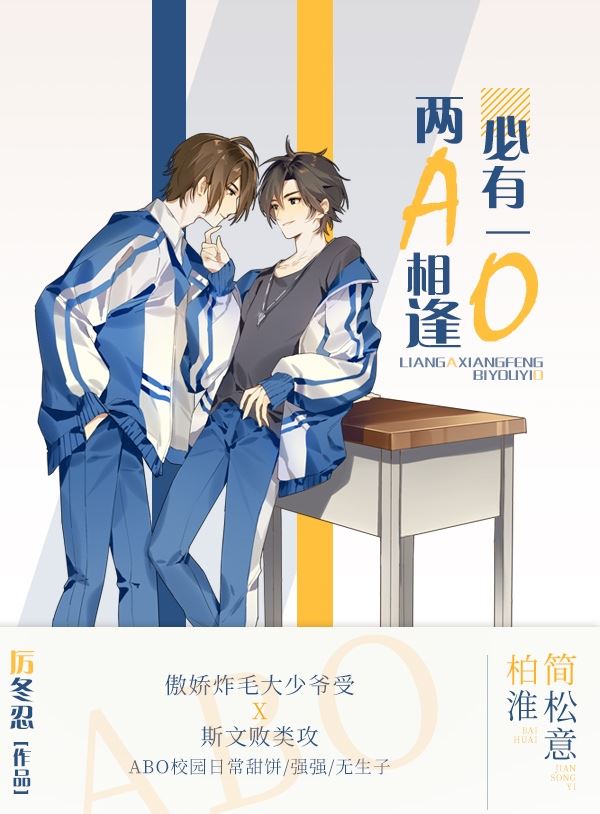
"Bai Huai has probably never seen anyone who can say such gentle words in a ferocious tone that he wants to hold him, rub him into his arms, and not let him go." I REPEATEDLY read this sentence and I cannot recover. This is the exact moment the emotional current between these two shifts from vague tension to something so concrete it hurts. Bai Huai wants to HOLD him. Not push him away. Not stand at a distance. Press him into his chest and refuse to let go. And Jian Songyi, in his ridiculously earnest, superstitious, beaded-bracelet-making way, is offering exactly what Bai Huai needs — not grand gestures, not dramatic confessions, just this quiet, stubborn gift of shared fortune. The part about teenage years hit me the hardest. "But it seems that they are so young that everything seems powerless and overwhelming, so they can only carefully and clumsily try all the methods, even if they know that the method may be ridiculous." That's love at that age. That's everything. You know it might look stupid. You know someone could laugh at you. But you try anyway because the feeling is too big to contain. Jian Songyi begging his mother to teach him knot-work, Bai Huai keeping the red cloth note — these are clumsy, ridiculous, beautiful attempts at reaching each other across whatever distance exists between them. And then Bai Huai's inner thought at the very end: "For example, if I ever happen to catch you, then I will be very lucky." CATCH YOU. Not be with you. Not love you. CATCH you. Like Jian Songyi is something that could slip away. Like he's been running. Like this bracelet is an anchor. I'm not okay.
... Read More
Okay so let me just say this whole sequence from Ch44-47 is a masterclass in how to do subtext without screaming it at you. On the surface, this is chapter content about a kid going through late differentiation and dealing with school drama. But the actual plot engine here? It's the physics problem scene. Think about it — Jian Songyi grabs Bai Huai's wrist to stop him from leaving. Not to say thanks, not to apologize for earlier, but to pretend he wants to help with homework. The man is LITERALLY struggling with differentiation — he can barely stay awake in a car — and he chooses THIS moment to offer academic tutoring as an excuse to spend more time together. And Bai Huai, who literally knows the answer to last year's Huaqing University independent enrollment question, plays along. They sit together in silence, him grading Bai Huai's work like some self-appointed supervisor, and this is the closest two people have ever been in this entire series without either of them admitting anything. The gossip post that ruins it all is almost secondary — the real plot beat is that evening on Indus Road where Bai Huai shows a flicker of tenderness and Jian Songyi actually notices it and files it away. Then Zhuo Luo comes in with that damn link and everything collapses back into their normal defensive patterns. The structure here is beautiful: quiet intimacy → interrupted by external chaos → back to square one. I keep waiting for the other shoe to drop.
... Read More
I keep coming back to the belt puncher. It sounds like a throwaway prop but honestly it's the pivot point of this whole chapter. Bai Huai notices something wrong BEFORE Jian Songyi even realizes it herself. He disappears for a while, comes back with thermoses and a basin and a tool, and solves three problems at once — the belt, the hot water situation, and whatever else I'm sure I'm missing. The structure here is also really smart. You've got this intimate moment that could easily tip into romance or conflict, and then BAM — Yang Yue kicks the door open with her widow comment and deflates the tension like a balloon. The author knows exactly when to puncture the mood and when to let it breathe. And notice how both of them say "get out" in unison? That's not hostility — that's habit. They've been operating as a unit for so long that even their rejection of her interruption is synchronized. Then the whole shower debate — Omega concerns, Cold water vs hot water, his quick solution of bringing thermoses. Every beat moves the plot forward while also revealing character. The narrative never sits still, and I love that about it.
... Read More
"Can't I protect you? You don't have to do anything. Why are you so stubborn? Why do you want to suffer like this?" This is ALL in Bai Huai's head. He never says it out loud. He gets right up to the edge of saying it and then pulls back. That restraint is so painful to read because we KNOW he means it, and we KNOW Jian Songyi has no idea. The physical description of Jian Songyi trying to stand up and failing over and over again — the broken beads of sweat accumulating on the floor — this isn't just action描写. This is emotional vulnerability rendered physically. He's trying so hard. He's humiliated. And Bai Huai can't watch anymore. Then the hug. "The ice wall was transformed into warm water in early spring." I had to stop and re-read that because it's genuinely beautiful. Bai Huai, who has been building walls and schemes and distance, just… reaches out. Tangling fingers through hair. Pressing Jian Songyi's head against his shoulder. It's abrupt but gentle, and Jian Songyi is too stunned to resist. And the candy jar moment — that's the emotional核 of the entire passage. Bai Huai sees that old, scratched, paint-chipped jar from when he was five years old, and suddenly all his scheming feels different. It's not manipulation; it's the same boy who used to leave notes and sweets for his crush, just with slightly more advanced tactics now. The memory is bittersweet: "He remembers how lonely he was as he kept his love for him a secret." Lonely. That word hits hard. All this time Bai Huai has been alone with his feelings, and now he's finally close enough to act on them, even if his methods are questionable. Jian Songyi eating the milk candy right after Bai Huai leaves — the message on the phone saying "That's why Little Huai rewarded you" — there's something achingly sweet about a grown man still receiving childhood candy as a love language. Two people who've liked each other since they were five, and it hasn't changed. It just got more complicated.
... Read More
Okay can we talk about how the author set up this new student introduction and I already know something is about to go down?? Like, the whole class dynamic is established so clearly — you've got the elite students who accepted Bai Huai because he PROVED himself, you've got Xu Jiaxing the lovable idiot, Yang Yue the observant type — and then BAM, this malnourished-looking Beta named Yu Ziguo walks in and nobody is enthusiastic at all. The rumor mill scene was hilarious but also kind of terrifying. One student tells ten, ten tells a hundred, and suddenly everyone knows the boss and the new boss had some kind of violent confrontation. The exaggeration of it — both men losing arms and legs, dragged to the hospital — is peak high school gossip culture. And Bai Huai's text exchange with Ice cream Xiaoyuanzi?? I died. "Curse him to eat instant noodles without seasoning all his life!" ...AND THEN HE FOUND UNSEASONED NOODLES. THE UNIVERSE HAS SPOKEN. But the real plot move here is the seating arrangement. Jian Songyi immediately offering to switch seats when he hears about the new student? That's not casual. That's him trying to protect space, and Bai Huai shutting it down with a simple "No." Meanwhile Jian Songyi muttering "my nonsense is the best" while sipping from his own water cup?? The layers. The subtext. I'm already sweating for Yu Ziguo, honestly.
... Read More
"I can be very wronged, but I can't wrong you once." I literally stopped reading this sentence and just sat there. That line is everything. It's the entire thesis of Bai Huai's love—so pure, so devastatingly one-sided for so long, yet he never once weaponized it. Even when Wang Shan threatened to expose them, even when he was suffering through differentiation alone, even when Jian Songyi called him disgusting in his head—all he wanted was to not hurt the person he loved. And the confession scene? "Yes, I like you." Five words. Then: "I like you because you are Jian Songyi." Not because of anything Jian Songyi did, not because of any specific quality—just because he EXISTS. That's the kind of love that makes you question whether it's devotion or self-destruction. But here's what got me really though—the night scene where Jian Songyi notices Bai Huai "swallows the sourness and bitterness of his experiences only to take out the sweetness to share." That's the moment Jian Songyi's entire world shifts. He realizes the person he took for granted carried an ocean of pain just to smile at him. And instead of running toward him, his first instinct is to RUN. Because how do you face someone who loved you that purely when you were too blind to see it? The amber eyes by the street lamp drowning Jian Songyi—CHILLS. Absolute chills. This CP has been simmering since chapter one and finally boiling over in the most heartbreaking way possible.
... Read More
Okay, let's talk structure because this chapter is a masterclass in controlled disruption. You're deep in an emotionally charged bedroom scene—Jian Songyi's vulnerability, Bai Huai's teasing, the unsaid question about exams hanging in the air—and then *knock knock*. The policewoman appears like a wrecking ball. It's frustrating, right? But that's the point. The interruption mirrors how real life derails intimate moments. The pacing here isn't about rushing or dragging; it's about rhythm of exposure and concealment. First, the physical closeness, then the mental processing, then the abrupt return to external reality. The transition to the police station feels jarring but necessary—it shifts the narrative from internal to external conflict. And within that shift, we get Wang Hai's backstory through exposition that's both chilling and economical. The author trusts us to connect dots: Wang Hai's greed, the anonymous caller, the escalation from extortion to attempted assault. No time to breathe before the next layer drops. Yet there's still room for quiet reflection—Jian Songyi's alone time with his phone, his spiral of doubt. It's a tightrope walk between intimacy and plot advancement, and I'm either exhausted or thrilled, never bored. The chapter ends on a note of moral abyss, leaving the reader wondering how far the descent will go.

Leave a comment

You must be logged in to leave comments. or
