Summary

... Read More

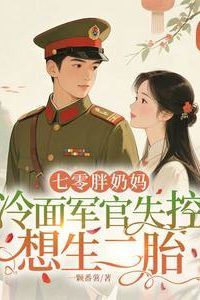
Lin Tingwan, a successful skincare entrepreneur from the twenty-first century, dies in a car explosion and awakens in the body of a twenty-year-old woman in 1975 China. The original Lin Tingwan, the daughter of university professors Lin Bokang and Song Zhihua, had died of fright upon learning that her family was about to be sent to the countryside for re-education. To save their only daughter from hardship, her parents arranged for her to marry Lu Yunzheng, a regiment commander in his late twenties who is infertile and raising three orphaned children from his deceased sister. Lin Tingwan accepts this reality, determined to navigate the turbulent era with the resilience of a modern woman.

Her situation improves dramatically when she discovers a mystical spatial dimension attached to her soul. Inside this space, she finds a spiritual spring with water that accelerates plant growth, heals wounds, and enhances beauty. She also learns she can transfer objects in and out of the space at will. Using this advantage, she secretly hides her parents’ precious books and manuscripts within the space to protect them from the Red Guards, who are actively monitoring the Lin household for contraband. She also uses the spiritual water to improve her family’s health before their departure.

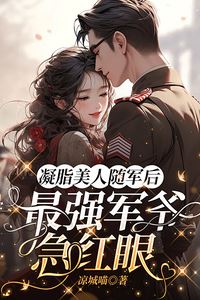
On the morning of her blind date, Lin Tingwan encounters Lu Yunzheng at a department store. He is the soldier who subdues a thief that had stolen her mother’s wallet. Lin Tingwan is struck by his handsome appearance and military bearing, while Lu Yunzheng is captivated by her beauty. The two are surprised to discover they are each other’s blind date. Lu Yunzheng, known for his stern demeanor, finds himself unusually nervous and shy in her presence. During their meeting, he honestly discloses his status as a widower with three children and his inability to father more, but also reveals his high rank, good salary, and respect for women’s careers.

Lin Tingwan, impressed by his integrity and appearance, agrees to marry him. The marriage is processed quickly, with Lu Yunzheng ensuring her parents are relocated to a production team in his friend Wen Chuan’s hometown, where they will be treated with respect. Shortly after the marriage certificate is issued, Red Guards raid the Lin home, accusing them of capitalist practices. Lu Yunzheng physically intervenes, intimidating the guards by revealing his identity as the feared commander of the Third Regiment. He forces an apology from the leader and ensures the search yields no damaging evidence, protecting the family from further harassment.

Lin Tingwan and Lu Yunzheng move into the military family compound, where they begin to navigate their new life together. Their relationship develops from a pragmatic arrangement into genuine affection, marked by tender moments and mutual support. However, the three children Lu Yunzheng cares for—Lu Zizhou, Lu Zihang, and the young Lu Zixin—are wary of their new stepmother. Influenced by a neighbor’s negative stories and the memory of previous failed matchmaking attempts for their uncle, the children view Lin Tingwan with suspicion and fear, expecting her to be a cruel intruder who will drive them away. Meanwhile, a schoolteacher named Ye Shuwei shows interest in the children, hinting at potential future complications within the household dynamics.

As the Lin family settles into the compound, Lin Tingwan uses her cooking skills and the resources from her space to win over her parents-in-law and manage the household. She balances her role as a devoted wife and stepmother while preparing for the uncertainties of the political climate. The story follows her efforts to build a stable life, protect her loved ones, and leverage her unique spatial abilities to thrive in a challenging historical period, all while deepening her bond with the initially reserved but increasingly devoted Lu Yunzheng.

Latest Release
DateGroupRelease
2026-08-11shanghai fantasy c4
2026-08-11shanghai fantasy c3
2026-08-11shanghai fantasy c2
2026-08-11shanghai fantasy c1

Community Reviews

Rating(4.1 / 5.0, 29votes)
5 stars
12(41%)
4 stars
7(24%)
3 stars
10(34%)
2 stars
0(0%)
1 stars
0(0%)

Popular reviews

... Read More
The pacing of this novel is what I would call aggressively efficient. In the span of seven chapters, we move from a chance encounter in a department store — where Lu Yunzheng catches a thief and returns Lin Tingwan's wallet — to a blind date arranged by their elders, to a meal at a state-owned hotel, to a marriage proposal delivered in the back seat of a military jeep. That is not a slow burn. That is a forest fire. And yet it works, because the author understands that tension does not require time — it requires intensity. Each chapter ends on a note that propels the reader forward. Chapter 4 ends with the two of them recognizing each other at the restaurant. Chapter 5 ends with Lu Yunzheng laying out his entire life story — his salary, his family, his children, his willingness to share everything. Chapter 6 ends with the proposal itself, delivered with such urgency that even Wen Chuan is nearly knocked over. The structure follows a classic romantic comedy arc but compresses it into a military-era framework. The meet-cute is the department store. The first date is the state-owned hotel. The turning point is the car ride home, where Lu Yunzheng and Lin's parents bond so effectively that Wen Chuan becomes redundant. The climax is the proposal, and the cliffhanger is the parents' hesitation. What I appreciate most is how the author uses Wen Chuan as a pacing device. He is the comic relief, the nagging friend, the observer who comments on the action and helps the reader understand what is happening emotionally. When he sees Lu Yunzheng's hands stroking his knees under the table, he clenches his fists and thinks, It seems like there's hope this time! This external validation of the internal emotional shift gives the reader permission to feel invested. The pacing is not lazy — it is deliberate. The author knows that in a transmigration romance set in the 1970s, the stakes are already high. Every day could be different. Every decision could have consequences. So the romance moves quickly, not because the characters are impulsive, but because the world they inhabit does not allow for leisurely courtship.
... Read More
The relationship dynamics in this chapter are absolutely exquisite. Let me start with Lu Zizhou—the twelve-year-old who carries the weight of three siblings on his small shoulders. His opening scene, leading his brothers and sisters to the uncle with lunch boxes while "lowering his head as if admitting his mistake," breaks my heart. This is a child who has been burned before and has learned that trusting strangers is dangerous. His internal monologue—"they are a burden, unwanted children, they will only be disliked"—reveals the deep insecurity that drives his overprotectiveness. But watch how Lin Tingwan earns his trust. She doesn't just feed them—she ASKS about their restrictions first. She notices Xinxin's allergy. She makes sure the dumplings are safe. And when she says to Zihang, "eat quickly, they're best eaten hot," she's not just being practical—she's speaking the language of someone who remembers what it feels like to be cared for without conditions. The Lu Yunzheng-Lin Tingwan relationship is evolving beautifully too. His line about not missing other people's cooking anymore—"ever since I ate the food cooked by Lin Tingwan, I no longer even miss the food cooked by others"—is such a subtle but powerful declaration. He's not just talking about food. And that moment when he catches her staring at him in his sweat-soaked vest? The tension between them is palpable. He teases her about being bold during the day versus nervous at night, which shows he's paying attention to every detail of her behavior. And Ye Shuwei—oh, she's written as a cautionary figure. Her genuine affection for the children is real, but her inability to see past her own romantic interest makes her dangerous in this household. Lin Tingwan's reading of her is accurate: this isn't about the kids, it's about the uncle.
... Read More
The central conflict of this novel is not romantic — it is existential. Lin Tingwan knows what is coming. She knows that in the years ahead, her father will be demoted, labeled, possibly sent down to the countryside. She knows that this will create obstacles for Lu Yunzheng, who has built his career on merit and political reliability. And she knows that in this era, a marriage to a tainted family can be a death sentence for a military career. This is why her question to Lu Yunzheng carries so much weight. If my parents are demoted, it may affect your work. The stakes are not abstract — they are literal, political, and immediate. Professor Lin's response is equally telling: Don't worry, if I really do get demoted, I will immediately publish an announcement in the newspaper to sever ties with you and will never implicate my daughter. This is a man who has already accepted the worst-case scenario and is trying to protect his daughter from the consequences. Lu Yunzheng's response to all of this is remarkable. He does not flinch. He does not hesitate. He has already thought it through. His parents were martyrs. His grandfather made contributions to the army. Even if something unexpected happens to the Lin family, he will not be implicated. This is not blind optimism — it is informed confidence, built on a lifetime of understanding how the system works. But the real conflict is internal. Lin Tingwan wants to believe in Lu Yunzheng, but she also wants to protect him. She has transmigration experience — she knows how the future unfolds — and she is wrestling with the moral question of whether to warn him, to change the future, or to accept the path that has already been set. The romantic tension is inseparable from this larger existential tension. The stakes are raised even higher by the presence of Lu Yunzheng's three nieces and nephews. He is already responsible for children who are not his own, and adding a wife and potentially more children to that responsibility is a enormous leap. Yet he makes it anyway, in a state-owned restaurant, with braised pork and a question that changes everything.
... Read More
I need to talk about Lu Zixin for a moment because THIS CHILD is carrying so much trauma and I am not emotionally prepared. She's four or five years old and her first instinct when meeting her new 'aunt' is to beg: 'Please don't chase Xinxin away, okay?' Don't you dare cry about this. Don't you dare. The text says she looked 'so skinny that he didn't look like a child of four or five years old' and had 'two big watery eyes.' She's literally starving for affection and security and all she can think about is not being abandoned. And then the candy scene—she takes the candy but immediately shares it with her brother, who pretends he's not greedy but is clearly starving for something other than food. Lu Zizhou is the oldest and he's already playing the role of protector, watching this 'aunt' like she's a predator waiting to strike. His internal monologue about exposing her 'true face' broke my heart because he's a CHILD doing this calculus. But here's what got me: Lin Tingwan doesn't flinch. She doesn't get offended. She just squats down, hugs the kid, and says 'How could a family chase Xinxin away?' The text says 'This aunt looked so beautiful when she smiled, and her body was fragrant and soft, just like her mother.' That comparison to their mother—God. That's the moment the ice cracked, even if just a little.
... Read More
Let me be clear: this isn't a fluffy transmigration romance where everything works out because the universe loves the protagonist. The stakes here are genuinely high. Lin Tingwan's family is marked for countryside re-education. That's not a minor inconvenience—it's life-destroying. Her parents describe it explicitly: "people sent down to the countryside get humiliated, forced to kneel for criticism, and work themselves to death." This is historical reality, not fictional drama. The original Lin Tingwan DIED of fright at the prospect. That's how terrifying this situation was. But the external conflict isn't the only thing at play. There's also the immediate danger of being watched. In Chapter 2, Lin Tingwan notices someone watching her family as they leave the house. She says to her father: "Dad, if there is someone monitoring them, then our whereabouts will be exposed, believe me." This isn't paranoia—it's survival instinct. The Red Guards are actively looking for reasons to raid homes, and her family's books could be used as 'evidence' of counter-revolutionary activity. Then there's the personal stake: Lin Tingwan has to marry a man she hasn't met, become a stepmother to three children, and navigate an era where her beauty—which is already noted as extraordinary—could make her a target. She's a 21st-century woman with modern values in a time and place where those values could get her in serious trouble. And yet—she has the space. She has the spring. She has her wits. The question isn't whether she'll survive. The question is how much of herself she'll have to sacrifice to do it, and what kind of life she'll build on the other side. I'm invested.
... Read More
I need to talk about the scene where Lin Tingwan catches Lu Yunzheng in his white vest, sweat-soaked, muscles visible, and the narrative just explodes with romantic tension. She's staring at him—"her autumn-watery eyes glanced at him"—and the text says his heart began to beat violently. This is the kind of moment that makes readers clutch their chests. The author writes: "It's simply a crime!!!" and I screamed. This woman has no filter when it comes to appreciating her husband's body, and Lu Yunzheng's reaction—flustered but secretly pleased—is absolutely perfect. But the emotional core of this chapter isn't the romantic tension (though that's delicious). It's the scene where Lin Tingwan holds little Xinxin and the girl immediately clings to her, shyly burying her face in her neck. "Her aunt kissed her?! Does this prove that my aunt likes Xinxin?!" The little girl's internal monologue is so innocent and devastating. After being burned by someone who brought poisoned food, after growing up feeling unwanted, this child is learning—slowly, carefully—that not everyone will hurt her. And Lu Yunzheng watching this interaction—"his heart trembled slightly. It seemed that he had not seen such a bright smile on Xinxin's face for a long time. All this is thanks to Lin Tingwan!"—this is the emotional peak of the chapter. He's not just grateful; he's witnessing something he thought was lost forever. The smile he thought only existed in his memories is back, and it's because of this woman he married. The contrast between Ye Shuwei's awkward, self-serving affection and Lin Tingwan's genuine, attentive care is heartbreaking. One brings dumplings she didn't make; the other asks about allergies before cooking. One wants to be auntie; the other earns the right to be called auntie.
See all reviews

Characters

See all characters

Custom lists

See all custom Lists