When Regret Strangles Your Throat - Reviews

When Regret Strangles Your Throat
+Add to Custom List
Sort
Add review
... Read More
I need a minute. Can we just talk about the red dress for one second? Jaina wore it because she thought Cadel disliked it. Violet told her he hated red, so Jaina chose other colors to avoid upsetting him. Then in this scene, she asks him point-blank and he says ‘I've never had any real interest in colors.' He didn't dislike red. He never did. Violet lied. And the moment Jaina realizes this, her blood surges with hot anger — not just because she was manipulated, but because she understands what that lie meant. Every time she chose navy or some other color ‘because he prefers it', she was shrinking herself. She was performing the role of the considerate wife based on FALSE information, while Violet was sitting across from them probably wearing red with a smug smile. But then Cadel says ‘At least I know that red suits you' and ‘You're the one who shines' and suddenly Jaina's face flushes because for the first time, someone is telling her to just BE herself instead of performing. The emotional whiplash of going from ‘I was tricked into making myself smaller' to ‘he thinks I shine in anything' is so much to process. And the worst part? She still doesn't let herself feel it. She literally covers it up with ‘more importantly, let's settle the matter of you coming to the Grand Temple.' She deflects. She always deflects. That's the tragedy, isn't it? He's trying so hard and she's still too armored to let it in.
... Read More
Can we just talk about Adil for a second because this man is carrying the entire emotional intelligence of this story on his back? "From Her Grace's perspective, did you not act like a husband shielding a mistress in front of his wife?" Bro. Adil just looked at his Duke and said, respectfully, that he was acting like a man with a mistress. And Cadel's reaction — 'A mis—!' — like the WORD itself physically wounded him. The man genuinely cannot comprehend how his wife sees his behavior. He thinks explaining the circumstances (the rainy nights, the protective thing) should resolve Jaina's feelings. Adil has to literally spell it out for him: knowing WHY you sleep with someone else doesn't make it hurt less. That line — 'Even in a marriage without love' — hit me hard. Adil knows about arranged marriages and still managed to understand something Cadel refuses to. But here's what really got me: Cadel's internal monologue afterward. 'Whether it was a curse or a blessing that she had returned with all her memories intact was hard to say.' The man has love, genuine love, but it's completely misfired. He fell for Jaina over time — quietly, steadily, immensely — but he never actually communicated it. He hurt her. He keeps hurting her. And now she's back, remembering everything, and he has to figure out how to reach a woman who has every reason to walk away. Meanwhile Violet and Cadel's dynamic is... complicated. She knows he sleeps with her on rainy nights and uses it as leverage against his marriage without even seeming to try. And Cadel, who supposedly loves Jaina, can't see that what he's doing looks exactly like what he's describing. I need Adil to get married and learn from his mistakes so the next generation doesn't repeat theirs.
... Read More
The structure of this section is so deliberate and I need to talk about it. We open with Cadel — slow, contemplative, leaning against chair backs, sighing heavily. The prose has this weighty quality to it, like the air in the room. Adil delivers the exposition about Violet and Jaina's conflict almost naturally, the way two close friends would when one is being painfully dense. This middle section burns at about 60% speed — lots of internal monologue, lots of Cadel remembering why he fell in love with Jaina, the emotional setup. Then we CUT to Violet. And the pace INCREASES immediately. She's laughing, conspiring, planning. 'Hahaha! These things must be crushed at the start.' The exclamation marks, the quick dialogue, the physicality — it's a completely different rhythm. We're in the antagonist's head and she's MOVING. Then Jaina's POV. And suddenly everything SLOWS down again. Tea. Silence. Measured sips. The description of her internal process — deciding, reconsidering, deciding again — takes up real narrative time. We feel every moment of her deliberation. When she finally speaks, it's one long, carefully constructed paragraph that mirrors the precision of her thoughts. The transition from Jaina's calm acceptance ('I won't fall in love with him again') to the actual confrontation with Violet is where the pacing pays off. The author lets us sit with Jaina's emotional resolution before triggering the confrontation. We know she's ready. Violet doesn't. That dramatic irony makes every line of dialogue crackle. The chapter ends on a note that's almost deceptively casual — 'I only need to give her the same in return' — but the reader understands this is the pivot point. Everything changes after this. I just... I need to know what happens next.
... Read More
The contrast between Jaina's world and Cadel's is almost cinematic. Her space—the fishing lodge, the clearing, the cottage with its food shed—is bathed in sunlight and surrounded by spirit-glowing trees. Everything grows fast here. The soil is impossibly rich. Elysion himself radiates golden light like a living sunbeam. There's a warmth to this setting that feels almost mythological, like stepping into a fairy tale where the forest itself is aware and watchful. The Water Spirit appearing in shades of blue, the Elim Tree bearing fruit once a year, the spirits who gossip—these details build a world that feels alive, older than human记录ions, with its own rules and rhythms. Then the scene shifts and the rain arrives. Cadel's world is gray, wet, oppressive. The North's rainy season isn't just weather—it's an enemy. It triggers physical reactions in him, something primal and terrifying. The ducal estate, the carriage, the document with Patrick's trembling signature—all of it feels heavy and bureaucratic, weighed down by power dynamics and corruption. Even the investigative agency mentioned in passing suggests a world where the church and state are entangled in uncomfortable ways. What strikes me most is how the environment itself becomes emotional shorthand. Jaina's world is bright and fertile despite its dangers; Cadel's is political and precise but fundamentally cold. And that final image—the rain falling steadily, Cadel's body trembling, his plan derailed by weather—transforms a simple atmospheric detail into something deeply symbolic. The storm isn't just bad timing; it's the physical manifestation of everything he can't control.
... Read More
"You don't know me at all." Four words. That's all it takes and suddenly the entire chapter recontextualizes itself. The pacing here is actually incredible when you think about it—starts with the Violet confrontation (which we've seen play out before in their past life), moves to the private conversation where Jaina drops the separate rooms bomb, then Adil's scene which is basically exposition but somehow works because we NEED to understand Cadel's curse, then back to Jaina signing the contract like nothing happened, and then BOOM, the "Do you hate me?" question that lands like a truck. The author knows exactly when to give us breathing room and when to slam the door. That ending where Cadel mentions his room is next door and Jaina's all "Not yet"—I literally gasped. The structure keeps pulling the rug out from under you.
... Read More
There are SO many layers here and I'm only just beginning to unpack them. The central symbol, obviously, is LIGHT. The Village of the Spirits is bathed in eternal sunlight. The Spirit of Light himself radiates golden light. Jaina is a SAINTESS — her power is divine, luminous, pure. And yet she spent her first life drowning in darkness: emotional darkness (her husband's betrayal), literal darkness (pouring her power into the ground), and metaphorical darkness (her family's commodification of her gift). The forest she flees into is steeped in demonic energy — the antithesis of everything she is. And yet she survives. Because she carries light within her. But here's what really got me: the farming. Jaina spent her idle years as Grand Duchess reading books about agriculture. About building homes that could withstand the North's brutal cold. She studied "in the hope of being of even the slightest help to that frigid land." And when she finally runs away to survive, that knowledge becomes her salvation. The very things she thought were wasted — her loneliness, her purposelessness, her hours in the library — become the tools that keep her alive. There's a whole theme about unused potential and the cruelty of a world that only values you for what you can PRODUCE. Her family values her divine power as income. Cadel... apparently valued her presence and wanted her safe. She couldn't tell the difference because she'd never been loved without conditions. But now she's in the Village of the Spirits, a place where spirits live in peace, where beauty exists without being exploited, and she's looking at a mushroom-shaped cottage by a lake. A home she can cultivate. A life she can build on her own terms. "I used too much divine power getting through the forest. I'm exhausted." And yet she keeps going. That's the thesis right there — light persists even when it's nearly spent.
... Read More
I need to talk about Cadel because oh boy do I have OPINIONS. Jaina's entire emotional arc in these chapters is built on a fundamental misreading of him, and it BREAKS me a little. She loved him. She literally loved him to the point where she wasted her divine power on the Elim Tree instead of saving herself. And what did he do? He gave her a comfortable life. He never asked her to fight. Never asked her to use her power. When the cold spell hit, he told her to STAY IN THE CASTLE for her own safety. When it passed, he still didn't call on her. Think about that from his perspective. He spent half the Grand Duchy's fortune acquiring a saintess. Any other duke would be putting her on the front lines, using her to protect trade routes, to ward off monsters, to project power. Cadel? He let her READ BOOKS. In the LIBRARY. All day. Every day. And she interpreted his respect for her autonomy as indifference. Of COURSE she did — she'd never known a man who didn't want something from her. Her father used her for money. Cadel seemed to want nothing. So in her framework, that meant he didn't care. It never occurred to her that someone could simply... respect her enough to leave her alone. Now she's fleeing into a monster-infested forest to escape her family, and one of her explicit goals is: "At the very least, I will not fall in love with him again." Which is tragic because she clearly already has, and because she doesn't yet understand that Cadel might have been the only person who ever treated her like a human being rather than a commodity. The parallel with her father is devastating. Patrick sees her as income. Cadel saw her as... what? A wife? A person? Something he didn't know how to name? We don't get his POV at all in these chapters, which makes the dramatic irony absolutely suffocating. And then there's the Spirit of Light, who shows up and immediately calls her a "mere human" with suspicion in his eyes. New relationship dynamics incoming and I am not ready.
... Read More
Okay so the thing that hit me hardest this batch wasn't even about Jaina and Cadel — it was Adil. That one scene where Jaina smiles at him and he looks genuinely confused? And then Cadel just casually covers for her like, yeah man she was here two years ago, whatever bro I'll fix this? This man can lie on the spot with zero hesitation. I respect it honestly. But what really wrecked me was Jaina realizing that to everyone else, this is their first time meeting her. She's carrying this entire history alone. That's some serious isolation right there. Meanwhile she's smiling at Adil because he was the only person who ever treated her with actual warmth in that castle, and now she can't even acknowledge it without causing confusion. The contrast between Adil and Cadel is just devastating. Adil showed kindness without expecting anything. Cadel? He gives her a ring — wait, no, HE GIVES VIOLET THE RING. That black gemstone that matches his eyes! He told Jaina he'd make her something special with it and instead... gave it to the other woman. Of course he did. The cruelty is so casual too, he doesn't even seem to register how much it destroys her.
... Read More
Okay so I need to talk about this moment where Cadel literally asks Jaina "Do you hate me?" and I nearly threw my book across the room. NOT because it's a bad scene—because it's so devastatingly good. Like, this man literally chose the other woman AGAIN and he's standing there looking vulnerable asking if she hates him? Jaina's whole internal monologue about her feelings being "too tangled" for simple hate? Chef's kiss. It's not that she doesn't hate him—it's that she CAN'T hate him yet, and that space between love and hate is where all the pain lives. She literally says "I had no intention of loving him again. Over time, even the love she once felt might fade" and I'm sitting here like— girl, you are doing THE WORK. The fact that she can't even summon clean hatred for him is what makes this romance so achingly real. In the last life she died for him. Here she's learning to not care, and the process itself IS the emotional journey. That line about wanting to eventually see him "as nothing more than a friend"—that's not weakness, that's survival.
... Read More
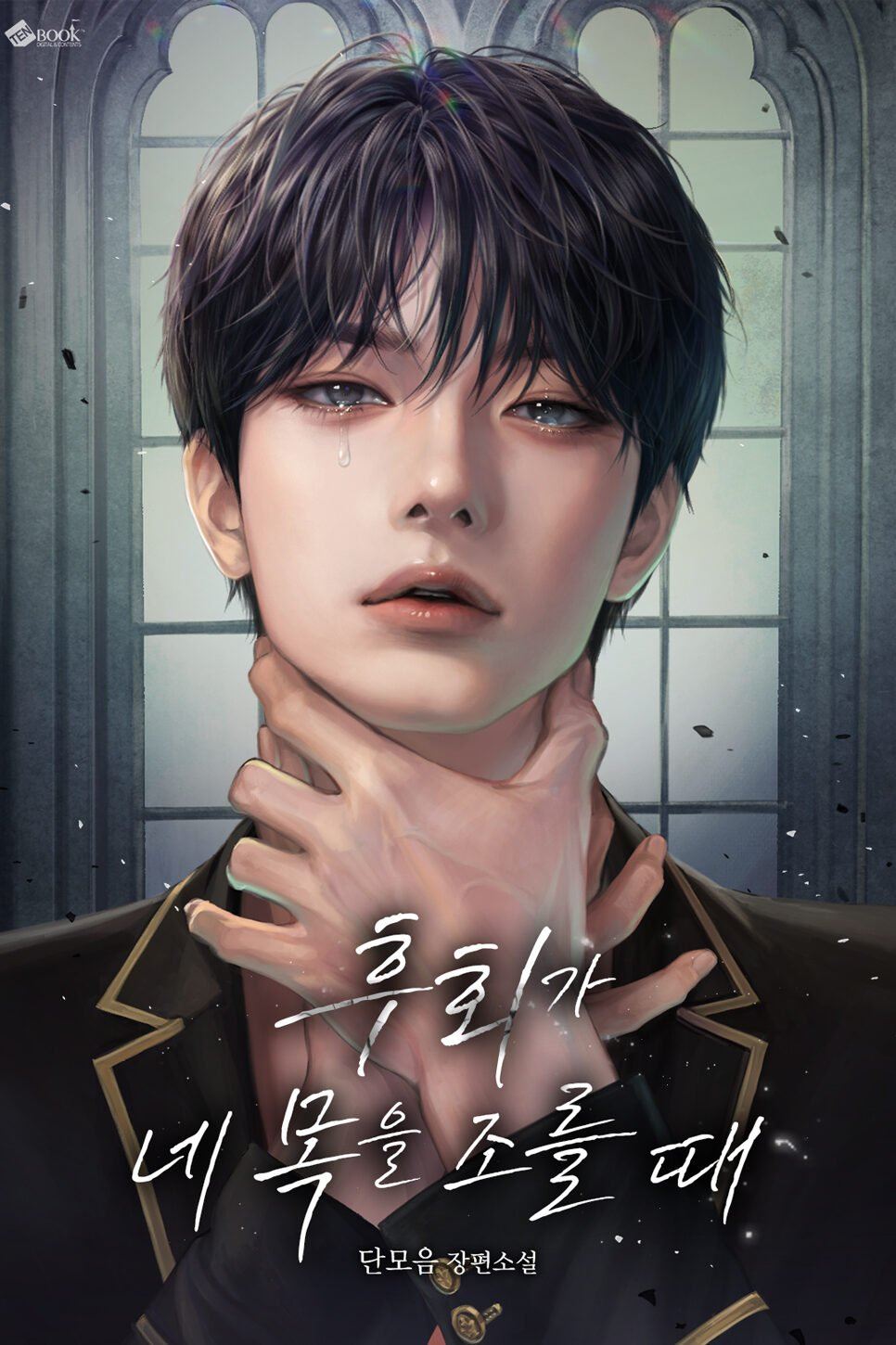
This chapter is a masterclass in pacing manipulation, and I need to talk about how the author sets you up for the emotional sledgehammer. The first half is... quiet. Almost cozy. Jaina baking, spirits gathering for meals, Elysion grumbling about bread. It's slice-of-life fantasy content. The prose slows down. We get descriptions of how the spiritual energy in the soil affects the food, how each spirit brings a different blessing, how lunch is about to be served. It feels like the story is taking a breath. And that breath is calculated. Because right when you settle in — when Jaina says "I'm eating too" and Elysion shrugs and disappears — the chapter HITS. "Did you think I wouldn't find you just because you hid in a place like this?" One sentence. That's all it takes to shatter the domestic peace. Cadel appears covered in wounds, having fought through a Forest of Monsters with nothing but a sword. No divine power protection. Just him. And the moment Jaina sees him, the narrative immediately pivots: "In that instant, she realized that she had never truly forgotten him." No buildup. No slow realization. Instant, visceral recognition. Then the author does something brilliant with information delivery. Instead of dumping exposition about Cadel's past, his marriage, the black mana, the spirit form — it all comes through their conversation naturally. He bandages his arm while explaining things. She ties the knot while processing revelations. The physical action grounds the emotional information. When Elysion drops the "he can't see me" bomb, it's woven into dialogue, not narration. When Cadel reveals he sacrificed years of his lifespan, it's observed by Elysion casually, not announced dramatically. The chapter ends on a question — "Why are you doing this?" — that mirrors the first time they met essentially. And then Cadel's response about needing her divine power to save the Empire is both a practical plot advancement AND an emotional deflection. He's using duty as cover for devotion, which is exactly the kind of thing he did in their first life that drove her away. The author is setting up a pattern here, and I'm already worried about what happens when Jaina figures out that his "I need your divine power" is really "I need you." The pacing choice to end on this ambiguous note rather than a clear resolution is what makes the chapter breathe. It doesn't tie everything up. It leaves you wanting to know what she'll say, what she'll do, whether she'll believe him.
... Read More
I need a minute. Can we just talk about how devastating the relationship between Jaina and Cadel is? This man—this absolutely insufferable, cruel, emotionally abusive man—got under her skin so completely that even after she decided to die, even after she looked death in the face, the memory of his voice and his sighs was what pushed her over the edge. The scene where he says 'Because of you—inferior Violet is being pointed at by the servants and called an adulteress'—that line is going to haunt me. He weaponizes her pain and redirects it toward the actual victim. And Jaina, who had every right to be angry, is left sobbing on the floor wondering if loving him was the mistake. That's not romance, that's psychological erosion. The author writes this devastatingly well. And then—the reincarnation twist. She comes back to the past and her first real moment of emotional reckoning is at the village, watching her family take credit for her blood and sweat. The betrayal compounds. It's not just Cadel anymore. Her entire world has been systematically stripping her of value and calling it love. But here's what gets me: the fact that Jaina fell in love despite all of this. Despite being told from the beginning that she'd never be enough, she still let herself care. That makes her so much more human and tragic than a typical reincarnation protagonist. She's not coming back with revenge energy yet—she's coming back numb. And that numbness? That's the most dangerous kind.
... Read More
Okay, so this section absolutely flipped the script on me. Up until now, Violet had been painting herself as this sympathetic figure — wronged by the Grand Duchess, gaslit by everyone around her. But then we get this little scene where she's talking to Merian and literally says she needed to go apologize to Jaina because 'these things must be crushed at the start, or they grow bold.' CRUSHED AT THE START. Like a garden weed. Like a pest problem. This woman has no delusions about what she's doing, and the narrative had been so smoothly letting us feel sorry for her that I completely missed how calculated she actually is. And then Jaina's response? Absolute masterclass. She doesn't throw a tantrum. She doesn't cry or beg Cadel to choose. She does something I genuinely didn't expect — she gives Violet exactly what she wants, but on Jaina's terms. 'Continue calling my husband by his name, as you always have.' The way Jaina deliberately mirrors Violet's own manipulative tone is *chef's kiss*. She takes Violet's language and weaponizes it back at her. The twist here isn't some big plot reveal — it's subtler than that. It's the realization that Jaina has stopped playing the role the story had assigned her. In the original timeline, she was the jealous, pathetic wife who couldn't handle sharing her husband. Now she's looking at Violet the way a queen looks at a bothersome insect. The plot structure itself is mirroring this shift: we spent two chapters in Cadel's POV feeling bad for him, then Violet's POV revealing her schemes, and now Jaina's POV where she's completely in control. The author is building toward something where the victim becomes the strategist.

Leave a comment

You must be logged in to leave comments. or
