When Regret Strangles Your Throat - Reviews

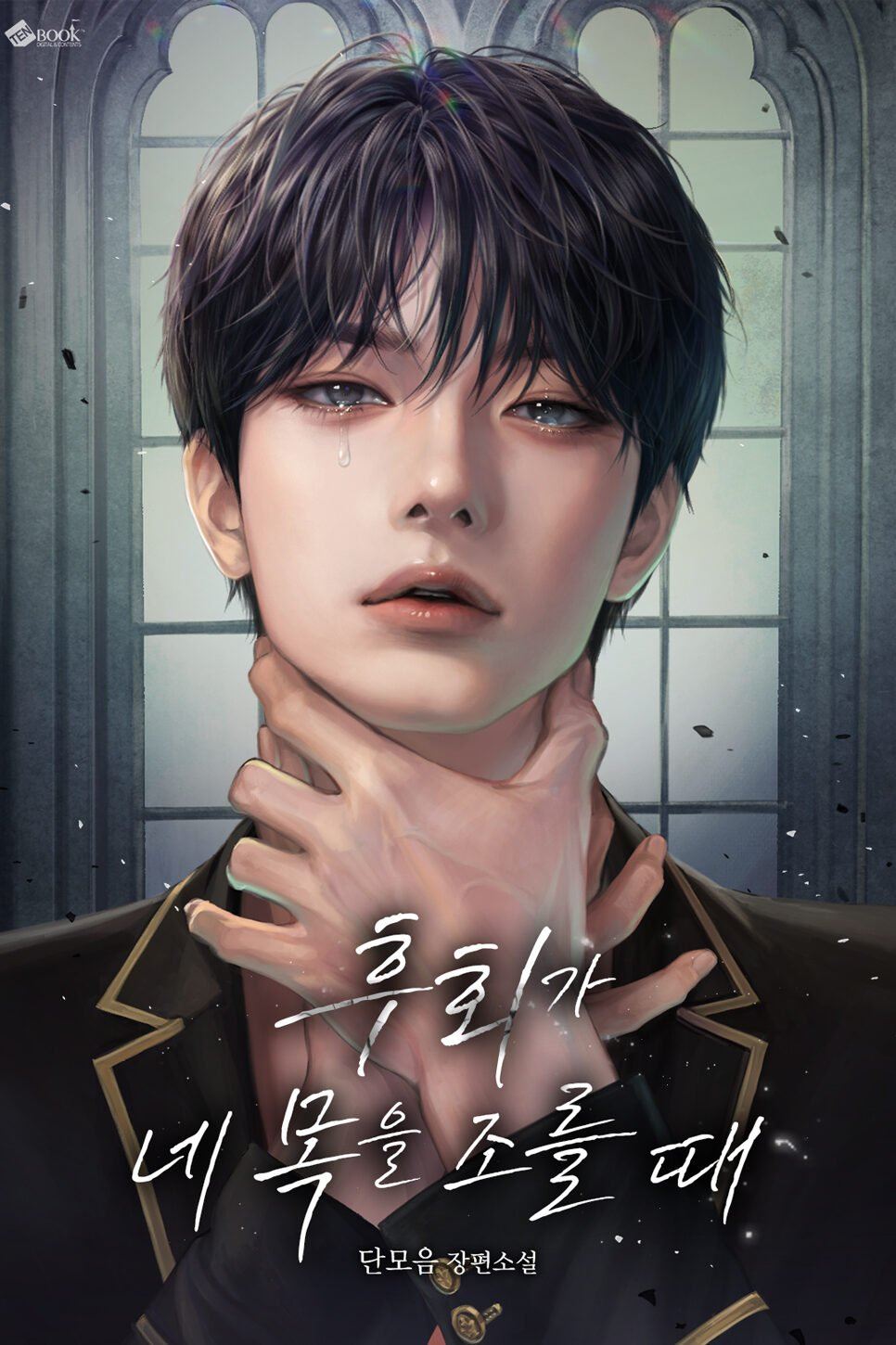
When Regret Strangles Your Throat
+Add to Custom List
Sort
Add review
... Read More
Okay so let me just... ELYSION. This water spirit who literally showed up scowling and said he'd never eat human food and now he's sitting there grumbling while absolutely devouring Jaina's cooking. And then he casually mentions that some spirits might have been secretly trying to taste her food before, which is the most Elysion thing ever — admitting indirectly that he was curious without ever actually saying he was curious. The man is a walking contradiction. He stays away from the cooking because "it doesn't look good" (it does), complains about everything (he comes back for seconds), and then drops bombshells like "he can't see me" when Jaina asks why Cadel looks confused. That's not just plot information — that's Elysion being Elysion, giving them a moment of privacy while acting like it's no big deal. But the real depth is in how Jaina and the spirits relationship evolved. She didn't force anything. She just... baked bread. One loaf. And offered it. And gradually, one by one, these powerful supernatural beings started showing up at her fishing spot for meals. That's not a transaction. That's trust built through something as ordinary as sharing food. Twelve blessings. Twelve spirits who chose to stay close to her. And Cadel? His relationship with Jaina is this whole tragic arc compressed into one chapter. He married her for political/destiny reasons, fell in love with her honestly, pushed her away through his own clumsiness, and then spent however-long searching for her across timelines. Now he's back and immediately trying to protect her while also being desperate for her to stay by his side. The power dynamic here is fascinating — she has the divine power he needs, but emotionally, he's the one begging.
... Read More
Let me just say this plainly: Violet is not playing games anymore. She had her whole plan — slow and patient approach, make Cadel accustomed to her presence before Jaina could compete. But then the Grand Duchess appeared and ruined everything. So Violet escalated. And the stakes just went from ‘emotional discomfort' to ‘potential psychological destruction.' Think about what she's planning: Cadel stays in HER chambers during the rainy season (which lasts a week to almost a month), Jaina is far away in the Empire, and Violet is going to ‘make it perfectly clear whether Cadel and I are truly like family, or if we're just a man and a woman.' The implication is NOT subtle. She's going to manufacture evidence that will shatter Jaina's sense of reality. And the horrifying part? Jaina WON'T investigate. Violet knows this about her. No love between them means no courage to confront Cadel directly. A saintess not born into nobility lacks the social standing to question freely. Violet has read her target perfectly. This is a predator who understands her prey. Meanwhile, Cadel is walking right into danger by going to the Grand Temple anyway — where the Elim Tree is withering and holy power is disappearing. Two fronts of conflict closing in on Jaina and I can't breathe. What happens if Violet's scheme works AND something goes wrong at the Grand Temple at the same time? I need the next chapters yesterday.
... Read More
There's something almost sacred about how the author describes the Village of the Spirits. "Dark and impossibly beautiful, with a faint shimmer of light. Astonishingly quiet. Peaceful." That's it. That's the whole vibe and it hits so hard because it's the ONLY place in this entire story where Jaina seems to have existed as herself rather than as someone's wife, someone's saintess, someone's prisoner. And the detail that it's invisible to humans? Perfect. It's literally a world apart from the human world that's been destroying her. Cadel had to follow her into the cursed Forest of Monsters just to find it, and even then he barely stumbled upon it by accident. This village exists outside the normal rules. Then we cut to the Grand Ducal Castle and the contrast is brutal. Rows of servants bowing. Stewards. Everything formal and cold and hierarchical. Jaina realizes she moved only between her chamber and the library during her entire first life — her whole world was four walls and a reading room. The suffocation of that existence finally registers on a conscious level now that she's returned. The village felt like freedom. The castle feels like a return to the cage. The author really understands that setting isn't just backdrop, it's emotional territory.
... Read More
The stakes in this chapter are quietly terrifying. Not because there's dragon attacks or political intrigue (though those are happening too)—but because Jaina has literally rewired her entire emotional response to Cadel. Remember when she used to stay silent to appear agreeable? Now she just... doesn't. When Violet plays the victim, Jaina calls it out. When Cadel tries to mediate, she shuts him down. The internal conflict is brutal though—she STILL feels something for him, which is why the separate rooms conversation hits so hard. She gave him a choice and part of her WANTED him to choose differently. That's the real stakes: can she actually let go, or will the old patterns pull her back in? And externally, the curse situation is unresolved—Cadel still has to deal with his rainy night visits, Jaina still needs to save the Elim Tree, monsters are attacking villages, black mages are everywhere. But the biggest tension is between two people who know exactly how this story ends and are trying desperately not to repeat it. How does that even work?!
... Read More
The pacing in these opening chapters is deliberately suffocating, and I respect the craft. The author doesn't rush us into the reincarnation reveal—they make us sit in Jaina's discomfort first, feel every second of that rainy marriage, the cold dinners, the sighs, the sliding door closing. It's slow-burn misery and it works because by the time she dies and wakes up in that dark storage room, the relief we might feel is immediately doused by the realization: nothing changed. She's still trapped. The transition from the marital bedroom to the family home happens seamlessly through the reincarnation mechanic, but the structural choice to keep the tone identically bleak across both settings is what really lands. Same Jaina. Same suffering. Just different perpetrators. That circular feeling—the sense that she's running in place—is baked into the narrative architecture itself. The village scene is where the pacing shifts noticeably. Everything before it is internal, quiet, claustrophobic. Then the monsters attack, the prose quickens, Jaina moves, acts, fights. It's almost cathartic. But then the author undercuts it immediately by having her mother and sister receive the gratitude. The relief is short-lived and that's intentional. We're not supposed to feel better yet. Chapter 7 ends on what feels like a breaking point but also a turning point. Jaina's resentment is no longer just directed inward—it's externalizing. The author has been building toward this shift for seven chapters, and the structural tension is razor-sharp.
... Read More
"On rainy nights, her husband would abandon her and go to the bedroom where this woman was waiting for him." I need a minute. THAT LINE. That's not just backstory, that's the entire emotional architecture of Jaina's suffering right there. Every time it rained, she was alone in their marital bed while he went to Violet. And now Cadel says "let's renovate our room" because the rainy season is coming again?? Her jealousy didn't disappear when she died, friends. It's still there. Still ugly and murky and coiling around her like smoke. And she caught herself feeling it and the shame was immediate. She told herself she wouldn't love him again, she wouldn't be foolish, and yet her body reacts before her mind can stop it. The most painful part is how rational she tries to be about it. She literally goes through a cost-benefit analysis: the Symbol of Binding requires marriage, she needs the protection, therefore she endures. She's treating her own heart like a strategic asset. And that's exactly what broke her the first time around, isn't it? The realization that she became so accustomed to rationalizing pain that she forgot she was allowed to want something better. I'm not okay.
... Read More
Can we just take a moment to appreciate the Spirit of Light's dialogue? Because it is PERFECTION. He wakes up, looks at Jaina, and says: "What." Not "Who are you?" Not "How dare you enter my domain?" Just. "What." As in: what IS this creature doing in my fishing lodge? His entire worldview has been interrupted and his first response is sheer, unfiltered confusion. And then when she says "Pardon?" he doubles down: "I asked what you are. Who else is here besides you?" This man does not suffer fools. He does not suffer intruders. And yet the text makes it clear that he's not actually hostile — he's just... blunt. Direct. A creature of pure light who has apparently never encountered a saintess showing up unannounced in the middle of nowhere. Jaina's dialogue, by contrast, is full of hesitation. Ellipses. Soft words. "Ah..." "Y-yes." She's been through trauma. She's running for her life. And she's speaking to an ancient supernatural being who could probably erase her with a thought. And still she tells him everything. The text says: "She told him everything." Not summarized. Not paraphrased. EVERYTHING. The affair, the suicide, the time travel, the family's exploitation. The parent characters' dialogue is also worth noting — Patrick's "Find her. Immediately!" and "D*mn wretch." He's not worried about his daughter. He's worried about his INVESTMENT. The wife and daughter changing their clothes and arranging their hair so the guest won't notice the dishevelment — those are tiny details but they paint a picture of a household that's all performance, all calculation. And Cadel's one line: "Where is Jaina?" Cold. Direct. No greetings, no pleasantries. The man doesn't waste words on people he considers beneath his attention — and yet he TRAVELED all the way to this merchant's estate to ask about his missing wife. Which either means he genuinely cares (and we know he doesn't show it well) or he's looking for something she has. Or both. The ambiguity is delicious.
... Read More
Elysion is honestly one of those characters who makes your heart ache because he's so obviously trying not to care. He scolds Jaina about farming, pretends he's just bored when he offers to go to the human world for supplies, and yet he builds her a cottage and a food shed. The moment he gets genuinely angry about her family's treatment of her—that's where you know he's compromised. He claims to despise humanity and yet spends his one annual appearance eating fruit and now repeatedly crossing into the human realm for a girl who isn't even formally his responsibility. The blessing scene is where it really lands though. When he tells her she's worthy of knowing his name, that's not worldbuilding—that's intimacy. He's giving her something no human has had access to in centuries, and he frames it like it's his decision, like he's doing her a favor, when really he's handing her his trust. And then there's Cadel. God, the way he clutches at that axe, the way the rain literally unravels him. His love for Jaina isn't soft or easy—it's desperate and haunted and absolutely consuming. He killed a priest to protect her, restructured his entire existence around preventing her suffering, and still she walked away. That's the emotional gut-punch here. The text doesn't tell us he loves her directly; it shows us through a man who would rather face a curse than live without her, through a Duke who abandons his duties in a pouring rain because he can't function without knowing she's safe. Theirs is a love built on guilt, second chances, and a shared history neither of them fully understands yet. Meanwhile Jaina's relationship with Elysion is quieter but no less significant—she's finding warmth in an unlikely place, learning to accept kindness from someone who expresses it through grumbling.
... Read More
"I'm sorry, but I have no intention of repeating that pitiful past, Violet." That one sentence raised the stakes for the entire story. Because up until this point, the conflict felt almost manageable — misunderstandings, petty jealousy, a husband who's clueless but means well. But now? Now Jaina has full knowledge of every betrayal, every humiliation, every moment where she fell apart. And she's choosing not to engage. The tension here is so deliciously quiet. No one's shouting. No one's crying. Jaina is sitting there drinking tea, slowly dismantling the woman who destroyed her previous life, and Violet has NO IDEA what's happening. Violet comes in playing the aggrieved party, expecting the old Jaina to react with jealousy or anger. Instead, Jaina gives her permission with a smile that's somehow worse than any punishment could be. "The look of someone who believed she had won" — Violet's own expression when Jaina grants her request. She thinks she's won something. She thinks she's established dominance. And the reader knows, we KNOW, that Jaina is setting a trap that Violet can't even see. That gap between what Violet thinks is happening and what's actually happening is where the real suspense lives. What are the stakes now? Jaina won't fall in love again. She won't be devastated by Cadel's indifference. She won't give Violet the satisfaction of watching her break. But what she's giving up — what she's consciously choosing to let go of — is also terrifying. If she doesn't love Cadel anymore, if she truly accepts their marriage as nothing more than duty, then what does that mean for him? For all the years he's loved her silently? The stakes aren't just about who wins this little power struggle with Violet. They're about whether this marriage can survive Jaina's emotional withdrawal.
... Read More
There's something deeply symbolic running through this entire passage that I can't shake. First: the rain. It keeps coming up. Not just as a plot mechanism (why Violet stays in Cadel's bedchamber), but as a symbol of vulnerability, of moments when boundaries dissolve. Adil puts it plainly — 'she's the woman you sleep with every time it rains.' Rain becomes the occasion for intimacy that exists outside the sanctioned marriage. And Jaina chose separate bedrooms to escape exactly this — the rainy-night absence. The physical space of the bedroom becomes a battleground for emotional belonging. Then there's the NAME. 'Lord Cadel' versus 'Cadel' versus 'my husband.' These aren't interchangeable. Each one carries a different power dynamic. Violet calls him by his first name as an act of claimed intimacy — she and Cadel have a shared history that pre-dates the marriage. Jaina calling him 'my husband' in this scene is a deliberate choice: it reasserts her position while simultaneously creating distance. She's claiming ownership while also saying, in effect: this is all I am to you, and all you are to me. The Elim Tree subplot adds another layer. The saintesses' divine power is tied to a tree that was never supposed to wither — and now it's decaying. What sustains them is dying. This mirrors Jaina's own situation: something sacred (her faith, her love, her sense of self) has been withering, and nobody's figured out how to save it. Or maybe they have, and they just don't know it yet. Jaina's final thought — 'I only need to give her the same in return' — is the thematic climax. She's learning to use the same weapons. But at what cost to herself?
... Read More
There are two sentences in this chapter that have completely dismantled me and I need to sit with them for a minute. "I will never let you die again. And even if you die and turn back time a hundred times, I will make you my wife every single time." Let that sink in. This man is telling her — in their second life, after she already chose death once — that he would chase her across a hundred iterations of existence. That his love isn't conditional on her choosing him. It's unconditional on him choosing her, repeatedly, desperately, regardless of outcome. And the devastating part? He already knew she wouldn't remember this. He had to explain everything from scratch. He had to watch her look at him with confusion instead of recognition. He had to say these things knowing she might still reject him, and he said them anyway. And then the physical detail that killed me: "His palm was hot. The heat wrapped around her wrist and seemed to spread through her entire body, setting her aflame." This is Cadel — the man who once couldn't figure out how to respond to a love confession — reaching out and grasping her wrist, unable to let go, needing physical contact to anchor himself to her presence. When Jaina tries to pull away and go get him food, he says "Stay here. In front of me." Not "stay with me." In front of him. He needs to see her. He needs visual confirmation that she's real and alive and standing right there. The backstory revelation about how they ended the first time is equally devastating in its banality. It wasn't some grand betrayal or catastrophic misunderstanding. It was... jealousy. Jaina got uncomfortable with Violet's closeness to Cadel, started snapping at her, and when Violet cried to Cadel about being slapped, he responded poorly. Then Jaina disappeared. She chose the Elim Tree over him. She poured her divine power into it and essentially volunteered for death because she felt she'd failed. And Cadel's response now: "In the end, all of this likely stems from a choice I made. So you bear no blame at all." He's taking responsibility for the apocalypse-like state of the world so she doesn't have to carry guilt. Even though she's the one who returned and potentially changed the timeline. He shields her from blame before she can even question herself. "Stay here, Jaina." His voice was low, almost pleading. This is a man who once couldn't express his feelings and now can barely hide how much he needs her.
... Read More
Okay so let me just say this: the setup for this entire arc is BRUTAL and I am here for it. Jaina dies — not just dies, she POURS ALL HER DIVINE POWER into the Elim Tree because she couldn't take the betrayal anymore — and then opens her eyes and she's BACK. In the past. Before everything went wrong. Before her family started squeezing every drop of profit from her. Before Cadel became someone she had to unlove. This is such a clean inciting incident. She makes a decision immediately — run to the Forest of Monsters. No hesitation, no dramatic inner monologue about whether it's the right choice. Just: "this place will never think to look for me here." The logic is airtight. Her family only sees her as income; losing her is worse than any monster. That's the whole thesis of her family right there. But the plot twist I didn't see coming — or rather, the twist the text quietly drops — is that Cadel never actually used her. Like. At all. He married her for political/strategic reasons, yes, but he never asked her to do anything. He kept her comfortable. Told her to stay in the castle during the cold spell. Never leveraged her divine power. She thought he was cold and indifferent, but she misread the entire thing. And now that she's running away, that regret is going to HURT when it catches up to her. The pacing is also chef's kiss. We go from her escape → deep into the forest → the encounter with the grotesque monsters → the fog → the reveal of the Village of the Spirits → finding the cabin → meeting the Spirit of Light. Every beat earns its place. Nothing lingers too long. The chapter ends on her telling the Spirit of Light everything, which is a massive cliffhanger because... what does he do with that information? I need to know. "I've returned in time." Those four words change EVERYTHING. And the fact that she tells this ancient spirit first — not her family, not anyone she knows — says everything about where her trust actually lies now.

Leave a comment

You must be logged in to leave comments. or
