Summary

... Read More
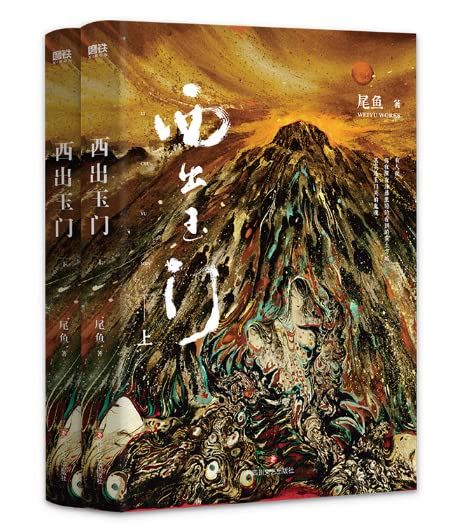
Chang Dong was once celebrated as the Desert Fang, a premier guide in the Gobi Desert, known for his unparalleled ability to navigate treacherous terrains such as Lop Nur. His life unraveled two years prior during the Black Camellia expedition, where his stubborn insistence on changing the campsite location to collect desert rose stones for a marriage proposal to his girlfriend, Kong Yang, led to a catastrophic sandstorm. The disaster resulted in the deaths of all eighteen team members except Chang Dong, who survived but faced intense public condemnation and legal battles, eventually leading him to sell his possessions to compensate the victims' families. Traumatized and ostracized, he retreated to Xi'an, living under the guise of an elderly shadow puppeteer named Ding Zhou to hide from his past.Ye Liuxi, a mysterious woman with a snake tattoo on her wrist, approaches Ding Zhou's puppet theater, revealing she knows Chang Dong's true identity and is seeking him out. She presents him with a magazine detailing the Black Camellia incident and a photograph of a woman embedded in a Yadan wind-eroded clay mound in Dragon City, claiming it is Kong Yang. Ye Liuxi offers to help Chang Dong recover Kong Yang's remains from the desert, but only if he agrees to guide her into the dangerous and remote Lop Nur region. Despite his initial reluctance and distrust, Chang Dong accepts the challenge, driven by the need to find closure for Kong Yang and to atone for the lives lost.Chang Dong removes his disguise and prepares for the desert journey, retrieving his modified off-road vehicle that he had kept sealed since the accident. He enlists the help of Fatty Tang, an antique dealer with connections to a computer expert, to track down Ye Liuxi's whereabouts using surveillance footage. Their investigation reveals Ye Liuxi's movements and connections, leading them to a small border town where she is now selling melons and working in the local sex trade. Chang Dong confronts Ye Liuxi, who agrees to guide him to Dragon City in exchange for his help entering Lop Nur. However, tensions rise when Chang Dong discovers that Ye Liuxi has been involved in dangerous schemes, including drugging a man and leaving him to freeze in a hotel room.As the trio prepares for the expedition, they face various challenges, including securing additional vehicles and supplies. Fatty Tang, motivated by the potential for finding lost treasures in the desert, joins them despite the risks. The journey takes them through harsh landscapes, from the outskirts of civilization to the unforgiving depths of the Gobi Desert. Along the way, Chang Dong must navigate not only the physical dangers of the desert but also the enigmatic and unpredictable nature of Ye Liuxi, whose true intentions remain unclear. The story builds towards a climactic trek into Dragon City, where Chang Dong hopes to find Kong Yang's remains, while Ye Liuxi pushes forward with her own agenda, setting the stage for a perilous confrontation with both the elements and their shared past.

Latest Release
DateGroupRelease
2026-09-26knoxt c19
2026-09-26knoxt c18
2026-09-26knoxt c17
2026-09-26knoxt c16
2026-09-26knoxt c15
2026-09-26knoxt c14
2026-09-26knoxt c13
2026-09-26knoxt c12
2026-09-26knoxt c11
2026-09-26knoxt c10
2026-09-26knoxt c9
2026-09-26knoxt c8

Community Reviews

Rating(4 / 5.0, 227votes)
5 stars
79(35%)
4 stars
70(31%)
3 stars
71(31%)
2 stars
7(3%)
1 stars
0(0%)

Popular reviews

... Read More
Okay can we just talk about Chang Dong for a second? The man just tells Ye Liuxi to get out of the car and then — plot twist — uses the car as a ramming tool against a yardang mound. And his response to her suspicion? 'If it were really fine, you wouldn't be asking me to get out.' THAT LINE. He's always one step ahead and he knows it. The way he reads the terrain, the way he tightened his seatbelt because he felt 'rusty' — this isn't a guy who's doing this for the first time, but he's also self-aware enough to acknowledge he might mess up. That's rare. And then there's Fei Tang. God, Fei Tang. The moment where he can't read the xiaozhun script and his 'self-worth plummeted' is both hilarious and genuinely touching. He literally throws himself into lifting the coffin 'veins popping visibly on his forehead' just to prove something. And then he notices the sky darkening and remembers some promise he made before getting in the car. WHAT PROMISE? I need to know. But also — he still stayed. That's the thing that got me. He was scared, legs trembling, but he didn't run. The Ding Liu and Gao Shen dynamic though? 'Liu-er, every profession has its expertise. No one's good at everything.' / 'So basically — you can't.' I literally screamed. That exchange is so perfectly two sentences and says SO MUCH about how these two already operate. She pushes him, he deflects with wisdom that's really just a polite way of saying 'no.' They're comfortable enough to do that with each other. That's either deep friendship or something more that the author is letting simmer. And Ye Liuxi just... rolls up her sleeves and opens the coffin. No hesitation. She found Fei Tang's panic 'amusing' honestly. She's the calm center of this chaos and I love her for it.
... Read More
The way this chapter moves is just *chef's kiss*. You've got the negotiation scene—tense, layered, every line doing double duty. Liu Qi reveals his hand through what he DOESN'T say. He mentions Hui Ba's body like it's an afterthought but it's clearly the emotional core. He produces the notebook casually but the damage is done—we now know he's been watching them for a while. Then BAM—scene change. Restaurant. Waiting. Card games nobody's playing. Chang Dong burning his notes. This is where most authors would drag, but the author uses the downtime to deepen characterization. Ye Liuxi's attitude toward risk. Chang Dong's cautious nature. Fei Tang's confusion (our audience surrogate, thank god). And then— "Summoning storms and rain." The comedic beat lands perfectly because we've been tense for so long. Chang Dong SPITTING TEA is the release valve. And Fei Tang asking "does that mean you can summon?" is the punchline that keeps the energy UP even as the chapter transitions to dinner. Dinner itself—massive portions, nobody eating, Liu Qi arriving at 9 PM sharp with TWO NEW CHARACTERS introduces fresh energy right when things could sag. Ding Liu's entrance alone changes the temperature of the room. The disciplined tattooed man standing silently behind Liu Qi versus the rebellious girl chewing chili—they create contrast that makes the scene POP. Structure-wise, the author is playing with micro-pauses and releases. The burned notebook. The tea spit. The unexplained half-storm ability. Each beat earns its place. No filler. Even the historical footnotes about nomadic confederations and the character 'ye' for stretch feel organically placed rather than inserted.
... Read More
The stakes in this section are terrifying precisely because they're invisible until it's too late. Let's start with the immediate, physical stakes. Chang Dong is trapped in sand that hardens like concrete. If Ye Liuxi hadn't come for him, he would have been stuck there indefinitely — or worse, buried alive as more sand piled on. The sand eye is an active threat, firing columns of sand at anything that moves. This isn't a passive haunting; it's an ecosystem that defends itself. The tension here is visceral and immediate. You can feel Chang Dong's panic, his desperation to free himself while keeping his eyes on the eye that's trying to kill him. But then the stakes escalate in a completely different direction. The coffin mounds disappear overnight. The tire tracks vanish. The ground itself seems to have been erased and replaced. What does this mean for Chang Dong and Ye Liuxi? If Yumen Pass can overwrite Bailongdui at will, then nothing is stable. Their truck, their supplies, their path out — all of it could disappear. The real conflict here isn't just 'will they survive the night.' It's 'can they trust reality itself?' This is where the author gets really clever with suspense. Instead of raising the stakes through more monsters or more danger, the author raises them through uncertainty. Chang Dong's theory about superimposition is both a breakthrough and a source of dread. If he's right, then they're not just dealing with haunted mounds — they're dealing with a parallel world that can merge with theirs. What happens when the merge becomes permanent? What happens if Yumen Pass decides to stay overlaid on Bailongdui forever? Would the people there even notice? Would they be replaced by shadow puppets in coffins? The internal conflict is equally compelling. Chang Dong is a thinker — he needs to understand before he can act. But understanding doesn't protect you. The sand eye doesn't care about his theories. It fires anyway. There's a tension between his need for comprehension and the world's refusal to be comprehensible. And Ye Liuxi? Her conflict is more instinctive. She acts first, questions later. When Chang Dong is trapped, she doesn't pause to consider whether her knife is appropriate for the situation. She runs. This creates a beautiful friction between them — one needs to understand, the other needs to move. Both are right. Both are necessary. The chapter ends not with a cliffhanger of danger, but with a cliffhanger of revelation. We've solved one mystery only to open a much larger one. The real stakes haven't been revealed yet — and that's what keeps you turning the page.
... Read More
There's this recurring animal taxonomy running through these chapters and I think it's the whole theme of the book in miniature. Ye Liuxi's speech to Fei Tang establishes the framework: pets vs. wolves. Well-behaved dogs please their owners; fierce wolfdogs with sharp teeth survive. Being 'clawless' isn't just weak — it's a death sentence in this world. But then she offers the path out: fight to grow your fangs. The metaphor implies that ferocity isn't innate — it's something you develop through necessity. And then we have the scorpion. Ye Liuxi draws it on herself. Scorpions are arachnids with no bones — they survive everywhere, in the harshest conditions, protected by armor and venom. She's literally wearing her identity as a creature of survival on her face. Something that looks decorative but is actually dangerous. But the most haunting symbol is the chain painting on that Han Dynasty coffin. People shackled, struggling forward, others twisted on the ground. This is an ancient depiction of suffering — not from a battle or a disaster, but from constraint. From being bound and dragged. What binds people in this story? Fear? Loyalty? The quest for treasure? Ye Liuxi claims she'd rather have a wolfdog than a pet. Chang Dong is bound to his craft, his precision, his patience. Fei Tang is chained to his role as informant, his fear keeping him moving forward even when he wants to run. Hui Ba's crew is digging through yardang rock with shovels — themselves half-buried in the very earth they're exploiting. The desert doesn't care about any of them. It has swallowed civilizations before and will swallow them again. The question is whether they'll go quietly or bite first.
... Read More
I keep thinking about what eight hundred yuan represents here. It's not just money — it's the price of avoidance. Chang Dong is willing to pay to not face consequences. Ye Liuxi is willing to accept payment to not intervene. Both are choosing distance over engagement, and both are calling it rational. The leather carving is another symbol I can't shake. Chang Dong spending the afternoon cutting patterns into hide, surrounded by shavings, while outside the world is beating him and he's pricing his own escape. It's meticulous work, precise work, the opposite of the chaos happening outside. He's creating order while paying someone else to handle disorder. And the cooking scene at the end — braised pork ribs, a charcuterie of care that Ye Liuxi expresses through food instead of words. She's nurturing them all without saying she cares. The steam rising into darkness is domesticity in a desert world that has no right to be domestic but somehow is. There's also this line about many people being loud with others but quiet alone. That's the theme, isn't it? Performance versus authenticity. Ye Liuxi performs toughness so convincingly that even Chang Dong believes her when she claims to be a three-time national champion. But alone, by her car, she's just a person watching soup boil. The real question is whether any of these people actually know who they are when nobody's watching.
... Read More
Yumen Pass isn't just a location marker here—it's become this enormous symbolic threshold, and I'm not even sure the author fully realizes how loaded it is yet. The whole concept of 'leaving' and 'entering' being relative depending on where you stand, where you call home—that's such a rich metaphor for belonging and displacement. These people beyond the pass weren't choosing to leave Han territory; they were chained and exiled. The pass became their cage, and their songs became laments for a homeland they could no longer see. 'One step beyond and your blood flows dry' reads differently when you understand it as a threat directed inward—at anyone who might think of returning. It's the language of a border that kills. And now in the present, the sand itself seems to be performing similar functions—trapping, obscuring, revealing things at speeds invisible to the naked eye. The high-speed camera footage is basically archaeology in real time. What happened in seconds took three minutes to witness. We're seeing the invisible become visible, the quick become slow, the hidden revealed. That's what this whole Bailongdui situation is about—trying to see what normal perception misses. The sand doesn't discriminate between natural formation and purposeful movement. Maybe that's the point: the desert doesn't care about human categories. Murder and geology look the same at the right speed.
See all reviews

Custom lists

See all custom Lists