We’re Married, After All - Reviews

We’re Married, After All
+Add to Custom List
Sort
Add review
... Read More
Let me just say this: the pacing in chapters 47-54 is absolutely diabolical and I cannot stop reading. The author knows exactly how to drag a scene out and then cut away at the most devastating moment. Chapter 47-50 are an absolute marathon of sensory overload—every paragraph is packed with physical sensation, breathless prose, the kind of writing that makes you read one more paragraph and then another and then realize three hours have passed. The bed creaking, the moans, the kisses, the fingers, the teeth biting down—it's relentless and I couldn't look away. And then—chapter 51 just drops thetemperature by fifty degrees. 'Whether it was out of consideration for me or because my presence was inconvenient, Danel left Lamprey Castle with me the following morning.' Short. Clinical. Brutal. The shift from the bedroom to the manor is where the real structural genius happens. The author deliberately withholds information. We don't know why he's watching us. We don't know what secret was discovered. We only know that the narrator 'was left unable to do anything.' That gap between knowing something is wrong and not knowing WHAT is wrong—that's where the tension lives. And then the final chapter ends with 'As the time I had to myself dwindled' and the narrator waiting for his next outing like a prisoner counting days. The pacing doesn't just control the story—it mirrors the protagonist's psychological state perfectly.
... Read More
The stakes in this batch aren't about battles or kingdom wars; they're internal, psychological, and terrifyingly personal. The central conflict is a quiet war between surveillance and autonomy. Our heroine is trapped in a gilded cage at Lamprey Castle, her movements monitored, her past scrutinized. The Baron's guards stationed near the bedroom aren't just for show; they are the physical manifestation of the constant threat of discovery. When Danel silences her during their intimate moment, whispering 'I… didn't want them to hear,' the stakes become visceral. It's not just about scandal; it's about the exposure of their entire dynamic, her hidden capabilities, and his obsessive watching. The conflict extends to her past. The memory of the jousting duel isn't a happy reminiscence; it's a source of shame and trauma linked to Petios's flight and her own secret violence. By bringing it up, Danel forces her to confront the parts of herself she's buried under 'learned helplessness.' The external conflict with the Baron's skewed priorities (hospital vs. orphanage) mirrors her internal conflict: how to act in a world where performative charity masks real suffering and true needs are ignored. She's caught between wanting to intervene, to teach the children properly, and the crushing weight of her restricted status. Every interaction with Danel is a high-stakes negotiation. He offers warmth and intensity, but the cost is her freedom and the uncovering of her deepest secrets. The suspense isn't whether she'll escape physically, but whether she'll regain her agency before she's completely consumed by his gaze and the cage they've built together.
... Read More
Okay, hear me out—this chapter is NOT just spicy content. There are actual thematic threads weaving through everything, and I think I found the key metaphor. The candle wax imagery appears TWICE in this chapter, and that's not accidental. First: "It burned like molten wax from a candle." Then near the end: "All that heat melted my thoughts like wax from a candle." The repetition is deliberate. What is wax? It's solid, then it melts, then it reshapes. It's destructive and creative simultaneously. The protagonist is the candle here. She's being consumed, softened, reshaped by this relationship. She wants to remain solid and self-contained, but the heat keeps melting her. And is that bad? The text refuses to give us a straightforward answer, which is exactly right for a story about a woman navigating desire she doesn't fully understand. Another symbol I can't unsee: his violet eyes. They're described as "usually cool and sharp" but then "clouded and unfocused." Eyes as windows to intent—when they're clear, he's controlled. When they're clouded, he's surrendering. The visual contrast maps onto the entire power dynamic. And the setting itself—the study, the carriage, the bedroom. Each space tells you something about their relationship. The study is where secrets are kept (documents, hoarded belongings). The carriage is transitional, neither here nor there. The bedroom is where truth comes out, literally and figuratively. The theme here is about consumption and surrender, about how love and desire can reshape you whether you want them to or not. The melting wax isn't pretty, but it's honest. That's what makes this chapter work on a level beyond its explicit content.
... Read More
The dialogue in this passage is sparse, almost skeletal, but the narrative voice carries the weight of a sledgehammer. The author doesn't need characters to shout; the silence does the work. Take the bedroom scene. Danel doesn't say a word. He just breathes. The narrator doesn't speak; she just tries to maintain the 'façade of ignorance.' The tension is generated entirely through internal monologue and physical description. The few lines of dialogue we do get are functional, yet heavy with subtext. 'He's probably avoiding attending the dinner banquet because he's afraid indulging in luxurious food might waver his resolve.' This line, recalled from the past, sounds mundane but reveals how she used to rationalize Danel's extreme behavior. The voice shifts sharply between the narrator's frantic, stream-of-consciousness panic and Danel's cold, calculated observations. The postcard itself is a form of dialogue—four sentences in a foreign language that she understands perfectly, connecting her to Petios across the distance. It's a conversation between two conspirators that excludes her. The narrative style forces us to be complicit in her discovery, reading between the lines just as she does.
... Read More
'Am I the strange one here? Is being stuck in this estate and having children the only thing I'm allowed to do?' This woman has a voice. Not the polite, confused wife we might have expected—but someone who is FIERCE even when she's shaking. Even when she's vulnerable. The narration is so sharply observant, so wry and self-aware, that I genuinely believe her. What's brilliant is how the dialogue contrasts with Danel's silence. She fires off question after question—'Is this also something I don't need to know?' 'Or is it that you just don't have anything to say to me?'—and he says NOTHING until he physically touches her. His only words are stammered fragments: 'You know what I'm thinking...' Meanwhile, her internal monologue is where the real gold lives. The narrator lists the unspoken questions: 'Why did you lace my tea with drugs? Why did you bury your face between my legs that night at dawn? Why have you filled that room with so many of my things?' These questions she never vocalizes, and that's the whole tragedy—they CAN'T talk to each other. The dialogue that exists is performative for both of them. She's performing calm; he's performing silence. The real conversation happens in her head and in his touch. The narrative voice itself—witty, aching, sometimes bitterly sarcastic—makes every line land. When she calls her childhood companion 'that bastard' under her breath? That's a whole backstory in three words.
... Read More
I keep thinking about the word 'tame' and how it threads through everything. Danel doesn't just learn her body—he 'tames' it. She asks 'how many nights had this man spent training me?' Training. Taming. These aren't romantic words. They're power words. But the beautiful, terrifying thing is that the roles flip. 'How much had he, in turn, been tamed by me?' The narrative is full of this inversion. He's the powerful lord, the dominant lover, the one who controls access to rooms and hospitals—but she's the one who makes him lose control, who drives him to the edge and then pulls him back, who whispers 'you made me like this' and then takes what she wants anyway. The castle itself is a symbol here. It's both sanctuary and prison. The bed is where intimacy happens but also where surveillance begins. The guest room at Lamprey Castle—where they were supposedly hidden—had knights outside the door the entire time. There is no privacy in this world. Every intimate moment is performed under the threat of discovery. And that final image: the narrator waiting in the dark, 'as the time I had to myself dwindled,' counting down to his next departure like a bird waiting for a cage door to open. This isn't a romance. It's a study in how love and power entangle until you can't tell which is which.
... Read More
The dialogue in these chapters is a masterclass in what isn't said, wrapped in a first-person narration that is so vividly subjective it practically vibrates off the page. Let's look at the exchanges. They are sparse, functional, yet loaded. 'How did you know I was here?' 'I saw you.' 'Why didn't you just send a maid?' 'There was no need for that.' On the surface, it's practically flat. But read between the lines, and it's a entire conversation about proximity, effort, and unspoken care. He came himself. There was 'no need' for formalities. The simplicity of his replies contrasts sharply with the torrent of speculation in the protagonist's head. This is where the author's voice shines—through her internal monologue. It's raw, sensory, and brutally honest. Compare the crisp dialogue to passages like: 'A heat began to coil in my lower abdomen. Even the wind brushing against me felt like a teasing caress.' Or later: 'The sweet scent of milk tea clung to me, making me feel as though I had bathed in it.' The narrative voice isn't just describing events; it's describing physiological and psychological states with equal weight. The prose becomes tactile. When Danel finally speaks during their encounter, his words are minimal: 'No, I think it's better if we go up together now.' 'It's fine. It's just milk.' Each line is practical, yet loaded with subtext. He's bypassing her excuse, tolerating her perceived flaw, asserting a quiet control. The dialogue here isn't about conversation; it's about negotiation, about testing boundaries without words. The author's style trusts the reader to decode the tension in these brief exchanges, knowing the richer dialogue is happening in the spaces between the lines and in the protagonist's increasingly uninhibited inner world. It's a voice that moves from observant to visceral, mirroring the relationship's own descent from polite distance to charged uncertainty.
... Read More
I need to process the Danel situation. Truly. Because my reading of him has completely inverted, and it's giving me whiplash. Initially, he came across as the archetype of the disinterested noble husband—present in body, absent in spirit, treating intimacy like a choreographed duty. I felt for the protagonist's quiet resignation. But this chapter... it showed us the machinery beneath the statue. That scene in the rain is everything. His immediate, almost desperate move to shield her from the storm ('adjusted the umbrella properly', 'confirming her shoulders were fully covered') is a character moment so vivid it hurt. This is a man who acts before he thinks, whose care bypasses his usual reserve. And then he sees her. That split-second decision to drop the umbrella and flee is not the action of a man who is indifferent. It's the action of a man who is overwhelmed. He's not running from her; he's running from himself. The physical evidence of his desire is now undeniable to both of them, and his response is pure panic. It recontextualizes EVERYTHING. His earlier stoicism wasn't coldness; it was control. A fragile, hard-won control over a nature that, apparently, is anything but monastic. The protagonist's relationship to him shifts from bored acceptance to bewildered fascination. She's no longer just tolerating a duty-bound husband; she's witnessing a secret struggle. Their dynamic has moved from parallel lines to a collision course. She's starting to suspect he's 'more worldly than I had imagined,' and the text brilliantly validates that suspicion through action, not exposition. The way he grabs her breast later, the 'shockingly hot' touch, the controlled yet intense gaze—it's the same man who fled, but now he's choosing to engage, however clumsily. The relationship is no longer a stale arrangement; it's a live wire. I'm invested in whether he can integrate these two selves, or if the pressure will shatter him. Their connection has become a question, not an answer.
... Read More
Okay, I need to unpack the CONFLICT in this batch because the stakes have been escalating in ways that make my stomach hurt. Let me start with the most immediate conflict: the power struggle between Laurea and Danel. This isn't a romance where two people figure each other out. This is a war of attrition where both sides are deploying the same weapons — secrecy, manipulation, physical control, emotional withdrawal — and neither side is willing to surrender. The banquet scene is a perfect microcosm of this. Laurea's plan: get drunk enough to observe her husband's behavior without his guard being up. Her stake: she needs to understand him, to map his patterns, to find cracks in his armor. Danel's counter-move: he sees through it instantly, removes the wine, controls the situation by escorting her out. His stake: maintaining his public composure while dealing with a wife who treats their marriage like a laboratory experiment. The tension in that moment isn't just romantic — it's the tension of two people who are simultaneously attracted to and threatened by each other. But the REAL stakes escalate when she discovers the hidden room. This changes everything. Previously, the conflict was about understanding each other. Now it's about possession versus autonomy. Danel has been curating a shrine to her in secret — that's an act of love and control simultaneously. And Laure's discovery of it shouldn't change anything, right? Except it does. Because now SHE has leverage. She knows his deepest secret. And her response isn't to confront him or run away — it's to prepare a counter-strike using the saripul herbs. Here's what makes the stakes so nail-biting: both of them are right to be afraid. If Danel's obsession is exposed, it destroys his social standing, his reputation, possibly his political power. If Laurea's experiments are discovered, she risks everything — her position as countess, her safety, her autonomy. They're both trapped in a situation where revealing the truth would be catastrophic, so they continue this elaborate dance of almost-confessions and almost-vulnerabilities. And that final scene — her standing in the doorway, him asleep at his desk, the tea still steaming — this is the peak of the conflict. She HAS him. She could do anything. And the fact that she doesn't, that she just watches him, suggests that beneath all the scheming, there's something else happening. Something neither of them has named yet. The suspense here isn't 'will they or won't they' — it's 'what happens when this carefully balanced system of mutual manipulation finally breaks?' And from the way this batch ends, I have a terrible feeling it's going to break very soon.
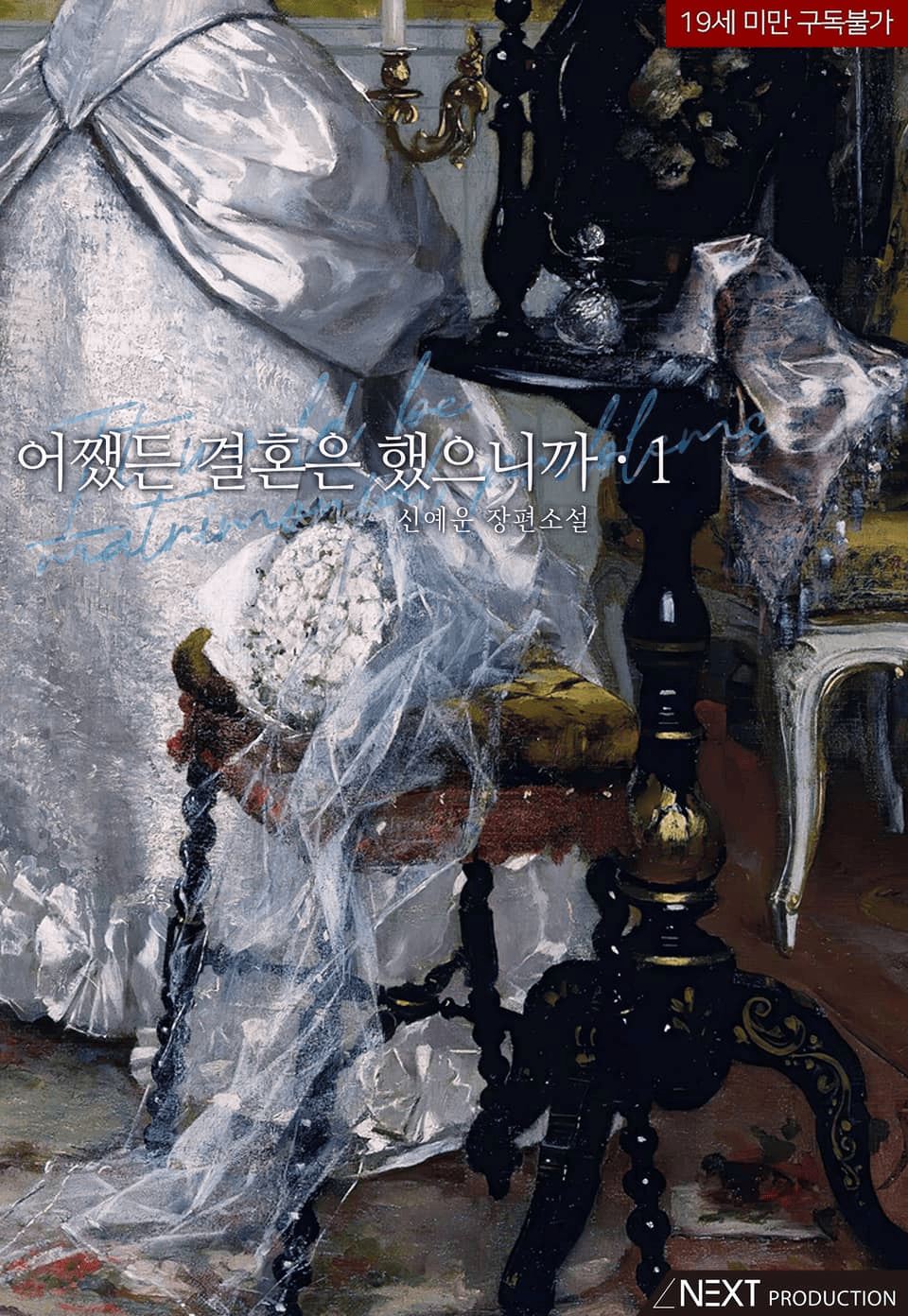
... Read More
The emotional core of this passage lives in those spaces between words. Laurea's entire first scene is a study in suppressed feeling—her gaze tracking Danel's hands, her legs pressed together under the table, the deliberate way she mimics his monastic tea ritual even though she hates tea. She's performing the role of the devoted wife because she doesn't know who she is when she stops performing. Then the bed shifts. The narrative voice cracks open. The clinical observer becomes a trembling body—"I wanted to scream at the sensation—both languid and overwhelmingly vivid." That's the emotional truth: pleasure and confusion fused into something she can't name. The prose gets breathless there, sentences fragmenting, echoing the physical experience. But the deepest emotional beat comes earlier, when she pours the tea into a potted plant. Danel's absence makes the ritual feel hollow, so she discards the ritual itself. It's such a small, domestic gesture—but it speaks volumes about her emotional state. She's not angry; she's disconnected. The tea was never about enjoyment. It was about synchronization, about matching his rhythm. Without him, the rhythm means nothing. The wedding night memory haunts this passage like a ghost. She passed out from pleasure—literarily and metaphorically unable to stay conscious in the face of intensity she couldn't process. Now, months later, that same intensity has returned, but it's different. It's not just physical. It's charged with everything they haven't said to each other. The emotion isn't in the act itself but in what follows: the confusion, the silence, the unanswered questions hanging in the dawn light.
... Read More
Ugh, Danel. DANEL. Can we talk about this man for a second because my feelings are complicated. On one hand, he's clearly obsessed with her—literally hoarding her belongings, waking up to intimate acts she didn't consent to in those past forgotten nights, and in THIS chapter he's being physically insistent even while claiming he wants to live separately. The contradiction is ASTRONOMICAL. Like sir, if you wanted space, why are you inside me AGAIN asking if you should stop? His line about living separately hit different though. "If I start accepting this, I don't know how far I'll go." That's either the most honest thing he's ever said or the most manipulative. Probably both. It suggests he's genuinely struggling with some internal boundary he's drawn, but he's using it as an excuse to do exactly what he wants while maintaining plausible deniability. And her—wow. She's simultaneously frustrated, aroused, confused, and oddly content all in the same paragraph. The push and pull between her desire for emotional honesty and her physical response to him is so realistic it hurts. She literally thinks "Nothing had been resolved yet" while also wrapping her arms around his back. That's not a love story, that's a psychological case study. The power dynamic here is fascinating. He controls the pace, the location, the timing. She thinks she's making requests but he's always the one deciding what "yes" actually means. And yet she keeps coming back. That's not weakness—that's human complexity. We want people who don't always give us what we ask for because the tension IS the relationship sometimes. I just wish they'd talk to each other for like five minutes without somebody climbing on top of somebody else.
... Read More
Okay, so let's talk about this sequence because it absolutely flips the entire script I'd built in my head for this marriage. Up until this moment, I thought I had Danel pegged: devout monk, stoic husband, duty-bound to producing an heir, emotionally as damp as the rain-soaked path he walked me home on. The plot had set up this clear dynamic—I was the mildly curious, slightly pragmatic wife exploring my relatively satisfactory arrangement; he was the serene, unapproachable fortress. Then BAM. The author slides in this line about his 'enormous manhood' and I am not just laughing out loud, I am physically reeling. It's such a deliberate, brutal juxtaposition. First, we get the image of this pious man who preferred libraries to offices, who married out of faith, who probably recites scripture before breakfast. And then WE GET THE SPECS. It's hilarious, it's shocking, and it completely destabilizes every assumption the protagonist (and I) were operating under. But the real plot masterstroke isn't just the comedic reveal—it's the subsequent scene with the sudden downpour. He finds her. He brings the umbrella. He matches his pace to hers. This small act of attentiveness feels like a thread pulling at the fabric of his composed exterior. And then... he sees her transparent shirt. The narrative doesn't shy away from it. 'A crack had formed somewhere deep within him.' He flees. Just... runs. Into the rain. This is such a potent plot beat because it introduces a mystery that immediately supersedes the political/arranged marriage framework. The central question is no longer 'Will they produce an heir?' but 'What is actually going on in that monastery-bred head of his?' Is it shame? Is it repressed desire? Is it a fundamental conflict between his vows and his nature? The pacing here is exquisite. We move from casual spear practice to drenching rain to a silent, charged walk to a panicked retreat, all within a few paragraphs. The story stops being about two people navigating an arrangement and starts being about a psychological unraveling. I am utterly hooked on the 'why' of it now. The plot has pivoted from external circumstance to internal earthquake, and I need to know what caused the tremor.

Leave a comment

You must be logged in to leave comments. or
