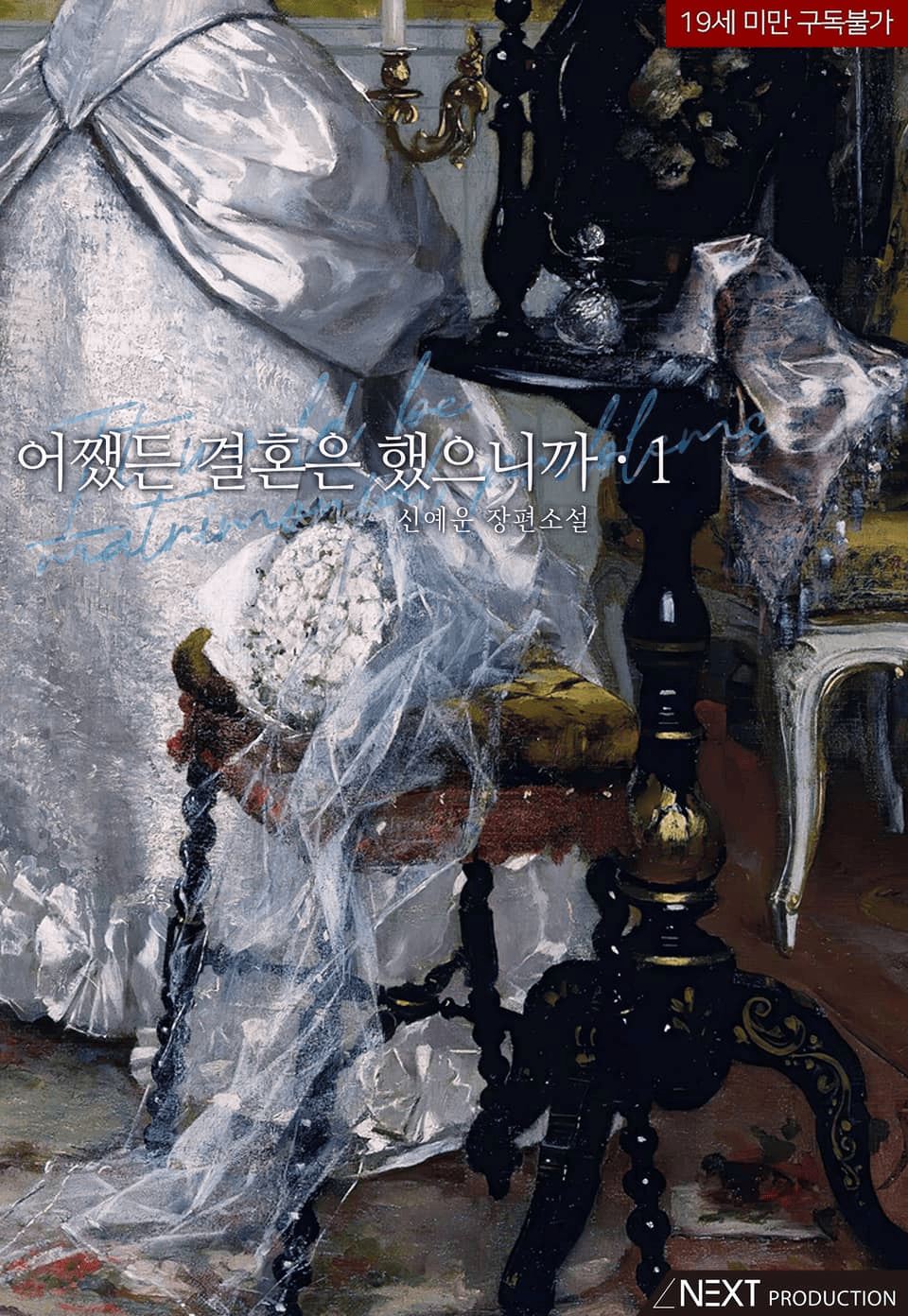
Summary

... Read More

Laurea Temesio, the daughter of a Marquis, was betrothed from childhood to Petios Veloce, the eldest son of a count. Despite her engagement to him, she possessed physical talents exceptional for a noblewoman of her time, excelling in horseback riding, archery, and spear throwing. Petios, however, was physically frail and failed the knightly examination multiple times. Desperate to secure the family line and the inheritance, Count Veloce arranged for Petios to marry Laurea, intending to transfer territories to the new couple. A week before the wedding, Petios abandoned his duties, fleeing out of fear that marrying such a talented woman would always cast him in her shadow. He left a letter explaining his departure, leaving the Veloce estate and the Temesio family in a state of crisis with guests already arriving for the ceremony.

To save face and maintain the political alliances, Count Veloce made a desperate decision: he replaced the runaway groom with his second son, Danel. Danel had spent half his life in a monastery, having entered at age thirteen with genuine religious devotion rather than political ambition. He was ordained as a priest and lived a life of asceticism, abstinence, and rigid routine. The marriage between Danel and Laurea was hastily performed, with the public narrative claiming that Petios had died suddenly. The union was scandalous due to Danel’s recent departure from the clergy, and it began not with affection, but with duty and awkwardness. For the first six months, their life together was defined by silence and precision. Danel maintained his monastic schedule, waking before dawn and working tirelessly, while their intimacy was limited to a nightly routine performed without passion, solely for the purpose of producing an heir.

Laurea found the arrangement tolerable, primarily because their sexual encounters were physically intense enough to cure her chronic insomnia, allowing her to sleep deeply every night. She accepted her role, believing that as long as Danel did not hate her, the marriage could function. However, the dynamic shifted dramatically one night when Danel returned from an inspection trip later than usual. Instead of following their strict routine, he entered her room in the early hours of the morning and performed oral sex on her while she slept, displaying a level of carnal hunger that contradicted his ascetic persona. The following day, he behaved as if nothing had happened, retreating into his usual cold indifference.

This incident planted seeds of doubt in Laurea’s mind. She began to observe Danel more closely, noticing signs of his suppressed desires, such as his reaction to her bare skin in the rain and his intense gaze when she exercised in the backyard. Despite these glimpses into his hidden lust, Danel returned to his mechanical nightly coupling, drugging her tea with a sleeping herb to ensure she remained unconscious during their intimacy. Laurea discovered this secret when she found a hidden room in his study filled with items belonging to her: her wedding dress, her books, and dried flowers from her bouquet. The room revealed a obsessive fixation that went beyond mere marital duty.

Confronting him, she exposed the drugging and the secret room. Danel, stripped of his composure, admitted that he was going to hell for his desires but could not help himself. The confrontation escalated as Laurea climbed onto his desk, inviting him to act on the lust he had been suppressing. Danel abandoned his restraint, engaging in explicit sexual acts that highlighted the stark contrast between his public piety and private depravity. He licked and sucked on her body with reverent obsession, revealing that his earlier return had not been an anomaly but a symptom of a consuming, hidden passion that he was struggling to reconcile with his faith. The story concludes with this shift from cold duty to a complex,欲望-driven dynamic between the former priest and his wife.

Latest Release
DateGroupRelease
2026-09-27citrus aurora c123
2026-09-27citrus aurora c122
2026-09-27citrus aurora c121
2026-09-27citrus aurora c120
2026-09-27citrus aurora c119
2026-09-27citrus aurora c118
2026-09-27citrus aurora c117
2026-09-27citrus aurora c116
2026-09-27citrus aurora c115
2026-09-27citrus aurora c114
2026-09-27citrus aurora c113
2026-09-27citrus aurora c112

Community Reviews

Rating(3.9 / 5.0, 70votes)
5 stars
28(40%)
4 stars
15(21%)
3 stars
22(31%)
2 stars
5(7%)
1 stars
0(0%)

Popular reviews

... Read More
This whole visit to Lamprey Castle is a masterclass in subtle plotting. On the surface, it's a social call, but every detail screams that something is deeply wrong. The Baroness's excuse about tuberculosis being 'still prevalent' is so transparently flimsy that it hurts. Our protagonist, with her six months of practiced learned helplessness, doesn't call her out, but the reader immediately knows: this is about control, not health. The real plot twist isn't a dramatic reveal; it's the slow-dawning realization that the 'hastily built' hospital is a useless vanity project, while the actual need—an orphanage for the children seen training as squires—is being ignored. This dissonance is the core conflict driving the entire arc. The Baroness's gentle guidance toward the training ground feels like a deliberate provocation, a way of showing our heroine the problem she's now trapped into solving. And then there's the dagger in the tail: the memory of the jousting duel. That scene, where she humiliated a cowardly rival by aiming for his crotch, wasn't just an action flashback; it was the key that unlocks Danel's secret knowledge. How did he know about that private event? The plot here isn't just about moving pieces on a board; it's about the protagonist realizing she's been watched, that her past isn't hers alone, and that every interaction with Danel is layered with hidden agendas. The narrative builds tension not through explosions, but through the claustrophobic weight of unspoken truths and the chilling realization that her companion might be the source of her confinement.
... Read More
I need to spend some time on Danel. On the surface, he's the devoted substitute, the brother who stepped up. But reading this, the mask has slipped so completely that I can't look at him the same way. The dynamic between him and the narrator is built on a foundation of lies so thick it's structural. He held her while she slept, tracing the baby hairs on her forehead while her face remained blank on paper—that is not affection, that is possession. And then there's Petios. The relationship with Petios is tragic in a way I hadn't fully grasped. He's grateful to Danel for taking over his life, which implies a complicity that makes my skin crawl. Danel orchestrated his imprisonment under the guise of protection. In the final scene, Danel watching the narrator from the window reveals the extent of his control; he notes that *he* deliberately obstructed her chances to form ties. He wrote the script for her loneliness. When he holds her that night, hard but not touching, it's not just restraint; it's a power move. He knows she's awake. He knows she suspects. And he's betting that she's too terrified to speak. The triangle here is toxic on every axis.
... Read More
Okay so let me just say that the scene in chapters 47-50 absolutely wrecked me emotionally and then chapters 51-54 just pivoted hard into "wait, is this a psychological thriller now?" and I am HERE for it. The whole arc from the guest room at Lamprey Castle to Danel returning to the manor and suddenly becoming a ghost around me—watching me, controlling my access, blocking me from the study, having the Baroness keep me away from the hospital—it all feels like one long tightening noose disguised as romance. But here's what I really love: the author never lets you settle. Just when you're lost in the heat of it all, BAM, the next morning everything changes. That transition hit me like a truck. One minute there's this overwhelming, almost suffocating intimacy and the next: "Danel left Lamprey Castle with me the following morning." And then suddenly he's conducting his entire workload from beside my bed. The servants discover what happened. Knights stand outside the door. None of this is accidental. The author is building this atmosphere of surveillance slowly, almost imperceptibly, and by chapter 54 when I finally have a moment of solitude in the dark, the reader realizes—we've been trapped in this relationship's gravity well the whole time. "How much had he, in turn, been tamed by me?" That question at the end of chapter 50? It's the thesis statement for the entire story so far.
... Read More
The pacing in this sequence is masterful because it moves like a actual investigation — hesitant, circling, hitting dead ends, then suddenly plunging downward. It starts almost comically light. The empty spot on the shoe rack. The dry laugh. The milk tea prediction. You almost feel like you're reading something with warmth and humor. And then — bare feet on cold stairs, the trembling candlestick, the realization that her body is colder than the night should allow. The tonal shift is so sudden it's almost violent. That's the author winking at you and then immediately taking the wink back. The vomiting scene is where the pacing really flexes. She recounts it almost casually, as a non-event, and that casualness is what makes it devastating. Then she returns to the present action — the study, the fireplace poker, the locks. Quick, efficient, purposeful. But the flashback to her childhood interrupts the momentum completely. The hunting festival. Her father's betrayal. Ten years of accumulated humiliation compressed into a few paragraphs. And then — the sketchbooks. Oh god, the sketchbooks. The pacing shifts again into something slower, more deliberate. Page by page, year by year, she flips through Danel's obsession. The early crude drawings. The gradual improvement. The summer with Petios. The solitary paintings. And then — the black blotches appear. The pacing quickens imperceptibly as the horror dawns. By the time she realizes the dark figure is Petios, the chapter has become a full-blown psychological descent. And it ends mid-sentence almost, with her realization crashing down. No resolution. Just the chilling certainty that he was there. Watching. Always.
... Read More
Okay so this scene is basically the point of no return for their entire marriage, right? Let me just say it—Laurea doesn't just discover the drugging here, she WAKES UP during it. That's a plot twist that hits different. She perches on the desk waiting for him to stir, holding the evidence, and the way the author builds this tension is *chef's kiss*. She's not reacting in real-time like a normal person would—she's calculating, patient, waiting. That's not a victim, that's someone who's already made up her mind. And then Danel wakes up and the silence? The suffocating silence? The author doesn't even let him speak first. She drops the dried leaves right in front of him. 'Explain this.' Three words. That's it. No screaming, no tears initially—just cold, quiet fury. But here's where it gets wild—the scene pivots from confrontation into something else entirely. He doesn't explain. He doesn't apologize. Instead he takes her hand, traces the nail marks she made, and pulls her into an intimate moment. Is this manipulation? Is this her body betraying her? Or is this some twisted form of communication between two people who literally cannot talk to each other? The plot structure here is brutal in the best way. It starts as a thriller-confrontation scene and morphs into an erotic scene, and I don't think the author is being random—I think this IS the story. A marriage built on secrets, powerlessness, and physical intimacy that's the only language either of them knows.
... Read More
This section is dripping with symbolism that's so rich it's almost oppressive. Let's start with the most obvious: the hastifully constructed hospital versus the desperate need for an orphanage. The Baroness shows the heroine the 'old but sturdy alms house' and then points to the 'hastily built' hospital across a barren field. This isn't just a poor architectural choice; it's a stark metaphor for the Lord's priorities. He's built a monument to vanity and charity theater, while the actual children—those playing in the dirt, dreaming of becoming knights—are ignored. The empty field where they train is a symbol of wasted potential and neglected futures. The Baron's 'charity' is a facade; the real work of care is being done elsewhere, or not at all. Then there's the training ground itself. It's crude, lacking proper instructors, but the children's determination shines through. They are the true knights-in-waiting, forging themselves against hardship, while the established nobility drowns in its own decay. The hospital becomes a symbol of hollow virtue—a structure that looks good on paper but serves no real purpose, much like the Baron's governance. And the protagonist's own past—the secret jousting match—mirrors this theme of hidden truths beneath respectable surfaces. She performed a violent, skilled act in secret, protecting a fragile man's honor while simultaneously shaming him. It's another layer of the central question: what is the real value of these institutions, these relationships, these performative acts of charity?
See all reviews

Custom lists

See all custom Lists