Waiting for You to Break Up for a Long Time - Reviews

Waiting for You to Break Up for a Long Time
+Add to Custom List
Sort
Add review
... Read More
I need to talk about Xiao Jing because this kid is genuinely one of the most important characters in this entire arc and honestly? He's doing more to push Lou Jia and Jiang Siwei together than either of them is. Let me explain. First off, his backstory is devastating—he's an abandoned baby found by his grandfather beside a well, and his grandfather's health is failing. This kid understands loss and mortality in a way most adults in this novel don't. When he says 'Teacher Jiang, I wish you were my dad' and hugs him, that's not just a cute kid moment—that's a child who knows how precious time is because he's experienced what it means to almost lose everything. And then there's the scene where he grabs both their hands in the crowd and says 'there are too many people, I was afraid you wouldn't be able to keep up with me.' They both KNOW what he's really doing. He's creating a moment for them. He's the little kid who sees everything and is desperately trying to make sure the two people who make him happy don't miss their chance. The dynamic between all three of them is so tender. Jiang Siwei playing along with the martial arts bit to make Xiao Jing laugh, Lou Jia gently teasing him about his terrible singing—these small moments reveal how much they've each become part of this makeshift family. And Xiao Jing's role as the emotional barometer between them is just... chef's kiss.
... Read More
Let me tell you about the most vulnerable scene I've read in a while. Jiang Siwei has spent years hiding his feelings. He blocked her calls, ignored everything about her, threw himself into his lab work for four years. He built this whole wall. And then Lou Jia shows up, and the wall doesn't just crack—it disintegrates. He can't help it. He follows her around. He gets flustered over mosquito coils. He sends dog stickers on WeChat like a teenager. All of this is him trying and failing to maintain control, and the stakes aren't about whether she'll reject him—he already knew that possibility existed. The real stakes are deeper. When he asks her, after confessing, if she thinks he's a freak, that's not about rejection. That's about shame. He's terrified that she'll look at him the way he's looked at himself—as someone who shouldn't feel this way, someone who's supposed to be a little brother figure, someone whose feelings are inappropriate. The external conflict with Zhang Lin is sharp and satisfying. Zhang Lin shows up, clearly still has feelings, and Lou Jia shuts it down in the most elegant way possible. She doesn't yell or cry. She just says, that person will never be you. And Zhang Lin laughs bitterly at himself. That's a conflict resolved with dignity, not drama. But the internal conflict is what keeps me up at night. Jiang Siwei is a gambler standing at the edge of the prize pool, as the narration puts it. He's willing to lose everything because losing would just bring him back to where he started—all those years of silence and distance. But winning? Winning means everything changes. And that's scarier than losing. The physical comedy of the book box collapse is actually brilliant storytelling for tension. It strips away every layer of pretense. They're on the floor, he's hurt, the box is destroyed, and there's nowhere left to hide. The world goes quiet. His heart is pounding so loud she can hear it. And in that silence, he finally asks the question he's been building toward for years. That's when the stakes become real. Not because anything dramatic happens, but because everything honest happens.
... Read More
This book keeps coming back to one question: what does it actually mean to love someone? Zhang Lin represents one answer—love as calculation, as weighing pros and cons, as having a Plan B. He says to Lou Jia, in your life I've always been a choice you made after weighing the options. And she hits him with the most devastating line in these chapters: I don't like having a Plan B when I do things. I prefer to look forward. That hit me like a truck. Because it's not just about romance—it's about how you approach everything. Zhang Lin can't imagine a world where someone chooses you without calculating whether it's the smart choice. But Lou Jia can. She says she doesn't need calculated love. She wants someone who gives everything without keeping score. And Jiang Siwei, who spent four years in a lab and never talked to anyone, who couldn't even figure out how to approach her after years of silence—he's the one who ends up offering exactly that. The dog metaphor runs through everything like a thread. Xiao Mao the stray dog, the WeChat message where she says she already has a little dog at home, Jiang Siwei sending back an excited dog sticker, the comparison between him and the dog, feeding them both at the same time. It's not just cute imagery—it's about loyalty, about choosing someone who chose you, about the kind of love that doesn't calculate but just… stays. There's also this recurring question about whether people can change. Jiang Siwei wonders if someone who was once afraid of dogs can end up raising one, and if someone who didn't like someone in the past can end up loving them. The answer the story keeps giving is yes. Not because people are inconsistent, but because love isn't logical. It doesn't follow the same rules as everything else. The most powerful moment of this theme comes when Lou Jia says, Everything he gave me was what he left after weighing the pros and cons. I don't need that kind of love. And Jiang Siwei, who has never once calculated anything about his feelings for her, just keeps asking, what if the person is someone you never expected? Like he's trying to give her permission to accept something that doesn't make sense on paper.
... Read More
Okay so I have to talk about how this whole Qixi Festival arc is basically the emotional and structural centerpiece of the novel. The author uses it as this massive turning point—everything before it feels like setup, and everything after it is dealing with the consequences of what happens during those few days. The plot structure here is really smart because it layers multiple storylines together: the communal feast, the injury incident, the bonfire, the confession-adjacent moments, and then the departure looming at the end. It all converges beautifully. The injury scene is the inciting incident of this whole arc. Jiang Siwei gets hurt saving Xiao Jing, and this one moment does so much—it forces Lou Jia to confront her feelings, it deepens the bond between Jiang Siwei and Xiao Jing, and it sets up the entire emotional trajectory leading to the bonfire. The Qixi Festival tradition itself (the Seven-Star Goddess blessing for couples who dance together) is basically the author's way of putting a ticking clock on the romantic tension. Every scene after the invitation feels charged with this unspoken question: will they dance? Will they confess? Will they be together? And then the ending—Lou Jia leading him to the fireflies, saying sorry for giving him an answer so late—that's a gorgeous plot resolution. It's not a clean, tidy ending, but it's honest. The author deliberately leaves it ambiguous, which I actually love. It feels real, like life doesn't wrap things up with a bow.
... Read More
Let me be clear — this book doesn't have explosions or assassins or world-ending threats. And yet I have NEVER been more anxious for characters in my entire reading life. The conflict here is internal, historical, and absolutely crushing. Jiang Siwei went abroad because his heart was broken. He came back because it was "too far from you." Three years of silence. Three years of him pretending he's fine while sitting in a dormitory remembering the winter night that destroyed him. And now Lou Jia is back in his life, taking care of him when he's sick, making him noodles, calling him a good boy when he takes his medicine — and he can't trust that any of it is real because he's been burned before. The stakes are laid out so clearly in that grass-woven dog moment. He's holding something she once gave HIM, and suddenly the past and present collide. His hand clenches. He forces a smile. He flees. The physical manifestation of his internal conflict is so well done. And Zhang Lin — oh god, Zhang Lin. He's not a villain. He's just... there. Someone who still cares about Lou Jia, who organized all those donations, who took a whole trip back just to see her. He doesn't even recognize Jiang Siwei at first. The irony is brutal. The fever strips Jiang Siwei bare — no more pretending, no more walls. He cries. He grabs her hand. He tells her about the moon. Every moment of vulnerability is both a gift and a torture because we KNOW he's terrified of what happens when he lets someone this close.
... Read More
I need to talk about the dialogue in these chapters because it's deceptively simple and absolutely lethal. The banter between Jiang Siwei and Lou Jia at the beginning — it feels so natural, like real people who have known each other forever. "You've been eating that for so many years, aren't you tired of it yet?" / "I haven't had it in a long time." This is two people who know each other's rhythms but are carefully navigating a new distance between them. The subtext is EVERYWHERE. And then there's the fever scene where Jiang Siwei can't form proper sentences. He just cries. And Lou Jia's line — "Why are you still the same as when you were a kid? Every time you get a fever, you start crying" — she's laughing but there's so much tenderness underneath it. You can hear the smile in her voice. But the dialogue that wrecked me was the moon conversation: "What are you looking at?" "The moon." "Why?" "Because you can see it too." That's it. That's the whole exchange. No grand declaration, no dramatic music, just two people and a mediocre moon. And it's the most romantic thing I've read in years. The author's narrative voice is also incredible — it has this wry, knowing quality. The author's note about the drunk man breaking your heart, the aside about how you can't wake someone pretending to sleep but a slap will do the job. There's humor woven through the pain, and that contrast makes everything hurt more.
... Read More
I started reading these chapters at what I told myself was a reasonable hour and ended up reading until 3AM. This is not a coincidence. The pacing is absolutely ruthless in the best way. Let me break down why I couldn't stop: Chapter 4 starts with the fever scene — slow, intimate, vulnerable. Jiang Siwei crying in his sleep, Lou Jia wiping his tears, that moment where he grabs her hand and just falls apart. It's quiet and aching. Then the author drops the Zhang Lin bomb and everything shifts. The pacing accelerates — Lou Jia rushing around with the principal, Jiang Siwei disappearing, the dinner scene where he won't sit near her, the alcohol he shouldn't be drinking. Each beat tighter than the last. And then the moon scene. The author slows everything down again — just two people on a stone, looking at a mediocre moon, saying the most important thing either of them has ever said. And then — BRRRRT. Phone call. Cut to black. The chapter breaks are perfectly placed too. The author's notes between chapters give you just enough breathing room to process what happened before slamming you into the next emotional wave. And that note about "A man, three parts drunk, acting until your heart breaks" — the author literally telling you you're about to get destroyed is peak manipulation and I love it. The transition from Chapter 4 to Chapter 5 is also genius. You think you've had your moment with the moon, then Chapter 5 opens with Lou Jia's heart pounding and another phone call interrupting everything. The author knows exactly how to keep you desperate for more.
... Read More
I keep coming back to this one detail and I need to figure out why it keeps haunting me. Ying Xi compares Jiang Siwei to Xiao Mao—the stray dog that Uncle Yang picked up—saying he's always by Lou Jia's side like the dog follows the cafeteria cook. And then later, Lou Jia literally feeds both of them at the same time, and she watches Jiang Siwei eat and thinks, why doesn't he have a tail? This is the kind of worldbuilding that doesn't need elaborate descriptions of the school or the village. It's in the small, lived-in details: the mosquito coils that weren't lit, the cafeteria sounds muffled by a wall, the evening light filtering through a window with dust floating in the air between them. The setting feels like a real place where people actually live, not just a backdrop for romantic moments. There's this one scene where Lou Jia walks out of her dorm in the morning and bumps into Jiang Siwei coming back from his run, and he says the mosquitoes woke him up, and she asks if they lit mosquito coils, and he gets all flustered because last night is obviously a sensitive topic. I could literally see this in my head like a movie. The courtyard gate, the morning light, his awkward steps, tripping into Fang Jin. It's so specific and so funny and so human. And then later, the scene in the book room—fading evening light, dust particles in the air, the two of them sitting on the floor surrounded by boxes, his head hurt but he doesn't seem to care because she's right there. The author doesn't overdescribe any of these moments. Just enough to paint the picture and then let the emotions carry it. What really makes this world feel alive though is the school itself. It's not just a setting—it's a character. The cafeteria, the dorms, the back hill where they collect firewood, the village houses where guests stay. Everyone is working together, living together, and the boundaries between personal and communal space blur in the best way. Jiang Siwei doesn't need a private confession booth—he just happens to collapse into a box of donated books while organizing them, and the whole world keeps going around them like nothing extraordinary is happening. That's when I know a story has nailed its atmosphere.
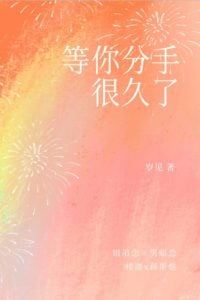
... Read More
There are so many layers of symbolism in this chapter that I want to unpack, because the author is clearly working on a deeper level than just telling a romance story. The fireflies at the end are the most potent symbol. Fireflies are fleeting—they glow briefly in the darkness and then disappear. They're described as 'more brilliant than fireflies, starlight, or the moon,' which is this beautiful paradox because they're literally fireflies. The author is saying that this moment, this confession of sorts, is more luminous than any celestial body. But fireflies also only shine in darkness, which mirrors how Lou Jia's feelings only fully emerge when everything else is stripped away—the noise, the crowd, the distractions. The Qixi Festival itself is loaded with symbolism. It's a festival about love and destiny, rooted in the legend of the Cowherd and the Weaver Girl who can only meet once a year across the Milky Way. The romantic tension between Lou Jia and Jiang Siwei echoes this mythology—they're separated not by a river of stars but by uncertainty, timing, and fear. The dancing tradition becomes a metaphor for taking a chance on love despite the odds. And Xiao Jing—the abandoned child who doesn't know his parents, who clings to his grandfather, who grabs strangers' hands because 'there are too many people'—he represents the fragility of human connection. His entire existence is a reminder that love and family are not guaranteed; they're chosen, moment by moment. That's why his presence is so thematically central.
... Read More
I have to talk about the atmosphere in these chapters because the author is a MASTER at setting mood through environment. The rain. It's been raining for DAYS in Wutong Village and that relentless sound of rain hitting the muddy ground becomes this constant backdrop to Jiang Siwei's fever dream of a state. When the rain finally stops and he wakes up to silence, it's like the world itself is holding its breath. And then the post-rain moon — not bright, not clear, not particularly full or crescent-shaped — but Jiang Siwei can't look away from it. Why? Because she can see it too. The imagery throughout is so vivid. The names scrawled on the underside of the top bunk — three characters, two characters, four characters — all overlapping. Previous volunteer teachers leaving their mark, ghosts of people who came before. It's such a small detail but it makes the whole place feel alive with history. And that scene where Jiang Siwei is sitting on a large stone by the wall outside the cafeteria, just staring up at the sky, while Lou Jia slowly walks over to him — the author paints this like a film frame. You can see it. The muddy ground, the cleared sky, his flushed face, the way he doesn't even turn his head when he answers. Pure cinema. The village itself feels like a character. Leaky classrooms, unfinished playgrounds, Principal Luo's homemade wine. It's not glamorous but it's real, and that realism makes every emotional moment hit harder.
... Read More
What makes this chapter so emotionally gripping is that the author raises the stakes on multiple levels simultaneously, and they all converge at the end. On the surface, the conflict is simple: Jiang Siwei is leaving. Teacher Zheng is coming back. The volunteer teaching program is ending. But the author layers this with so much more. There's the external conflict of distance and uncertainty—Jiang Siwei is continuing to a PhD, potentially staying in academia, while Lou Jia has chosen to stay in the village. These are fundamentally different life trajectories. But the REAL conflict is internal. Lou Jia's struggle isn't about whether she likes Jiang Siwei—she clearly does. Her conflict is about fear. Fear of getting hurt, fear of making the wrong choice, fear that choosing him means losing herself. When she says 'I'll stay here,' it's both a declaration of love AND an act of vulnerability that could potentially cost her everything if it doesn't work out. Jiang Siwei's internal conflict is equally compelling. He's someone who 'used to think [he] could spend his whole life living in a lab.' He's not naturally romantic or social. Choosing to learn dancing, choosing to be vulnerable, choosing to ask her to 'just focus on the present'—these are enormous risks for a person like him. The bonfire scene amplifies all of this tension. Everyone is dancing, celebrating, casting away their worries—but Lou Jia is weighed down by thoughts. The contrast between the joyous atmosphere and her internal turmoil makes every interaction feel charged. And that ending with the fireflies? It's the moment all that built-up tension finally releases, but not in the way you'd expect. It's a release through apology, through admission of fear, through honesty. And honestly? That's more powerful than any grand romantic gesture could have been.
... Read More
Okay so I need to talk about this scene where Jiang Siwei and Lou Jia are organizing books and she asks him if he would consider someone who gives love without any weighing or calculating, and he says yes, and then she says yes too, and he gets up from crouching with numb legs and stumbles into the box and she falls on top of him and the box collapses and his head hits the ground and— I literally could not stop laughing AND crying at the same time. This is the kind of moment that makes a confession scene actually work instead of being cringey or overly dramatic. The author didn't give us a grand speech or a dramatic rain scene. Jiang Siwei literally fell into a box of books and Lou Jia fell on top of him, and THEN he asks if she thinks he's a freak. That is SO him. All that buildup—the drunken night, the awkward morning encounter, the WeChat messages, the way he couldn't stop following her around like a little shadow—and it all culminates in him physically crashing into a cardboard box. And then the silence after. "You've figured it out, haven't you?" he asks. And she just says yeah, you're so obvious. I'm not an idiot. The plot here is doing something really smart: it's letting the physical comedy do the emotional work. Every time tension gets too heavy, the author undercuts it with something ridiculous, which actually makes the vulnerability hit harder because neither of them can hide behind pretense anymore. Jiang Siwei trying to hide his feelings, failing spectacularingly, and then when she calls him out, he just breaks. Tears. Actual tears. Not the cool kind where one tear rolls down your cheek, but the kind where you feel stupid crying and wipe your face haphazardly because you didn't plan any of this. That's the kind of confession that feels real. And Lou Jia's response—why would I think you're a freak just because you like me?—is so perfectly her character. She's direct, she's warm, she doesn't play games. The plot could have gone a dozen other directions here. She could have been confused. She could have gently rejected him. She could have made a joke. Instead she just… accepts it immediately and then teases him about it. That's the kind of emotional honesty that makes this whole arc land.

Leave a comment

You must be logged in to leave comments. or
