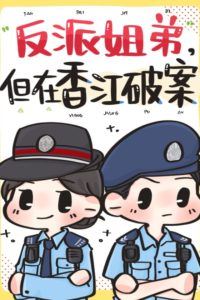
Villain Siblings, But Solving Cases in Hong Kong
+Add to Custom List
Genres:
Novel Info
  • Author:
  • 溯時
  • Status:Ongoing

Summary

... Read More

In Hong Kong, 1995, Chief Inspector Li Heng of the West Kowloon Regional Crime Unit investigates the discovery of skeletal remains concealed beneath a stove in a Sham Shui Po tenement. The victim, an adult male, died six to seven years prior from blunt force trauma. Li Heng, a young but highly competent officer with a rootless past and recurring dreams of a golden, warm childhood, leads the investigation with her team, including the diligent but slow Lin Jiacong and the well-connected Old You. The case initially points to a missing nineteen-year-old student named Liang Wei, whose family reported him missing around the same time. However, Li Heng discovers a critical discrepancy: Liang Wei’s medical records show a scar on his left brow bone, while the remains have a scar on the right, proving the victim is not Liang Wei.

The investigation shifts focus to Liang Wei’s girlfriend, Chi Huimin, known as Amin, a former star at the Jinxiao Nightclub. Through interviews with nightclub staff and Liang Wei’s night school classmates, Li Heng uncovers a complex social web. Amin presented two faces: a flashy, aloof nightclub performer and a gentle, innocent girl who was deeply devoted to Liang Wei. She had dropped out of the sex work industry to start a normal life with him, but both she and Liang Wei vanished shortly after. The victim is eventually identified as Zhang Pingxuan, a twenty-two-year-old man with mild intellectual disabilities, who disappeared under similar circumstances. His grandmother reveals that Zhang Pingxuan was easily manipulated by bad friends and was obsessed with finding his wealthy biological father, who had abandoned them.

Complicating matters is the involvement of Shen Zhicheng, the arrogant and reckless heir to the Shen family, whose ancestors own the land where the tenement stands. The Shen Group is preparing for a major demolition project, and the discovery of a corpse threatens to delay the signing. Shen Zhicheng insists on monitoring the case, leveraging his family’s influence and donations to the police force. Despite Li Heng’s initial hostility and professional boundaries, Shen Zhicheng accompanies her on key investigative steps, including a trip to the nightclub and an airport intercept of Amin’s former roommate, Maggie. Shen Zhicheng’s presence is partly due to his own traumatic past; he was blamed for the deaths of his parents and twin sister in a car accident when he was a child, a guilt that haunts him and connects him to the theme of lost siblings in the case.

As Li Heng digs deeper, she learns that Amin had a twin sister, Zhang Huijing, who suffered from congenital bone deformities and was favored by their abusive mother. The timeline reveals that Amin resigned from the nightclub and Liang Wei disappeared around the same time Zhang Pingxuan vanished, all coinciding with Typhoon Signal No. 8 six years ago. The evidence suggests that Zhang Pingxuan was lured by his manipulative peers, possibly using his desire to find his father as a hook. Li Heng suspects that Amin and Liang Wei are still alive but in hiding, and that their disappearance is linked to the events surrounding Zhang Pingxuan’s death. The case evolves from a simple identification mystery into a intricate web of deception, family secrets, and hidden identities, with Li Heng determined to uncover the truth regardless of the pressure from the Shen family or the passage of time.

Novel Items

More
Materials
A yellowed piece of paper embedded in the cement beneath the stove. The faded handwriting contained a nursery rhyme with numbers: One, two, three, hurry and hide. Four, five, six, can't be found. Seven, eight, nine, caught you now. The child's voice reciting the rhyme helped Li Heng decipher the illegible writing. The note was bagged with cement chunks for the tech unit to restore.
Materials
A palm-sized metal pad found wedged beneath a flowerpot on the balcony of Unit 2. Its edges were no longer sharp and it was pressed into a curved arc matching the flowerpot base. The pattern printed on it had faded from exposure to sun and rain. Li Heng hoped to lift fingerprints from it, though corrosion likely compromised the prints.
Materials
A crumpled, dog-eared stamp sheet that Li Heng carried in her pocket. She used them to bribe Auntie Wang into providing information about Xiao Wei. The stamps could be redeemed for a free Ultraman figure at Wing On Supermarket.
Evidence
A human skeleton discovered at the bottom of the drainage ditch while Uncle Dazhu was digging. A small skeletal hand wrapped in tattered fabric was exposed. The discovery triggered a murder investigation by the county public security bureau.
Materials
Fabric fibers found near the skeletal remains, pending further testing by the forensic department. Could potentially help identify the deceased.
Evidence
A square metal plate found at the crime scene with evenly distributed wear marks in the middle. The edges were cut cleanly. When pieced together, the outline resembles a wine glass. It is believed to be a custom coaster from an entertainment venue like a nightclub. The missing corner vaguely matches the emblem on Jinxiao Nightclub's neon sign.
Latest Release
DateGroupRelease
2026-08-11shanghai fantasy c51
2026-08-11shanghai fantasy c50
2026-08-11shanghai fantasy c49
2026-08-11shanghai fantasy c48
2026-08-11shanghai fantasy c47
2026-08-11shanghai fantasy c46
2026-08-11shanghai fantasy c45
2026-08-11shanghai fantasy c44
2026-08-11shanghai fantasy c43
2026-08-11shanghai fantasy c42
2026-08-11shanghai fantasy c41
2026-08-11shanghai fantasy c40

Community Reviews

Rating(3.9 / 5.0, 29votes)
5 stars
7(24%)
4 stars
13(45%)
3 stars
9(31%)
2 stars
0(0%)
1 stars
0(0%)

Popular reviews

... Read More
Let me just say this—the pacing in these chapters is absolutely masterful and I have no idea how the author does it. You start with Shen Zhicheng in near-silence, alone in an attic, trying to fix a music box. It's slow. Intimate. Almost meditative. The prose lingers on details—the faded photograph, the stiff winding key, the glass globe casting moonlight. You're in a completely different emotional register here. Then—bam—cut to the police station, sunlight, noise, Old You and Lin Jiacong bickering, Pan Liqin breathing down everyone's neck. The energy shifts instantly but seamlessly. The investigation scenes move at a deliberate pace. You're given the pieces one by one: the false testimony about Zhang Fengying, the surveillance footage, the neighbor's account of an abusive father. Each revelation is small, almost mundane, but they accumulate. The author never rushes. Even when Fang Zhishan finally spots Liang Wei in the grainy footage, it doesn't feel like a cheap climax—it feels earned. Decades of frame-by-frame review paying off. Then the chase sequence. Li Heng following Zhang Huijing through Cheung Sha Wan, the tension building with every step, Shen Zhicheng's near-exposure, the whistle, the catcall cover. And then—the phone call. Ten minutes of dialogue that could have been a scene break but instead becomes the emotional peak of the entire chapter. The pacing slows right when it needs to, letting that conversation breathe, letting Li Heng's backstory echo in the background. And it ends on "a smile still lingered at the corners of her mouth." Not a cliffhanger. Not a revelation. Just that smile. And you're left sitting there wondering what it means.
... Read More
The dialogue in this chapter is genuinely excellent, and I want to highlight how each character has a completely distinct voice. Maggie/Cai Meiqi sounds like someone who's rebuilt herself from scratch and is fiercely protective of the new version. Her dialogue is sharp, dismissive, almost performative: 'Fishing for a rich husband? If Amin were that smart...' and 'Amin and I are no longer in the same world. I don't want my husband knowing about that past.' She's telling the police everything but also making sure they understand she's not that girl anymore. The diamond ring flash at the end is basically dialogue without words. Shen Zhicheng's voice is this perfect mix of deflection and vulnerability. He starts with 'I'm not your chauffeur' and 'you don't know how to drive a luxury car?'—classic deflection. But then he says 'Twins have a connection' in this barely audible voice, and you know he's not talking about Amin and her sister at all. The way he immediately covers it up afterward is so characteristic. Granny Zhou's dialogue is heartbreaking in its simplicity. 'This person... looks like my grandson.' The pause, the uncertainty, the trembling. And later: 'I've thought about it for all these years, and still don't dare.' This woman has carried six years of worst-case scenarios and the author gives her dialogue that matches her age and her grief perfectly—short, careful, weighted. And Li Heng—she barely speaks in this chapter but when she does, it's efficient and sharp. 'What about that twin sister you mentioned?' 'He's not a cop.' The handbrake incident is basically non-verbal dialogue and it says everything.
... Read More
Let me just say—the stakes in this section are absolutely razor-thin and the author knows it. On one thread: Li Heng is trying to connect Liang Wei to Zhang Huijing, and the entire case hinges on whether they had a secret relationship. If they didn't, then Zhang Fengying's false testimony about living overseas is irrelevant, and the police have no reason to dig deeper. The higher-ups are calling multiple times a day. Chief Inspector Pan Liqin has made three trips to the CID room that morning alone. The pressure is mounting, and Li Heng is holding the line—shutting her door, having her team cover for her, refusing to close the case until she has answers. On another thread: Zhang Huijing is performing this elaborate fiction. She's lying about her mother, she's meeting someone secretly (or pretending to), and she's doing it all with this terrifying calm. The surveillance footage shows Liang Wei at the exact time the police were taking her statement. He was watching her. Or protecting her. The ambiguity itself is the tension. And then the chase. Li Heng following Zhang Huijing through a narrow alley, heart in her throat, knowing that if she loses her—or if Zhang Huijing realizes she's being followed—the lead is gone forever. Shen Zhicheng nearly blows their cover with a single syllable. One word. That's how close it was. But the real stakes aren't professional or procedural. They're personal. Li Heng listening to Zhang Huijing's phone call, hearing a twenty-nine-year-old woman sound like a child, and suddenly remembering her own childhood—shuffled between foster families, sent back to the orphanage, stopping hope because it hurt too much. The case isn't just about solving a murder anymore. It's about two women who understand loss in different languages, standing in the same alley, separated by profession but connected by something far deeper. And that's what makes every frame of tension here hit so much harder.
... Read More
This book smells like Hong Kong. Not the postcard version, but the real one — the narrow hallways with musty air in Yuen Long, the old buildings where lighting is terrible and layouts are stuffy, the maze of alleys between Cheung Sha Wan and Sham Shui Po where you can cut through and be somewhere completely different in five minutes. The landlord scene gave me chills. She's just a middle-aged auntie in slippers, carrying a ring of keys, rambling about how no one's wanted to rent that place for years. And then she produces this plastic bag — Ah Min's leftovers after her father's funeral. Old clothes, a small mirror, a worn makeup bag with a powder puff and an old comb. The way the author describes it, you can practically smell that room. 'She didn't even leave a little something for the trouble of cleaning up the place,' the landlord says, and there's this heartbreaking implication that Ah Min came back one last time, looked around, and left again with nothing. Then you cut to Li Heng's rented room, past ten at night, neon lights flickering outside the window. She's sitting cross-legged on her bed with a calculator, running down payment numbers. The contrast between the grimy evidence room where the archivist dreams of evidence talking to her, and this cramped private space where a police inspector is calculating how close she is to owning a home — it's such a vivid portrait of this city's underbelly and its dreams. And Shen Zhicheng's villa on the hillside, that spiral staircase, the attic room where starlight falls on an old crib with two small folded blankets. The silence inside versus the 'relentless noise and malice of childhood' outside. Two completely different worlds separated by a door.
... Read More
I need to talk about the rooftop scene because the author absolutely cooked. The whole setup—old tenement buildings about to be demolished, the debris scattered around, sirens blaring below, the old neighbors murmuring like ghosts of the neighborhood itself. It feels so specific to Hong Kong, this sense of a place that's being erased. And then Liang Wei standing at the edge, his feet already hanging over the void, glasses off, unshaven, thinner than in the missing person posters. The visual of him turning his head slowly with bloodshot eyes—chilling. But what really sold it for me was the moment of the fall. Li Heng watching from below, her heart doing that familiar palpitation thing, the two figures tangled together dangling from the fourth-floor window, sliding down the railing until they crash onto the inflatable cushion. It reads like a film sequence. Every beat timed perfectly. The crowd screaming, someone covering a child's eyes, the dull thud of impact. And then the aftermath—Shen Zhicheng lying there dazed, confirming Liang Wei is alive before doing anything else. That small detail. He doesn't check his own injuries first. He checks if the guy he just saved is breathing. The hospital scene afterward has this weird liminal quality too—fluorescent lights, corridor benches, the afternoon sunlight through tree branches casting dappled shadows on Liang Wei's gaunt face. Six years of running catching up to him in that room. The contrast between the chaotic rooftop and the sterile hospital quiet is so well done.
... Read More
The confession scene at the end of this batch is where everything converges and I was NOT prepared. Liang Wei finally opens up about what really happened with Zhang Pingxuan and the author makes you understand him in the worst possible way. He wasn't some cold-blooded murderer. He was a good student, someone everyone said was born to be a scholar, whose mother was dying in a hospital and who saw a path to save her through a man stupid enough to trust him. The detail about the fake passbook—how he forged it so Zhang Pingxuan's grandmother would never know—shows how calculated he was, even then. But then the murder itself... Zhang Pingxuan came with the money, he didn't need to die, but he was clinging to Liang Wei, pestering him, and something snapped. Six years of replaying that moment. Every time he closes his eyes, he sees it. The stakes here are enormous because we're not just dealing with a murder mystery anymore. We're dealing with a person who has been carrying this guilt for half a decade, who tried to end it all on that rooftop, and who is now sitting in a hospital bed finally ready to talk. Li Heng's reaction is so controlled—pulling out her notepad, asking him to tell her about his crime like she's just starting a routine interview. But underneath that professionalism, you can feel the weight of six years of an unsolved case finally cracking open. And Shen Zhicheng's role in all of this? He went from being this annoying spoiled heir to the person who physically prevented a second death at the same building. The tension between all these threads—past and present, guilt and redemption, duty and compassion—is what makes this novel absolutely unputdownable. I stayed up way too late reading this batch.
See all reviews

Characters

See all characters

Custom lists

Oops…There is nothing here.