Villain Alpha is Pregnant - Reviews

Villain Alpha is Pregnant
+Add to Custom List
Sort
Add review
... Read More
If I had to pick one thing that makes this text feel alive, it's the dialogue. Specifically, Li Zhuo's voice, which is so sharply drawn it could cut glass. Listen to how he speaks: "If you had listened to me earlier, then you wouldn't be in this mess. Look at you, after all this time, not even a single branded clothing." This is not a villain monologue. This is a mediocre middleman trying to assert dominance over someone he's clearly terrified of. The grammar is slightly off. The insults are cheap. The concern is performative. Every word says: I need you to need me, and I'm angry that you don't seem to need anything. And then Si Huaixi's responses: "Mhm." "Well, it's not impossible. Since we've discovered a lead, let's go take a look." Two words. Then a practical sentence. No heat. No coldness even. Just efficiency. The contrast between Li Zhuo's verbosity and Si Huaixi's restraint creates a comedic rhythm that's almost slapstick, which is remarkable for a text dealing with human trafficking and soul deterioration. Irin's voice is different again—formal, hesitant, wrapped in self-correction: "Irin can't be certain, but does Mr. Si think that Irin's body might be there?" She refers to herself in the third person. She hedges. She apologizes for existing. It's the voice of someone who has been diminished so thoroughly that politeness has become a survival mechanism. The client's dialogue is even more revealing: "Where is he?" Four words that contain terror, obsession, and urgency all at once. No greeting. No small talk. Just the raw question of someone who has waited too long and is now afraid the moment has passed. What's striking is that no character sounds alike. Each has a distinct phonetic fingerprint. That's rare in serialized fiction where dialogue often converges into a single authorial voice.
... Read More
I am dead on the floor because the AI Silver Arc is genuinely the funniest and most relatable character in this entire passage and I need the author to give it a spin-off. Listen to this exchange: "Master, you could have called other mech pilots. It wasn't necessary for you to take the risk yourself!" and then later: "If you continue to disregard the young master's and Mr. Si's words, I will report this to Mr. Si." AND PEI ZHAOZHOU'S RESPONSE IS JUST TO FROWN AND CHANGE THE SUBJECT. The man is being parented by an AI and he's not even fighting it—he's just trying to get back to sleep. This is peak domestic comedy disguised as military sci-fi. But then you have the onboard pirate dialogue which is a completely different flavor. "Why are you so quiet today?" "Do I?" Jeff said with a smile. Every line between these characters crackles with unspoken suspicion. They're performing normalcy over actual menace, and the subtext is doing ALL the heavy lifting. No exposition needed—their dialogue tells you everything about how fractured this group is. The narrative voice itself is worth mentioning too. It's restrained but never flat. There's warmth when describing Pei Zhaozhou's actions and then this sudden cold pivot when the POV shifts to the impostor. The author knows exactly when to let scenes breathe and when to tighten the screws.
... Read More
This chapter is a masterclass in controlled escalation, and I'm still not over it. It starts almost QUIETLY. Two teams entering an empty ship. Methodical reports. Captain Barton walking through corridors with thermal sensors. There's this long stretch where nothing seems to be happening, and I'll admit I was almost drifting—until Pei Zhaozhou's suspicion kicked in. That's when the temperature changed. Not with action, but with dread. The author does something really clever with information pacing. We learn things in this order: empty ship → dead pirates with wrong wounds → damaged circuits → hidden passengers → explosion. Each revelation should theoretically calm us down (okay, maybe the pirates are dead, problem solved!), but each one actually deepens the mystery. The narrative trick is making every answer feel more unsettling than the question. Then BOOM. Reaction chamber. Three minutes. The pacing shifts from investigative thriller to survival horror in a single paragraph. And that ending—Pei Zhaozhou volunteering to fly the Silver Arc mech—lands like a drumbeat. The chapter doesn't resolve anything; it just raises the voltage. If I'm being honest, the middle section with the sealed compartments could've been trimmed. But looking back, that deliberate slowness made the explosion hurt more. Good grief.
... Read More
"You don't have to be like this. We are family, and Father would want you to behave." I need to talk about this moment because it wrecked me. Edward, the Crown Prince, the guy who looks like he hasn't slept in weeks, standing there telling his younger brother to behave. And Kyle — oh god, Kyle. He could literally feel the smell of his own blood when he dug his nails into his palm, and his response to genuine care is to sneer about finding him a wife to produce more freaks. That line hit like a truck. The fact that Edward raised Kyle since childhood changes everything about this scene. It's not just an older brother talking down to a younger one. This is someone who genuinely stepped up, who watched over this violent, unstable kid despite everything, and now he's just... empty. His eyes used to be "clear and bright" but now they're "cloudy and dull." The author doesn't say it outright but Edward is clearly suffering from something too, something tied to the family's mental illness history. And Kyle's reaction — calling his mother a "freak," mocking Edward, retreating behind that cold exterior — it's not that he doesn't care. It's the opposite. He's sick (and I don't mean emotionally, though that too), he's out of control, and Edward is the only person who might actually reach him. But Kyle pushes him away instead. What kills me is that final line: "He was sick." After all that venom, after all those cuts, Kyle looks at Edward and the narration just... stops. No follow-up. Just those three words. I think Kyle knows exactly what's wrong with both of them, and that shared brokenness is the only thing connecting them now.
... Read More
There's a recurring motif in this text that I can't shake—the idea that survival is performance. Everyone on that ship is playing a role. The civilians bark out connections to nobles and government officials like talismans, as if naming powerful relatives will somehow make them powerful. The star pirates pretend to be brutal marauders while clearly operating under someone else's orders. The variety show stars, stripped of their makeup and cameras, become 'haggard and disheveled' ghosts of themselves. And then there's Bai Huaiyu, whose entire survival strategy is predicated on performing vulnerability. He's an Omega in a world where pheromones are literally weapons—'His pheromones had a higher chance of manipulating Alphas than Betas.' That's not just a biological detail; it's a commentary on how the powerless learn to weaponize the very traits society tells them make them weak. He turns charm into a scalpel. The fruit knife is another symbol I couldn't ignore. 'Bai Huaiyu concealed the small fruit knife he used to slice fruits in his luggage.' The most dangerous weapon on that ship isn't held by the pirates—it's a kitchen tool carried by the person everyone underestimates. Of course it is. 'If everyone were to perish, Bai Yuji believed that he would be the only one left standing.' This line feels like the thematic thesis of the entire passage. It's not about heroism or loyalty or love. It's about who survives when the stage collapses—and everyone is already performing.
... Read More
Can we talk about how sparse the dialogue is in these chapters and how EFFECTIVE it is? Most of the conversations here are utilitarian. King Edmund: "Kyle, he's disappeared." Edward: "All the guards who were escorting him to exile are dead." That's it. No elaboration, no emotional padding. These are people who have long ago stopped performing for each other and just state facts. It creates this atmosphere of a royal family that has run out of warmth but hasn't run out of strategy. The one scene that DOES have colorful dialogue is Edward visiting Katie. And honestly? It's barely dialogue. It's mostly action tags and pheromone descriptions. Katie's only line is "Oh, I see. Then I'll go there later" — delivered while CHEWING ROSE PETALS. The fact that she's eating flowers while discussing a crisis is the most Katie thing imaginable. And Edward's response? Just... compliance. He doesn't push back. He doesn't question why she's snacking during a royal emergency. The power dynamic is so clearly written WITHOUT words. Li Zhuo's conversation with the mysterious benefactor is mostly reported speech — the broker confirming he'll deliver Si Huaixi. But the voice here is distinct. His desperation comes through in the physical descriptions around his speech: "withered face," "sickly shades of dark blue," trembling hands injecting painkillers. The dialogue is polite on the surface — "May I ask when you will settle the remaining payment" — but the subtext is a man selling someone else's freedom because he's dying and needs money for medicine. There's a tragic layering here that pure dialogue couldn't achieve. The author's narrative voice is also worth noting — it shifts register depending on whose perspective we're following. Si Huaixi's sections are lyrical and inward. The royal family sections are sharp and external. It's a subtle but consistent choice that helps us orient ourselves even when chapter boundaries blur.
... Read More
I have never laughed this hard at dialogue in a romance novel and I need everyone to understand what I just experienced. The absolute GEM of this entire batch is Si Huaixi, in a delirious, drug-addled state, clutching Pei Zhaozhou's waist and SCREAMING "I said it, I don't want to waste water!" WHILE PULLING HIM INTO BED. This man is so committed to his water-conservation principle that it overrides every biological instinct in his body and somehow becomes the most compelling argument for bed-sharing I have ever encountered. PEI ZHAOZHOU: *tries to be sensible* Si Huaixi: *no, we are bathing in nothing and I am keeping you* The sheer absurdity of it, delivered with complete earnestness—this is the kind of dialogue that makes you snort-laugh out loud in public. And Pei Zhaozhou's voice is a masterclass in contrast. Everything about him is measured, controlled, formal—"Why don't I go out first, and you soothe yourself" (bro, what sort of gentlemanly crisis is this, but also respect the manners), "let me help you" spoken in that soft, honeyed tone that clearly wasn't in his default settings. He sounds like a man who has read zero romance novels but is somehow perfectly cast in one. The voice shift when he's coeraxed is subtle but devastating—you can hear the steel dissolving. Then there's the narrator's own voice, which is doing SO much work. Lines like "Pei Zhaozhou didn't even know what to do with this good baby who cherished water" and the old cow comparison—this narrative voice has personality. It's witty, slightly irreverent, and completely invested in watching these two disasters figure each other out. The descriptive flourishes throughout are also carrying a lot: "His moist and beautiful sea-blue eyes were fixed on Pei Zhaozhou. His thin lips were slightly open, as if looking forward to his next move"—this is romantic tension written with such specificity that you can feel your pulse spike. The author knows exactly how to use dialogue to create comedy AND chemistry simultaneously, and that balance is incredibly hard to pull off.
... Read More
The visual contrast in this chapter is absolutely stunning. It opens in this grotesque, visceral scene—Eddie Claude covered in rotten eggs and tomato juice, the public humiliation turning fatal, police officers freezing up at his unhinged laughter. There's something almost carnivalesque about the imperial citizens throwing produce at a prisoner, like this is some twisted festival. And then Si Huaixi walking through the chaos with those 'cold and chilling sea-blue eyes'—this character is clearly operating on a level nobody else understands. Then we cut to Princess Katie's private chamber, and the atmosphere shifts entirely. She's caressing rose petals, surrounded by elegance and restraint, speaking in that 'ethereal and casual tone' while dropping information that could topple a kingdom. The rose motif is doing so much work here—it's delicate, beautiful, but roses have thorns. Classic symbolic layering. The worldbuilding details that emerge through Katie's monologue are rich: the pheromone compatibility system (86% vs 30%), the S-class Alpha designation, the ABO dynamics woven into royal succession politics, the Basalom family's standing among nobility. None of this is explained through infodumps—it's all naturalized through character motivation and personal history. The world feels lived-in because every political detail is tied to someone's pain.
... Read More
The stakes in this batch are through the roof. We open with Bai Huaiyu trapped on a hijacked spaceship, surrounded by star pirates. He's an Omega with no means to resist—except he does. He releases his pheromones, causes chaos, and when Ke Yan arrives, he lets the Alpha get close enough to mark him. Then he stabs him. The conflict is immediate and visceral: survival versus domination. Bai Huaiyu gambles everything on that one move, and it pays off—until Ke Yan lives. Oh, he lives, but he's wounded and furious. That's the external conflict: will Ke Yan hunt Bai Huaiyu down? Will the pirates tear apart the ship looking for him? But there's also internal conflict. Bai Huaiyu remembers Ying Yao, the Alpha he deceived and manipulated. He finds her more pleasing than the nauseating Alphas around him. Why? Because she was his puppet, his creation. He hurt her, but she didn't see him coming. Ke Yan, on the other hand, saw right through him—and still fell for it. That's a blow to Bai Huaiyu's ego, I bet. On the palace front, Edward's conflict is quieter but no less intense. He's torn between hating his deceased brother and loving the family he's trying to save. The Queen's madness is a constant pressure, and Edward plays along because he has no choice. "For the sake of this fragile family, Edward donned a mask of hypocrisy." That's internal conflict in a nutshell: duty versus desire, love versus resentment. The stakes here aren't life and death—they're sanity and identity. And then the pirate crew! Their conflict shifts with their leader's death. They're angry, confused, and suddenly nostalgic. "Sigh, what's the use of talking? Let's just get to work." The stakes for them are survival—without a strong boss, they're adrift. They used to complain about Ke Yan, but now they remember his generosity. That's a classic conflict: you only appreciate someone when they're gone. What keeps me hooked is how these conflicts intersect. Bai Huaiyu's escape might trigger Ke Yan's revenge. Edward's facade could crack under the Queen's madness. And the pirates might turn on each other. The author makes you care because every character has something to lose, and the threats feel real. Not just death, but betrayal, loneliness, and the loss of self. That's masterful tension.
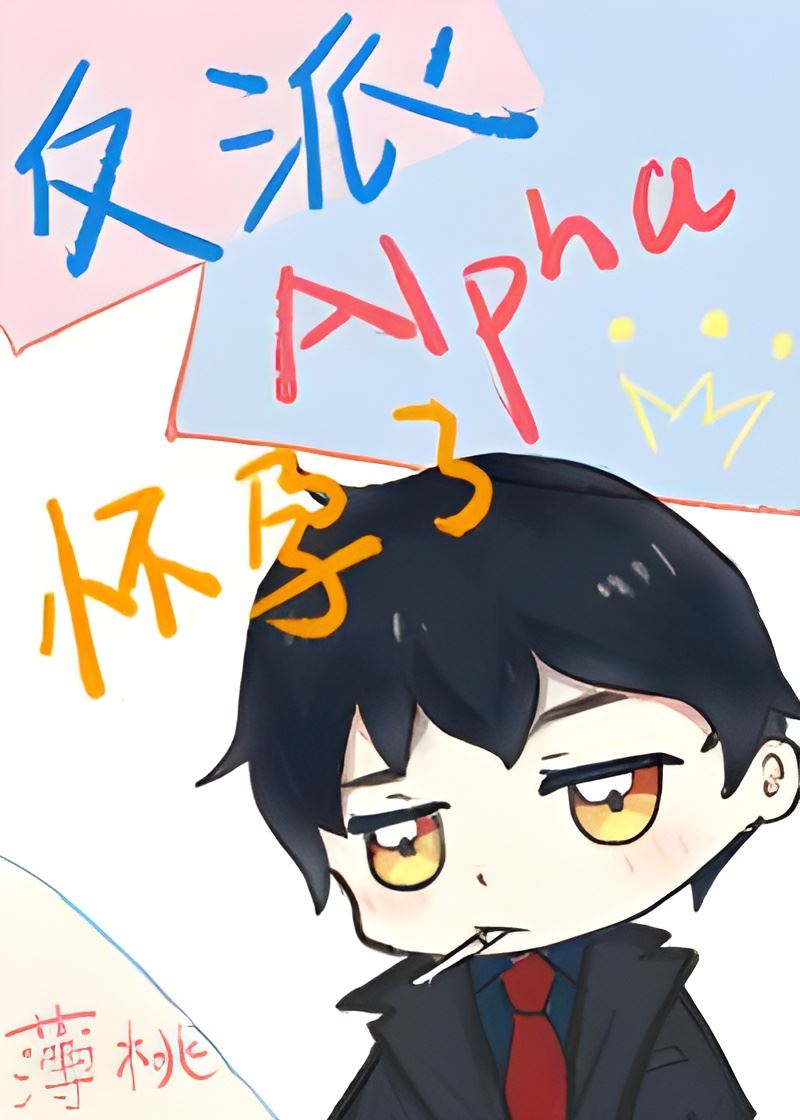
... Read More
There's something genuinely devastating about how Si Huaixi's gaze literally lights up when he hears about young Pei Zhaozhou. Remember that moment? Si Huaixi pictures him as mature and stern always, and then this vision of a dazzling young mech pilot who refused to be crushed by nobles comes to life. His deep blue pupils sparkled. That line hit me hard because it tells us everything about what Pei Zhaozhou has lost. He used to be someone people wanted to see - someone who fought back cleverly, who used combat courses to send noble heirs to the hospital literally. Now he's this weary figure sitting in the shadows, letting people frame him without fighting back as aggressively. The tragedy is that Si Huaixi represents the first person in a long time who actually admires him for who he was, not just what he can do for them. And Pei Zhaozhou's reaction? His brow relaxed, eyes carrying a hint of amusement before gradually fading away. He couldn't even stay in that warm moment. Their relationship is so fragile and precious right now. Si Huaixi genuinely wants to know everything about Brother Pei's past - and Pei Zhaozhou is slowly letting him in, which might be the most vulnerable thing either of them has done.
... Read More
I need to talk about Bai Huaiyu because this character is genuinely terrifying and I love it. On the surface, he's presented as this mild, gentle Omega who cowers and plays the helpless victim. But read between the lines and he's a snake in serpent form. The moment the author tells us 'No one knew how terrifying this seemingly gentle Omega was behind closed doors'—that hit me like a freight train. Everything before that point recontextualizes. His 'cowering' wasn't fear, it was performance. His whispered conversation with Bai Yuji wasn't seeking comfort, it was calculating. And the dynamic with Bai Yuji is even more delicious. This cousin—sent by the Bai family to monitor him—is literally clinging to him like a life raft in a crisis. But Bai Huaiyu sees him for what he is: a liability. An annoyance. A reminder of family control he wants to shed. And yet, he doesn't expose himself fully even in life-or-death because 'he didn't want to expose his special abilities unless absolutely necessary.' This man would rather let everyone around him die than reveal his trump card early. That's not just cold—that's strategic on a level that makes my skin crawl. 'His pheromones had a higher chance of manipulating Alphas than Betas, not to mention Alphas' inherent physical superiority. When necessary, he would charm several star pirates and civilian Alphas to shield him from the rest of the pirates.' He's literally planning to use people as meat shields. And the worst part? I find myself rooting for him anyway because the alternative is watching him get碾碎 by people who are actually trying to kill him. The author made me complicit. That's good writing.
... Read More
So the mc is the ml ayyy. The tag should be seme protagonist. He made the alpha villain preggy. That was me being Confucius ?

Leave a comment

You must be logged in to leave comments. or
