Villain Alpha is Pregnant - Reviews

Villain Alpha is Pregnant
+Add to Custom List
Sort
Add review
... Read More
Can we just talk about Si Huaixi for a second? Because the way this scene handles his shift from icy silence to desperate concern is actually masterful. He starts off giving Pei Zhaozhou the silent treatment - that's established context - but the moment he feels fetal movement under his hand, everything changes. He's not angry about the lie, he's worried. 'Just let me take a look, Brother Pei. You can argue with me, but don't hide your illness from me. I'm really worried about you.' And THEN Pei Zhaozhou breaks and says 'It was you who started the silent treatment first' and Si Huaixi just... admits it? 'Mm, I was wrong. I won't give you the silent treatment anymore.' That's it. That's the entire love language of these two people. Two stubborn people who only know how to communicate through conflict and then somehow stumble into vulnerability. The line 'he wasn't indifferent either' hit me like a truck. Si Huaixi has been holding back his own feelings this whole time too.
... Read More
I have to talk about how this chapter switches between two completely different worlds and somehow makes both feel urgent. We start with Irin's ghost story—slow, haunting, intimate. Every sentence is weighted with grief and transparency. She speaks in fragments because she's fading. The pacing here is deliberate, almost meditative, pulling you into this cold digital swamp where a girl's consciousness is barely holding on. And then—BAM. Cut to Bai Huaiyu's film set. Chaos. Director Lin furious about money. The assistant director shouting about lost contact with a spacecraft. Yao Ying's panic. The tempo shifts from a whisper to a scream overnight and I was NOT ready. This structural choice is doing something clever. By cutting between Irin's quiet desperation and the industrial panic of the film crew, the author creates a rhythm that mimics how real crises work. One person's tragedy is another person's emergency. They're happening simultaneously, independently, and yet the reader knows they're connected. The tension builds precisely because we're not given closure on either front. The transition moments are also well-handled. After Irin shows Si Huaixi her star map, there's this little beat where he sets it aside and thinks about how quickly things are moving—he hasn't even found the original owner's family yet—and then the narrative pivots. It's a sigh before the storm. And then Director Lin's phone rings and the storm arrives. What I appreciated most is that neither storyline gets rushed despite the dual focus. Irin's confession has room to breathe. The film set panic feels legitimately chaotic rather than perfunctory. The author trusts the reader to hold both threads in their head at once. That's a hard balance to strike and it's executed well.
... Read More
There's this recurring motif in these chapters about faces and how they're treated. The production team panics because Bai Huaiyu's forehead got red. His manager is already drafting compensation claims focused entirely on his appearance. "Your face must remain flawless." And Bai Huaiyu's internal response is this bitter, hollow laugh—he was beaten to the point of bone fractures in the western suburbs and nobody cared about his face then. The face is a symbol, obviously. It's the commodity. It's the mask he's forced to wear in a world that only values Omegas for what they can provide to Alphas. The Bai family doesn't care about Bai Huaiyu as a person—they care about the face, the pheromones, the image. His actual pain is irrelevant because it doesn't translate to profit. "This duke has privately purchased a lot of banned drugs through the Bai family's channels, and many commoners and slaves have been killed by him!" But Bai Huaiyu has to go meet him anyway. Because the family's industrial pursuits—pharmaceuticals,_illicit trade, exploitation—require sacrifices. His body, his face, his freedom, all of it is currency in a system that sees human beings as resources. The ABO hierarchy itself is this giant metaphor for power structures built on biological determinism. And Bai Huaiyu sits at the intersection of every layer of oppression—bastard, Omega, valuable, disposable—and there's nowhere to hide. The basketball scene isn't random comic relief either. Ying Yao, the Alpha, hurts him while pretending to help. That's the entire system in miniature.
... Read More
Okay, I need to talk about Shen Modong and Bai Huaiyu because honestly this dynamic has me absolutely shook. So Shen Modong is this untouchable young film emperor—top-tier actor, ridiculously wealthy family, frosty expression, basically everyone's dream date except he only cares about acting. And then BAM, he's on the phone being all sweet and gentle with Bai Huaiyu like some lovesick teenager. The contrast is everything. His eyes are described as 'melting like a serene snow-capped mountain spring' and I'm just sitting here going WHAT HAPPENED TO THE COLD FILM EMPEROR? But here's where it gets juicy—the translation note literally says Bai Huaiyu is some kind of 'scheming white lotus' who's used 'love potion' on Shen Modong. Or maybe he hasn't, maybe he's just genuinely manipulative. Either way, Shen Modong is throwing himself under the bus for this guy. He's willing to lower his status, engage in CP pairings publicly, and basically abandon his own career momentum. And the worst part? He genuinely believes Bai Huaiyu is 'kind and gentle.' Like bro, look at the evidence. This guy has caused minor injuries to MULTIPLE celebrities on drama sets. He instigated staff to hurt Ju Suxin. That's not gentle, that's calculated. Meanwhile, Zhong Hong is the real MVP here. She's been out there managing fans, explaining that Shen Modong and Bai Huaiyu are 'just friends,' dealing with the public fallout while her precious 'little cabbage' is out there getting emotionally drained by this Omega. Her internal monologue about 'vampire bats' is giving me life. She knows something is off but can't prove it, and that helplessness is so relatable. Then there's Si Huaixi, who's just... watching all of this unfold with this knowing glint in his eye. He knows Shen Modong is supposed to be 'the greatest support in the entertainment industry for the protagonist, Bai Huaiyu.' He knows the script. He's been waiting for this moment. The emotional tension between all these characters is absolutely delicious. I literally cannot wait to see how this plays out.
... Read More
I keep coming back to one tiny detail from these chapters and I can't shake it. Si Huaixi walks into the restaurant in Novice Village, sees the synthetic food on the table, and immediately furrows his brows in disdain. This is a man who lived through the apocalypse. He ate real survival food. He fought real zombies. And now he's looking at this perfectly fine-sounding synthetic meal like it's an insult. It's such a small moment but it carries so much weight. That synthetic food represents everything he's left behind — the violence, the scarcity, the constant fight for survival. And it's also what this peaceful interstellar era can't escape: they've replaced real food with synthetics, they've turned war into a VIDEO GAME with Mech arenas and simulation battlefields. The Zerg he's slaughtering aren't real threats — they're code and polygons. But for Si Huaixi, who has killed real horrors, this is almost insulting. His PTSD isn't mentioned outright but it's there in every blink. Then there's the money symbol. Seven figures for a Mech minimum. Four digits in his account. This is a man who could end wars single-handedly and he can't even afford basic transportation gear. The apocalypse stripped him of everything conventional, and now in this supposedly advanced peaceful era, those old-world skills don't translate to wealth. He's powerful but powerless. Ancient but broke. The flying Zerg that required twelve high-level Mechs to handle — he took it down alone. "Like cutting vegetables and slicing melons." This phrase kept echoing in my head. In the apocalypse, life was cheap. Things that would overwhelm armies were just Tuesday. That desensitization is both his greatest weapon and his deepest tragedy. How do you reintegrate into a world that treats simulated combat as entertainment when you've seen actual death? That's the question underneath all the mech battles and romantic tension.
... Read More
I need to talk about this university scene because it is SO vividly rendered. Imperial University sitting in the east district near the palace, gathering elite talent, producing military and tech leaders—it immediately tells us this is some kind of advanced civilization, possibly futuristic or alternate-history. The fact that even here, the future elite still chase celebrities just like we would in our world, makes the setting feel lived-in and real. The description of Si Huaixi appearing under the trees is where the author really pulls out all the stops. You've got sea-blue eyes like pearls from the ocean, cold black eyebrows, those dramatic crimson corners at the edges of his eyes, marble-like features, and he's described as walking out of the ocean depths like a siren. This isn't just pretty-face stuff; the imagery ties him to water and mystery and danger simultaneously. It makes him feel almost mythic, like the kind of person you'd see in ancient sailor tales coming to enchant everyone around him. But what I love most is the everyday details woven in. The cafeteria limiting nutritional supplement drinks to 100 bottles a day, the limited edition milk tea flavor that students line up for, the week-old restaurant reservations getting ruined because of fan obsession. These are such specific, mundane touches that ground the whole thing. It's not just grand celebrity events; it's about students with midterms and friends who need milk tea bribes. Qiu Yi pushing up her glasses lazily while talking about skipping naps, Liang Antong's frantic energy, the whole dynamic of these two roommates with completely different motivations suddenly bonded together—these scenes feel like they were actually observed from life. The author doesn't just tell us about fan culture; we're right there with them, climbing walls and chasing idols and debating which supplements are worth the wait. It's immersive in a way that makes me want to visit this university myself.
... Read More
The chapter transitions are so smooth and intentional. We start in a tense social situation — the lunch invitation, the unspoken feelings, the jealous glances — and then it cuts straight to the drama set where everything is chaos. Director Lin roaring, Liu Sishan blushing uncontrollably, the contrast between the quiet intensity of Pei Zhaozhou's POV and the noisy set is really effective. What I love is how the author uses the filming of "This Star Is Named for You" as both a pacing device AND a thematic mirror. The drama-within-a-drama lets us see Si Huaixi in a completely different light — he's playing a bully, swaggering around with graffiti on his uniform, looking like "a wild and mischievous black lion." It's almost like the character is living two parallel lives, one where he's quietly pining and another where he's commanding attention on set. The shift from the restaurant scene to the film set keeps the reader engaged because the energy completely changes but the underlying tension remains. And that ending with Si Huaixi lifting Liu Sishan's chin in character — the scene cuts off mid-action which is a brilliant mini-cliffhanger. I had to immediately keep reading.
... Read More
I need to talk about Queen Vanessa because WOW. This woman is written with such devastating depth. She's standing at the window, humming a song about departure — 'chase after and attain everything you desired' — and her son has been KIDNAPPED and she's just... watching. Singing. Not panicking. Something is profoundly wrong and beautifully human about her. Then she says to King Edmund: 'That's my child.' And Edmund looks and can't believe it. The boy has his eyes but someone ELSE's face. And Vanessa — mad, broken, brilliant Vanessa — has been DREAMING about this child. A desolate planet. A small child struggling through adulthood. She felt him die. She felt him come back. And here's the moment that absolutely destroyed me: she went MAD, dug up his grave, and found the coffin EMPTY. She KNEW. She'd been carrying this grief and this hope for a year, maybe longer, and she never stopped believing. Meanwhile King Edmund is this terrifying, possessive monster who says 'don't mention other men's names' while his wife is pleading for her son's life. The contrast is unbearable. He's enchanted by her madness even as he tries to control it. 'My child is already dead,' he tells her flatly — and then the realization hits him. The grave was empty. The boy is alive. Si Huaixi is his son. And Vanessa's plea — 'Can you help him? My child, he's in pain, desperate, walking on a self-destructive path' — this is a mother watching her child become exactly what she feared. The Odyssean royal bloodline 'tearing itself apart.' She named it. She sees the pattern. I'm not okay.
... Read More
There's a symbol in this chapter that I can't stop thinking about, and it's not the pregnancy itself or the military rank or even the AI mech. It's the pheromone disorder. Let me explain why this matters. In the world this story builds, pheromones aren't just biological signals — they're fate. They determine compatibility, attraction, reproduction. And Pei Zhaozhou's body has been systematically denied that fate. Pheromone deficiency syndrome. Infertility diagnosis. A surgical scar on the back of his neck that requires constant hormone patches just to function. His body has been telling him: you are broken, you cannot reproduce, you should stay away from others. And then Si Huaixi happens. Not just happens — Si Huaixi literally tears through the hormone patch, the external crutch keeping Pei Zhaozhou's body stable, and instead of destroying him, REMAKES him. His indices go from critically dangerous to PEAK performance. He passes the Imperial Army examination. He gets pregnant. Every single one of these things was medically impossible according to the rules the story has established. This is the core question the narrative is asking: who controls your body? Your biology? Your choices? Or something else entirely? The pheromone disorder has always been a metaphor for Pei Zhaozhou's perceived brokenness — his inability to fulfill what his society expects of an Alpha. But Si Huaixi, this ambiguous figure with unknown instincts, disrupts that entire system. He proves that the rules were wrong. Now the indices are deteriorating again, and the doctor warns about the fetus. So the question becomes: is this nature reasserting itself? Or is it something more deliberate? Is the pheromone fluctuation a biological reality or a narrative mechanism — a way for the author to ask whether love and reproduction can ever truly be free from manipulation? The elderly lady in the waiting room keeps asking about his partner. She represents the normal, expected social structure — two parents, together, responsible. Pei Zhaozhou is outside that structure in every way: alone, suspicious, medically improbable. And yet he's the one holding onto life while everyone else holds his hand. The symbolism writes itself.
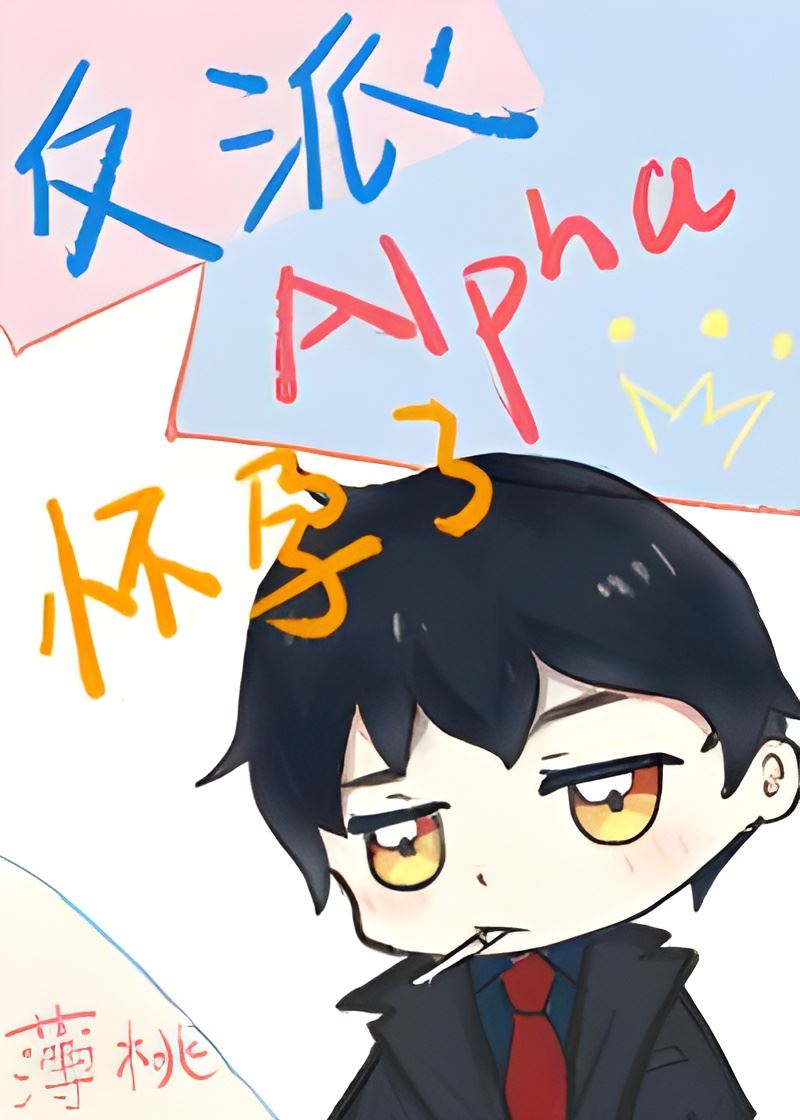
... Read More
The pacing here is deliberately unhurried in the most satisfying way. We start in the makeup room—slow, detailed, almost claustrophobic with Bai Huaiyu's narcissistic demands. Then we move outside to the basketball court where the sun becomes an active antagonist. Each failed take by Ying Yao adds a beat of building frustration, and the chapter structure mirrors Bai Huaiyu's losing control: longer pauses between takes, more exasperated corrections from the director, his makeup increasingly compromised. The author doesn't rush this descent. They let us sit in the discomfort. What I found particularly effective is how the chapter ends—not with a climax but with a deliberate deflation. Si Huaixi sitting quietly offering melon seeds while everyone else is in various states of crisis. It's a pacing choice that says: the real power doesn't need to demonstrate itself. The basketball scene itself could have been a big action set piece, but instead the author chose psychological unraveling, which is far more compelling. The chapter doesn't resolve anything—it just pivots, leaving us wanting to see what Si Huaixi says next.
... Read More
On the surface, this is a transmigration revenge story with entertainment industry darkness. But the opening—the synthetic food, the interstellar setting where even nobles settle for substitutes—feels like more than just worldbuilding flavor. It's a thesis statement. The entire novel seems to be asking: what does it cost to survive in a system that feeds you poison and calls it nutrition? Si Huaixi swallowing that terrible food with a "strange expression" because he "couldn't waste precious food" is such a small moment but it echoes the larger theme. The original owner couldn't waste the opportunity either—that's why he signed the contract despite the red flags. Both of them are consuming something toxic because they've been told it's valuable. The synthetic food is the entertainment industry: mass-produced, chemically altered, expensive for the illusion of authenticity. And Sun Shaomei on that rooftop—she's the literal embodiment of someone who swallowed the contract and is now standing at the edge. Her line "I will definitely stay in school. I will never step into this big, dying tank of the entertainment industry" isn't just regret; it's the recognition that the whole system is a death trap disguised as a dream. The word "tank" there is doing heavy work—it suggests something密闭, pressurized, where nothing survives. The telepathic control at the end raises another thematic question: if Si Huaixi can override someone's will, is he any different from Li Zhuo, who overrides women's autonomy through drugs and blackmail? That tension between liberation and domination seems like it's going to be central to this story.
... Read More
Pei Zhaozhou's internal conflict in this chapter is devastating because it's so deeply human. His fear isn't about aliens or battles or interstellar politics—it's about losing control of his own body. "What if his excessive pheromone disorder worsened?" This is the question haunting him, and it reframes everything about his character. He's an Alpha in a society where that identity carries weight, and the thought of becoming someone who can't even manage his own temperament—to be "irritable, impulsive, and reckless"—is apparently worse than death. He's already drafted a will. He's already allocated his assets. This isn't a hypothetical fear; it's a planned-for scenario. The stakes feel incredibly personal and immediate. This isn't a vague threat lurking somewhere in the plot; it's living inside Pei Zhaozhou's body right now. And the brilliant twist is that the reader assumes the worst-case scenario is his disorder worsening, when the actual revelation flips the script entirely. But the emotional truth remains—the fear was real, even if the diagnosis wasn't what he feared. There's also the external stake: Si Huaixi has a film shoot he'll need to skip. The author reminds us of this, grounding the emotional drama in practical consequences. Pei Zhaozhou says "But don't you have a film shoot in the afternoon?" and Si Huaixi replies "I will ask for a leave from the crew." The willingness to sacrifice professional obligations for someone else speaks volumes about where this relationship is heading—and what's at risk if something happens to either of them.

Leave a comment

You must be logged in to leave comments. or
