Vengeance Should Be Grim And Regal - Reviews

Vengeance Should Be Grim And Regal
+Add to Custom List
Sort
Add review
... Read More
Okay so let me just sit with this sequence for a sec because it's genuinely one of the most audacious plot moves I have ever seen in any novel. Sezlin walks into Ludwig's room at night — AT NIGHT, in the middle of the palace, with an actual intruder supposedly running around upstairs — and what does she do? She doesn't beg. She doesn't plead. She says: "I'll kill him for you. Please marry me." And then she ups it: "I'll make you Emperor." That escalation alone is wild. Most protagonist's would negotiate, compromise, maybe offer information as a stepping stone. She just goes straight for the nuclear option like she's ordering dinner. And the plot logic behind it? It actually holds up. She's not some naive girl playing at politics — she knows her family (Brioden) has already pledged loyalty to the Second Empress. She knows her father wants her married to the First Prince to cement that alliance. So she's cutting the board clean and walking across it. Brilliant and terrifying. But here's what really sealed it for me: the whole scene plays out against the backdrop of an unnamed intruder on the fourth floor, knights knocking, shoes left behind. The author uses this external threat to compress the tension like a vice. Every time the knights' footsteps approach, you're wondering if they're going to burst in — and yet somehow the more danger there is, the bolder Sezlin gets. That's good structural pacing. The stakes keep rising while the clock keeps ticking. And then Ludwig's response isn't rejection or acceptance. It's: investigate the Hestin Mine. Send someone discreetly. Watch her every move. This is such a smart plot choice because it refuses to give us easy answers. We don't know if the mine exists, if she's lying, if any of this will come true. But we DO know the alliance is now real — at least on paper. The game has started. I cannot wait to see what happens when that mine either delivers or betrays them both.
... Read More
Ludwig's dialogue in this section is absolutelychefskiss. The way he dissects people with words is unmatched. Let me give you the absolute best example: "It seems bugs have laid eggs near the palace. Flies keep coming in at all hours." ...bro you just called your own brother's assassins bugs. And then the mic drop: "Even on the battlefield, I never touched a dog while eating. Friedrich. I mean, don't waste your effort." That's not just an insult, that's a complete character execution in three sentences. He basically told Friedrich his assassination attempts are beneath him AND implied Friedrich is a dog AND delivered it as a casual side comment. The fact that Sezlin then reflects "Indeed. He is crazy" is the perfect reader reaction. And the banter between Ludwig and Sezlin? "We've discussed private lives. Is there anything else you've thought about?" "One thing comes to mind right away." Their rhythm is so natural — like two people who are trying very hard to seem composed while absolutely dismantling each other. The dialogue never feels stiff or expository, which is honestly impressive for a political romance. Every line carries weight, subtext, and personality.
... Read More
I need to talk about how this author writes Sezlin's voice because it is SO distinct. When she tells Emily "What a loud voice you have" after the girl's been stuttering and panicking—chilling. Absolutely chilling. Not angry, not cruel even, just... flat. And then there's the tea scene. Ludwig says "It doesn't seem like this is the place for our conversation" and Sezlin replies: "I found the imperial palace tea leaves more to my taste." She's making a statement about POWER while talking about TEA. And Ludwig immediately understands because he picks up her hand and they leave together. The Duke meanwhile is doing all the wrong things—his dialogue is full of hedging, excuses, rationalizations. "She is still a child who is not fully prepared. She needs more education"—like bro, you've been BEATING her. The contrast between how Sezlin speaks (calm, brief, devastating) and how the Duke speaks (nervous, performative, weak) tells you everything about who actually runs this household. Even the maids' dialogue is great—panic and squeaking vs Sezlin's ice-cold efficiency.
... Read More
"My lady." Ludwig moved his foot as if he couldn't listen to her. The distance that had been far gradually closed. Soon, a shadow darker than night fell over her. I need to talk about this moment because it captures everything about how these two operate. He steps toward her — not aggressively, exactly, but with the kind of predatory closeness that says he's testing whether she'll flinch. And she almost does. Her shoulders heave. Her lower lip is bitten raw. But then she stands there and tells him she'll make him Emperor and honestly? That's the most intimate thing that happens in this entire scene. Not the physical closeness. Not the way he hides her behind his back from the knights. Not even the charged silence between them. It's the fact that she looks at a man who has spent his life being called an unlucky slave — sent to die in wars at ten years old, reduced to eating mud, treated worse than a flying insect — and she offers him everything. Not pity. Not charity. A throne. And he? He doesn't soften. He doesn't thank her. He asks what she gets out of it. Because that's all he knows how to do — calculate, weigh, suspect. Even when someone is laying their soul on the line for him, his first instinct is to find the catch. The line that wrecked me though was when she says: "We each get what we need." She doesn't say "what we want." She doesn't say anything about love or partnership or fate. It's two people who understand exactly what the other lacks and are stitching themselves together like a tactical formation. But here's the thing — I caught myself hoping it would become more than that. And I think that's what makes their dynamic so dangerously good.
... Read More
I need to talk about how this section handles its pacing because honestly it's masterful and I don't say that lightly. The first movement is pure adrenaline. Sezlin in the bedroom. Ludwig closing the distance. The proposal. The knights at the door. The shoe on the stairs. Every beat is sharp, fast, urgent. You can feel your pulse rising just reading it. The action verbs are clipped, the sentences tighten, and then — the door closes and suddenly everyone exhales. And that's where it gets interesting. Instead of resolving the tension, the author immediately pivots. The next scene is Sezlin and Ludwig sitting across from each other with tea, discussing political strategy like they're having a normal conversation. But it's not normal. The silence between their lines is loaded. "The tea has gone cold." Four words and suddenly the entire power dynamic shifts again. He's not impressed anymore. He's... thinking. Considering. Which is somehow more dangerous than anger. Then comes the Hestin Mine revelation and the pace slows to a crawl. Each line of dialogue is measured, deliberate. Sezlin unfolds her plan like a map. Ludwig listens. The reader is pulled from the breathless sprint of the opening into something more meditative, more ominous. And the final beat? Two weeks pass. Sezlin folding her fingers. Fourteen folds. Watching the clock. That's not a cliffhanger — it's worse. It's uncertainty. The author just took everything we thought we knew and put it in limbo. Will the mine deliver? Is she being watched? What happens when Ludwig finds out the truth? The structure here does exactly what good pacing should: it makes you feel the story the way you'd feel a physical thing. Fast, slow, held breath, released, then held again.
... Read More
I need to talk about April. April Brioden, who literally GAVE HER LIFE so her sister wouldn't have to suffer, and whose kindness was weaponized against her by everyone in that mansion. The letter scene absolutely destroyed me: This woman faced torturous abuse for SEVEN YEARS and still chose to protect her sister. Meanwhile, Sezlin spent those seven years hating April for being "favorite," never understanding that April was trying to shield her. The irony is so thick you could cut it with a knife. And then there's the Duke — oh my god. This man treated Sezlin like garbage his entire life and still had the AUDACITY to blame her for April's death. "You killed April." Really? You ignored your elder daughter, had her tormented by servants, and now YOU'RE surprised she snapped? The dynamic between the two princes is already fascinating from what we've seen. Ludwig, the First Prince, is cold but perceptive — he immediately suspects Sezlin's real motive when she mentions the Second Prince. And Friedrich, the Second Prince? "If it was painful enough for her to die on her own, you should have told me beforehand. I just lost a valuable test subject." CHILLS. Absolute chills. But honestly, the core relationship that drove me wild is the SISTER BOND. Not the one they had in the present timeline (broken, resentful, distant) but the one that existed underneath it all. April knew. She ALWAYS knew what her brother-in-law was doing, and she took the bullet so Sezlin wouldn't have to.
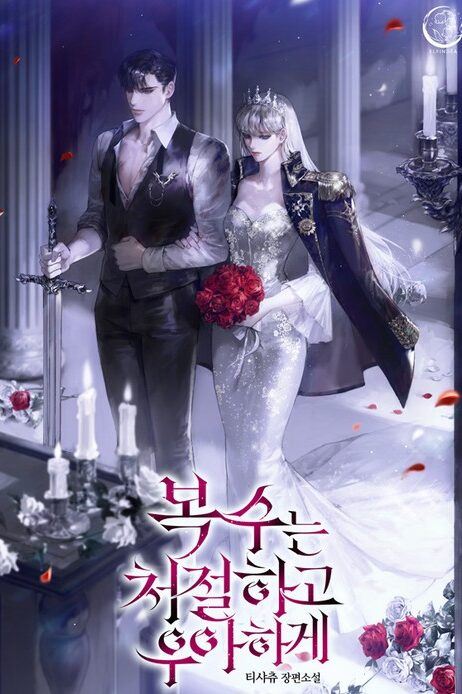
... Read More
There are several symbols layered throughout these chapters, but the pearl brooch is the one that won't leave my head. It represents everything about the sisterly relationship — April giving something precious to the sister who pushed her away, Sezlin wanting to destroy it but being unable to, the unspoken apology that never got spoken aloud. Then there's the mirror. Sezlin literally confronts herself — or what's left of her — after seven years of imprisonment. The reflection shows "an emaciated woman" with hair and eyes that have "lost their color." This isn't just physical description; it's the visual representation of how abuse strips away identity, vitality, everything that makes you feel human. The chrysanthemum at the funeral is another layer. Flowers at funerals are traditional, but here it becomes the instrument of truth. It's what prompts Sezlin to look beneath April's burial clothes, to see the injection marks and bruises that prove the letter was real. And the season shifting from Spring to Winter — obviously symbolic of hope to despair, youth to ruin. But also, Spring is when things begin, and Winter is when they end. Except... Sezlin returns to Spring. Which means the cycle can restart. Can be rewritten. The text also plays with the theme of IMPURITY. "An impurity born of a political marriage." That's what everyone called her. And yet, despite being raised to believe she was worthless, she finds the strength to change destiny. The story seems to be asking: who decides someone's value? The system that calls you impure? Or the person who refuses to accept that label?
... Read More
Can we just take a moment for the pearl brooch? The one April gave her before becoming the Prince's consort? Sezlin holds it in her trembling hand, raises it like she wants to throw it on the ground, and can't do it. "Hic." She hadn't shed tears. Not one. Throughout the entire funeral, through her father's accusations, through laughing maniacally at her reflection in the mirror — no tears. But this little piece of jewelry from her sister? That's what breaks her. That's what makes her finally, completely fall apart. And the way the author writes her breakdown: "Having lost her reason, Sezlin wailed without even shedding tears." That line haunts me. It's not sadness that's consuming her — it's GUILT. Pure, unadulterated guilt for everything she did wrong, for every harsh word she spoke, for every time she pushed April away when her sister was literally reaching out to her. "Ha, haha...!" — laughter turning into sobs, the mirror showing an emaciated woman with faded platinum hair and colorless eyes. SEVEN YEARS of imprisonment and abuse had stripped her completely, and then regressing to twenty felt less like a gift and more like a burden she had to carry. The emotional whiplash from the bold proposal scene to the raw grief of the funeral is insane. One moment she's a scheming princess ready to play politics, the next she's a broken woman clutching a dead sister's letter. And when she wakes up young again? There's no joy in it — just the terrifying weight of knowing exactly what's coming and having to face it all over again.
... Read More
Okay so I literally gasped out loud when Sezlin said 'So?' for the first time. Like, this is the exact turn in the plot where the reader realizes this person is NOT the same character they knew in the previous life. The whole scene is structured like a pressure cooker and the author makes us wait and wait until April actually walks through the door, and then—BAM—Sezlin goes full actress. The way she collapses onto the floor? Calculated. The fact that she bites her lip to produce real tears? That's not weakness, that's strategy on another level. And what made it even better was that the head maid tried to use the 'she plays pranks' excuse, completely forgetting that Sezlin would now expose them. The author really loves making the antagonist feel confident right before they get destroyed. Also, the coachman scene at the end—where Sezlin slaps him without missing a beat—this is basically the book telling us that her transformation is COMPLETE. She's not playing pretend anymore, she's become someone new. The pacing of these chapters is honestly unhinged in the best way.
... Read More
I need to talk about Friedrich's rage scene because it is PHENOMENAL. You know that moment when he storms into his room and HURLS a vase against the wall?? The description is so vivid I could literally HEAR it shattering. "A sharp shattering sound echoed in the air." And the text mentions the door was closed — thank god — otherwise the reputation hit would've been catastrophic. But what I love about this scene is what it REVEALS about the palace world. This is a place where even your private tantrums are dangerous. Where if the Second Prince goes on a rampage, it becomes palace gossip before sunrise. The whole empire feels like it's built on layers of surveillance and consequence. Every move is watched, every sound could be reported. And yet somehow the palace still feels lived-in, not just ornamental. The way the text moves from the opulent banquet hall to Friedrich's private fury to Sezlin's quiet tea conversation to the Duke pacing in his study — it paints this entire world that feels enormous and suffocating at the same time. You can feel the weight of every corridor and closed door. The author doesn't need to describe the architecture because the politics DESCRIBE the architecture.
... Read More
"Spring at twenty." Opens the story on a beautiful day — perfect weather, perfect opportunity for trouble. Then seven years later: "Winter at twenty-seven." The seasonal shift isn't accidental. It mirrors Sezlin's entire emotional journey from hopeful springtime energy to the bitter freeze of grief. The opening scene with Ludwig is so visually striking. The faint scent of perfumed oil, the cool eyes, the door clicking shut. There's this palpable tension — is it romantic? Is it threatening? Both? The author writes it so you can't tell, and that ambiguity is delicious. "Soft hair was buried in his callused hand." — I got actual goosebumps. The physical contrast between them is immediately established without any exposition dump. But the funeral scene? That's where the worldbuilding really shines. The dim moon, the Duke standing with his back to the window, the rough funeral gloves that Sezlin can barely bear to wear because even they feel too luxurious for someone who's been treated like furniture her whole life. And then later, the chrysanthemum she placed at the funeral — that small detail becomes the key that unlocks the entire truth when she lifts April's burial clothes. The author doesn't over-describe, which I appreciate. We get just enough sensory detail to feel immersed — the scent of oil, the cold mirror surface, the emaciated reflection — and the rest fills in naturally through emotion rather than exposition. The Azelan Empire feels lived-in without needing a geography lesson.
... Read More
Can we talk about how these two communicate? Or rather, how they DON'T communicate? Because the dialogue throughout this entire section is doing SO MUCH work without saying much at all. Take Ludwig's line: "What brings you here?" On the surface it sounds almost polite, like a proper host greeting an unexpected guest. But the narration tells us his gaze was "indescribably chilling." That contrast between the casual question and the dangerous undertone—that is chef's kiss writing. And Sezlin's dialogue! She's constantly performing. Even when she's supposed to be alone in the garden at night, she's saying things like "It's dangerous, my lady" and commanding the knights to step back like she's in control. But we know she's not. She's panicking internally while maintaining this cold exterior. The maid interactions are also fascinating—Sezlin manipulating them into leaving so she can sneak away, using their fear of her reputation as a weapon. "The villainess of Brioden. Crazy Sezlin." She weaponizes her own bad reputation like armor. Ludwig's conversation with Benjamin about refusing the Empress's invitations is dry, sharp, and reveals so much about his strategic mind without ever stating it outright.

Leave a comment

You must be logged in to leave comments. or
