Summary

... Read More

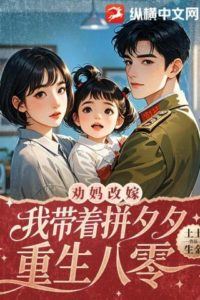
Su Erbao, a woman who spent her life in grinding poverty and exhaustion, dies of terminal liver cancer after being beaten to death by her abusive father and relatives. In her final moments, she learns the full extent of their betrayal: her father, Su Dagui, had faked his death forty years ago to marry a wealthy woman, while his family systematically ruined her mother and sister to seize their meager assets. Upon dying, Su Erbao is reborn into her ten-year-old body in 1980, retaining her adult memories and a mysterious spatial system called Pin-Xi-Xi that allows her to purchase goods and store items.

She awakens on the day her mother, Wang Lihua, is being pressured by the eldest branch of the Su family to lend them three hundred yuan for her cousin Su Wen’s wedding. Remembering the future, Su Erbao violently attacks the manipulative aunt and grandmother, protecting her sick mother. She reveals her rebirth to her family and uses the system to buy medicine for her mother and food for the household. Realizing the danger they are in, Su Erbao devises a plan to sever all ties with the Su family. With the help of village elders, she forces a public agreement where the Su family receives the three hundred yuan in exchange for letting Wang Lihua and her daughters leave the home and the clan.

Driven out into the bitter winter, the mother and daughters move into an abandoned courtyard at the village entrance. Su Erbao uses her system to generate income by buying cotton quilts and selling them at the black market, securing their first capital. During a trip to the county town, she encounters Shen Jinsong, a police officer who will later become a significant ally in her previous life before his untimely death. Su Erbao recognizes him and begins to strategize how to save him while building a new life.

Meanwhile, the Su family, now in possession of the money and the house, plots further. Old Mrs. Su and Su Dafu scheme to get Su Wen’s fiancée pregnant to avoid paying the bride price, demonstrating their continued moral decay. Su Erbao, aware of their malicious intentions, prepares for future conflicts. She uses the system to buy a sewing machine and materials, planning to start a clothing business to achieve financial independence. The story follows her efforts to protect her mother and sister from the Su family’s ongoing harassment while using her system to climb out of poverty and exact revenge on those who wronged her.

Novel Items

More
System
A mysterious system that Su Erbao gained upon rebirth. It contains a Xi-Xi Wallet with 999,982 yuan (originally 1 million yuan saved for a house, minus 18 yuan spent on medicine) and a Xi-Xi Storage Space that is 100m x 100m x 5m with static time, meaning items inside do not deteriorate. Items purchased are delivered directly to the storage space. It can be controlled mentally and accessed through a System Mall.
Medicine
Medicine that Lin Feng buys at the pharmacy after getting a fever from being soaked in rain at the amusement park with Si Yueyan.
Weapon
A knife used for cutting firewood that Lin Mengling grabbed and held to her own neck during the confrontation, attempting suicide to avoid being reported to Public Security. She slashed at her own neck before being tackled to the ground.
Money
The compensation money that Wang Lihua had saved, which the eldest branch borrowed for Su Wen's wedding under false pretenses. They claimed it was just for show and would be returned after the wedding, but never returned it, leading to Wang Lihua's death from lack of medical funds.
System
A system mall possessed by Su Erbao that functions as her golden finger. She can browse and purchase items such as food and clothing from it. It has a Storage Space for keeping purchased items.
Money
Compensation money paid by the factory to Wang Lihua for Su Dagui's death. It was in Wang Lihua's hands for less than three days before the Su family pressured her for it. Su Erbao plans to use it to sever ties with the Su family.
Latest Release
DateGroupRelease
2026-08-11shanghai fantasy c15
2026-08-11shanghai fantasy c14
2026-08-11shanghai fantasy c13
2026-08-11shanghai fantasy c12
2026-08-11shanghai fantasy c11
2026-08-11shanghai fantasy c10
2026-08-11shanghai fantasy c9
2026-08-11shanghai fantasy c8
2026-08-11shanghai fantasy c7
2026-08-11shanghai fantasy c6
2026-08-11shanghai fantasy c5
2026-08-11shanghai fantasy c4

Community Reviews

Rating(3.8 / 5.0, 10votes)
5 stars
3(30%)
4 stars
2(20%)
3 stars
5(50%)
2 stars
0(0%)
1 stars
0(0%)

Popular reviews

... Read More
I need to talk about the dialogue in this section because it is absolutely *chef's kiss*. The standout moment, the one I've already quoted to at least three people, is Su Erbao looking at Shen Jinsong trying to speak in a baby voice and saying: "Uncle, your voice sounds really strange. Did you get cotton in your throat?" I am not okay. This line is everything. It's funny, it's period-accurate (cotton as a metaphor for something stuck), it's devastatingly childish while also being wildly perceptive, and it completely dismantles Shen Jinsong's attempt at sweetness. The narration says his words "sting like needles" and he's left grinning awkwardly. Perfect. But the dialogue isn't just funny—it's character-revealing. Look at how each person speaks: Wang Lihua: soft-spoken, polite, always apologizing. "I'm sorry, comrade. My daughter is young and doesn't know any better." She's performing humility because she has to. Every word is calculated for survival. Su Dabao: direct, practical, already thinking about solutions. She tells Shen Jinsong their whole story—the eviction, the stolen compensation, the trip to the city for medical care—because her teacher told her to seek help from the police. This is a child who has been forced to grow up too fast. Su Erbao: sardonic, observant, internally ruthless. Her dialogue with Shen Jinsong is all deadpan delivery. "Uncle, you talk too much." "This guy is seriously childish." She's narrating her own life like a disappointed film critic. Shen Jinsong: earnest, slightly awkward, genuinely kind. His police-speak—"Protecting the safety of the masses is my duty"—is undercut by the fact that he's clearly just trying to be a good person in a world that doesn't make it easy. The narration even notes he finds Su Erbao's stern expression amusing rather than offensive. He's not threatened by her; he's charmed. The narrative voice itself is worth praising. It's close third person, bouncing between Wang Lihua's weary pragmatism and Su Erbao's sharp internal commentary. The author lets Su Erbao's voice carry the humor and the dramatic irony while keeping Wang Lihua's perspective grounded and emotional. When Su Erbao thinks about Shen Jinsong's future murder while simultaneously watching him make funny faces at her from outside the bus window—the contrast between her internal knowledge and the external scene is hilarious and heartbreaking at the same time. One minor critique: some of Wang Lihua's dialogue leans slightly toward the formal side. Her apologies to Shen Jinsong feel a touch rehearsed. But honestly, that might be intentional—she's a mother who has learned that politeness is armor.
... Read More
This chapter is a masterclass in pacing. Let me break down why it works so well. It starts slow and domestic—Su Erbao thinking about woolen coats, Wang Lihua learning to sew, Su Wen going to pick up Liu Juanzi. This is the calm before the storm, and it's necessary because it gives us something to lose. We care about these people making clothes and building a life, which makes everything that follows hit harder. Then it pivots. Liu Juanzi's backstory drops—she's the one who suggested selling Su Erbao in the previous life. The text says: 'This sister-in-law was ten thousand times more disgusting than Su Wen!' And suddenly the domestic warmth turns cold. Su Erbao's nails dig into her palms. The stakes just shifted. Then Wang Jianjun's entire history with Little Xie comes out, and the danger escalates from family betrayal to physical threat. Su Erbao is buying electric batons and anti-wolf devices. She's planning for violence before it even happens. And then—chapter 15 hits like a freight train. Provincial police at dawn. Su Dagui's fake death exposed. Deng Xinru being dragged out. The parallel between Su Erbao's quiet preparations and Su Dagui's sudden downfall is chef's kiss. The chapter ends on Old Mrs. Su with her pipe and Su Dafu pacing, which is a perfect cliffhanger. We know something is coming. The Su family is cornered. And the mysterious man who visited Su Erbao's house in less than half an hour? Who is he? What did he want? The author never lets up. Every scene raises the stakes. Every character revelation adds tension. I stayed up way too late reading this.
... Read More
Okay so the Su Dagui arrest scene is absolutely wild and I need to talk about it. The way the author sets this up is genius—first we get all this domestic village drama with the woolen coats and Liu Juanzi's arrival, and then BAM, provincial police show up at dawn. The contrast is everything. One minute we're worried about whether Su Erbao's mom can figure out the sewing machine, the next minute Su Dagui's being dragged out of bed in his fancy woolen overcoat. What really sold it for me was Su Dagui's internal monologue while being arrested. He's literally already planned his own fake death and now he's calculating escape routes in real time. 'Most importantly, he had coaxed Deng Xinru into marrying him as soon as he arrived.' This man is a whole different level of calculated. And then he immediately starts thinking about having Old Mrs. Su kill Wang Lihua and the girls to cut the loose ends. The plot threads are weaving together so tightly. Also the detail about Su Dagui's woolen overcoat—'On the first day he followed Deng Xinru to Wutongshi, she took him to a shopping mall and bought him the woolen overcoat he had been longing for.' This is such a sharp character moment disguised as worldbuilding. That coat is basically a symbol of how he bought his way into a new identity. And now the police are knocking while he's half-asleep in it. Ironic as hell. The parallel structure between the two storylines is what really gets me. On one side, Su Erbao is buying anti-wolf devices and planning her family's survival. On the other side, Su Dagui is being arrested and planning murders. Two families, same moment, completely different trajectories. And that final image of Old Mrs. Su puffing on her pipe with her face 'darker than the bottom of a pot' while Su Dafu paces around? The author just leaves us there. What happens next, huh?
... Read More
Let me just say this upfront: the stakes in this section are deceptively layered. On the surface, the conflict is immediate and survival-level. Wang Lihua is a widow who has been evicted from her home with two daughters. Her former in-laws stole their compensation money and their house. She's selling black-market cotton to feed her children, bargaining down to the jiao, risking arrest for what amounts to petty trade. The stakes are real: eat or don't eat, stay on the street or find shelter, comply with the system or risk everything outside it. But the author is playing a longer game, and it's brilliant. Shen Jinsong's murder hangs over this entire section like a guillotine. We don't know it yet when we start reading, but by the time Su Erbao recognizes him, the reader is suddenly watching a countdown. Every interaction between them—the chocolate offer, the escort to the bus station, the funny face at the window—is infused with dramatic irony. We know this kind, slightly awkward man is going to be killed by a hired assassin three years from now. We know his grandfather will grieve himself to death. We know the corruption case he's investigating will cost him his life. And Su Erbao? She's sitting across from him eating braised pork, thinking about how to warn him without revealing she's essentially a time-traveling ghost. The internal conflict here is *relentless*. She wants to save him. She can't tell him why. She has to pretend this is a normal encounter while carrying the weight of future knowledge. The tension of that gap—between what she knows and what she can say—is the engine driving this section. There's also the quieter conflict of the Su family's past. Su Dabao mentions the complaint letter. Shen Jinsong offers his address. The implication is clear: the injustice that drove this family onto the streets isn't resolved, and the system that failed them is the same system Shen Jinsong represents. Will he help them? Can he? The novel is setting up a collision between personal survival and institutional justice, and I am here for it. The suspense maintenance is excellent too. The black market scene has genuine tension—will they get caught? Will the deal fall through?—and it transitions smoothly into the emotional suspense of Su Erbao's secret knowledge. The author never lets the reader breathe, but in a good way. Every scene raises new questions while answering old ones. One thing that genuinely got to me: Su Erbao rolling her eyes at Shen Jinsong while thinking "Too bad he'll be killed in three years." The casual cruelty of that thought, delivered with the same tone as "this guy is seriously childish," is devastating. She's learned to armor herself in sarcasm, even when her heart is breaking for someone she's just met. That's the real stakes here—not just survival, but the emotional cost of knowing too much.
... Read More
Okay so this section is genuinely tight plotting. Let me break down why it works. First, the black market cotton sale. It's not just a random scene—it establishes three things at once: the family's desperate financial situation, Wang Lihua's cunning (she literally disguises herself and her daughters in the public restroom!), and the underground economy that keeps people alive in this era. The bargaining sequence with the steel mill worker is chef's kiss. Every beat matters—the thumb-and-finger signal, the fake walk-away, the whispered negotiation. And then the quilt upsell? That's not just comic relief, that's character. Wang Lihua sees an opportunity and takes it. She's not just surviving, she's strategizing. But the real plot bomb drops when Su Erbao recognizes Shen Jinsong. The author does this brilliantly—Su Erbao is eating braised pork, minding her own business, and then it hits her: this guy is the cop who got murdered three years from now. The narration gives us all the backstory in one efficient paragraph (corruption case, hired killer, grandfather's grief, special investigator sent from Jingshi) without it feeling like an info dump because it's filtered through Su Erbao's urgent realization. And here's where the tension gets delicious: she knows he's going to die, she wants to warn him, but she can't exactly say "I'm your future daughter-in-law from another timeline." So she just... rolls her eyes at him while thinking about his impending murder. The dramatic irony is *so* good because we're watching a character who holds dangerous knowledge and has to play along with normal social interactions. The plot also sets up the Su family conflict as a looming thread. Su Dabao mentions the complaint letter, and Shen Jinsong offers his address. This is clearly a setup for future scenes where they'll need his help. The author is laying tracks, and I'm here for it. One thing I want to flag: the pacing between the black market scene and the restaurant scene is slightly jarring. We go from high-stakes illegal trading to a casual meal, and while the transition makes sense chronologically, I found myself wanting a beat of transition—maybe Wang Lihua counting the money, or the daughters processing what just happened. Instead we cut straight to the restaurant, which works for momentum but loses a moment of emotional processing. Still, the plot moves well overall, and the Shen Jinsong revelation more than makes up for it.
... Read More
On the surface, this is a rebirth novel about a family surviving economic hardship in socialist China. But read it again and the themes run much deeper. The central symbol is the cotton itself. It appears everywhere: the black-market cotton Wang Lihua sells, the cotton padding in Shen Jinsong's torn jacket, the cotton quilts she upsells, and of course, the phrase "cotton in your throat" that becomes Su Erbao's sharpest weapon. Cotton is warmth, survival, commerce, and verbal sparring all at once. It's the fabric of this world—literally and figuratively. Shen Jinsong's jacket is its own symbol. A new jacket his mother sent him, worn only once, destroyed in the line of duty. He's reluctant to wear new things until now, as if he doesn't feel he deserves comfort. The tear at the elbow reveals the thin cotton inside—a man whose outward appearance of authority hides fragility. And yet he's the one who picks up a child, pays for bus tickets, and offers chocolate to a stranger. The jacket is armor that doesn't protect him, which turns out to be prophetic. He dies because he did his job, because he uncovered corruption, because he was too honest for this world. The patches on the women's clothing are another recurring motif. Su Erbao's jacket has plaid patches because the original fabric grew short. Wang Lihua's clothes are faded. Every patch is a story of making do, of a mother's love expressed through mending, of dignity maintained through sheer will. The Su family was kicked out with nothing, and these patches are the evidence of their resilience. But the deepest theme here is about knowledge and power. Su Erbao knows things. She knows Shen Jinsong will die. She knows her family's future. She knows where to find cotton and how to sell it. In her past life, she was powerless—now she carries the weight of foresight. But the novel is careful not to make this a fantasy of control. She can't just warn Shen Jinsong directly. She has to navigate social conventions, wait for the right moment, play the role of a quiet child while holding dangerous knowledge. The rebirth trope here isn't about omnipotence; it's about the burden of remembering what others have forgotten. The chocolate scene is thematically rich too. Shen Jinsong offers it to Su Erbao as a gesture of kindness, and she immediately calculates whether he's a kidnapper. In this world, even sweetness is suspect. A child's instinct isn't to trust an adult offering candy—it's to assess the threat. That's the world the novel is building: one where survival requires constant calculation, where kindness exists but must be evaluated, where a widow with two daughters must disguise themselves in public restrooms just to feed their children.
See all reviews

Characters

See all characters

Custom lists

Oops…There is nothing here.