Triangle Scandal - Reviews

Triangle Scandal
+Add to Custom List
Sort
Add review
... Read More
The structure of these chapters is tight enough to snap. You open with Dione already in crisis mode—newspaper scandal, social ramifications, a potential threat to Raihan's reputation and therefore her own standing. She decides to visit the duke knowing full well he might be unreachable, and the transition from her residence to the Schwitz mansion happens in one clean star-divider beat. No wasted words. Inside the drawing room, the pacing becomes almost claustrophobic. Every line of dialogue carries multiple layers. When Yurik says the article must be why she is visiting, that is not small talk, that is dominance. When he strokes his chin and lets out an inexplicable laugh about Raihan being labeled irresponsible, he is sizing her up and she knows it. Then the whole conversation accelerates. Condition. Jealousy. Confession. Acceptance. All of it happens before she even finishes her cold tea. And then the second half, Chapter 9, slows down but in a completely different way. Instead of external action we get internal spiraling. She collapses onto her bed. She rolls around. She blames her parents. She traces the ceiling pattern and fixates on blue eyes. This structural choice is brilliant because it mirrors how shock actually works. The dramatic confrontation burns off first, then the residue sinks in and starts eating at you. The chapter ends with her sending a servant to confirm Raihan's whereabouts and immediately pivoting to asking for an audience with the crown prince. She is trying to regain control by turning everything into business again, and the reader knows it is a coping mechanism. The pacing never drags because even in the quiet moments, Dione's internal monologue is racing so fast it feels like running. Nina's letter arrives with that trademark blunt energy right at the end, which is a perfect tonal valve release before the next volume presumably explodes again.
... Read More
I need to talk about this line because it wrecked me: "Come to think of it, to follow her grandmother's will and inherit the title, she couldn't marry this man in front of her. So why was she weighing his attitude so seriously?" She literally just figured out they can't be together and STILL she's over there analyzing whether he's sincere or not. Dione you sweet summer child. And what makes it even MORE painful is that she's not wrong about the obstacle. The inheritance, the title, the whole chain of duty—it's real. But the fact that her brain immediately goes to "I shouldn't be thinking about this" instead of just… stopping the thoughts? That's the thing about feelings. They don't turn off because you've identified a logical reason to ignore them. Then ten minutes later she's comparing his eyes to the sea and the author is out here murdering us both. The way she remembers not having visited the sea since she was a child with her parents—just drops that in while they're having the best moment of the date? That's the author saying "look, she's lonely, she's nostalgic, she's OPEN and you can't even let yourself feel it."
... Read More
Yurik Schwitz is the most infuriating and compelling character I have encountered in a while. The narrative paints him as coldness personified, platinum hair and sharp blue eyes and all, someone people avoid because standing next to him makes them look plain by comparison. But then he walks into Dione's life and flips the entire script. What I love about this scene is how much Yurik reveals without meaning to. He immediately cuts through her formal pleasantries and gets straight to the point. He knows Raihan hasn't returned to Elvirtein. He was there in Dione's place at the palace, which means he keeps tabs on these things and presumably cares about what happens to her. And then the condition—don't sleep with that bastard. That is not the language of a detached nobleman. That is jealousy dressed up as a negotiation term. The narrative itself almost acknowledges this, saying the condition felt like jealousy and it would be easier to believe in some political motive. But then he says the thing. Because I like you. And Dione's reaction is so perfectly honest. She can't even process it. Her mind goes blank. She laughs weakly. She stammers. She blames her parents for raising her on love stories so grand that real-life confessions feel inadequate. Meanwhile Yurik is sitting there in this elegant composed posture and somehow being the most vulnerable person in the room. The dynamic between them is electric because neither of them fully understand what is happening. Dione suspects his confession might be some academy-style psychological tactic, while Yurik seems genuinely baffled that she wouldn't just accept it at face value. And Raihan? The ghost in the room. He hasn't returned because of her, and Yurik knows it and is using that knowledge to position himself. This is three people orbiting each other and none of them have admitted their true feelings yet. I am not okay.
... Read More
Dione's dialogue in this section is so characteristically HER. She's awkward, she stammers, she says things like "Uh, um" and "Wait" and "Ah!" and it's not polished or regal at all—which is exactly why I love it. She's a noblewoman but she's also just a person who's terrible at handling situations where her heart is involved. Raihan's voice though—his dialogue is so sparse but every word lands. "Then shouldn't we just have fun so we don't think about anything at all?" That's such a Raihan line. He's the one proposing they stop overthinking and just exist in the moment. And later, "When you come to the sea, it's normal for your clothes to get wet"—he's deflecting, being casual, making light of the fact that he's now holding her skirt and shoes in one hand like some kind of devoted husband energy. But the winner, absolute winner, is: "If you don't want this, you can slap me." How do you respond to that?? That is both a challenge and an invitation and a surrender all at once. And Dione's response is basically nothing—a couple of ellipses and internal panic. That's it. That's her whole character voice throughout this whole section. She doesn't have words for this. None of us do.
... Read More
There's a recurring image in these early chapters that I can't stop thinking about: the marks on Dione's body described as 'flowers of heat blooming.' Flowers. That's not accidental. Flowers are beautiful, temporary, and they die. They're also signs of passion and growth—but also of something that will fade. And Dione herself is called 'the flower of Essen Empire's social circles.' She's been performing beauty and charm like a flower in a display case for years, and now the actual consequences of her body—real, physical, undeniable—are covering her like petals. Then there's the newspaper itself as a symbol. It represents society's gaze, the public eye that turns private moments into scandal. The butler HIDING the newspaper is almost reverent—he's protecting his young mistress from the crowd. And the will, with its two-year deadline, operates like a ticking clock motif that transforms the entire story from romantic comedy into something with genuine stakes. The empty house after her grandmother dies mirrors the empty spaces in Dione's relationships—all those lovers who came and went, none of them staying, none of them filling the void. The theme here isn't just 'find love.' It's about what we inherit—not just titles and wealth, but our families' expectations, their regrets, their unfinished wishes. Dione didn't choose to inherit this pressure, but she's the one who has to carry it.
... Read More
"If that were true, human society would be like the animal kingdom. What are they talking?" This line absolutely cracked me up. Dione's inner monologue is so dry and razor-sharp here, and it actually does double duty—it's both a genuinely funny beat and a masterclass in how the author uses character voice to advance the plot. Let's talk about the central conflict structure for a second. You've got three major threads braided together here and they're not tangling by accident: (1) the Raihan marriage proposal and its aftermath, (2) the public scandal that flared up and then deliberately fizzled out, and (3) the looming shadow of Yurik's confession. The author could have let any one of these exhaust itself before moving to the next, but instead they overlap in this really tense way. Dione is trying to manage all three simultaneously and barely keeping it together. What I find most interesting is how the scandal resolution itself works as a plot mechanism. It doesn't get resolved through drama or confrontation—it gets resolved through cold political logic. Dione can't leave Essen because she's the heir. That's it. That's the whole thing. Society looks at that fact and goes, "Oh, well, never mind." It's such a satisfyingly pragmatic solution that also happens to be deeply sad. The romance subplot gets sacrificed at the altar of inheritance law and everyone just… accepts it. That's the kind of plot turn that makes you want to throw the book across the room and immediately pick it back up. And then—of course—Yurik appears on the horizon like a storm cloud. The author dangles this new complication right as you think things might settle down. That's textbook pacing manipulation and I'm here for it.
... Read More
The stakes in this story just escalated SO hard and I am not ready. Let me lay out what's on the line for everyone: Dione — she just got rejected by the guy she clearly cares about (she visited him at personal risk, she's guilty about the scandal, she thought about him constantly). But her career, her family's title, her entire future depends on her political positioning. She can't afford a romance with a foreign prince. Can she? Raihan — he put his heart on the line, got rejected, and now has to decide whether to leave or stay. His own words say he was ninety percent impulsive, but his actions say he's not done. What does he have left to gamble? Yurik — ten years of silence, and now the man he loves is being proposed to by a crown prince. His conflict isn't just romantic, it's about whether to finally speak up or continue suffering quietly. And Durant... Durant knows everything and says nothing, which is its own kind of torture. The external conflict (political marriages, imperial diplomacy, scandal management) is wrapping tighter around all of them, and the internal conflicts are just... explosive. Every character is standing on a precipice. I need the next chapter immediately.
... Read More
Dione is such a fascinating mess of a character and I need to talk about her. Here's this woman who's spent her life using casual relationships as a bandage for the emptiness after losing her parents, and now the one time she actually connects with someone—drunk or not—it becomes the most complicated thing in the world. Her dynamic with Raihan is already layered before you even get to the will reveal. In that morning-after scene, the author does something really subtle: she apologizes INSTANTLY without even processing what happened. That tells you everything about Dione—she's practiced at making herself small, at handling situations diplomatically, at running before anyone can ask for more. And Raihan? He's barely in this chapter but his presence is EVERYWHERE. The fact that he sent a letter saying 'we're sorry for overdoing it with the wine' while ALSO making sure the newspaper couldn't print the story until THREE DAYS later—that's not awkwardness, that's保护. He's shielding her. Then the Crown Prince comes in and starts fishing for information about Duke Schwitz after mentioning him as a potential help? Who is THIS man and why am I suspicious of him already?
... Read More
I re-read the transition between chapters four and five times because the structural pivot here is so干净 it's almost invisible until you notice it. Chapter 40-something ends with the scandal fading, Dione deciding to hire a secretary, and Leticia arriving. Then Chapter 47 hits us with the Raihan letter and ends on the devastating line: "And you're meeting Prince Raihan in four days, right?" Four. Days. The author essentially slams the door in your face at that exact moment. The pacing in this section works like a series of exhales followed by sudden inhalations. The scandal subplot gets its breath released gradually—we watch it inflate and deflate over several paragraphs. Then Dione's secretary problem gets solved almost too quickly (Leticia just… yes?), which creates a tiny lull. And right in that lull, the Yurik complication surfaces like a shark fin. "He's made a new friend recently." Dione's dread is immediate and visceral. Then the letter arrives. Another pause. Dione reads it. Folds it. Unfolds it. Makes her decision. And then—BAM—the countdown begins. Four days until she sees him again. The chapter structure itself becomes a ticking clock. What's remarkable is how the author controls reader engagement through these pacing choices. The section where Dione debates whether to accept Raihan's lunch invitation is deliberately slow—almost painfully so. We're trapped in her head, agonizing over the same decision she is. And then the Leticia conversation speeds everything back up, rattling off complications at a breakneck pace: the grandmother's will, Yurik's confession, the upcoming meeting. It's like the chapter itself can't breathe anymore. The scene transitions are also worth noting. The author uses asterisk breaks (* * *) almost like camera cuts in a film, jumping between Dione's perspective and Raihan's without warning. We're suddenly in Raihan's head, learning things we didn't know—his selfish hopes, his belated understanding of what family means to her. That perspective shift hits harder because it comes so unexpectedly.
... Read More
Okay, let's talk about Yurik for a second, because this dude is a whole vibe and also kind of heartbreaking. We get this snippet where Durant basically just drops the bomb about Dione and Raihan sharing a room, and Yurik's reaction isn't some explosive rage—it's quieter, way more internal. His face "twisted as if he'd turned into a demon," which is such a weirdly specific and vivid description of suppressed jealousy. But then he doesn't just storm off; he goes into this cold, calculating mode. He's looking at the newspaper article, analyzing it, thinking about how to approach Dione without looking desperate or using his authority to force things. And then the kicker: he remembers Durant calling Raihan a "romantic type," and he just sees through it completely. That's when the panic sets in. He realizes, oh crap, if I just stand here looking dignified, she's actually going to get married to someone else. So he springs into action, ringing the bell to make sure Dione can see him immediately. It's this massive shift from his usual composed, distant demeanor to pure crisis mode. It really highlights their entire dynamic—he's the one who has loved her first, who's been watching from the sidelines, who is so terrified of ruining their connection that he overthinks every single move. Meanwhile, Raihan is all outward action and intense, almost reckless romantic gestures (proposing after three weeks! Sharing a room!). Yurik's love is a slow burn of observation and restraint, which makes his sudden burst of urgency feel so earned and intense. It makes you wonder if Dione even truly *sees* Yurik's depth, or if she just takes his steady presence for granted.
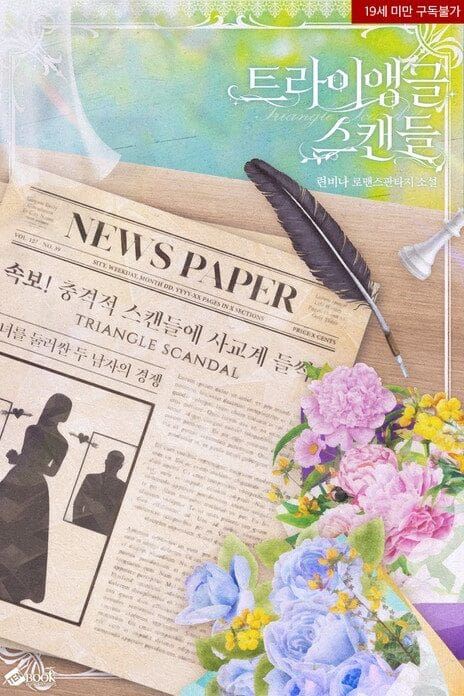
... Read More
The pacing in these chapters is MASTERFUL and I need to discuss how smoothly the author transitions from pure romance to full-blown political crisis. We go from: sharing bitter food preferences → talking about Crescent Hall → discovering they both love opera → the almost-date realization → the apology about her parents → THE ACCIDENTAL KISS → AND THEN the newspaper headline drops like a bomb. 'Heiress to the Marquisate, Dione Estellon, revealed to be in a secret relationship with Raihan Elvirtein, the 4th Prince?!' One minute I'm swooning over two people who just click and the next I'm reading investigative journalism about whether their overnight encounter constitutes a diplomatic incident. The speed at which stakes escalate is honestly remarkable. The author doesn't give you a breather between the romantic high and the dramatic fallout. What's interesting is how the narrator controls engagement—the banquet scene lingers with sensory details (the wine, the conversation, the drunkenness) before pivoting to the morning after, and then IMMEDIATELY cuts to the newspaper article. No transition paragraph, no 'meanwhile back at the estate.' Just straight into the consequences. That's confidence in pacing. And the chapter ending on 'the editor-in-chief couldn't just go find him and threaten him' with Duke Schwitz's name dropped as the biggest investor? That cliffhanger is NECESSARILY going to make you read the next chapter immediately.
... Read More
The author does such a great job of using the domestic and social settings to mirror the internal chaos. Take Dione's mansion, for instance. It's not just a backdrop; it's a character itself. She's buried under the weight of her grandmother's inheritance, managing budgets and legal documents—this heavy, tangible responsibility that grounds her in reality while her romantic life is in complete upheaval. Then contrast that with the elegant, slightly tense tea party with Nina. The setting is soft: a windowed terrace, the lazy feeling of a summer afternoon, the clink of china. It's a space for feminine gossip and vulnerable conversation, a rare moment where the political pressure lifts just enough for the truth to almost surface. Yet even there, Dione holds back. She doesn't mention Yurik at all. The world they live in—with its entrenched political marriages, its social reputations, its whispered articles—creates a pressure cooker where personal feelings are always secondary to family and state. The "lazy afternoon sun" becomes ironic because Dione's mind is anything but lazy; it's racing with complications. These scenes of refined society make the underlying power struggles and emotional constraints feel so much more suffocating and real.

Leave a comment

You must be logged in to leave comments. or
