Transmigration: Fleeing the Famine? I Took My Younger Siblings into the Mountains - Reviews

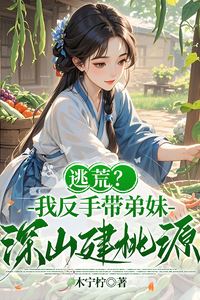
Transmigration: Fleeing the Famine? I Took My Younger Siblings into the Mountains
+Add to Custom List
Sort
Add review
... Read More
Let's talk about stakes because this chapter makes them crystal clear. Lin Wanxing isn't just fighting to survive—she's fighting for TWO children who depend on her. Every decision carries the weight of their lives. When she hears the wolf howls, her heart pounds, but she doesn't freeze. She picks up Yaya, tells Xiaoshi to stay close, and keeps moving. That's not just courage—that's responsibility. The external conflicts are brutal: wolves closing in, a venomous snake coiled and watching, a wild boar that could gore her, the sheer terror of being lost in total darkness. But the internal conflict is what really gets me. Lin Wanxing can't sleep that night. She's thinking about the food supply, the medicines she needs to retrieve, the cold medicine Granny Zhang gave her. She's carrying the mental load of three people's survival on her shoulders. And then there's the grandmother conflict—Old Madam Lin furious about stolen grain and silver, vowing to beat the girl to death. That threat is real and it's looming. The villagers are preparing to migrate, and if they find out the kids ran into the mountains, they'll either try to rescue them or blame the grandmother's cruelty for driving them there. The chapter ends with everyone realizing the children are missing and the mountains are dangerous. The stakes just multiplied. Lin Wanxing is out there with limited food, no proper shelter yet, and now a whole village that might be hunting for her. The author does an incredible job of making every conflict feel immediate and visceral. I was genuinely worried for them.
... Read More
Okay I need to just say this out loud: Old Madam Lin is the kind of villain that makes you want to throw the book across the room. Not because she's dramatically evil or has some grand scheme — she's just casually, banally cruel. She sold her own granddaughter for two sacks of rice. Two sacks. For a kid who was already treated like a beast of burden. And the worst part? The novel doesn't even need to show us her full backstory to make us hate her. One scene is enough: she shoves Lin Wanxing, the girl hits her head on a table leg, and dies. No trial, no dramatic confrontation, just... pushed. Dead. Because half a handful of rice was missing. But what really got me was the relationship between Lin Wanxing and her siblings. Little Stone and Lin Yaya. These kids are four and eight years old, they're shivering in tattered clothes, and their first instinct when they hear Grandma is coming to hit Big Sister is to RUN to defend her. "Big Sister didn't steal the rice." "It wasn't Big Sister." They have nothing — no food, no protection, no power — and yet they still throw themselves in front of that old woman's rage. And Lin Wanxing's reaction? She doesn't break down crying. She doesn't have some dramatic monologue. She just takes a deep breath, forces back the bitterness, and says: "From now on, Big Sister will protect both of you." That's it. Three sentences. And I was wrecked. The dynamic between these three is the emotional anchor of the whole story. Everyone else in this novel seems to be either exploiting them or indifferent to their suffering. The grandmother, the aunt, the village — it's all just one big machine grinding these kids down. But Lin Wanxing? She becomes their shield. And Little Stone, despite being a child himself, immediately steps up: "I'll protect Little Sister and won't let the bad people bully us!" He's eight years old and he's already learned what survival looks like in this world. I also have to mention how the novel handles the original owner's fate versus Lin Wanxing's. The cannon fodder version of this character had no agency — she was sold, abused, killed, and even her death was an inconvenience to the people who found her body. But now? Now she has a modern woman's mind and pharmacology knowledge backing her up. The contrast between what this girl was destined to become and what she's actively planning to do is everything. She's not just surviving; she's strategizing. Three days to prepare. That's the kind of protagonist I can get behind.
... Read More
I need to talk about Liu Cuihua because honestly I almost threw my phone across the room. Lin Wanxing overhears her and her husband talking about selling her off during the refugee journey. 'That damned little brat woke up, so she might as well work. Once we're on the refugee road, I'll find a chance to sell her off. We can trade her for some coarse grain and leave more food for my Goudan.' And Lin Wanxing's reaction? Her fists clenched so tightly her fingernails dug into her palms. This is the moment where the story stops being a survival narrative and becomes something darker. Old Madam Lin is cruel, sure—she starves the kids, beats them, calls them names. But Liu Cuihua? She's calculated. She's planning to trade a child like livestock. And what about Lin Goudan, the precious grandson who smacks his lips deliberately in front of the starving kids just to provoke them? This family isn't just neglectful, they're actively malicious. The worst part is Lin Wanxing's internal response: 'Human hearts were far more terrifying than wild animals.' She's not wrong. She's been smart enough to prepare for everything—medicinal herbs, escape routes, hidden food caches—but nothing prepared her for the realization that the people sharing her roof wanted to sell her into slavery. That moment when she overhears the conversation is everything. The author doesn't even let us process it before Lin Wanxing just quietly leads her siblings away and continues with the plan. No breakdown, no dramatic confrontation. Just cold, hard survival instinct kicking in. That's the kind of character development that makes you respect Lin Wanxing so much. She's not a hero who rages against injustice—she's a sister who quietly gathers supplies while the people who should love her plot to destroy her.
... Read More
Can we talk about how good the dialogue is in this novel? Specifically, how each character sounds completely different from everyone else? Old Madam Lin's voice is immediately recognizable. She doesn't just say mean things — she says them in a very specific way. "You little bitch! Worthless money-losing brat! What are you staring at? Deaf, are you?" That's not just angry dialogue; that's a personality. Every sentence is designed to diminish, to belittle, to make Lin Wanxing feel small. And the repetition of insults — "worthless money-losing brat" — shows that this isn't new. This is routine. This is what this girl has heard every day of her life. Then there's Liu Cuihua, the aunt. Her dialogue has a different texture: "You wretched girl! Why are you still standing there? Get the fire started and cook! Are you trying to starve me to death?" Notice how she frames everything as an accusation? Lin Wanxing isn't just slow — she's actively trying to starve her aunt to death. That's the kind of twisted logic that comes from growing up in a household where everyone is competing for scraps. But the most interesting dialogue comes from the children. Little Stone says: "I'll listen to Big Sis! I'll protect Little Sister and won't let the bad people bully us!" He's eight years old and he's already learned to use the word "Big Sis" instead of "sister" — it's a term of endearment and respect mixed together. And his promise to protect his little sister? That's a child who has already been forced to grow up too fast. Lin Yaya's dialogue is even more striking in its simplicity. "Big Sister... Yaya isn't hungry. Don't argue with Grandma anymore. Grandma will hit you..." She's four. She doesn't understand the word "danger" but she understands fear. And her first instinct isn't to protect herself — it's to protect her sister from getting hurt. The narrative voice itself is also worth noting. It's close third-person, staying firmly inside Lin Wanxing's perspective, which means we get her internal reactions alongside the external dialogue. When she sees her siblings defending her, the narration doesn't just tell us she felt something — it says "someone had squeezed her heart." That's the kind of physical metaphor that makes the emotion land harder. And the author doesn't over-explain the dialogue tags. Most of the time it's just the character speaking, and the context makes it clear who's talking. That restraint actually makes the dialogue feel more natural, like eavesdropping on a real conversation rather than reading a scripted exchange.
... Read More
Okay so the pacing in these chapters is absolutely relentless and I need to discuss why it works so well. The author starts with what seems like a slow burn—gathering vegetables, visiting Granny Zhang, sharpening a hatchet. But every single scene is building toward something. There's no filler here. Each action Lin Wanxing takes is a piece of a larger plan, and the reader slowly realizes what's happening before the characters fully execute it. That's smart storytelling. We know she's preparing to escape before she actually escapes, which means every scene carries double meaning. When she's digging up medicinal herbs, we're not just watching her gather plants—we're watching her gather survival tools. When she's carving marks on a pine tree, we're not just seeing her explore—we're seeing her map an escape route. And then the structure shifts dramatically when she overhears Liu Cuihua's conversation. Everything changes. The pacing accelerates because suddenly the reader understands the full stakes. This isn't just about surviving a famine anymore—this is about escaping people who want to sell her. The midnight escape sequence is where the pacing really shines. 'Quietly, she got up and packed all the supplies she had prepared into an old cloth bundle.' Then she wakes the kids. Then they move through the house. Then she goes back for more supplies. Then she sneaks into Old Madam Lin's room. The tension builds scene by scene, and the author never lets up. The final lines are a masterclass in cliffhanger structure: 'She was just debating whether she should also try to steal the remaining sack of white flour when Old Madam Lin suddenly muttered, 'Who's there? Why aren't you''—and then it cuts off. I literally gasped. The pacing from preparation to execution to near-discovery is perfectly calibrated. Every paragraph raises the stakes, and the author knows exactly when to slow down for emotional moments and when to accelerate for tension. The chapter structure here is basically a heist movie in literary form, and I was completely hooked.
... Read More
The pacing in these first seven chapters is honestly impressive. Let me break down why. The story opens with Lin Wanxing waking up in a new body — classic transmigration setup — but instead of spending three chapters figuring out where she is and what's going on, she gets the full backstory dumped on her in one devastating information cascade. We learn about the grandmother, the abuse, the siblings, the original owner's fate, and the fact that she was sold and killed — all before the first chapter ends. That's a lot of exposition, but it works because it's delivered through emotional shock rather than dry narration. We feel her horror as she processes what happened to this girl. Then the author immediately introduces the ticking clock: the village chief announces the famine exodus, and Lin Wanxing realizes she has exactly three days to prepare before the original timeline catches up with her and her siblings. Three days. That's the structural heartbeat of the entire opening arc. This is smart pacing because it does two things at once. First, it creates urgency — every scene now has a deadline hovering over it. Second, it gives the reader a clear sense of what's at stake without needing constant reminders. We already know what happens if she fails: the siblings die. So every small action — hiding rice, cooking extra porridge, planning the mountain escape — feels weighted with consequence. The chapter transitions are also tight. There's no filler. Each scene moves the plot forward: waking up → learning the backstory → the siblings defend her → the village announcement → secret food prep → the porridge scene → back to the village meeting where Old Madam Lin is forced to publicly claim she'd never abandon the kids. That last beat is especially well-timed because it sets up the central conflict: Old Madam Lin's public face versus her private cruelty, and Lin Wanxing knowing exactly which one is real. If I had one critique, it's that the transition from the porridge scene back to the village feels slightly abrupt — we go from an intimate, emotional moment to a public confrontation pretty quickly. But honestly, that works too. It mirrors Lin Wanxing's own experience: one moment you're sharing something tender with your siblings, the next you're back in the cold reality of this household. The author knows how to keep you turning pages. Every chapter ends with a reason to keep reading, and the three-day countdown makes sure there's never a dull moment.
... Read More
I have to give major credit to the dialogue in this text because honestly, every character has such a distinct voice that I never once got confused about who was speaking. Old Madam Lin's dialogue is pure venom: 'You little bitch! Lazy bones! Are you still not up?' and 'You wretched girl! It's been forever! Is the food still not ready? Are you trying to starve this old woman to death?' She doesn't just sound mean—she sounds like a specific kind of cruel old woman who weaponizes her authority and makes everything about her own comfort. And then there's Liu Cuihua, whose dialogue is even more chilling because it's so casual: 'That damned little brat woke up, so she might as well work. Once we're on the refugee road, I'll find a chance to sell her off.' She says this about a child like she's discussing household chores. The contrast between Old Madam Lin's loud, performative cruelty and Liu Cuihua's quiet, matter-of-fact malice is brilliant characterization through dialogue alone. Lin Goudan doesn't even need dialogue to tell us everything about him—he just 'deliberately smacked his lips loudly in front of them, clearly trying to provoke them.' But when he does speak, it's pure entitlement: 'My precious eldest grandson must be starving. Hurry and eat. After you're done, Grandma will make you big steamed buns.' He's being fed while other children watch, and he knows it. Granny Zhang's voice is completely different—warm, maternal, with that gentle sigh: 'You poor child. You're always being bullied. No wonder your health is so fragile.' You can hear her compassion in every word. And Lin Wanxing? Her dialogue is sparse but telling. She barely speaks, and when she does, it's either practical ('Big Sister, can this still be used?') or protective ('Come on. Big Sis is taking you to find something delicious.'). The narrative voice itself is also worth discussing—it's close third person, staying tightly anchored to Lin Wanxing's perspective, which means we get her thoughts and observations but we also get the dramatic irony of hearing other characters' private conversations that she wasn't meant to overhear. The author's voice shapes the entire reading experience, making us feel like we're right there in the house, listening, watching, surviving alongside Lin Wanxing.
... Read More
I keep thinking about the hidden pockets Lin Wanxing sews into everyone's clothes, and I can't shake the feeling that they're one of the most powerful symbols in this entire passage. On the surface, they're practical—dividing food so that if robbers attack or they get separated, everyone has a chance to survive. But symbolically, they represent something much deeper. These pockets are about hope disguised as preparation. In a world where everything is being taken away from them—food, safety, family, dignity—Lin Wanxing is creating hidden spaces where something precious can be kept safe. The pockets are small, concealed, almost invisible, just like her resistance. No one can see what she's carrying. No one can take it from her. And the items she hides—the wild vegetables, the medicinal herbs, the rice, the flour—these aren't just survival supplies. They're symbols of agency. Every time she sews a pocket or hides food, she's making a choice. She's saying: I will survive, and I will make sure my siblings survive too. The locked wooden box in Old Madam Lin's room is another powerful symbol—this time representing the opposite. It's hidden, yes, but it's not for protection. It's for hoarding. Old Madam Lin locks away the family heirloom hairpin while the children starve. The box symbolizes how the powerful hide their wealth while the powerless suffer. And then there's the wild lettuce—that patch of vibrant green that everyone ignores because it's bitter. It's a symbol of overlooked value, of resources that exist but go unused because people are too accustomed to suffering to recognize opportunity. The novel seems to be asking a deeper question: what does it mean to survive when the world has decided you shouldn't? Lin Wanxing's answer is written in every hidden pocket, every sharpened hatchet, every carved mark on a pine tree. Survival isn't just about staying alive—it's about maintaining your humanity while doing it. And the fact that she's doing it for her siblings, not just for herself, makes the theme even more powerful. This story isn't just about escaping a bad situation. It's about what we're willing to carry, what we're willing to hide, and what we're willing to fight for when everything else has been taken away.
... Read More
There's a reason this novel keeps coming back to food. Not just as plot device but as a symbol for everything that's at stake. Rice is the first thing we encounter. Half a handful missing from the jar. The coarse rice that Old Madam Lin hoards while the children get watery gruel. The secretly cooked thick porridge that Lin Yaya swallows hard at. Rice isn't just sustenance here — it's power. Whoever controls the rice controls everyone. Old Madam Lin uses it as a weapon, and Lin Wanxing's first act of rebellion is to redistribute it. Then there's water. The drought has dried up the rivers. The village is dying because water is gone. But Lin Wanxing knows about a place "deep in the mountains behind the village" where there's "clear spring water." Water as life. Water as hope. Water as the thing that separates survival from death. And the mountain itself — that's probably the richest symbol in the opening chapters. In the original timeline, the mountain is just... a place. But for Lin Wanxing, it becomes a promise. "Deep in the mountains behind the village, there are sweet wild berries, clear spring water, and little rabbits." That's not just a survival plan. That's a vision of a different kind of life — one where food grows naturally, where you don't have to steal handfuls of rice to feed your siblings, where the wild itself provides. The mountain represents agency. Old Madam Lin controls the village, the rice jar, the punishments. But the mountain is outside her reach. It's wild and untamed and available to anyone brave enough to find it. Lin Wanxing choosing the mountain over the refugee caravan is a choice to reject the system that's designed to crush her family. There's also the recurring image of the body — or rather, the violation of the body. The original Lin Wanxing was worked to death, sold, abused in a brothel, and finally killed by a push from her grandmother. Her body was never her own. But the transmigration itself is almost like a reclamation — a new consciousness inhabiting a body that was previously just a vessel for suffering. "The pain... It hurt so much..." is the first thing we feel, and it's both literal (the head injury) and symbolic (the pain of inheriting someone else's trauma). I think the deepest theme here is about what it means to be human in an inhuman system. The novel keeps asking: when everything around you treats you like an animal, how do you stay human? Lin Wanxing's answer is simple but radical — she protects her siblings. She shares food. She makes promises. She refuses to let them die alone the way the original owner died.
... Read More
I'm not okay. I am genuinely not okay after reading the porridge scene. Here's what happens: Lin Wanxing secretly cooks a thicker batch of porridge and hides it in an earthenware jar. When everyone else has gone to the village meeting, she pulls out three full bowls and gives them to her siblings. The text says: "The porridge was thick and fragrant with the aroma of rice. Lin Yaya couldn't help swallowing hard." And then: "It was the first time they had ever eaten porridge this thick." First time. In their entire lives, up to this point, these children had never eaten porridge this thick. Not once. And Lin Wanxing watches them eat it with "huge smiles spreading across their faces" and feels nothing but bitterness. This is the kind of detail that hits you in the chest. It's not dramatic. There's no screaming, no violence, no cliffhanger. Just two starving kids experiencing something most of us take for granted — a proper bowl of rice porridge — and treating it like a miracle. The author doesn't even need to say "they were starving" because the porridge itself tells the whole story. And Lin Wanxing's silent vow at the end? "This time, no matter what, I would protect these two children. I would make sure they grew up safely, never went hungry again, and one day had a home filled with genuine warmth." I read that and just sat there. A home filled with genuine warmth. That's all she's asking for. Not wealth. Not power. Just a home where her siblings aren't afraid, where they can eat until they're full, where love isn't something that has to be earned through suffering. What makes this even more devastating is the contrast with how the original Lin Wanxing died. In the novel's timeline, these kids froze and starved after their sister was sold away. They had no one. No big sister to hide the porridge, no one to tell them about the mountain behind the village with sweet berries and clear water. They just... died. Alone. While their grandmother was busy bragging to the village that she'd never abandon them. The sibling bond here isn't romantic — it's something deeper. It's the kind of love that says "I will carry you on my back through hell if that's what it takes." And Lin Wanxing has already made that choice before the first chapter even ends.
... Read More
I need to talk about the structure of this chapter because the author is playing with something really clever. The first half is all survival—night escape, snake fight, cave setup, herb retrieval, boar chase. It's relentless. No breathing room. And then—BAM—we cut to Qinghe Village. The grandmother discovering the theft, the villagers gathering, the chief announcing the children are missing. This structural pivot is genius because it does two things at once. First, it gives the reader a moment to exhale after all that mountain tension. Second, it reminds us that the antagonists are still out there, still angry, still plotting. The chapter ends on a cliffhanger with the villagers realizing the kids fled into the mountains and the danger that poses. The pacing between the two settings creates this push-pull rhythm: danger in the mountains, danger in the village. Meanwhile, the cave scenes themselves are well-paced—action (snake), then quieter moments (Yaya treating Lin Wanxing's wound, making porridge), then action again (boar). The author knows when to let scenes breathe and when to accelerate. The only thing I'd note is that the cave discovery and cleaning section could've been slightly tighter, but honestly, the domestic warmth of Yaya putting dandelion on the wound and the kids eating porridge felt necessary to ground the story before the next crisis hit.
... Read More
The way this story builds its world is genuinely impressive, and I want to talk about how the setting itself becomes almost a character. We open with 'After half a year of drought, the rice jars of nearly every household in Qinghe Village were almost empty.' That's it. One sentence and suddenly we understand everything. This isn't a gentle famine where people are slightly hungry—this is a desperate, clawing starvation where 'nearly all the common edible greens on the mountain had already been picked clean.' The world feels real because the author doesn't just tell us it's hard, they show us the consequences. Wild lettuce grows in abundance but nobody eats it because 'the villagers simply disliked its bitterness.' That detail is everything. It's not that food doesn't exist—it's that suffering has made people so desperate that even bitter, nutritious plants go untouched because they're too hard to process. And then there's Granny Zhang, the barefoot doctor, who represents the thin thread of kindness still holding this world together. 'You poor child. You're always being bullied. No wonder your health is so fragile.' The world of this story has both cruelty and compassion existing side by side, and that makes it feel lived-in. The cave scene is another example of brilliant environmental storytelling. 'Tall weeds concealed the entrance, while inside were only a few loose stones and some animal droppings that could easily be cleaned away.' This isn't just a plot device—it's a specific, tactile description that makes you feel the damp earth, see the weeds, imagine cleaning out animal droppings. And the final scene in Old Madam Lin's room under 'the faint moonlight'—the cracked clay pot, the lump of coarse salt, the rusty kitchen knife, the locked wooden box beside the pillow. Every object tells a story about this family's poverty and secrecy. The world feels alive because nothing is generic. Even the weather matters: 'It was already the third or fourth month of spring, the weather was still chilly.' Spring should be warm, but it's not. Nothing in this world is quite right, and that's exactly what makes it so immersive.

Leave a comment

You must be logged in to leave comments. or
