Transmigrating as the Grand Princess’s Scumbag Alpha Consort - Reviews

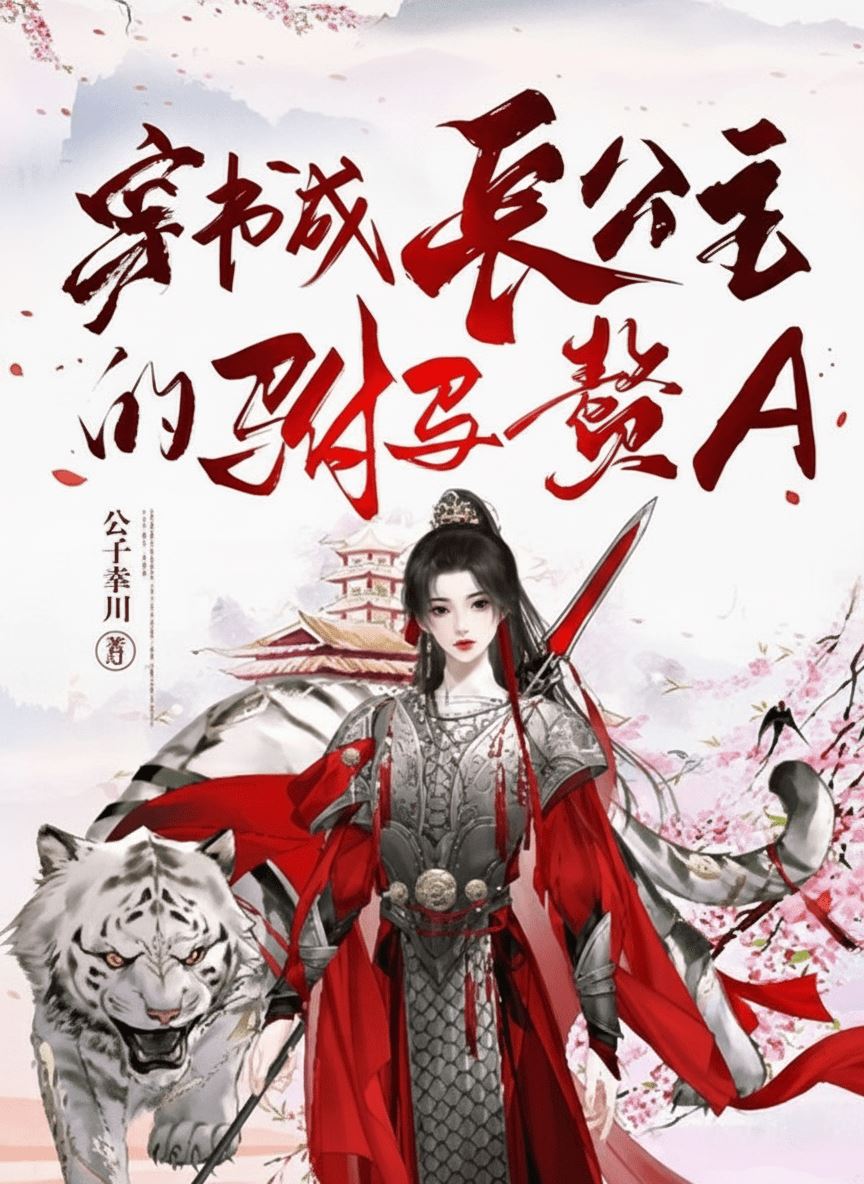
Transmigrating as the Grand Princess’s Scumbag Alpha Consort
+Add to Custom List
Sort
Add review
... Read More
"I would like you to bring me something back." "Throws jade pillow at her head." That exchange alone is worth the price of admission. It's so perfectly them. Yu Jiuzhou can't be direct about anything—not anger, not suspicion, definitely not any form of warmth—so she weaponizes household objects instead. And Chi Wan, who just wanted to help, takes it and walks away without breaking character. That's either incredible emotional control or she's genuinely not hurt, which is even more confusing. But here's what's actually tugging at my heart: Chi Wan's internal monologue when she's explaining herself. She's not doing this for power or revenge. She says it straight: "What she most wanted to do upon arriving in this era was to study ancient medical arts... and hopefully, like the great predecessors of Chinese medicine, benefit all people." A transmigration wish list that's just... kindness. Professional curiosity and the desire to help. Meanwhile Yu Jiuzhou is sitting there in a heated chamber gripping a dagger, and this woman is over here talking about her life goals like she's filling out a job application. I keep waiting for one of them to just stop performing and be real with the other. Until then we're stuck watching two smart people repeatedly miss each other, and honestly the frustration is kind of addictive.
... Read More
The world-building here is woven into the action so naturally that you barely notice it until you're already three layers deep in the culture. The heated chamber (hot room) where Yu Jiuzhou is recovering—that's a specific setting choice that tells us about both the physical world and the social hierarchy. Only someone of her status would have access to such a room, and the fact that she's alone with Chi Wan in it immediately signals vulnerability and danger at the same time. The author doesn't need to explain what a heated chamber is; the context does the work. Then there's the jade pillow detail—"The ancients were fond of jade and wooden pillows; no wonder their cervical spines were so healthy." This tiny aside from Chi Wan is such a great world-building moment. It's her modern perspective leaking through, observing something ordinary to everyone else but exotic to her. The humor lands because it's genuine curiosity, not exposition. And the political world paints itself in sharp strokes: the Emperor's reluctant investigation, the Grand Court of Revision, the steward getting executed while the actual culprits remain untouched. You can feel the corruption as a texture—every institution is compromised in a different way. The Marquis of Huai'an's family operating with the Princess's banner is basically a visual of how power works: you don't need to own authority, you just need to wear its costume. The world feels lived-in because the details aren't decorative. Every object, every title, every bureaucratic process exists because the story needs it, not because the author wants to show off research.
... Read More
Okay so I have to talk about this heated chamber scene because WOW. The way the author builds this setting is genuinely cinematic. You've got Yu Jiuzhou lying there, weak from the drug, and then this whole atmosphere of tension just hangs in the air like fog. I could literally feel the heat of the chamber and then the cold chill of Yu Jiuzhou's glare hitting Chi Wan like a physical wave. "The chill made Chi Wan tremble." — that single line though? That's it? That's all it takes to make your skin crawl. The author doesn't over-describe; they trust you to fill in the blanks. And then immediately after, Yu Jiuzhou radiates "the air of someone who had walked out of a mountain of corpses and a sea of blood." Bro. That imagery is NOT subtle but it doesn't need to be. You can TELL she's a general. You can feel the battlefield on her. Meanwhile Chi Wan is just sitting there trying to play it cool while being mentally dissected by a woman who probably has murder on her mind. The contrast between the suffocating heat of the chamber and that glacier-cold aura coming off the princess is honestly chef's kiss. Also side note: the Princess's Residence kitchen scene was surprisingly vivid. The maidservants lurking, the medicine pot clanking, the political dynamics shifting in real time through tiny gestures. This world feels REAL. Like, you could walk through it. Don't get me started on how the acupuncture scene alone carries so much weight — the silver needles, the proximity, the power imbalance, the barely-contained violence. Every scene is doing double duty. I'm obsessed.
... Read More
"If I said I didn't buy it, would Your Highness believe me?" "I do not." Two sentences. TWO. And yet Xia Qu's delivery of that news, Yu Jiuzhou's deadpan response — this exchange is EVERYTHING. The dialogue in this book is so sharp it cuts. Let me just say: Xia Qu has a voice that is INSTANTLY recognizable. She's direct, she's rude, she doesn't give a damn about hierarchy ("So what if she was the Fuma? Her rank wasn't even as high as Xia Qu's"). And every time she opens her mouth you KNOW it's going to sting. The banter with Chi Wan about bitter medicine? Absolutely priceless. Chi Wan drops this line about how modern patent Chinese medicines are sweet, Xia Qu is losing her mind like WHAT IS THIS WOMAN TALKING ABOUT, and then Chi Wan has a whole entrepreneurial daydream about cold medicine for kids. The tonal whiplash is unreal. But here's what really got me — the dialogue doesn't just reveal character, it reveals WHO KNOWS WHAT. Every conversation between Chi Wan and Yu Jiuzhou is a chess match where both players are pretending they don't know the other person can see the board. "You still require acupuncture today." "Didn't you say that just taking the medicine would be enough?" These lines are loaded with subtext so thick you could spread it on bread. And Chun Gui's little lines — always practical, always slightly exasperated — they ground the whole thing. The narrative voice itself is delightfully sardonic, especially inside Chi Wan's head. She's constantly one step ahead thinking about gold and pharmacies and escaping the capital, while literally standing in a room full of people who want her dead. The humor is dry but it works because it's earned.
... Read More
This passage is absolutely drowning in themes about identity and authenticity that I keep turning over in my head. The core premise — Chi Wan is a "lonely soul from this world" who has occupied another woman's body — raises this haunting question: what gives you the right to love someone? Chi Wan declares she did it "because I adore Your Highness and could not bear to see you hurt." But from Yu Jiuzhou's perspective, this is precisely the violation — "To want something was to obtain it at all costs, regardless of whether the other person liked it, regardless of the trouble it caused them?" That line is the thematic heart of the entire novel I think. The original Chi Wan was also guilty of this: she paraded herself as Prince Zhongshan's pawn, used her position, played games, and destroyed Yu Jiuzhou's life — all in the name of ambition and attachment. The political subplot reinforces this theme beautifully. These princes are all treating Yu Jiuzhou as a pawn to be won, just like the original Chi Wan did. Chi Wan's cousin story is a perfect parallel — those cousins thought they had rights to her inheritance, just like the imperial clansmen think they have rights to Yu Jiuzhou's allegiance. The recurring motif here is unconsented possession, whether it's political, romantic, or literal (body occupation). Who gets to claim whom? Who has the right to decide?
... Read More
Let's be real — the stakes in this book are NOT subtle. Yu Jiuzhou woke up from being drugged and immediately starts investigating. Three days later, Imperial Physician Liu is at her bedside. Chun Gui has already traced an aphrodisiac dealer. Xia Qu reports findings like it's Tuesday. Meanwhile Chi Wan is sitting there thinking OH NO THEY KNOW (do they? Don't they? Can they prove anything?). The external conflict is a powder keg — assassination attempts, poison, stolen drugs, a princess who trusts absolutely no one — but the INTERNAL conflict is where this thing REALLY lives. Chi Wan genuinely wants to save Yu Jiuzhou. She brews the medicine herself, she administers acupuncture, she stands there taking hostile glares. But she ALSO knows that her predecessor poisoned this woman. Every kind act is suspect. Every gesture of care reads as manipulation. And Yu Jiuzhou? She's caught between gratitude and terror. This body couldn't regularly taste medicines and had no immunity to bitterness — wait, that's Chi Wan's thought. But Yu Jiuzhou's POV is equally agonizing. She remembers the previous night: clothes removed, needles piercing her back, groggy and violated. Now the same person is leaning over her again, same tools, same proximity. Is she saving me or finishing what was started? "Her Highness's internal fire is too strong, unlike an ordinary person's." What a line. That could be medical advice OR a metaphor for Yu Jiuzhou's entire existence. The suspense is masterfully maintained because NO ONE has full information. Chi Wan suspects Yu Jiuzhou is reborn. Yu Jiuzhou suspects Chi Wan is up to something. Xia Qu suspects everyone. The reader suspects everyone. And the beautiful thing is the author never lets us settle. Just when you think you understand who's playing what role, the ground shifts. Chi Wan's modern knowledge of patent medicine suddenly becomes her potential escape route — silver, a pharmacy, freedom from the capital — but the door stays locked. The stakes keep rising because the only way out requires changing the one person who holds all the power over her, and that person clearly does not trust her. What could possibly go wrong. NOTHING. Absolutely nothing. I'm already drafting my resignation letter from sane behavior.
... Read More
This scene where Chi Wan tries to give Yu Jiuzhou acupuncture while Yu Jiuzhou is literally gripping a dagger under the quilt? I laughed out loud. The physical comedy of it is great, but what's really happening underneath is this desperate power negotiation between two women who both think the other one is playing them. Yu Jiuzhou is fascinating because she's not a pure victim here. She's cunning, experienced in imperial struggle, and she absolutely sees through Chi Wan's performance—except she can't tell if the performance is fake or if Chi Wan genuinely believes her own act. That's the real tension. A lying enemy you can handle. A person who seems sincere but whose sincerity might be the trick? That's genuinely scary. Chi Wan on the other hand is trying SO hard. "I'm really not that scum"—she says it with such earnestness that it's almost painful. She mentions wanting to study ancient medicine, benefit all people, she's a PhD who transmigrated and her dream is... Chinese medicine. Not revenge, not power, not even survival exactly. She wants to practice her craft. And Yu Jiuzhou hears that and thinks "this is definitely a scheme." Their dynamic is this weird dance where neither can quite reach the other. Chi Wan wants to be useful; Yu Jiuzhou wants to not be manipulated. Both are reasonable positions. But the way Chi Wan accidentally makes things worse by mentioning scent stabilization—OK that was a genuine misstep on her part, no shade—and Yu Jiuzhou immediately assuming she wants to mark her. The misunderstanding gap between them is basically a canyon at this point.
... Read More
Okay so let's talk about the moment Yu Jiuzhou opens her eyes and her FIRST thought is 'Kill her.' Not 'what happened?' not 'where am I?' Just pure, unfiltered murder intent aimed directly at Chi Wan. This is such a delicious plot turn, honestly. The author could have gone the safe route—wake up confused, don't remember anything dramatic—but no, the rebirth element means she REMEMBERS everything. Every slight, every humiliation, every betrayal from her past life. And seeing Chi Wan standing there in her residence is apparently the last straw. What I love about this chapter's structure is the immediate power shift. Chi Wan just left to eat because Chun Gui told her to, completely unaware that the person she was treating is now awake and actively plotting her death. That dramatic irony is chef's kiss. Then Chi Wan walks back in right as Yu Jiuzhou locks eyes with her, and you can literally see the tension spike in real time. But here's what really makes the plot work: Yu Jiuzhou doesn't follow through. She stops herself. Not because she forgives Chi Wan, but because she calculates that acting now would ruin everything. The Emperor would exile her, she'd never see her parents again, and the political board would lose her as a piece. She literally bites her tongue and plays the part of the fragile, recovering patient while internally screaming. That restraint is more powerful than any action scene could be. And then Chi Wan plays her own game—checking her pulse, counting down, 'three, two, one,' and boom, Yu Jiuzhou faints dead away. Did Chi Wan know? Or did she genuinely hope for this outcome? The text says Chi Wan 'knew in her heart' it was emotional turmoil causing the collapse. So she's not entirely clueless. She's riding this razor's edge too, and the author keeps both characters walking it perfectly. The plot doesn't resolve anything here—it just tightens the screw even further.
... Read More
'If she were to truly kill or harm the Fuma, being exiled to her fiefdom and never seeing His Majesty the Emperor or Her Majesty the Empress again would be a relatively light outcome.' This single sentence raises the stakes so high I could feel my heart rate spike. Let that sink in. Yu Jiuzhou, the Emperor's beloved daughter, the Grand Princess of the realm—if she acts on her vengeance, the worst-case scenario isn't death. It's being permanently separated from the only parents she ever knew. That is DEVASTATING for someone who grew up showered with affection. The conflict here operates on three levels simultaneously. First: personal. Yu Jiuzhou hates Chi Wan with a fire forged in her previous life. Every memory, every betrayal, every moment of suffering screams for revenge. Second: political. The House of Huai'an is rising, the Emperor needs them as a counterweight, and attacking Chi Wan would undermine the very power structure that keeps Yu Jiuzhou safe. Third: familial. Her father chose this marriage. Her father won't protect her if she ruins it. These three conflicts are layered on top of each other like pressure cooking, and the chapter never lets up. What makes the suspense so gripping is that both characters are playing chess while the board is literally on fire. Chi Wan knows Yu Jiuzhou is reborn and knows her hatred. Yu Jiuzhou knows Chi Wan is calculating and manipulating. Neither can reveal their full hand. Neither can afford to blink. And the imperial physicians arriving adds yet another layer—now there are witnesses, experts, people who will report everything back to the court. Every breath Yu Jiuzhou takes is being measured. The stakes couldn't be higher, and the author keeps them there without ever raising their voice. Just cold, precise narration that makes you ache for the character trapped in the center of it all.
... Read More
'But the Yu Jiuzhou leaning weakly against the bed was a tiger, yes, but a weak paper tiger, possessing no real power to harm.' What a description. A paper tiger—a creature that looks fierce but is actually hollow inside. That's Yu Jiuzhou in this scene. She's the Grand Princess, the Emperor's only daughter, surrounded by imperial physicians and court guards, and yet she can't even sit up without support. The worldbuilding in this passage is extraordinary because it builds the entire political ecosystem around a single moment: a woman waking up in bed, unable to move, surrounded by people who all have agendas. The author drops so much information about the House of Huai'an, the twelve founding marquises, the Tiger Guard Army, the Hanlin Academy—and it all matters. It's not just exposition for its own sake. Every detail explains WHY Yu Jiuzhou can't simply order Chi Wan executed. Every rank, every title, every political alliance is a chain around her wrists. I also love the visual contrast between the heated chamber where Chi Wan was tending to Yu Jiuzhou and the cold, murderous atmosphere that descends the moment the Princess wakes up. The text mentions 'all the court officials watching the Princess'—this isn't a private room anymore. It's a public stage where every movement is observed, every word recorded, every emotion performed for an audience of calculating politicians. The setting itself becomes a prison. And the image of Chi Wan counting down 'three, two, one' before Yu Jiuzhou faints—it's so cinematic. You can see it frame by frame. The tension in that moment, the way the entire room holds its breath, Chun Gui's panic, the physicians arriving like a panel of experts... it reads like a scene from a high-production drama. The author knows how to compose a moment.
... Read More
The pacing in these chapters is absolutely relentless and I cannot catch my breath. Let me trace how the author moves us: we start with Chi Wan trying to perform acupuncture, Yu Jiuzhou coldly refusing, Xia Qu deliberately pivoting the conversation to Prince Bao'an — and then BOOM, within the span of a few paragraphs we go from medical procedure to political maneuvering to philosophical observation to a full-blown romantic confession. It doesn't feel rushed though, which is the real trick. The author achieves this by constantly raising the stakes at each beat. First it's personal safety (will Yu Jiuzhou let her treat her?), then political survival (what does Prince Bao'an want?), then identity revelation (Chi Wan tries to prove she's not the original host), and finally emotional vulnerability (the confession). Each layer builds on the previous one like dominos. The pacing choice to have Xia Qu and Chun Gui leave right before the confession is what makes it work. You can feel the door closing, the space tightening, the moment of no return. And the chapter ends not with a resolved beat but with Yu Jiuzhou feeling nauseated and Chi Wan internally crumbling — a perfect asymmetric ending that leaves you desperate for the next chapter. The author knows exactly when to accelerate and when to slow down to a micro-focus.
... Read More
'Her Highness, please reconsider.' Chun Gui says this four times in this chapter alone. Four. And every single time, she's trying to stop Yu Jiuzhou from doing something reckless—and every single time, Yu Jiuzhou has to swallow her rage and comply. But the real character drama isn't between Yu Jiuzhou and Chun Gui. It's between Yu Jiuzhou and Chi Wan, and the absolute masterpiece of acting happening on both sides. Chi Wan is the most fascinating character in this passage. On the surface, she's performing the role of the devoted Fuma—checking pulses, counting to three to time a faint, pretending to be concerned. But the narration keeps peeling back the layers. She 'knew in her heart' Yu Jiuzhou fainted from emotional distress. She saw the murderous intent in those eyes and registered it immediately. She's not some naive servant girl here; she's playing a long game and she knows exactly what she's doing. Yu Jiuzhou, meanwhile, is trapped between her reborn knowledge and her present weakness. She remembers everything—every betrayal, every cruelty Chi Wan inflicted in her previous life. She wants nothing more than to destroy her. But she also recognizes that Chi Wan's family, the House of Huai'an, is now too powerful to attack openly. Her father won't protect her if she lashes out. She has to wait. She has to be smarter. The moment where Chi Wan grabs Yu Jiuzhou's wrist to check her pulse is everything. Yu Jiuzhou tries to pull away but can't—even her resistance looks like 'a coquettish protest.' That single detail tells you everything about their power dynamic right now. Chi Wan controls the physical space between them, and Yu Jiuzhou is powerless to change it. And yet Yu Jiuzhou's gaze is described as 'dagger-like.' Two people locked in this brutal game of chess, neither able to make a move without risking everything. I amobsessed.

Leave a comment

You must be logged in to leave comments. or
