Transmigrated into the Notorious Supporting Female Character - Reviews

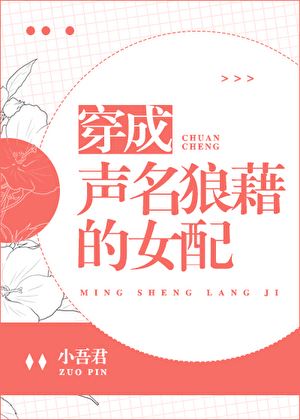
Transmigrated into the Notorious Supporting Female Character
+Add to Custom List
Sort
Add review
... Read More
"the light streaming in carried no warmth." Cold winter day. Empty bookshelves. An empty refrigerator. A house that's been sitting idle, full of dust, waiting for someone to claim it. This chapter is soaked in imagery of emptiness and transitions, and I think it's pointing at something bigger than just a change of residence. Que Yining is essentially rebuilding herself from nothing — or rather, from the remnants of someone else's life. The empty study with no books is especially symbolic. Who was the original owner? Did she read? Did she have ideas? Did she matter to anyone? The house is a shell, and Que Yining is about to fill it with her own intentions. There's also the motif of disguises running through this section — the new hair color, the feigned petulance with her mother, the alias with the headhunter, the deliberate avoidance of her bodyguard. She's constructing a new identity layer by layer, room by room. What's underneath all of it? The text gives us a clue: "she was still unclear about the mystery of this body." She doesn't even fully understand her own situation yet. That uncertainty is the real theme here — not revenge, not romance, but the terrifying freedom of becoming someone new without knowing who that someone will turn out to be.
... Read More
Que Yining's dialogue is razor-sharp, and I live for it. "No need for small talk. Get straight to business. You know what I want to hear." That's not just efficient; it's a personality. She doesn't do filler. Even in a hospital bed, with facial scars and internal injuries, her voice carries the authority of someone who has never needed to raise it. But here's what made me actually pause: Fan Zhengwen's lines. "I was wrong, I'll reflect on it, I repent. I swear I'll never drink again!" The stammering denial, the performative remorse—that's a voice. You can hear the cadence of someone who's done this before, who knows the script but isn't selling it convincingly. And Gu Shanxue's response? Silence until she needs to strike. Her only spoken line in this entire passage is the question about the son. Maximum impact, minimum words. The narrative voice itself is worth noting. It slips between close third-person on Que Yining and these moments of almost cinematic observation—Zhang Shiyu watching Gu Shanxue watch Que Yining, a triangle of silent glances that says more than any dialogue could. The author understands that what characters don't say is often louder than what they do. Even the internal monologues have distinct flavors: Que Yining's are strategic and controlled, Gu Shanxue's are visceral and fearful, Zhang Shiyu's are admiring and quietly hopeful.
... Read More
There's a reason this chapter is called—or at least centered around—the idea of one umbrella separating two worlds. An umbrella is supposed to protect you from the rain, but it also creates a shared space, a bubble where two people are forced into proximity. Under that umbrella, the social distance between them collapses. Gu Shanxue, who is normally "cool and indifferent," initiates physical contact. Que Yining, who prides herself on control, can't stop her heart from racing. The umbrella is both barrier and bridge. And then there's the key. A teardrop-shaped magnetic card handed over after dinner—a literal key to a space, but also a metaphorical one. Gu Shanxue is inviting Que Yining into her world, into her routine, into her life. "You can go tomorrow instead" is code for "I want you to come back." The rain itself is a symbol I can't stop thinking about. It's constant, inescapable, soaking everything. But it's also cleansing, renewing. The world outside is washed clean and empty, leaving only what's essential between these two characters. And the blood-rushing imagery—"much like the blood that constantly surged towards Que Yining's heart, circulating and spreading throughout her body"—the rain and the heartbeat become the same thing. External and internal pressure, the storm outside mirroring the storm inside. Even the cat neutering line isn't just comic relief; it's Que Yining trying to ground herself in something practical and mundane when her emotions are running too fast. The novel keeps asking: who is targeting whom, and why? But the deeper question underneath is always: who is Que Yining becoming when she's with Gu Shanxue, and what happens when the rain stops?
... Read More
The stakes in this chapter are deceptively quiet. On the surface, two women are hanging out at a hot spring resort. Underneath, we're watching someone carefully dismantle another person's boundaries while that person doesn't even realize they're being besieged. Gu Shanxue's central conflict here is internal and almost tragic: she doesn't want to be rude, so she tolerates increasing levels of intimacy that she's clearly uncomfortable with. 'Gu Shanxue felt her body should be relaxed, but her mind wasn't.' That sentence is the thesis of her entire emotional arc. Her body is in a hot spring with the woman she likes; her mind is pressed against her temples trying to escape. The one-way glass bathroom scene raises the stakes significantly because it introduces a violation of trust—not malicious, but real. Gu Shanxue walks in assuming Que Yining 'wouldn't stare at her. After all, constantly staring at a friend's body was a bit too perverted and vulgar. Que Yining wasn't that kind of person. Wasn't Que Yining? She really wasn't. But if the subject was Gu Shanxue, she might just have to be perverted and vulgar for once.' This is the moment the reader realizes Gu Shanxue's trust is misplaced, and the dramatic irony becomes almost painful. There's also the subplot hanging in the background—Qiao Yuchu and Bian Ji'an texting Que Yining, and the mention of 'the original owner.' This suggests Que Yining isn't entirely herself, which adds another layer of stakes: how much of this pursuit is genuine feeling versus calculated performance? If Que Yining is transmigration-adjacent or has some alter ego, does Gu Shanxue deserve to know? What happens when the mask slips? The suspense here isn't about whether they'll end up together—it's about what Gu Shanxue will do when she finally realizes she's been played. And honestly, that's way more interesting.
... Read More
This chunk of chapters has a rhythm I genuinely didn't expect. It starts SO slow — just two people in a room, one applying makeup, the other watching. The prose lingers on small details: the moisturizing quality of the lip gloss, the way Gu Shanxue's hand pauses when she touches her own lips with it. You can feel the weight of every unspoken thing between them. Then — boom — elevator doors close, they're making plans, and suddenly it's like the story exhales and picks up speed. The conversation about the charity gala flows naturally into a hot spring invitation, which feels like the author giving us a breather after all that tension. And then the scene completely shifts to the office building, Xie Yanhuai in an ill-fitting suit, fidgeting with his tie. The pacing here is almost comedic — ten minutes of nervous anticipation, and then the mood flips entirely when Xie Yanhuai goes from 'this is a disaster' to passionately pitching game ideas. Lin Jingyu watching his friend transform is such a perfect beat. The transition between these two worlds — the personal/intimate and the professional/ambitious — never feels jarring. It works because Que Yining is the pivot point. She's the same person in both scenes: calculating, warm, driven. The chapter structure mirrors her life now: she's no longer just dealing with relationship dynamics, she's building a whole new world around herself. The pacing reflects that expansion. If I'm being honest, the ending feels a touch rushed. We get 'everything proceeded in orderly manner' and then it cuts off mid-sentence about renovation and recruitment. I want MORE of this new chapter of her life. Don't leave me hanging like that.
... Read More
The structure of this chapter is a masterclass in tension management, and I want to break down why it works so well. Act One: The Setup. We open with Que Yining already at the table, already positioned. The author doesn't waste time with exposition — she drops us right into the conflict. First round, Que Yining loses. Good. She establishes that she CAN lose, which makes her subsequent wins more believable. This is crucial because if she won immediately, the reader would suspect something. By letting Wang Ruiyuan taste victory first, the author buys credibility. Act Two: The Turn. Three sixes in a row. This is where the chapter snaps into a different gear. Each loss compounds — Wang Ruiyuan goes from confident to frustrated to indignant to desperate. The pacing accelerates with each round. Shorter sentences. Sharper dialogue. The mixed drinks escalation is the midpoint climax. Act Three: The Execution. Ten losses. The switch to lowest roll. The vomiting. "That's about enough." Bian Ji'an serves as the reader's conscience here, grounding the scene when it starts getting too dark. Then the main event — the photos. Quick, clinical, devastating. Act Four: The Fall. This is where the chapter subverts every expectation. After all that power, all that control, the alcohol overwhelms her. She forgets her own life. The reversal is almost cruel but it's necessary — it prevents the chapter from becoming a pure wish-fulfillment fantasy and reminds us that Que Yining is still human, still vulnerable, still paying a price for everything. The chapter ends mid-conversation on the phone with Qiao Yuchu persuading Gu Shanxue. That's a cliffhanger that doesn't scream for attention but quietly demands you keep reading. Perfect restraint.
... Read More
Let's talk about Que Yining's emotional state because this girl is running on fumes and spite and I find it devastatingly attractive. She claims she wants to give up on the Young Master. She says she hopes he gets married immediately. But then she makes this tiny, almost invisible admission: 'As long as the other person isn't Gu Shanxue, anyone will do.' TRANSLATE THAT. What she's really saying is that her real heartbreak has nothing to do with the Young Master at all. The bra scene is haunting in retrospect. She couldn't wear Gu Shanxue's bra because it wouldn't fit—not because of size, but because of what it represented. That moment of vulnerability, of being half-dressed and exposed in someone else's space, and then having to cover up and pretend nothing happened? I felt that in my chest. And Gu Shanxue's polite dismissal, sending her away like a guest rather than someone she cares about—that's the kind of rejection that builds characters. Meanwhile, Qiao Yuchu is over here being the chaotic wingman, laughing about destroying Wang Ruiyuan's reputation while secretly setting up Que Yining with Gu Shanxue. The friendship here is so rich. Qiao Yuchu genuinely wants her happy, even if her methods are unhinged. 'You can't let that pretty face of yours go to waste!' is the kind of thing only a true friend would say, and I'm not crying, you're crying.
... Read More
I need to talk about the perfume scene because my heart is STILL recovering. "A rich fragrance mixed with floral and sweet notes; the top notes were stunning, the middle notes captivating, and the base notes lingering—just like the beautiful, complex, and inscrutable woman before her." QUE YINING. GU SHANXUE IS WRITING YOU A LOVE LETTER AND CALLING IT FRAGRANCE. I am not okay. But what actually wrecked me wasn't just the gift itself — it was what happened AFTER. Que Yining smells it, genuinely likes it, and then her internal monologue hits me like a truck: "This meant that for some time to come, she would probably favor this perfume often, wearing it to places where she might meet Gu Shanxue, allowing her to recognize her by scent." SHE'S GOING TO WEAR IT ON PURPOSE TO SEE GU SHANXUE AGAIN. She's turning a thank-you gift into a strategy, yes, but also — and this is the part that got me — into something almost tender. She's thinking about future encounters. She's imagining walking into a room and Gu Shanxue smelling her before even seeing her. That's not just manipulation. That's... investment. Emotional investment. The kind you don't make lightly. And Gu Shanxue's reaction! The way her expression "relaxed" when she saw Que Yining's genuine smile — she was nervous about whether the gift would land, and then it did, and you can literally see the tension leave her shoulders. These two are so painfully awkward around each other and I am deceased. The finger-licking-the-wine moment though — THAT was Que Yining deliberately weaponizing her own charm. "Her fingers were slender and pale, the tip of her tongue a vivid red. In that instant, there was an alluring charm that could bewitch one's heart." Gu Shanxue was 'momentarily dazed and nodded, a little stiffly.' Best. Reaction. Ever. I can't tell if Que Yining is falling for Gu Shanxue or just playing a really long con. But honestly? Maybe it doesn't matter. Maybe the con IS the feeling.
... Read More
The setting in these chapters is doing SO much heavy lifting and I want to talk about it. We're in this 'seemingly clean and grand clubhouse' — and the narrator literally tells us it's 'full of sordid secrets' before Que Yining even glances inside. That single line does more worldbuilding than paragraphs of description. You can feel the artificiality of it all: the hostesses entertaining bored rich kids, the private rooms where reputations are made and destroyed, the whole ecosystem of people performing kindness while secretly plotting each other's downfall. The catering empire detail about the Que family is such a smart touch — it grounds this world in something tangible. 'Sixty percent of people in Lu Su would have nowhere to eat' if they closed down. This isn't just some vague wealthy-family backdrop; it's an actual economic force. And the contrast between the glamorous surface and the rot underneath? That's the whole novel right there. Gu Shanxue's home life mirrors this perfectly — a house where the mistress lives brazenly while the legitimate daughter is treated like garbage. The world feels alive because every location tells you something about power, and power is the real antagonist here.
... Read More
There's something deeply symbolic about the color red running through this entire section, and I didn't even notice until I reread it. Xiao Lin paints Que Yining's nails "a true red"—that's not arbitrary. Red throughout Chinese literature carries massive weight: passion, danger, warning signs. And then Zhou Yueyi is wearing lipstick, and Que Yining suggests an orange-toned shade instead. The transformation theme is everywhere. The original owner of this body was explosive, bold in her love, and ultimately destroyed by it. Zhou Yueyi is the calm surface hiding scheming currents. And Que Yining—she's something entirely new, using red as armor rather than as a weapon of desperation. But the deepest symbol is probably the water imagery. Someone drenched in freezing winter, someone floating on water under moonlight. Water is liminal space—the boundary between worlds, between identities, between life and whatever comes after. Que Yining literally fell into this new body and world, and she's trying to understand what happened to the previous inhabitant. The water is both the mechanism of her arrival and the mystery she needs to solve. We're all just trying to surface here.
... Read More
Let me just say: the author knows how to paint a room. "Sunlight, sliced by the blinds, floated in fragments on the floor." Four sentences and I can see the private hospital room—the well-appointed quality, the clinical cleanliness fractured by this warm broken light. It's the kind of detail that turns a setting into a mood. But it's the detention center scene that really stunned me. The switch from warm hospital light to whatever fluorescent hellscape exists in a police interrogation room. Fan Zhengwen picking at his fingers, his voice lacking conviction, the way Gu Shanxue sits across from him like ice. And then—the reveal of his son. Three years old. Cute. This is where the atmosphere curdles from professional tension into something darker, more personal. The author doesn't describe the room's dimensions or the furniture; we feel the power dynamic shift through body language and the weight of unspoken threats. There's also this recurring visual motif I couldn't shake: the scar. First it's introduced almost clinically, then Zhang Shiyu's internal reframing of it—"a bold stroke of ink on a masterpiece"—transforms a disfigurement into art. The author is doing something clever here, using physical marks as metaphors for how trauma reshapes identity. Every scar in this novel isn't just damage; it's evidence of survival, a visual argument against the idea that broken things are worthless.
... Read More
This chapter is set almost entirely in Gu Shanxue's apartment, and the space itself tells you everything the characters aren't saying. Let me paint the picture: warm water dripping from a towel into a basin. The light above the bed blurring into a halo in Que Yining's vision. The heavy blanket being gently held down. The collarbones and shoulders revealed underneath like a bright moon in the night. These images are so cinematic, so tender. But then—the morning. Sunlight flooding in through the curtains, the air conditioner still running, the empty living room, the guest room with no bedding laid out, Ningning the cat eating from an automatic feeder, no suitcases anywhere. Gu Shanxue is gone. The apartment transforms from a place of intimacy into a museum of something that almost happened. The key on the dining table, swaying slightly in the wind from the balcony—that final image is haunting. A key that opens a door to someone who isn't even home anymore. The contrast between the warm, dim, close atmosphere of the night scene and the cold, bright, empty reality of the morning is masterful. You can feel the temperature shift just from reading it.

Leave a comment

You must be logged in to leave comments. or
